
Anne Charnock
Author of A Calculated Life
About the Author
Anne Charnock is a journalist and novelist. She attended the University of East Anglia, studying environmental sciences. She earned a master's in fine arts at The Manchester School of Art. Her journalism career includes time as a foreign correspondent, travelling in the Middle East, Africa and show more India. Her work was published in New Scientist, The Guardian, Financial Times, Geographical, and other publication. Her novels include A Calculated Life, Sleeping Embers of an Ordinary Mind, Dreams Before the Start of Time. She is author of the novella The Enclave, which won the British Science Fiction Association 2017 Award for Best Short Fiction. Her 2017 novel, Dreams Before the Start of Time, won the 2018 Arthur C Clarke Award for science-fiction. (Bowker Author Biography) show less
Series
Works by Anne Charnock
Associated Works
Lightspeed Magazine, Issue 49 • June 2014 (Women Destroy Science Fiction! special issue) (2014) — Contributor — 174 copies, 11 reviews
BSFA Awards 2020: Featuring All the Nominated Short Stories and Non-Fiction for the 2020 BSFA Awards (2021) — Contributor — 2 copies, 1 review
Tagged
Common Knowledge
- Birthdate
- 1954-06-08
- Gender
- female
- Education
- University of East Anglia (Environmental Sciences)
Manchester School of Art - Occupations
- journalist
blogger
reviewer - Nationality
- UK
- Birthplace
- Bolton, Lancashire, England, UK
- Places of residence
- London, England, UK
Chester, Cheshire, England, UK
Isle of Bute, Scotland, UK - Associated Place (for map)
- England, UK
Members
Reviews
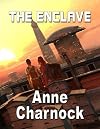
I read Charnock’s Sleeping Embers of an Ordinary Mind last year and thought it very good. In fact, it reminded me of Katie Ward’s Girl Reading, which is one of the best novels I’ve read in the last five years or so. Despite that, I hadn’t really known what to expect on opening The Enclave. Happily, it is good, although I’ve yet to decide if it’s good enough to be nominated for an award (although given how few novellas I read in their year of publication… On the other hand, I show more wouldn’t nominate an unworthy novella just because it was the only one I’d read that year). The title refers to a ghetto in, or near, a UK city, in which live migrants and UK citizens who have refused to be chipped. (It’s not entirely clear what this chipping entails or means in the story, but given The Enclave is set in the same world as Charnock’s novel A Calculated Life, I imagine it’s explained there.) Caleb is a twelve-year-old boy who walked from Spain to the UK with his mother, hoping to find his father who had left earlier. But somewhere in England, he lost his mother, was picked up by Skylark and sold into indentured labour under Ma Lexie. So now he lives in a shack on a rooftop in an enclave. Ma Lexie sells “remade clothes” at a street market, and has three boys to do the sewing for her. But Caleb has an eye for fashion and so Ma Lexie boots out her old overseer and puts Caleb in charge. The story is told first-person, initially from Caleb’s point of view, then from Ma Lexie’s, and finally again from Caleb’s. The characters are convincing, the setting is an all-too-frighteningly-likely consequence of Brexit and the rise in institutional racism in the UK, which means the whole chipping thing does tend to dilute the politics. I’ve never really taken to first-person narrative – it’s always struck me as the weakest, and the one writers with poor imaginations most frequently employ. A first-person narrator who is a Mary Sue (of any gender) is a complete waste of time. Happily, neither Caleb nor Ma Lexie can be accused of that, and the use of first-person here allows Charnock to confine the narrative only to what the narrators know. Although well-written, I’ve a feeling The Enclave could have been stronger, made more of a meal of its setting, said something trenchant about UK politics of the last twelve months. Other than that, bits of The Enclave reminded me, of all things, of Kes, especially the end. And there’s a slight hint of Keith Roberts to it, which is, of course, a plus. I think I probably will end up nominating it next year. show less
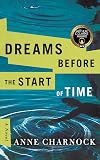
I forget who originally recommended Charnock, but I read her Sleeping Embers of an Ordinary Mind (see here), and was impressed enough to want to read more. Which I now have done. Although it has taken me pretty much exactly twelve months. But it was worth the wait. Dreams Before the Start of Time is… an ensemble piece. There are a group of people, related by blood or marriage or just friends, and they’re living their lives in London and Shanghai over the next few decades, beginning show more several years from now. The story opens with a young woman deciding to become a single mother, but using a sperm donor. Her friend, on the other hand, has a one-night stand, and decides to keep the consequences. As the years unfold, attitudes to the means of conception, gestation and child-rearing change as technology progresses and sensibilities reflect new social mores. A sf novel like this in direct opposition to the Atwood above – the world has not ended, there are no sexual assaults, no mega-violence, no violence, in fact. There needs to be more science fiction like this. Of course, it helps that the writing is really good – good enough for me to pick the novel as one of my top five books of the year – see here. I was given Charnock’s A Calculated Life, her debut novel, for Christmas. I’m looking forward to reading it. show less
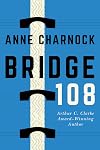
Major déjà vu reading this, as the first section is basically the novella The Enclave, which was published in 2017 and won the BSFA Award (I seem to remember voting for it, too). Three years later, and child slavery and human trafficking is not what I want to read about in a sf novel, but then Bridge 108 abruptly flips POV to that of an undercover immigration agent and we get some actual commentary on the world being described. I understand that to write from the POV of a child slave would show more mean the narrative accepting the situation – but it also normalises it. Science fiction, especially US science fiction, which this is not, I hasten to add, has an extremely bad habit of normalising the worst excesses of humanity in pursuit of “drama”. It’s s complete bollocks stance. If you write a fascist story with no commentary, you’re writing exactly what a fascist would write. Your personal politics are irrelevant. Charnock presents a UK in which refugees end up living illegally in “enclaves” alongside legal residents who do not have implanted chips, but then shows these enclaves are breeding-grounds of illegality and immorality. Sadly, too many people are like those fuckwits who voted for the Tories and now clap for the NHS. Or worse, voted for Brexit and now clap for the NHS – that £350 million a week would be fucking useful now, you hypocritical morons. British – and American – politics are perhaps extreme examples, but something similar exists in science fiction: authors saying, “look at me! I’m left-wing!” and then they write the most fascist space opera you could imagine. The genre is inherently right-wing, but they take it to excess. They’re a blight on the genre, and there are far too many of them and they’re far too popular. The Sad Puppies were right that the heart of science fiction had been colonised, but were too stupid that to see that it was their stories which had done so. They looked only at the politics of the writers. Had they based their argument on the politics of the stories, perhaps they might have kept their mouths shut. show less
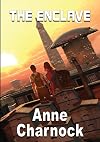
Anne Charnock returns to the world she wrote about in A Calculated Life, but it's not connected with that story in any way other than setting. This is a story about Caleb--a climate change refugee--and life in an enclave.
Caleb was traveling with his mother to find his father who had gone on ahead of them. They got separated one night, and Caleb was forced to travel with other refugees to find a "reception center" and, hopefully, his father. Instead, Caleb winds up in an enclave.
If you show more haven't read A Calculated Life, then here's your background (I'm copying this from my ACL review): "Late 21st Century England. Life isn't glamorous, nor is it horrific. It's a dystopia, where government and corporations control a pacified populace. The population has been divided into augmented professionals, who live in wonderful neighborhoods with all the trappings of upper middle class life we see today, and organics, who are crowded together in enclaves outside the city. The enclaves aren't filthy hellholes, but rather subsidized housing where their residents make use of everything to scrape up extra money to take the edge off of their spartan existence."
The story has quite a Dickensian feel to it. The enclave may as well be 19th century London, complete with gangs discretely fighting over the scraps. Caleb is a bit of an innocent waif caught up in it all. He earns his keep by taking recycled materials and making "new" products for his overseer (Ma Lexie) to sell at the flea market. There are other kids that work and live at the flat with him, taken under Ma Lexie's wing to work in her private sweatshop. Caleb spends a lot of time on the roof where he can see Odette, a girl who tends a rooftop tourist garden for her overseer. They exchange notes back and forth by throwing bottles from one roof to the next as neither one of them really gets to leave their buildings.
In the middle third of the book, we get a POV switch to Ma Lexie. Charnock really makes the most of this section. Through Ma Lexie's inner dialogue, we get to see how she views her life in the enclave and how Caleb fits into it. It's terribly revealing about how ignorant Ma Lexie is about her motivations and use of power.
The sci-fi elements are slight, which makes the story accessible to a larger audience. Remove a couple of elements and this story could easily be read as a contemporary fiction. It isn't hard to imagine that the Syrian refugees in Europe are having similar experiences. I think Dickens, with his penchant for an undercurrent of social commentary in his work, would approve. show less
Caleb was traveling with his mother to find his father who had gone on ahead of them. They got separated one night, and Caleb was forced to travel with other refugees to find a "reception center" and, hopefully, his father. Instead, Caleb winds up in an enclave.
If you show more haven't read A Calculated Life, then here's your background (I'm copying this from my ACL review): "Late 21st Century England. Life isn't glamorous, nor is it horrific. It's a dystopia, where government and corporations control a pacified populace. The population has been divided into augmented professionals, who live in wonderful neighborhoods with all the trappings of upper middle class life we see today, and organics, who are crowded together in enclaves outside the city. The enclaves aren't filthy hellholes, but rather subsidized housing where their residents make use of everything to scrape up extra money to take the edge off of their spartan existence."
The story has quite a Dickensian feel to it. The enclave may as well be 19th century London, complete with gangs discretely fighting over the scraps. Caleb is a bit of an innocent waif caught up in it all. He earns his keep by taking recycled materials and making "new" products for his overseer (Ma Lexie) to sell at the flea market. There are other kids that work and live at the flat with him, taken under Ma Lexie's wing to work in her private sweatshop. Caleb spends a lot of time on the roof where he can see Odette, a girl who tends a rooftop tourist garden for her overseer. They exchange notes back and forth by throwing bottles from one roof to the next as neither one of them really gets to leave their buildings.
In the middle third of the book, we get a POV switch to Ma Lexie. Charnock really makes the most of this section. Through Ma Lexie's inner dialogue, we get to see how she views her life in the enclave and how Caleb fits into it. It's terribly revealing about how ignorant Ma Lexie is about her motivations and use of power.
The sci-fi elements are slight, which makes the story accessible to a larger audience. Remove a couple of elements and this story could easily be read as a contemporary fiction. It isn't hard to imagine that the Syrian refugees in Europe are having similar experiences. I think Dickens, with his penchant for an undercurrent of social commentary in his work, would approve. show less
Lists
Awards


You May Also Like


Associated Authors
Statistics
- Works
- 6
- Also by
- 10
- Members
- 484
- Popularity
- #51,010
- Rating
- 3.6
- Reviews
- 54
- ISBNs
- 21

