
Chris Beckett (2) (1955–)
Author of Dark Eden
For other authors named Chris Beckett, see the disambiguation page.
About the Author
Chris Beckett is lecturer in Social Work at Anglia Polytechnic University, Cambridge
Series
Works by Chris Beckett
Marcher [short story] 3 copies
To Become a Warrior 2 copies
Valour 1 copy
The Perimeter 1 copy
Sons of Eden 1 copy
When Will We Get There? 1 copy
The Welfare Man Retires 1 copy
Associated Works
The Year's Best Science Fiction: Twenty-Third Annual Collection (2006) — Contributor — 568 copies, 5 reviews
The Year's Best Science Fiction: Nineteenth Annual Collection (2002) — Contributor — 559 copies, 6 reviews
The Year's Best Science Fiction: Twentieth Annual Collection (2003) — Contributor — 525 copies, 1 review
The Year's Best Science Fiction: Ninth Annual Collection (1992) — Contributor — 456 copies, 4 reviews
The Year's Best Science Fiction: Twenty-Eighth Annual Collection (2011) — Contributor — 328 copies, 3 reviews
Solaris Rising 3: The New Solaris Book of Science Fiction (2014) — Contributor — 48 copies, 6 reviews
Stories of Hope and Wonder: In Support of the UK's Healthcare Workers (2020) — Contributor — 11 copies, 1 review
Tagged
Common Knowledge
- Birthdate
- 1955
- Gender
- male
- Education
- University of Bristol (BSc) (psychology) (1977)
University of Wales (CQSW) (1981)
Goldsmith's College, University of London (Diploma in Advanced Social Work) (1977)
Anglia Ruskin University (MA) (English Studies) (2005) - Occupations
- social worker
Senior Lecturer in Social Work - Organizations
- Anglia Ruskin University
University of East Anglia - Short biography
- Chris Beckett was born in Oxford, England in 1955, and now lives in Cambridge, England. He has published three novels: Dark Eden, The Holy Machine and Marcher. He has been publishing short stories in the UK and the US, since 1990, and his short story collection, The Turing Test, won the Edge Hill Short Fiction Award in 2009, the UK's only national prize for single-author short-story collections.
His new short story collection, The Peacock Cloak, will be appearing at Easter 2013.
Chris Beckett works part-time as a lecturer in social work and he also writes text books on social work, in which he tries to use his experience of story telling to make the writing readable and lively. [adapted 7/23/2013 from Amazon.com] - Nationality
- UK
- Birthplace
- Oxford, Oxfordshire, England, UK
- Places of residence
- Cambridge, Cambridgeshire, England, UK
- Associated Place (for map)
- England, UK
Members
Reviews

A crashed-ship/lost-colony tale, "Dark Eden" takes place several generations after two stranded humans leave descendants on a sunless planet; Beckett allows that the culture spawned has somehow persisted for 163 years, making his story directly from the difficulties that such a genetic and cultural bottleneck would create. Founder Effect, cargo cult, recessives on display, linguistic simplification: you got it.
Setting this story apart from others of this type, DE is told in the first person show more from a number of different characters' p-o-v, in the limited vernacular of the lost children. The strengths and weaknesses of oral tradition both keep things going and restrict innovation; this group has decided over time to eschew innovation or exploration in favor of staying in one place and in one state of being until longed-for rescue occurs. Beckett makes good use of that fertile ground. This book is both stimulating and a bit menacing: there's a bit of "Lord of the Flies" determinism explicit throughout, but that's not too unexpected given the times in which Beckett wrote it. The angsty adolescents of DE represent not just a metaphorical future, but the only hope for a future the residents of Eden have. The clipped but expressive language used underscores that, the way Huck Finn's dialect drives Mark Twain's classic novel. show less
Setting this story apart from others of this type, DE is told in the first person show more from a number of different characters' p-o-v, in the limited vernacular of the lost children. The strengths and weaknesses of oral tradition both keep things going and restrict innovation; this group has decided over time to eschew innovation or exploration in favor of staying in one place and in one state of being until longed-for rescue occurs. Beckett makes good use of that fertile ground. This book is both stimulating and a bit menacing: there's a bit of "Lord of the Flies" determinism explicit throughout, but that's not too unexpected given the times in which Beckett wrote it. The angsty adolescents of DE represent not just a metaphorical future, but the only hope for a future the residents of Eden have. The clipped but expressive language used underscores that, the way Huck Finn's dialect drives Mark Twain's classic novel. show less
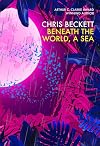
Just as I feel I must buy a grocery item if I've touched it these days, I am also obligated to borrow any library book I touch. Given that library browsing slots give me 15 minutes to choose a stack of books, my novel-choosing heuristics are: semi-familiar author, appealing cover, and/or on the new acquisition shelf. 'Beneath the World, a Sea' met all three criteria. It was on the new book shelf, looked attractive, and I recognised Chris Beckett's name as I've read [b:America show more City|35711882|America City|Chris Beckett|https://i.gr-assets.com/images/S/compressed.photo.goodreads.com/books/1500566965l/35711882._SX50_.jpg|57211847], (which had interesting ideas but a rather flat narrative). My heuristics served me well, as I really loved 'Beneath the World, a Sea'. I can be stingy with five star ratings and struggle to articulate what exactly takes a novel from four to five stars from me. It tends to be some sort of emotional affinity, as I give plenty of excellent books four. In this case, the setting, themes, and narration were all exceedingly appealing. 'Beneath the World, a Sea' (which is also wonderfully titled) is set in a weird, isolated South American forest community. I adore spatially specific weirdness of this kind and was pleased to be reminded of [b:Annihilation|17934530|Annihilation (Southern Reach, #1)|Jeff VanderMeer|https://i.gr-assets.com/images/S/compressed.photo.goodreads.com/books/1403941587l/17934530._SX50_.jpg|24946895] and [b:Infinite Ground|30256420|Infinite Ground|Martin MacInnes|https://i.gr-assets.com/images/S/compressed.photo.goodreads.com/books/1463999496l/30256420._SX50_.jpg|50728268]. The latter is an especially apposite comparison, as 'Beneath the World, a Sea' also begins with a police investigation before developing in much more existential directions.
The protagonist, Ben Ronson, is a London police officer sent to the Submundo Delta to investigate the mass killing of native creatures called Duendes. To reach the Submundo, he and everyone else travelling there must spend several days in the Zona, a space of forgetting. Thus everyone arrives at the Submundo disorientated by a gap in their memory, to find the peculiar flora and fauna of the place have a powerful psychological effect. In the vicinity of Duendes, people become overwhelmed by all the thoughts that they would normally repress. The geographical isolation of the Submundo also creates a peculiar intimacy between its expat residents, which makes it easy to perceive the truths of others without enabling similarly acute self-perception. Beckett's writing manages the clever trick of being evocative without a great deal of description. The dialogue and streams of consciousness help to create a vivid and distinctive atmosphere throughout. I found the place beguiling and fascinating.
It was also very nice to read a book set in 1990. That's recent enough not to require much adjustment for historical events and attitudes, yet also a time before the internet and mobile phones made us perpetually accessible to each other. The Submundo is physically and thus informationally isolated from the rest of the world, although various characters discuss how this could be changed. One proposes to build a monorail, which would traverse the Zona and widen the life opportunities of the Mundinos. These are the descendents of South American people dumped in the Submundo by colonial intruders in the 1860s. They established themselves in villages around the delt, creating a religion unique to the place. One of the main characters is an anthropologist who studies their ways of life, which include killing Duendes. Via this anthropologist and others, the narrative considers colonialism and financial neo-colonialism in an interesting and subtle way.
Although there are several intriguing themes of this kind, the questions at the core of the book are more philosophical and concern the sense of self. I absolutely love it when what could have been a criminal investigation plot turns into something far weirder and more existential. This is quite often attempted, but can be difficult to pull off. Beckett subverted my expectations brilliantly and turned Ben Ronson the upright cop into a fascinating character, who is essentially investigating himself:
From the start, there are references to Ronson hiding and repressing things. When he finally reads the notebooks from his time in the Zona, they are electric: his other forgotten self taunts him with terrible deeds he may have committed. He is profoundly shocked and shaken by this, as well he might be. Although other characters have interestingly varied reactions to the Zona and Submundo, Ronson's is the most compelling. It makes you wonder: if you were going to a place you knew you'd retain no memories of, what would you do? To a very controlled person like Ronson (and me, incidentally), it could be an opportunity to take risks that you wouldn't normally entertain. The tension around whether Ronson acted on any of his darkest thoughts in the Zona is sustained brilliantly. Did he just experiment with being a freer person, one who admitted his bisexuality? Or did he commit violence, even murder? The narrative acknowledges that anyone who works for the police must have at least the potential for deadly violence. Alternatively, is he just mocking himself for being a coward out of self-hatred?
I very much enjoyed the ambiguity and piquancy of the ending: Ronson re-enters the Zona and relaxes back into some other self. His mission to investigate the Duende killings has faded into the background, indeed within the Submundo it is hard to see the killings as crimes at all. The Duendes are utterly inhuman and resemble small parts of a single huge organism. There is no indication that their numbers are diminishing and they make no efforts to avoid humans, in fact quite the opposite. The anthropologist and scientists cannot explain how the Submundo works or what the Duendes are. A businessman's efforts to fly into the Submundo, to invade it with the modern world, quite literally crash and burn. Thus the place remains satisfyingly mysterious to the end, as the narrative concerns its psychological impact upon visitors rather than the impact that visitors have upon it. The Submundo could be an analogy for various different things, yet I also appreciated it as a throwback to Victorian tales of strange undisturbed places that Western minds can't cope with. Beckett combines elements of those stories with sci-fi and contemporary psychological insight, to brilliant effect. show less
The protagonist, Ben Ronson, is a London police officer sent to the Submundo Delta to investigate the mass killing of native creatures called Duendes. To reach the Submundo, he and everyone else travelling there must spend several days in the Zona, a space of forgetting. Thus everyone arrives at the Submundo disorientated by a gap in their memory, to find the peculiar flora and fauna of the place have a powerful psychological effect. In the vicinity of Duendes, people become overwhelmed by all the thoughts that they would normally repress. The geographical isolation of the Submundo also creates a peculiar intimacy between its expat residents, which makes it easy to perceive the truths of others without enabling similarly acute self-perception. Beckett's writing manages the clever trick of being evocative without a great deal of description. The dialogue and streams of consciousness help to create a vivid and distinctive atmosphere throughout. I found the place beguiling and fascinating.
It was also very nice to read a book set in 1990. That's recent enough not to require much adjustment for historical events and attitudes, yet also a time before the internet and mobile phones made us perpetually accessible to each other. The Submundo is physically and thus informationally isolated from the rest of the world, although various characters discuss how this could be changed. One proposes to build a monorail, which would traverse the Zona and widen the life opportunities of the Mundinos. These are the descendents of South American people dumped in the Submundo by colonial intruders in the 1860s. They established themselves in villages around the delt, creating a religion unique to the place. One of the main characters is an anthropologist who studies their ways of life, which include killing Duendes. Via this anthropologist and others, the narrative considers colonialism and financial neo-colonialism in an interesting and subtle way.
Although there are several intriguing themes of this kind, the questions at the core of the book are more philosophical and concern the sense of self. I absolutely love it when what could have been a criminal investigation plot turns into something far weirder and more existential. This is quite often attempted, but can be difficult to pull off. Beckett subverted my expectations brilliantly and turned Ben Ronson the upright cop into a fascinating character, who is essentially investigating himself:
The forest had crept into him. Last night it had been hard to let it in, knowing that it was about to be taken from him, but somehow this morning it had crept back in. Being Ben Ronson didn't seem so important now, with these big spiral leaves hanging down all around him, those quivering white helices opening their crimson mouths... And what was Ben Ronson anyway? He imagined a kind of web which linked up objects out there in the world with memories and nodes of feeling in long branching chains. At any particular moment almost all of this web was in darkness, and if he had a self at all, it was a kind of spotlight that swept back and forth through these hundreds of millions of branching chains, searching for some kind of meaning, some kind of sense that he was connected to something he wanted.
I very much enjoyed the ambiguity and piquancy of the ending: Ronson re-enters the Zona and relaxes back into some other self. His mission to investigate the Duende killings has faded into the background, indeed within the Submundo it is hard to see the killings as crimes at all. The Duendes are utterly inhuman and resemble small parts of a single huge organism. There is no indication that their numbers are diminishing and they make no efforts to avoid humans, in fact quite the opposite. The anthropologist and scientists cannot explain how the Submundo works or what the Duendes are. A businessman's efforts to fly into the Submundo, to invade it with the modern world, quite literally crash and burn. Thus the place remains satisfyingly mysterious to the end, as the narrative concerns its psychological impact upon visitors rather than the impact that visitors have upon it.
http://nwhyte.livejournal.com/2621178.html
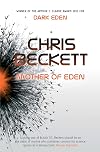
Beckett's setting is the lost tribes of humans on a far distant planet, descendants of a long ago crashed spaceship (whose own bitter story becomes fairly obvious to the reader, though not to the characters). They are in conflict over natural resources, the indigenous aliens, their own history, and the roles of women and men. The details of the plot, on reflection, are actually standard pulp themes; but the way Beckett chooses to tell the story show more through the voices of the young generation (mostly women) and his undercurrent of revolution (both class and gender) are very subversive of those tropes. The ending is bitter yet hopeful. I really liked this, as I enjoyed its predecessor, and will be agonising over my BSFA vote over the next three weeks. And needless to say, it's in contention for my Hugo nominations as well. show less
Beckett's setting is the lost tribes of humans on a far distant planet, descendants of a long ago crashed spaceship (whose own bitter story becomes fairly obvious to the reader, though not to the characters). They are in conflict over natural resources, the indigenous aliens, their own history, and the roles of women and men. The details of the plot, on reflection, are actually standard pulp themes; but the way Beckett chooses to tell the story show more through the voices of the young generation (mostly women) and his undercurrent of revolution (both class and gender) are very subversive of those tropes. The ending is bitter yet hopeful. I really liked this, as I enjoyed its predecessor, and will be agonising over my BSFA vote over the next three weeks. And needless to say, it's in contention for my Hugo nominations as well. show less

I wanted to like this book. I had read the first in the series which was nominated for the British SF Association award and won the Clarke award. The characters are well drawn, the planet and it's ecology is novel. But...
The actually premise of the book is not as original as it first seems. Basically, it's the post-nuclear apocalypse story - people dragging their way back to civilization, mutated people etc. The cause of this (one woman and two men stranded on a planet with limited show more resources) but the outcome is basically the same. It's told well however and the slant is new. But...
My problem, which I had to a lesser extent with the first novel, is pacing. This book is a slow as molasses. This is civilization building as a paint drying spectacle; the paint dries, it cracks, it starts to peel, it falls off the wall.
I got as far as the first couple of cracks and gave up. show less
The actually premise of the book is not as original as it first seems. Basically, it's the post-nuclear apocalypse story - people dragging their way back to civilization, mutated people etc. The cause of this (one woman and two men stranded on a planet with limited show more resources) but the outcome is basically the same. It's told well however and the slant is new. But...
My problem, which I had to a lesser extent with the first novel, is pacing. This book is a slow as molasses. This is civilization building as a paint drying spectacle; the paint dries, it cracks, it starts to peel, it falls off the wall.
I got as far as the first couple of cracks and gave up. show less
 This review was written for LibraryThing Early Reviewers.
Lists
Awards


You May Also Like


Associated Authors
Statistics
- Works
- 54
- Also by
- 25
- Members
- 2,069
- Popularity
- #12,420
- Rating
- 3.6
- Reviews
- 152
- ISBNs
- 124
- Languages
- 4
- Favorited
- 2
