
Eric Brown (1) (1960–2023)
Author of Helix
For other authors named Eric Brown, see the disambiguation page.
Series
Works by Eric Brown
Beyond the Heliopause 3 copies
Cold Testing 3 copies
Sunworld 3 copies
Steps Along the Way 3 copies
The Phoenix Experiment [short story] 2 copies
Ferryman [short story] 2 copies
People Of Planet Earth 2 copies
Pithecanthropus Blues [short story] 2 copies
Bukowski On Mars With Beer 2 copies
The Rest Is Speculation 2 copies
Dark Calvary 2 copies
Meridian 2 copies
Venus Macabre 2 copies
The Crimes Of Domini Duvall 1 copy
Star of Epsilon 1 copy
The Pineal-Zen Equation 1 copy
Varah [short story] 1 copy
A Heritage Of Stars 1 copy
The Blue Portal 1 copy
Frozen Woman 1 copy
The Farewell Party 1 copy
Life Beyond ... 1 copy
The Sins of Edward Veron 1 copy
Myths of the Martian Future 1 copy
P.O.O.C.H. 1 copy
Salvage Rites 1 copy
New York Games 1 copy
The Scribe of Betelgeuse V 1 copy
Associated Works
Solaris Rising: The New Solaris Book of Science Fiction (2011) — Contributor — 137 copies, 4 reviews
The Book of Extraordinary Impossible Crimes and Puzzling Deaths (2020) — Contributor — 17 copies, 1 review
Postscripts Magazine, Issue 15: Worldcon 2008 Special (2008) — Contributor, some editions — 15 copies
Stories of Hope and Wonder: In Support of the UK's Healthcare Workers (2020) — Contributor — 11 copies, 1 review
The Future of Horror: The Collected Solaris Horror Anthologies, featuring House of Fear, Magic and End of the Road (2015) — Contributor — 8 copies
Aboriginal Science Fiction No. 59 & 60 Winter 1998 — Contributor — 2 copies
Clarkesworld: Issue 049 (October 2010) — Author — 1 copy
Aboriginal Science Fiction No. 55 & 56 Spring 1998 — Contributor — 1 copy
Tagged
Common Knowledge
- Birthdate
- 1960-05-24
- Date of death
- 2023-03-21
- Gender
- male
- Occupations
- fiction writer
literary critic - Agent
- John Jarrold
- Cause of death
- sepsis
- Nationality
- UK
- Birthplace
- Haworth, West Riding of Yorkshire, England, UK
- Places of residence
- Berwickshire, Scotland, UK
- Map Location
- England, UK
Members
Reviews
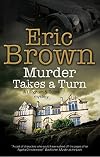
This is the fifth book in Brown’s 1950s-set crime novels featuring thriller writer/private detective Don Langham, and his fiancée now wife and literary agent Maria Dupré. Setting these novels in the 1950s was a cunning move, as it means all the modern technology that “breaks” crime fiction does not exist, like mobile phones or the internet. This is old school crime fiction, and deliberately so. And yet, Brown manages to give Langham and Dupré sensibilities that would not be out of show more place in twenty-first century Britain (well, the Remain part of twenty-first century Britain, that is). In this instalment, a critically-acclaimed writer invites half a dozen people he had wronged in the past to his Cornish pile with a promise of making amends. One of those is Dupré’s partner in the literary agency, Charles Elder, and he persuades Dupré and Langham to accompany him. Which is quite handy as Langham has been hired by the writer’s daughter to investigate the writer’s new business manager. Needless to say, once all are on site, the writer is murdered… but everyone apparently has an alibi… I had thought the writer, and his travel-writer brother, were based on the Durrells, but Eric tells me the writer figure was actually inspired by John Fowles. Murder Takes a Turn – and the title is a bit of a spoiler – is much like the previous books in the series, although it does have a tendency to reveal information to the reader before it’s revealed to the principles, so you wonder why they’re so slow to spot clues… But the two leads are likeable and well-drawn, and the supporting cast are equally well-drawn, and if sometimes it doesn’t always feel quite like the 1950s (which I say only having read fiction written then), it does at least avoid sensibilities which would offend in the twenty-first century. These books are quick reads, but they’re fun with it, and they’re as satisfying as murder mysteries as they are 1950s-set fiction. show less
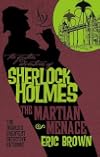
Apparently, there are several of these The Further Adventures of Sherlock Holmes novels published by Titan Books. I’m not a Holmes fan, but Eric is a friend of many, many years and I do like his books. The Martian Menace is an expansion of a novella, The Martian Simulacra, published back in 2018 by NewCon Press. In that novella, a mashup of Doyle and Wells, Sherlock Holmes and Dr Watson are flown to Mars to solve the murder of an important Martian philosopher. But it’s all a ruse, as the show more Martians are replacing important individuals (only the British ones are named, of course, as this is Edwardian fiction; much like in US genre fiction) and replacing them with robots indistinguishable from the originals. But Holmes and Watson escape this fate with the help of an enterprising young woman from the resistance (comprised of humans wise to the Martians’ plans and the Martian enemies of those Martians who have been welcomed on Earth). The Martian Menace takes this story, and then does something very clever with it. Dragging Moriarty into the story is perhaps a no-brainer. Brown positions Moriarty as the architect of the Martians’ plot, but only by creating a multitude of simulacra of him… and it is the fate of the original Moriarty which proves to be the driver behind the plot of the novel and the enabler of its resolution. Reading this novel was an odd experience. It was as if the novella were two-dimensional, and the novel suddenly added a third dimension. Perhaps read from fresh, without knowledge of the novella, The Martian Menace would read as an inventive take on Sherlock Holmes meets Wells’ Martians. But having, read the novella, the novel went from the familiar to a quite unexpected place. I enjoyed it more than I expected. show less
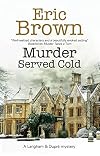
Crime fiction, bizarrely, is likely more technology-dependent than science fiction. The mobile phone has, for example, pretty much killed half of the standard crime novel plots… And who needs private detectives when you have the internet? Which makes it more difficult to come up with interesting stories for current-day crime or mystery novels. So some writers have chosen to write historical mysteries, and so bypass the issue. Such as these by Eric Brown, the Langham and Duprée series, show more which are set during the 1950s. As a conceit, it works fine, and Brown handles the period extremely well. But… Well, it does seem all a bit cosily familiar. I mean, it’s not “chocolate-box England” by any stretch of the imagination, but it’s certainly a time and place that has been extensively colonised – particularly by those who were present during that time and place – although not always with fictions that gave any real indication of what the period was actually like. The advantage of a series such as Brown’s is that it offers twenty-first century commentary on 1950’s sensibilities, and it’s to this series’s credit that it judges the mix to a nicety. This book, the sixth of the series, sees the protagonists investigating the theft of an expensive painting at a country house, which then leads to murder. The crimes are solved relatively easily, but what makes Murder Served Cold (the titles are a joke that has overrun its course) more interesting than others of its type is that it comments intelligently on social mores of the time. It’s the secondary characters who carry the meat of the story, and that strikes me as something a lot of crime writers with flagship characters seem to forget. Brown uses his story to discuss a variety of topics that were around in the 1950 but still reflect on twenty-first century society. It’s a clever trick, and it works well – although I suspect not all readers will recognise what’s going on. The protagonists’ politics, for example, is diametrically opposed to that of their client, and while relations remain amicable there is political commentary in there. It’s nice to see a 1950s-set novel with a 21st century spin. I mean, there were lots of excellent novels written and published in the 1950s, but there are a lot of 21st century novels set in the 1950s which do little to engage with the mores and politics of that time. I hope this series continues. show less
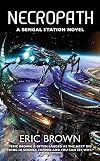
'Necropath' es una novela de ciencia ficción situada en el vasto y claustrofóbico escenario de Bengal Station, una megalópolis flotante sobre el océano Índico. La historia sigue a Jeff Vaughan, un telepático que trabaja como oficial de seguridad en la estación. Vaughan lleva una vida marcada por la soledad y la desilusión, utilizando sus habilidades para escanear mentes en busca de intenciones criminales. Sin embargo, su trabajo lo ha dejado emocionalmente aislado y hastiado de las show more miserias humanas que percibe constantemente.
El relato comienza cuando Vaughan es contactado por un joven con noticias sobre una amiga suya llamada Tiger, una niña de la calle que Vaughan ha tomado bajo su protección de forma indirecta. Tiger, que ha caído gravemente enferma por una droga alienígena, representa un punto de vulnerabilidad para Vaughan, ya que su relación con ella le recuerda un doloroso pasado. La trama explora la lucha de Vaughan contra sus propios demonios internos mientras intenta salvar a Tiger y confronta el sombrío entorno de la estación, donde la pobreza y el crimen están profundamente arraigados.
La novela combina elementos de investigación, intriga, y una meditación sobre la humanidad y la moralidad. Vaughan también descubre oscuros secretos en la estación que revelan una corrupción sistemática más profunda. En un contexto que mezcla el noir clásico con temas de ciencia ficción, la obra se sumerge en cuestiones éticas sobre el uso de habilidades telepáticas, la desigualdad y la explotación.
La obra destaca por su ambientación detallada, presentando Bengal Station como un personaje en sí mismo, un lugar vibrante y opresivo lleno de contrastes entre riqueza y pobreza, modernidad y decadencia. La exploración psicológica de Jeff Vaughan es otro punto fuerte, ya que su carácter cínico y atormentado proporciona una perspectiva profunda sobre los desafíos éticos y emocionales que conlleva ser un telepático. show less
El relato comienza cuando Vaughan es contactado por un joven con noticias sobre una amiga suya llamada Tiger, una niña de la calle que Vaughan ha tomado bajo su protección de forma indirecta. Tiger, que ha caído gravemente enferma por una droga alienígena, representa un punto de vulnerabilidad para Vaughan, ya que su relación con ella le recuerda un doloroso pasado. La trama explora la lucha de Vaughan contra sus propios demonios internos mientras intenta salvar a Tiger y confronta el sombrío entorno de la estación, donde la pobreza y el crimen están profundamente arraigados.
La novela combina elementos de investigación, intriga, y una meditación sobre la humanidad y la moralidad. Vaughan también descubre oscuros secretos en la estación que revelan una corrupción sistemática más profunda. En un contexto que mezcla el noir clásico con temas de ciencia ficción, la obra se sumerge en cuestiones éticas sobre el uso de habilidades telepáticas, la desigualdad y la explotación.
La obra destaca por su ambientación detallada, presentando Bengal Station como un personaje en sí mismo, un lugar vibrante y opresivo lleno de contrastes entre riqueza y pobreza, modernidad y decadencia. La exploración psicológica de Jeff Vaughan es otro punto fuerte, ya que su carácter cínico y atormentado proporciona una perspectiva profunda sobre los desafíos éticos y emocionales que conlleva ser un telepático. show less
Lists
Awards


You May Also Like


Associated Authors
Statistics
- Works
- 149
- Also by
- 71
- Members
- 3,495
- Popularity
- #7,275
- Rating
- 3.7
- Reviews
- 161
- ISBNs
- 300
- Languages
- 4
- Favorited
- 4

