
Carroll V. Glines (1920–2016)
Author of The Doolittle Raid
About the Author
Carroll V. Glines began flying in 1939, joined the Army Air Corps in 1941, and retired from the Air Force as a colonel in 1968. He is currently curator of the Doolittle Military Aviation Library at the University of Texas at Dallas
Image credit: U.S. Air Force photo by Tech. Sgt. Thomas Coney, cropped by uploader (defenseimagery.mil)
Works by Carroll V. Glines
Chennault's Forgotten Warriors: The Saga of the 308th Bomb Group in China (Schiffer Military History) (1997) 11 copies
Those Legendary Piper Cubs: Their Role In War And Peace (Schiffer Military History Book) (2005) 9 copies
Minutemen of the air;: The valiant exploits of the Civil Air Patrol in peace and war, (1966) 9 copies, 1 review
The modern United States Air Force 3 copies
Helicopter Rescues 1 copy
Associated Works
Tagged
Common Knowledge
- Canonical name
- Glines, Carroll V.
- Legal name
- Glines, Carroll Vane, Jr.
- Birthdate
- 1920-12-02
- Date of death
- 2016-01-14
- Gender
- male
- Occupations
- air force officer
biographer
historian - Organizations
- United States Army (Air Forces)
United States Air Force - Nationality
- USA
- Birthplace
- Baltimore, Maryland, USA
- Associated Place (for map)
- Maryland, USA
Members
Reviews
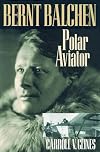
A very well written biography about one of the most famous people of the twentieth century you've probably never heard about. The first person to pilot an aircraft over both poles, he also flew across the Atlantic just weeks after Lindbergh, taught Amelia Earhart to fly on instruments and was a consultant for Arctic and Antarctic explorers. During WW2 he flew rescue missions in Greenland, set up military bases in the far north, created and led a clandestine airline that flew between Britain show more and Sweden, dropped supplies to the Norwegian resistance; the list goes on and on. Quite an interesting man. show less

This book is a detailed recounting of the carrier launched B-25 raid against Tokyo, Japan on 18 April 1942. The book opens with a brief, one chapter, recap of the December 7th attack on Pearl Harbor. This chapter is followed by four chapters detailing the evolution of the idea of a carrier born bomber attack- the initial idea, the investigation of possible bomber types, the special modification to the bombers, crew training and, finally, the carrier Hornet sailing from San Francisco loaded show more with 16 B-25 medium bombers.
The chapters that follow detail the unexpected encounter with Japanese picket ships which forced an earlier than expected launch of the strike force, a plane by plane description of their respective flights from the Hornet to Japan, and the fate of those planes after the strike on Tokyo and vicinity. (Most of the bombers made it to China with their crews either bailing out over the land or ditching in the ocean near the coast. One crew landed in the Soviet Union and one entire crew and three survivors of a second were captured by the Japanese – 4 of these men survived 40 months of captivity.)
The remainder of the book discusses the impact of the raid on Japan and Japanese military thinking, the ordeals faced by the 8 who were captured and the repatriation of the POW's to the United States at the end of the war. The book is well written and does an excellent job of conveying the many facets of the mission-technical, political, and personal - to the reader. show less
The chapters that follow detail the unexpected encounter with Japanese picket ships which forced an earlier than expected launch of the strike force, a plane by plane description of their respective flights from the Hornet to Japan, and the fate of those planes after the strike on Tokyo and vicinity. (Most of the bombers made it to China with their crews either bailing out over the land or ditching in the ocean near the coast. One crew landed in the Soviet Union and one entire crew and three survivors of a second were captured by the Japanese – 4 of these men survived 40 months of captivity.)
The remainder of the book discusses the impact of the raid on Japan and Japanese military thinking, the ordeals faced by the 8 who were captured and the repatriation of the POW's to the United States at the end of the war. The book is well written and does an excellent job of conveying the many facets of the mission-technical, political, and personal - to the reader. show less

One of the most famous events of WWII was the interception and downing of the plane carrying Admiral Yamamoto to the island of Bougainville in 1943. Breaking one of the Japanese codes alerted the Allies to the time of Yamamoto's visit to his men stationed on Bougainville. By careful planning of the time and speed needed for interception, there was a successful mission by P-38s stationed on Guadalcanal in meeting Yamamoto's aircraft and downing it off of Bougainville. The death of the Naval show more hero who planned the attack on Pearl Harbor was a great blow to the morale of the Japanese. But this is only the beginning of the story. There follows the ugly controversy concerning which pilot actually downed Yamamoto's aircraft that has still not and may now never be resolved. Glines offers a convincing argument for one of the pilot's claims, revealing how the personal ambitions of the other cast a sordidness over a truly remarkable achievement. show less
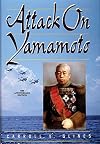
A diligent, often dramatic evaluation of a durable dispute from WW II: Which American pilot deserves the credit for shooting Japan's greatest admiral out of the sky. Admiral Isoroku Yamamoto, commander of the Japanese navy and mastermind of the attack on Pearl Harbor, was killed on April 18, 1943, in an aerial ambush by a squadron of U.S. Army P-38s based on Guadalcanal. Glines describes how the trap was set after U.S. naval intelligence discovered that Yamamoto would be flying between New show more Guinea and Bougainville on that date, and describes in detail how it was sprung.
One of the most famous events of WWII was the interception and downing of the plane carrying Admiral Yamamoto to the island of Bougainville in 1943. Breaking one of the Japanese codes alerted the Allies to the time of Yamamoto's visit to his men stationed on Bougainville. By careful planning of the time and speed needed for interception, there was a successful mission by P-38s stationed on Guadalcanal in meeting Yamamoto's aircraft and downing it off of Bougainville. The death of the Naval hero who planned the attack on Pearl Harbor was a great blow to the morale of the Japanese.
With the victory at Guadalcanal, American troops finally regained a foothold in the South Pacific. Then the sudden opportunity for another major triumph arose. Admiral Yamamoto, the mastermind of the attack on Pearl Harbor, decided to visit his front-line troops, leaving himself briefly vulnerable. show less
One of the most famous events of WWII was the interception and downing of the plane carrying Admiral Yamamoto to the island of Bougainville in 1943. Breaking one of the Japanese codes alerted the Allies to the time of Yamamoto's visit to his men stationed on Bougainville. By careful planning of the time and speed needed for interception, there was a successful mission by P-38s stationed on Guadalcanal in meeting Yamamoto's aircraft and downing it off of Bougainville. The death of the Naval hero who planned the attack on Pearl Harbor was a great blow to the morale of the Japanese.
With the victory at Guadalcanal, American troops finally regained a foothold in the South Pacific. Then the sudden opportunity for another major triumph arose. Admiral Yamamoto, the mastermind of the attack on Pearl Harbor, decided to visit his front-line troops, leaving himself briefly vulnerable. show less
You May Also Like


Associated Authors
Statistics
- Works
- 29
- Also by
- 1
- Members
- 558
- Popularity
- #44,765
- Rating
- 4.1
- Reviews
- 9
- ISBNs
- 48
- Languages
- 1
