
Erin Bow
Author of Plain Kate
About the Author
Image credit: erinbow.ca
Series
Works by Erin Bow
Children of Peace 11 copies
Tagged
Common Knowledge
- Other names
- Notebloom, Erin
- Birthdate
- 1972
- Gender
- female
- Education
- Creighton University
- Occupations
- physicist
poet
writer - Awards and honors
- CBC Canadian Literary Award
- Relationships
- Bow, James (husband)
- Nationality
- USA (birth)
Canada - Birthplace
- Des Moines, Iowa, USA
- Places of residence
- Des Moines, Iowa, USA
Omaha, Nebraska, USA
Geneva, Switzerland
Kitchener, Ontario, Canada
Members
Reviews
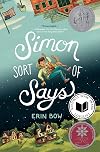
First sentence: People are always asking why my family came to the National Quiet Zone. Like we need a reason. I mean, who wouldn’t want to live in a place with no internet and no cell phones and no TV and no radio? Who wouldn’t want to live surrounded by emu farms in a town that’s half astrophysicists and half people who are afraid of their microwaves? I mean, isn’t that the American Dream? Hint: no. Obviously, there’s a story
Premise/plot: Simon and his family have moved to Grin show more and Bear It, Nebraska, in the "National Quiet Zone." The town is divided into two teams: "Team Science" and "Team Farm." [The scientists are listening for radio signals from outer space.] Simon is hoping to blend into his school--though he's neither team--as much as possible. He wants to 'fly under the radar' so to speak. But his developing friendship with Agate and Kevin might just bring him some unwanted attention...the tradeoff being the best friends he could ever hope for.
Simon comes to town with a secret. He delights in the fact that there is no internet so that there no one can google his name and find out.
My thoughts: This one gets a million bonus points for quirkiness. Yet despite all the lighter, "quirky," moments this one hits heavy--in the heart. There are scenes that read like a punch in the gut. Simon's secret is that he is the sole survivor from his class after a school shooting. It changed Simon's life--and the lives of his parents--forever.
What I loved about this one was the characterization: ALL the characters--no matter how "big" or "small" "central" or "side" are developed. The narrative draws you into the story, into the community, into the characters' lives. I thought it was well done.
What I didn't quite love, however, was the theology. Granted, I'm not a Catholic. [His father is a deacon and program director]. I could understand how his son's experiences could shake/rattle/throw doubt upon his faith. However, I don't understand how he could maintain at least the outer profession of faith and religion yet preach--several times--in his belief, in his insistence, that there are no miracles, no providence, no sovereignty. He's applauded for embracing a "God of Chaos." This is a middle grade novel. It certainly isn't the place for a philosophical or theological discussion on the "Why is there evil?" or "If God is good, why is there evil?" or "If God is all-knowing or all-powerful, why is there evil?" or "Why does God allow evil?" There are other more appropriate places for that discussion. [I'm not saying it's not worth having...at all...] Again, I'm not a Catholic, so I'm not sure how 'shocking' or 'progressive' or 'controversial' that statement would be. It got me to thinking--that's all. show less
Premise/plot: Simon and his family have moved to Grin show more and Bear It, Nebraska, in the "National Quiet Zone." The town is divided into two teams: "Team Science" and "Team Farm." [The scientists are listening for radio signals from outer space.] Simon is hoping to blend into his school--though he's neither team--as much as possible. He wants to 'fly under the radar' so to speak. But his developing friendship with Agate and Kevin might just bring him some unwanted attention...the tradeoff being the best friends he could ever hope for.
Simon comes to town with a secret. He delights in the fact that there is no internet so that there no one can google his name and find out.
My thoughts: This one gets a million bonus points for quirkiness. Yet despite all the lighter, "quirky," moments this one hits heavy--in the heart. There are scenes that read like a punch in the gut. Simon's secret is that he is the sole survivor from his class after a school shooting. It changed Simon's life--and the lives of his parents--forever.
What I loved about this one was the characterization: ALL the characters--no matter how "big" or "small" "central" or "side" are developed. The narrative draws you into the story, into the community, into the characters' lives. I thought it was well done.
What I didn't quite love, however, was the theology. Granted, I'm not a Catholic. [His father is a deacon and program director]. I could understand how his son's experiences could shake/rattle/throw doubt upon his faith. However, I don't understand how he could maintain at least the outer profession of faith and religion yet preach--several times--in his belief, in his insistence, that there are no miracles, no providence, no sovereignty. He's applauded for embracing a "God of Chaos." This is a middle grade novel. It certainly isn't the place for a philosophical or theological discussion on the "Why is there evil?" or "If God is good, why is there evil?" or "If God is all-knowing or all-powerful, why is there evil?" or "Why does God allow evil?" There are other more appropriate places for that discussion. [I'm not saying it's not worth having...at all...] Again, I'm not a Catholic, so I'm not sure how 'shocking' or 'progressive' or 'controversial' that statement would be. It got me to thinking--that's all. show less
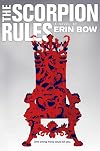
Greta is a princess, and a hostage: the AI ruling the post-global warming, water-scarce world has declared that any leader of a country must have a child-hostage under the AI’s control. The leader can choose to fight a war, whether offensively or defensively, but will have their hostage killed as a result. After a revolution, Greta, who represents the entity that occupies what’s now Canada, gets a new counterpart from what used to be a big chunk of the US; they’re very likely to go to show more war over water access soon, and the new hostage isn’t at all reconciled to the way things are, as Greta is. Bow explores the various ways that a person can be tortured, in terrifying detail both physical and psychological, and the ways in which people survive, and deform, under such circumstances. It’s a thought-provoking and entertaining read, if you can deal with the torture (which is never presented as anything but horrifying). show less
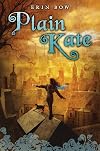
Let me start at the end: I was reduced to not a slightly teary, not a delicately weepy, but a blubbering, sobbing mess at the end of this book. I haven't cried so much because of a book since I struggled to read the last chapters of Tolkien's The Return of the King through a veil of tears, a comparison which may give you an indication of both how invested I was in the characters and the effectiveness of Bow's world-building.
Bow's prose certainly reflects the fact that she is a published show more poet, with phrases like "the sky had slid shut under a lid of low clouds" (p. 30) appearing throughout. This lyricism lent itself well to the dark, magical world that Plain Kate inhabits and tries her best to make her way safely through. The book is very atmospheric, and I could almost feel the cold damp of the fog traveling upriver, or hear the mud pulling at the bottom of Plain Kate's boots. The novel has a distinct Medieval, Eastern European feel to it, with towns and cities located at great distances from one another and tinkers and merchants selling their wares in outdoor markets.
Plain Kate is an evocative main character. She reveals herself slowly to other characters as well as to the reader, and coming to know her gradually made her feel all the more real. Her constant companion, Taggle the cat, is a wonderful comic foil to Plain Kate's seriousness while remaining an exceedingly loyal companion (despite his derision for dogs). Secondary characters, such as Drina and Behjet, are three-dimensional with their own tangled beliefs and personal sorrows that are hinted at and not always explained, leaving the reader to draw their own conclusions. As in reality, people and events were not always tied up neatly, which makes it easier to believe that the world in Plain Kate has no boundaries and continues to exist.
Although it took me a few dozen pages to get truly sucked into Plain Kate, once I was in it I wasn't prepared to leave until I got to the end. Had someone asked me after the first chapter if I would be an emotional wreck at the end of the book, I would have given a definitive no. I am exceedingly glad that I would have been wrong, and I will be recommending this book to many. show less
Bow's prose certainly reflects the fact that she is a published show more poet, with phrases like "the sky had slid shut under a lid of low clouds" (p. 30) appearing throughout. This lyricism lent itself well to the dark, magical world that Plain Kate inhabits and tries her best to make her way safely through. The book is very atmospheric, and I could almost feel the cold damp of the fog traveling upriver, or hear the mud pulling at the bottom of Plain Kate's boots. The novel has a distinct Medieval, Eastern European feel to it, with towns and cities located at great distances from one another and tinkers and merchants selling their wares in outdoor markets.
Plain Kate is an evocative main character. She reveals herself slowly to other characters as well as to the reader, and coming to know her gradually made her feel all the more real. Her constant companion, Taggle the cat, is a wonderful comic foil to Plain Kate's seriousness while remaining an exceedingly loyal companion (despite his derision for dogs). Secondary characters, such as Drina and Behjet, are three-dimensional with their own tangled beliefs and personal sorrows that are hinted at and not always explained, leaving the reader to draw their own conclusions. As in reality, people and events were not always tied up neatly, which makes it easier to believe that the world in Plain Kate has no boundaries and continues to exist.
Although it took me a few dozen pages to get truly sucked into Plain Kate, once I was in it I wasn't prepared to leave until I got to the end. Had someone asked me after the first chapter if I would be an emotional wreck at the end of the book, I would have given a definitive no. I am exceedingly glad that I would have been wrong, and I will be recommending this book to many. show less

Simon and his parents move to a new town after major trauma, though Simon likes to tell people it was because of the Alpaca Incident. It's Simon's goal to fly under the radar, but Agate, his new best friend, convinces him that what they really need to do is to spoof a message from aliens, directed at the scientists at a nearby research facility. Also, goat birth, a murderous peacock, and a holy squirrel.
As you can sort of tell from that description, this is a wacky story of friendship and show more PTSD, interspersed with questions of faith and death, and a multitude of disgusting facts. You might not think that this would work, but let me assure you, it does. This book is funny and endearing, and accessible to both kids and adults. show less
As you can sort of tell from that description, this is a wacky story of friendship and show more PTSD, interspersed with questions of faith and death, and a multitude of disgusting facts. You might not think that this would work, but let me assure you, it does. This book is funny and endearing, and accessible to both kids and adults. show less
Lists
Awards


You May Also Like


Associated Authors
Statistics
- Works
- 13
- Members
- 2,248
- Popularity
- #11,403
- Rating
- 4.0
- Reviews
- 180
- ISBNs
- 76
- Languages
- 3
- Favorited
- 2