
David Bordwell (1947–2024)
Author of Film Art: An Introduction
About the Author
David Bordwell is the Jacques Ledoux Professor of Film Studies Emeritus at the University of Wisconsin-Madison. With Kristin Thompson, he is coauthor of Film History: An Introduction and the Film Arts: An Introduction and the blog Observations on Film Art, which can be found at show more http://www.davidbordwell.net/blog. show less
Series
Works by David Bordwell
Perplexing Plots: Popular Storytelling and the Poetics of Murder (Film and Culture Series) (2023) 37 copies, 2 reviews
Minding Movies: Observations on the Art, Craft, and Business of Filmmaking (Paperback) - Common (2011) 1 copy
電影藝術 : 形式與風格 1 copy
Associated Works
Shared Pleasures: A History Of Movie Presentation In The United States (Wisconsin Studies in Film) (1992) — Foreword, some editions — 37 copies
Tagged
Common Knowledge
- Canonical name
- Bordwell, David
- Legal name
- Bordwell, David Jay
- Birthdate
- 1947-07-23
- Date of death
- 2024-02-29
- Gender
- male
- Education
- State University of New York, Albany (BA|1969)
University of Iowa (MA|1972|Ph.D|1974) - Occupations
- film scholar
professor
film theorist
film historian - Organizations
- University of Wisconsin, Madison
Society for Cinema Studies
Cinema Journal (editorial board) - Relationships
- Thompson, Kristin (spouse)
- Cause of death
- idiopathic pulmonary fibrosis
- Nationality
- USA
- Birthplace
- Penn Yan, New York, USA
- Places of residence
- Madison, Wisconsin, USA
- Place of death
- Madison, Wisconsin, USA
- Associated Place (for map)
- Wisconsin, USA
Members
Discussions
Anisha’s Nonfiction Challenge 2026 in Journey In Books (Yesterday 11:59am)
Reviews
یکی از بهترین کتابهایی که خوندم... یه جوری بود که هیچ احساس کمبودی نمیکنی از یه کتاب مرجع و انقدر روون نوشته شده و انقدر خوب با روابط علت و معلولی اجتماعی، سیاسی و تکنولوژی پیش میره که هی جذب میشی این کتاب رو ادامه بدی. نمیدونم دیوید بوردول و کریستین تامپسن تو عمرشون show more چهقدر کتاب خوندند و فیلم دیدند تا تونستن این کتاب رو بنویسند. خیلی خوشحال شدم که تونستم این کتاب رو بخونم و یه توفیق اجباری شد. show less
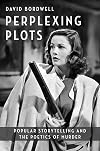
Movie-goers may enjoy sitting down with David Bordwell’s recent book, Perplexing Plots: Popular Storytelling and the Poetics of Murder(Columbia University Press, 2023). Similarly, devotees of the British Libraries’ Crime Classics series are likely to find Perplexing Plots a fun read. Just how might the structure of Anthony Berkeley’s The Poisoned Chocolates Case be relevant to modern movie-making?
A quick tour of the book’s index indicates an exciting scope of discussion. Yes, there show more are the standard “brand names” of 100 years of detective fiction – Christie, Chandler, Highsmith, Hammett, etc. – but there are also less well-known creators, such as Barbara Meredith, Richard Hull, and Frances Iles. The same is true of the films mentioned. Bordwell opens with a quick analysis of Quentin Tarantino’s Pulp Fiction, but also discusses directors Alfred Hitchcock and Christopher Nolan. The crossover between modern crime fiction and movie-making is analyzed by a thorough discussion of Gillian Flynn’s best-selling Gone Girl, film and novel.
There are brief obligatory references to film works by Jean Cocteau and Orson Welles, but Bordwell is primarily interested in how creators deliver meaning in the context of popular culture – think multiplex rather than art house. He monitors how creators convey the passage or shift of time, play with points of view,and juxtapose narrative blocks while delivering an immersive experience. Bordwell writes self-deprecatingly that there will be those who find his examination of narrative craftsmanship “plodding” but his prose is entirely accessible to a general readership.
This is one that is highly recommended. show less
A quick tour of the book’s index indicates an exciting scope of discussion. Yes, there show more are the standard “brand names” of 100 years of detective fiction – Christie, Chandler, Highsmith, Hammett, etc. – but there are also less well-known creators, such as Barbara Meredith, Richard Hull, and Frances Iles. The same is true of the films mentioned. Bordwell opens with a quick analysis of Quentin Tarantino’s Pulp Fiction, but also discusses directors Alfred Hitchcock and Christopher Nolan. The crossover between modern crime fiction and movie-making is analyzed by a thorough discussion of Gillian Flynn’s best-selling Gone Girl, film and novel.
There are brief obligatory references to film works by Jean Cocteau and Orson Welles, but Bordwell is primarily interested in how creators deliver meaning in the context of popular culture – think multiplex rather than art house. He monitors how creators convey the passage or shift of time, play with points of view,and juxtapose narrative blocks while delivering an immersive experience. Bordwell writes self-deprecatingly that there will be those who find his examination of narrative craftsmanship “plodding” but his prose is entirely accessible to a general readership.
This is one that is highly recommended. show less
I first read this book in a much earlier edition, but when I learned that Bordwell died this year, I thought it was time to have another look.
The enlightening discussion of the new tools in the cinematographer’s bag was new since I last read it. I was surprised to learn that film itself still has its uses. Evidently, images involving billions of light-sensitive molecules have not been totally displaced by images made of millions of pixels. The discussion of the CGI techniques used in show more Gravity was especially helpful.
I also enjoyed the many trips to Bordwell’s blog, which the book encouraged. I do wish, though, that the blog included more links to film clips.
Some things have stayed the same: an insightful, detailed critique of Citizen Kane and an organizational structure that makes it problematic for someone trying to organize a course around it. show less
The enlightening discussion of the new tools in the cinematographer’s bag was new since I last read it. I was surprised to learn that film itself still has its uses. Evidently, images involving billions of light-sensitive molecules have not been totally displaced by images made of millions of pixels. The discussion of the CGI techniques used in show more Gravity was especially helpful.
I also enjoyed the many trips to Bordwell’s blog, which the book encouraged. I do wish, though, that the blog included more links to film clips.
Some things have stayed the same: an insightful, detailed critique of Citizen Kane and an organizational structure that makes it problematic for someone trying to organize a course around it. show less

Have you ever wanted a very concise introduction to film, as a whole? Well, congratulations, you and I have something in common. What you may not have in common with me, though, is ownership of a book entitled "Film Art: An Introduction." My copy is the seventh edition. It was published in 2003. Since then, a lot of great films have come out, and even if there's an eighth, ninth, or tenth edition, it will still be behind the times with respect to recent films. But after reading this book (in show more whatever recent edition you may procure) and the included Film Viewers Guide (also by Bordwell. See my library for more info), you will be ready to handle the onslaught of new films, and be able to explain to your friends, hopefully in terms they understand, what redeeming qualities that film had (you MUST start using the word "film" to describe what you once called a "movie." I mean, do you call them "talkies" or "colors"? Why still use "movie", unless you're used to just watching La Jetee?)
This book gives an overview of film in its entirety, covering things like the development of the film camera (at least, nontechnical aspects of it that non-engineers and optics people can understand), the film projector, as well as the film development process, pre-production, production, post-production, etc.
You will be amazed at how much stuff there is to know about films, unless you've read this book already, then you know what I mean, right!?
This book, while not meant for casual lazy day lap reading (it's a wobbly sort of book that sits better on a desk and is read best one chapter at a time over a longer time than most books), is a dense work that will leave you spotting more and more things in films, annoying your friends and family more and more as they watch films with you. You'll find your taste in films changing, and since you've alienated all your friends and family, you'll find yourself at art house theaters (though they may call themselves "theatres"), watching movies by yourself, with all the other people there who too have alienated themselves from their friends and family. You could try to make friends with them, but they're just as annoying as you.
Be warned, though, that if you are going to read this book, you may want to see the major films they discuss (at least Citizen Kane) BEFORE reading it, as it's one big spoiler for every film ever (not really, but it goes under the assumption that if you're reading it, you've either seen the films, or really don't care for the surprise ending in which you find out that Rosebud was actually a mystical dragon that Charles Foster Kane used to hang out with along the beachfront in his boyhood days, or whatever it was that Rosebud actually was).
Nevertheless, if you're like me (and if you've gotten this far, you at least LIKE me, or my review, which is a part of me, as I wrote it), you have this voracious appetite for film and books (and some music, but not as much), then this book ABOUT film will be of great interest to you.
If you hate film, or hate reading (then goodness, why are you reading a BOOK review?), then you may want to avoid this book, as it's a lot of work, and will just make you more annoying. show less
This book gives an overview of film in its entirety, covering things like the development of the film camera (at least, nontechnical aspects of it that non-engineers and optics people can understand), the film projector, as well as the film development process, pre-production, production, post-production, etc.
You will be amazed at how much stuff there is to know about films, unless you've read this book already, then you know what I mean, right!?
This book, while not meant for casual lazy day lap reading (it's a wobbly sort of book that sits better on a desk and is read best one chapter at a time over a longer time than most books), is a dense work that will leave you spotting more and more things in films, annoying your friends and family more and more as they watch films with you. You'll find your taste in films changing, and since you've alienated all your friends and family, you'll find yourself at art house theaters (though they may call themselves "theatres"), watching movies by yourself, with all the other people there who too have alienated themselves from their friends and family. You could try to make friends with them, but they're just as annoying as you.
Be warned, though, that if you are going to read this book, you may want to see the major films they discuss (at least Citizen Kane) BEFORE reading it, as it's one big spoiler for every film ever (not really, but it goes under the assumption that if you're reading it, you've either seen the films, or really don't care for the surprise ending in which you find out that Rosebud was actually a mystical dragon that Charles Foster Kane used to hang out with along the beachfront in his boyhood days, or whatever it was that Rosebud actually was).
Nevertheless, if you're like me (and if you've gotten this far, you at least LIKE me, or my review, which is a part of me, as I wrote it), you have this voracious appetite for film and books (and some music, but not as much), then this book ABOUT film will be of great interest to you.
If you hate film, or hate reading (then goodness, why are you reading a BOOK review?), then you may want to avoid this book, as it's a lot of work, and will just make you more annoying. show less
Lists
Awards


You May Also Like


Associated Authors
Statistics
- Works
- 38
- Also by
- 4
- Members
- 3,170
- Popularity
- #8,055
- Rating
- 3.9
- Reviews
- 14
- ISBNs
- 184
- Languages
- 12
- Favorited
- 4
