
Madeleine Ker
Author of The Designer
About the Author
Disambiguation Notice:
Note: the author URL is: http://www.librarything.com/author/kermadeleine therefore the author name is Madeleine Ker.
Marius Gabriel writes under his real name, as well as romance novels under the pseudonym Madeleine Ker
Series
Works by Madeleine Ker
Romance Treasury: The Trodden Paths / Voyage of the Mistral / Innocent Abroad (1989) — Contributor — 3 copies
Savnet i mitt hjerte 1 copy
COM AMOR E ODIO 1 copy
Romance Treasury: A Girl Called Andy / The Street of the Fountain / A Dangerous Man (1990) — Contributor — 1 copy
Nacida del mar 1 copy
Associated Works
Tagged
Common Knowledge
- Legal name
- Cipolla, Marius Gabriel
- Other names
- Gabriel, Marius
Gabriel, Mary - Birthdate
- 1954-11-13
- Gender
- male
- Education
- Newcastle University, England
- Occupations
- Shakespearean scholar
novelist
musician - Short biography
- Marius Gabriel has written four mystery best-sellers and two historical novels. He has also written and illustrated children's books.
- Nationality
- UK
- Birthplace
- Mafeking, South Africa
- Places of residence
- South Africa (birth)
England, UK
Spain
Lincolnshire, England, UK - Disambiguation notice
- Note: the author URL is: http://www.librarything.com/author/ke... therefore the author name is Madeleine Ker.
Marius Gabriel writes under his real name, as well as romance novels under the pseudonym Madeleine Ker - Associated Place (for map)
- Lincolnshire, England, UK
Members
Reviews

This is part of the books I inherited from my grandmother after she died. As a teen she would lend me volumes of Harlequin novels--from the 70's/80's/90's--because they interested me. I'll admit something off the top, I loved this book. I mean I loved it with a pretty fierce passion. I must have read it at least a dozen times between the ages of 13 and 16. And that's even with the almost not quite forced consent love scene that nearly happens.
I think what grabbed me as a young teen was the show more fact that Sophie remade herself (or rather unmade what she had become for a role in a TV show) and hey it grabbed the attention of the guy she was pining for. At the time I read this originally that was my dream--to suddenly flourish and the guy I had been nursing a crush on to notice me and be like 'Where have you been?' and I'd laugh and say 'right under your nose' with a dramatic kiss. So yeah I may have projected just a little.
On a re-read as an adult (I haven't touched this book in gosh about 7 years? maybe more) I realized that they both need a LOT of serious therapy. I mean it. Sophie needs help because she let something get to her so badly that a year later she decides to get revenge on the man by getting him sexually frustrated. Kyle needs help because he then wants revenge for her revenge and all buts tells Sophie he's seducing her (younger) cousin. Meanwhile they're both so hung up on each other that they can't eat or sleep or even hold a conversation properly.
Still I admire Ker in her ability to still make me want to let them get together. They deserve each other, though I find it...unrealistic that Sophie would give up everything she worked for just because she suddenly has Kyle. I mean really? But that seems to be really popular in Harlequin novels of this era. show less
I think what grabbed me as a young teen was the show more fact that Sophie remade herself (or rather unmade what she had become for a role in a TV show) and hey it grabbed the attention of the guy she was pining for. At the time I read this originally that was my dream--to suddenly flourish and the guy I had been nursing a crush on to notice me and be like 'Where have you been?' and I'd laugh and say 'right under your nose' with a dramatic kiss. So yeah I may have projected just a little.
On a re-read as an adult (I haven't touched this book in gosh about 7 years? maybe more) I realized that they both need a LOT of serious therapy. I mean it. Sophie needs help because she let something get to her so badly that a year later she decides to get revenge on the man by getting him sexually frustrated. Kyle needs help because he then wants revenge for her revenge and all buts tells Sophie he's seducing her (younger) cousin. Meanwhile they're both so hung up on each other that they can't eat or sleep or even hold a conversation properly.
Still I admire Ker in her ability to still make me want to let them get together. They deserve each other, though I find it...unrealistic that Sophie would give up everything she worked for just because she suddenly has Kyle. I mean really? But that seems to be really popular in Harlequin novels of this era. show less

I will say this about this book, thank God for Coco Chanel and Arletty! Those two women made the book worthwhile reading. I found the beginning of the book very hard to get into thanks to Olivia Olsen, this young artist who has come to Paris to paint. She's just the kind of character I have a problem with, a young naive thing that on the very first pages of the book meets a young anarchist that will take her by storm. I was not amused, I found Olivia to be boring to be very frank. However, I show more kept on reading because as I wrote before there were two bright spots in this book Coco Chanel and the French actress Arletty. Personally, I wouldn't have minded that Olivia had been cut out of the picture and the book had been just about Coco Chanel and Arletty. Although I have to admit Olivia's role become more interesting after the Germans occupied France and she started to help the Resistance.
At first, I gave the book 4-stars, but after some consideration did I lower the rating to 3-stars. And, that's because I've read two books previously by Marius Gabriel that I really enjoyed, The Ocean Liner and The Designer. The Parisians can't really measure up to them. It's just not as interesting, unfortunately. Still, there are some really good parts in the book, well everything concerning Coco Chanel and Arletty. I felt that Olivia's personality was truly bland and I felt it the most when she interacted with them. She grew a bit better towards the end, but still, the stars of this book were Coco Chanel and Arletty!
I want to thank the publisher for providing me with a free copy through NetGalley for an honest review!> show less
At first, I gave the book 4-stars, but after some consideration did I lower the rating to 3-stars. And, that's because I've read two books previously by Marius Gabriel that I really enjoyed, The Ocean Liner and The Designer. The Parisians can't really measure up to them. It's just not as interesting, unfortunately. Still, there are some really good parts in the book, well everything concerning Coco Chanel and Arletty. I felt that Olivia's personality was truly bland and I felt it the most when she interacted with them. She grew a bit better towards the end, but still, the stars of this book were Coco Chanel and Arletty!
I want to thank the publisher for providing me with a free copy through NetGalley for an honest review!> show less
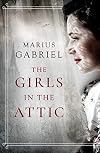
This tale, set in the fall of Germany in World War II, unpacks themes of love, loss, the Third Reich, the Holocaust, and the meaning of life. One of the main characters Max returns home after being injured fighting for the Nazis only to find his mother housing two Jewish girls in the attic. All the girls’ relatives have been murdered. Max’s values – formed by the Hitler Youth in rebellion against his Christian parents – are quickly called into question by his mother’s persevering show more faith and by the decency of the Jewish sisters Lola and Heidi.
Thus begins a road where this once-Nazi soldier becomes an opponent of the Third Reich. In the process, he falls in love with one of the Jewish sisters. They seek shelter together, and he defends her as Germany crumbles to Soviet, British, and American invaders. They lose everything, but seem to gain an inner sense of self-respect with each indignity. Survival amidst abiding love becomes the motif of their lives.
Gabriel integrates a wide scope of history into this text. He also alternates genres of fiction in rapid sequence. Just when it seems that the novel has settled into one archetype (like a romance or a war novel), the action alternates into something different. Clearly, Gabriel is a master of writing historical fiction. Not much stands to be improved, but were I to suggest something, it would be in pulling minor historical details into the narrative. I didn’t learn a whole lot I didn’t know about the time period, but I am already well-read in this era. I would have liked to have learned a few nuggets of new material that could drive the unfolding of plot.
Appropriate audiences include war-buffs as well as fans of romances. Be forewarned: Many dark and tragic losses occur in this book. Positive human themes shine through, but the end of Nazi Germany and the Soviet invasion of eastern Europe did not, to say the least, usher an immediate utopian era. There are periods of positivity, but those are bookended by sadness. The perseverance of love amidst sorrow abides as a theme. As previously mentioned, readers steeped in World War II history might find some of the historical details superficial.
Overall, Gabriel spins together an interesting tale full of intrigue. This page-turner should collect larger audiences of those who appreciate good stories. The book is skillfully told, and its fast-moving plot will not disappoint. Love ultimately triumphs despite all the dark that Nazis and Soviets can throw at it and despite how tragedy seems to ineluctably follow moments of human warmth. In that respect, this story captures the essence of human life on earth and reminds readers of the inner strength that can be gained through suffering. show less
Thus begins a road where this once-Nazi soldier becomes an opponent of the Third Reich. In the process, he falls in love with one of the Jewish sisters. They seek shelter together, and he defends her as Germany crumbles to Soviet, British, and American invaders. They lose everything, but seem to gain an inner sense of self-respect with each indignity. Survival amidst abiding love becomes the motif of their lives.
Gabriel integrates a wide scope of history into this text. He also alternates genres of fiction in rapid sequence. Just when it seems that the novel has settled into one archetype (like a romance or a war novel), the action alternates into something different. Clearly, Gabriel is a master of writing historical fiction. Not much stands to be improved, but were I to suggest something, it would be in pulling minor historical details into the narrative. I didn’t learn a whole lot I didn’t know about the time period, but I am already well-read in this era. I would have liked to have learned a few nuggets of new material that could drive the unfolding of plot.
Appropriate audiences include war-buffs as well as fans of romances. Be forewarned: Many dark and tragic losses occur in this book. Positive human themes shine through, but the end of Nazi Germany and the Soviet invasion of eastern Europe did not, to say the least, usher an immediate utopian era. There are periods of positivity, but those are bookended by sadness. The perseverance of love amidst sorrow abides as a theme. As previously mentioned, readers steeped in World War II history might find some of the historical details superficial.
Overall, Gabriel spins together an interesting tale full of intrigue. This page-turner should collect larger audiences of those who appreciate good stories. The book is skillfully told, and its fast-moving plot will not disappoint. Love ultimately triumphs despite all the dark that Nazis and Soviets can throw at it and despite how tragedy seems to ineluctably follow moments of human warmth. In that respect, this story captures the essence of human life on earth and reminds readers of the inner strength that can be gained through suffering. show less

Having arrived in Paris with her husband Amory shortly following the city's liberation during World War II, Copper finds herself aghast at the horrors still raging in the city while simultaneously captivated by the people she's become acquainted with, geniuses and eccentrics alike, while sampling its art and fashion circles. Despite her marriage beginning to disintegrate, Copper snatches a gift opportunity to begin work as a journalist, reporting to American readers on the present state of show more affairs in Paris and the ways in which the population is beginning to reclaim its pride. One of her new friends is a talented fashion visionary who lacks the confidence and temerity to strike out on his own: Christian Dior.
I picked up this title solely because of the author. I've never read anything as unforgettable as Gabriel's The Original Sin, and relish the rare opportunity to read another of his works. Although I usually shy away from the topic of WWII when reading for pleasure, I found The Designer sweetly charming, and the subplot involving Dior touching and illuminating. show less
I picked up this title solely because of the author. I've never read anything as unforgettable as Gabriel's The Original Sin, and relish the rare opportunity to read another of his works. Although I usually shy away from the topic of WWII when reading for pleasure, I found The Designer sweetly charming, and the subplot involving Dior touching and illuminating. show less
Awards

You May Also Like


Associated Authors
Statistics
- Works
- 65
- Also by
- 2
- Members
- 1,150
- Popularity
- #22,331
- Rating
- 3.6
- Reviews
- 51
- ISBNs
- 256
- Languages
- 13
- Favorited
- 3