
Ella Maillart (1903–1997)
Author of The Cruel Way
About the Author
Ella K. Maillart (1903-97) was a Swiss journalist, photographer, and adventurer. She is the author of Gypsy Afloat, The Forbidden Journey, Turkestan Solo, and many other works published in English, French, and German.
Works by Ella Maillart
Turkestan Solo: A Journey Through Central Asia (Equestrian Travel Classics) (1985) 112 copies, 3 reviews
Associated Works
Tagged
Common Knowledge
- Other names
- Maillart, Kini
- Birthdate
- 1903-02-20
- Date of death
- 1997-03-27
- Gender
- female
- Occupations
- travel writer
photographer
journalist
Olympic athlete - Organizations
- Le Petit Parisien
- Awards and honors
- Sir Percy Sykes Memorial Medal (1955)
- Relationships
- Fleming, Peter (travel companion)
Schwarzenbach, Annemarie (travel companion) - Short biography
- Ella Maillart was born to a wealthy family in Geneva, Switzerland. Her father was Swiss and her mother Danish. As a child, she loved reading maps and adventure books and decided to become an athlete. At age of 20, she sailed with a friend from Cannes to Corsica, then to Sardinia, Sicily and Greece. In 1924, she became the only female competitor in the Summer Olympics single-handed yacht sailing event; she finished ninth out of a field of 17. At this time, she was also the captain of the Swiss women's field hockey team and a member of its international ski team. From the 1930s, she spent years exploring the Muslim majority republics of the USSR, as well as other parts of Asia. She published a series of books such as Turkestan Solo: A Journey Through Central Asia (1932) that, along with her photographs, are today considered valuable historical testimonies. Her early books were written in French but later she began to write in English. In 1934, the French daily Le Petit Parisien sent her to Manchuria to report on the situation under the Japanese occupation. There she met Peter Fleming, a writer and correspondent for The Times, with whom she would team up to cross China from Peking to Srinagar (3,500 miles), much of the route being through hostile desert regions and steep Himalayan passes. The journey started in February 1935 and took seven months to complete, involving travel by train, on lorries, on foot, horse, and camel. Maillart later recorded this trek in her book Forbidden Journey, while Peter Fleming's parallel account is found in his News from Tartary. In 1937, Maillart returned to Asia for Le Petit Parisien to report on Afghanistan, Iran and Turkey. In 1939, she took a trip from Geneva to Kabul by car, in the company of the Swiss writer Annemarie Schwarzenbach. Maillart's book about this experience, which was cut short by the outbreak of World War II, was called The Cruel Way: Switzerland to Afghanistan in a Ford.
She spent the war years in the south of India, learning from different teachers about Hindu philosophy. On her return to Switzerland in 1945, she continued to ski until late in life, and last traveled to Tibet in 1986.
She also made documentary films on Afghanistan, Nepal, and South India that today are part of the collection of the Swiss Film Archive in Lausanne, Switzerland. - Nationality
- Switzerland
- Birthplace
- Geneva, Geneva, Switzerland
- Places of residence
- India
Geneva, Switzerland
Chandolin, Switzerland - Place of death
- Chandolin, Switzerland
- Map Location
- Switzerland
Members
Reviews
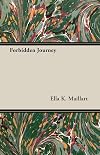
"Night was falling when the vast swarm of lights that was Paris appeared in the north....
Suddenly I understood something. I felt now, with all the strength of my senses and intelligence, that Paris, France, Europe, the White Race, were nothing.... The something that counted in and against all particularisms was the magnificent scheme of things that we call the world."
Forbidden Journey, Maillart's account of the trip that her travel companion Peter Fleming described in his book News from show more Tartary, was a bit of a revelation. I learned so much from this book - not just about the journey, China and the cultures of the Chinese in the 1930s, but also about perspectives and how they change - or stay the same over time.
Of course, Forbidden Journey describes the same trip from Beijing across China and into India via Kashmir that Fleming's more widely known account does. Like Fleming's book Forbidden Journey is the record of accomplishment of a trip that very few adventurers have managed to describe to a Western readership since the days of Marco Polo.
When Maillart set out on her trip in 1935, she soon had to abandon her plans of travelling alone. Because of the political upheaval in China at the time - Japanese invasion of Manchuria, the rise of the Communist army - roads were blocked and warrants issued for anyone who did not have the right papers, the right connections, or the right demeanor. It was at this point that Maillart joined forces with Peter Fleming, older brother of Ian and political correspondent for The Times, who had also planned to follow the Silk Road across China - by himself.
Neither of them wanted to join forces, but the alternative for both would have been to abandon the trip. Together, they could produce enough languages, life skills, money, and passports/visa to at least leave Beijing - and try and by-pass the official control posts.
Forbidden Journey may not be the most elegantly written one of the two books. Peter Fleming was evidently a more skilled writer than Maillart, but Maillart was the more diligent observer. She was the one that notices things - people's dress, people's demeanour, their circumstances. Maillart picked up on nuances of the everyday life that she and Fleming encountered and made time in her book to record them, sometimes comment, rarely judge. And this is the part that makes her book - and by reflection Maillart as a person - special: Maillart did not try to compare the things she sees with other things known to her. By that, she did not try to validate her observations and experiences against a Western belief system - at least not often. She rather took in everything she saw and tried to understand it against the background she encountered it in.
To my recollection, the only exception to this, where she did comment on something she saw is when she encountered Chinese women who had their feet bound. Maillart was upset by this and mentioned it a few times. Foot binding was officially banned in 1912 but was still common practice in rural areas into the 1930. But then, was Maillart moved by this because she thought it was wrong by European standards or was she upset to see the practice because there had been criticism of the practice throughout China since at least the 1870s? Having read Maillart's other books, I have no doubt that her concern was caused by her humanist approach to whatever people she met.
Anyway, I could go on fan-girling about Maillart, who was an extraordinary person, but I shall leave her biography to speak for her.
What did impress me at the end of the book, both books actually, were the different outlooks both Maillart and Fleming took away from the trip:
On arriving in India, both weary travellers, sun tanned, clad in what can only be described as rags after months of travail by foot, camel, horseback, they checked into a hotel and went to dinner. Both had hoped for months for this very moment that they could enjoy a meal prepared by a proper chef and a drink, but the enjoyment was somewhat spoilt by the reactions from the other hotel guests.
Soon after, Fleming returned to the UK by the quickest route possible to rejoin society. Maillart on the other hand, though returning to Europe, would make it her life's ambition to never again be part of an exclusive society. She did pretty well on that, too. show less
Suddenly I understood something. I felt now, with all the strength of my senses and intelligence, that Paris, France, Europe, the White Race, were nothing.... The something that counted in and against all particularisms was the magnificent scheme of things that we call the world."
Forbidden Journey, Maillart's account of the trip that her travel companion Peter Fleming described in his book News from show more Tartary, was a bit of a revelation. I learned so much from this book - not just about the journey, China and the cultures of the Chinese in the 1930s, but also about perspectives and how they change - or stay the same over time.
Of course, Forbidden Journey describes the same trip from Beijing across China and into India via Kashmir that Fleming's more widely known account does. Like Fleming's book Forbidden Journey is the record of accomplishment of a trip that very few adventurers have managed to describe to a Western readership since the days of Marco Polo.
When Maillart set out on her trip in 1935, she soon had to abandon her plans of travelling alone. Because of the political upheaval in China at the time - Japanese invasion of Manchuria, the rise of the Communist army - roads were blocked and warrants issued for anyone who did not have the right papers, the right connections, or the right demeanor. It was at this point that Maillart joined forces with Peter Fleming, older brother of Ian and political correspondent for The Times, who had also planned to follow the Silk Road across China - by himself.
Neither of them wanted to join forces, but the alternative for both would have been to abandon the trip. Together, they could produce enough languages, life skills, money, and passports/visa to at least leave Beijing - and try and by-pass the official control posts.
Forbidden Journey may not be the most elegantly written one of the two books. Peter Fleming was evidently a more skilled writer than Maillart, but Maillart was the more diligent observer. She was the one that notices things - people's dress, people's demeanour, their circumstances. Maillart picked up on nuances of the everyday life that she and Fleming encountered and made time in her book to record them, sometimes comment, rarely judge. And this is the part that makes her book - and by reflection Maillart as a person - special: Maillart did not try to compare the things she sees with other things known to her. By that, she did not try to validate her observations and experiences against a Western belief system - at least not often. She rather took in everything she saw and tried to understand it against the background she encountered it in.
To my recollection, the only exception to this, where she did comment on something she saw is when she encountered Chinese women who had their feet bound. Maillart was upset by this and mentioned it a few times. Foot binding was officially banned in 1912 but was still common practice in rural areas into the 1930. But then, was Maillart moved by this because she thought it was wrong by European standards or was she upset to see the practice because there had been criticism of the practice throughout China since at least the 1870s? Having read Maillart's other books, I have no doubt that her concern was caused by her humanist approach to whatever people she met.
Anyway, I could go on fan-girling about Maillart, who was an extraordinary person, but I shall leave her biography to speak for her.
What did impress me at the end of the book, both books actually, were the different outlooks both Maillart and Fleming took away from the trip:
On arriving in India, both weary travellers, sun tanned, clad in what can only be described as rags after months of travail by foot, camel, horseback, they checked into a hotel and went to dinner. Both had hoped for months for this very moment that they could enjoy a meal prepared by a proper chef and a drink, but the enjoyment was somewhat spoilt by the reactions from the other hotel guests.
Soon after, Fleming returned to the UK by the quickest route possible to rejoin society. Maillart on the other hand, though returning to Europe, would make it her life's ambition to never again be part of an exclusive society. She did pretty well on that, too. show less
Entertaining account of long distance travel, in remote areas of China, amidst the chaos and dangers of a civil war. Ella Maillart, a redoubtable person, writes with charm, warmth and insight. She travelled with Peter Fleming, a correspondent for The Times, who wrote his own book about their adventures - whom she clearly respected. Yes, they argued fiercely, as two strong, independent characters would, but there was friendship too, which lasted until the end of their days.
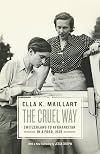
This a combined review of [b:All the Roads Are Open: The Afghan Journey|12504523|All the Roads Are Open The Afghan Journey|Annemarie Schwarzenbach|https://d.gr-assets.com/books/1342213466s/12504523.jpg|13764265] and [b:The Cruel Way: Switzerland to Afghanistan in a Ford, 1939|19322066|The Cruel Way Switzerland to Afghanistan in a Ford, 1939|Ella K. Maillart|https://d.gr-assets.com/books/1386635505s/19322066.jpg|27375115]. Quotes are taken from The Cruel Way.
"The gist of our dialogue had been show more that if she was mad I was mad too: I was unwilling to let myself be strangled by that prudent life that everybody advocated. I also was convinced that— whether we succeed or not— it is our job to search for the significance of life."
The Cruel Way and Alle Wege Sind Offen (published in English as All the Roads are Open) are two accounts of an incredible road trip. In 1939, Annemarie Schwarzenbach and Ella Maillart - both women were Swiss journalists and experienced travelers - set off from their native Switzerland on the eve of WWII to escape the madness of Europe and drive (yes, drive) across Europe, Turkey, Persia (Iran) to Afghanistan (and India if they can reach it).
Though, the wish to escape was probably more AS' motive. EM quite openly discusses that her motive was to help her friend (AS) to shake a morphine addiction and to recuperate from bouts of depression - descriptions of both are described quite vividly and (as far as I can tell) earnestly in The Cruel Way.
Maillart's book (The Cruel Way) was published in 1947 (five years after AS' death), and on request of AS' family, Maillart disguised AS as the character Christina.
Schwarzenbach's account Alle Wege Sind Offen was published in 2008, though some of her articles were published during the trip.
I originally started reading Alle Wege sind Offen - a journal of her third and last journey from Switzerland to Afghanistan. When I reached the part where she non-nonchalantly mentions that she drove the car into a ditch, I was curious to see what impact this had on her travels and most of all how her travel companion, Ella Maillart, experienced the accident - and whether it would be mentioned in Maillart's book.
It made sense to read both in parallel. Reading both books in parallel was like being told the story in 3D.
It was also quite gut-wrenching. AS' writing is lyrical and reflects her anxieties and weariness. I'm not sure this is deliberate. It feels more like her writing is inevitably the only true way she can express herself. EM hints at this in her book, too.
"She was harassed by her fight with the doctors: they would not understand that writing was life and food to her, that the regenerative cure of enforced rest applied to dyspeptics and hysterics could not suit her."
EM's writing is a contrast to that of AS - no aloofness to be found here. She's fairly grounded and practical. Because of that, more of the actual circumstances of the trip are revealed.
"Our descent was impressive. The track had been hacked out half -way down a sandy slope. Christina drove, sitting towards the mountain— which was lucky: from my seat it looked as if our off-side wheels were in the void. At some places the crumbling soil was stiffened with a row of faggots. While we skidded round sharp curves, the glistening shale reminded me of the icy track the ski-racers had rushed down six months ago at Zakopane. I said nothing: to this day I am sure that Christina never guessed how soft that ledge was."
Having read the two accounts and looking at how not only the lives of AS and EM but how the world they describe would change shortly after their accounts end, makes for tough reading.
“I am thirty. It is the last chance to mend my ways, to take myself in hand. This journey is not going to be a sky -larking escapade as if we were twenty— and that is impossible, with the fear of Hitler increasing day by day around us. This journey must be a means towards our end. We can help each other to become conscious, responsible persons. My blind way of life has grown unbearable. What is the reason, the meaning of the chaos that undermines people and nations? And there must be something that I am to do with my life, there must be some purpose for which I could gladly die or live! Kini . . . how do you live?”
The reward for having read both books is that I get a better understanding of the world they traveled, a world that would disappear shortly after the trip. That I learned much about the attitudes of travelers and people they meet, attitudes sometimes so liberal and forward thinking that it is surprising and terrifying to know that only a few decades later it would seem that the countries they have traveled in had always been closed to visitors. show less
"The gist of our dialogue had been show more that if she was mad I was mad too: I was unwilling to let myself be strangled by that prudent life that everybody advocated. I also was convinced that— whether we succeed or not— it is our job to search for the significance of life."
The Cruel Way and Alle Wege Sind Offen (published in English as All the Roads are Open) are two accounts of an incredible road trip. In 1939, Annemarie Schwarzenbach and Ella Maillart - both women were Swiss journalists and experienced travelers - set off from their native Switzerland on the eve of WWII to escape the madness of Europe and drive (yes, drive) across Europe, Turkey, Persia (Iran) to Afghanistan (and India if they can reach it).
Though, the wish to escape was probably more AS' motive. EM quite openly discusses that her motive was to help her friend (AS) to shake a morphine addiction and to recuperate from bouts of depression - descriptions of both are described quite vividly and (as far as I can tell) earnestly in The Cruel Way.
Maillart's book (The Cruel Way) was published in 1947 (five years after AS' death), and on request of AS' family, Maillart disguised AS as the character Christina.
Schwarzenbach's account Alle Wege Sind Offen was published in 2008, though some of her articles were published during the trip.
I originally started reading Alle Wege sind Offen - a journal of her third and last journey from Switzerland to Afghanistan. When I reached the part where she non-nonchalantly mentions that she drove the car into a ditch, I was curious to see what impact this had on her travels and most of all how her travel companion, Ella Maillart, experienced the accident - and whether it would be mentioned in Maillart's book.
It made sense to read both in parallel. Reading both books in parallel was like being told the story in 3D.
It was also quite gut-wrenching. AS' writing is lyrical and reflects her anxieties and weariness. I'm not sure this is deliberate. It feels more like her writing is inevitably the only true way she can express herself. EM hints at this in her book, too.
"She was harassed by her fight with the doctors: they would not understand that writing was life and food to her, that the regenerative cure of enforced rest applied to dyspeptics and hysterics could not suit her."
EM's writing is a contrast to that of AS - no aloofness to be found here. She's fairly grounded and practical. Because of that, more of the actual circumstances of the trip are revealed.
"Our descent was impressive. The track had been hacked out half -way down a sandy slope. Christina drove, sitting towards the mountain— which was lucky: from my seat it looked as if our off-side wheels were in the void. At some places the crumbling soil was stiffened with a row of faggots. While we skidded round sharp curves, the glistening shale reminded me of the icy track the ski-racers had rushed down six months ago at Zakopane. I said nothing: to this day I am sure that Christina never guessed how soft that ledge was."
Having read the two accounts and looking at how not only the lives of AS and EM but how the world they describe would change shortly after their accounts end, makes for tough reading.
“I am thirty. It is the last chance to mend my ways, to take myself in hand. This journey is not going to be a sky -larking escapade as if we were twenty— and that is impossible, with the fear of Hitler increasing day by day around us. This journey must be a means towards our end. We can help each other to become conscious, responsible persons. My blind way of life has grown unbearable. What is the reason, the meaning of the chaos that undermines people and nations? And there must be something that I am to do with my life, there must be some purpose for which I could gladly die or live! Kini . . . how do you live?”
The reward for having read both books is that I get a better understanding of the world they traveled, a world that would disappear shortly after the trip. That I learned much about the attitudes of travelers and people they meet, attitudes sometimes so liberal and forward thinking that it is surprising and terrifying to know that only a few decades later it would seem that the countries they have traveled in had always been closed to visitors. show less
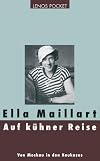
This is another book by Ella Maillart about her travels to the far flung places of the earth whose names sound like she made them up for a childrens bedtime story.
I read Auf Kuehner Reise (tr. "Daring Travels" - it may also have been published as "Ausser Kurs", i.e. "Off Course"), which was originally published in French as Parmi la jeunesse russe (tr. "Amongst Russian Youth"), in the German translation. Unfortunately, this is another book that has never been translated widely (but, IMO, show more really should have been). There are probably several reasons for the lack of interest:
First off, this book is basically Maillart's first book. She always travelled and was fond of adventure but it was not until her return from Russia in 1930 that she was persuaded to write about her experiences.
Second, the trip and the book were really quite audacious: As a Swiss national, Maillart had difficulties obtaining a visa for the trip. Switzerland had not recognised the Soviet Union politically and relations between western states and the Stalinist country were rather tense.
When she finally does get permission to travel in the SU, she is under no illusion that what ever she writes may endanger her trip and also the people supporting her whilst travelling. There is a scene in the book where she alludes to being followed by a member of state security. She quickly dismisses the scene but I could not help wondering how closely she had been watched or had had similar encounters that have not made it into her book.
She also thinly disguises the identity of the people she meets. For example, Moscow in 1930 was severely lacking accommodation - Maillart could not afford to stay in hotels (and at any rate would have preferred to stay with locals) and finds lodgings with Countess Tolstoy (daughter-in-law of Leo), who is a friend of a friend. She never mentions her outright, tho. And only refers to her as Madam T. or Frau K. (depending on which edition you read). So, she is quite aware from the outset that if she chose to write anything political, it might have consequences for herself and the people around her.
As a result she wrote down her observations with little criticism of what she saw and little judgement. She does compare some of the ways and attitude she observes to her experiences in Germany or Switzerland but, generally leaves out any in depth valuation of which one is better etc.
The non-political tone of the book led to a rejection by western readers when the book was published in 1932. I assume that readers expected to have their the rumors and stories about the grim realities of Stalinist Russia confirmed and were disappointed by a book that spent a lot of time talking about the attitudes of the state towards building a future by providing education and opportunities for its youth. What Maillart also describes - but does not spell out - is how the Stalinist regime colonizes the country and bit by bit eradicates differences between its people and destroys true individuality. Again, she does not analyse this within this book but it is present in her observations. (She is more vocal about it in her later book The Cruel Way.)
What was also fascinating about the way Maillart wrote this book was the way she used her observations to tell about the ideas she favoured, like the emergence of women into the work place and by extension a more equal society or the promotion of education for people of all walks of life.
Maillart was not naive enough to believe or promote the communist idea in her book. Far from it. Communists do not get many favourable mentions in the book at all. She mostly focuses on the discussions she has with the young people that she travels with and the people she meets on the road. However, this being her first book, I guess people would not have grasped that Maillart herself was the most staunch supporters of freedom and individuality.
As for the trip itself, the book is divided in to two parts: Maillart starts off with a short stay in Moscow - which made for fascinating reading because there are so few first-hand accounts that I have read of westerners travelling there during Stalin's reign.
The second part of the book, describes her trip from Moscow to the Caucasus - more specifically Svanetia, which I had not heard of and which really does sound like a fairy tale place.
Svanetia, in northern Georgia, at the time of her trip (1930) was a very remote place. Not only is it surrounded by the highest mountains in Europe, but at the time, there were hardly any transportation links or any means of communication, or facilities which would have been commonplace in other parts of eastern Europe - such as plumbing, reliable water supply, not to mention electricity or heating systems - apparently some houses were still constructed without chimneys providing no ventilation for fires inside the house (and making heating them difficult).
It really must have been a fascinating experience.
By comparison, only 9 years later, Maillart would describe a trip across Persia and Afghanistan, which was made possible by the relative ease with which she and her companion were able to find food and lodgings and source parts and petrol for their car.
The trip in what is now Georgia was much less sophisticated.
She describes how people would watch a film at an improvised cinema, and believing it to be real, would check behind the screen to find the actors; how the radio was such a novelty still that people could not believe it was possible for it to transmit in real time; how people were only slowly adjusting to the change in times and customs.
For me the second part of the book was even more enjoyable than the first. For one it showed a part of the world at a time when no one else wrote about, at a time that must have been both wondrous and frightening at the same time.
At the same time, the book shows Maillart at a point, a seminal point, in her life where she makes a choice to abandon Europe to become a traveller. She shares some of her motivations in the book and we also get to see some of the guts it would take for her to make the decision as it is quite clear that she'd not choose (or have the means to choose) travelling in comfort.
But then, if she could hike across the Causcasus with a severe leg injury (a dog bit a chunk out of her) and no medical help, what else was there to stop her?
So, this was only the first of her many extraordinary adventures. show less
I read Auf Kuehner Reise (tr. "Daring Travels" - it may also have been published as "Ausser Kurs", i.e. "Off Course"), which was originally published in French as Parmi la jeunesse russe (tr. "Amongst Russian Youth"), in the German translation. Unfortunately, this is another book that has never been translated widely (but, IMO, show more really should have been). There are probably several reasons for the lack of interest:
First off, this book is basically Maillart's first book. She always travelled and was fond of adventure but it was not until her return from Russia in 1930 that she was persuaded to write about her experiences.
Second, the trip and the book were really quite audacious: As a Swiss national, Maillart had difficulties obtaining a visa for the trip. Switzerland had not recognised the Soviet Union politically and relations between western states and the Stalinist country were rather tense.
When she finally does get permission to travel in the SU, she is under no illusion that what ever she writes may endanger her trip and also the people supporting her whilst travelling. There is a scene in the book where she alludes to being followed by a member of state security. She quickly dismisses the scene but I could not help wondering how closely she had been watched or had had similar encounters that have not made it into her book.
She also thinly disguises the identity of the people she meets. For example, Moscow in 1930 was severely lacking accommodation - Maillart could not afford to stay in hotels (and at any rate would have preferred to stay with locals) and finds lodgings with Countess Tolstoy (daughter-in-law of Leo), who is a friend of a friend. She never mentions her outright, tho. And only refers to her as Madam T. or Frau K. (depending on which edition you read). So, she is quite aware from the outset that if she chose to write anything political, it might have consequences for herself and the people around her.
As a result she wrote down her observations with little criticism of what she saw and little judgement. She does compare some of the ways and attitude she observes to her experiences in Germany or Switzerland but, generally leaves out any in depth valuation of which one is better etc.
The non-political tone of the book led to a rejection by western readers when the book was published in 1932. I assume that readers expected to have their the rumors and stories about the grim realities of Stalinist Russia confirmed and were disappointed by a book that spent a lot of time talking about the attitudes of the state towards building a future by providing education and opportunities for its youth. What Maillart also describes - but does not spell out - is how the Stalinist regime colonizes the country and bit by bit eradicates differences between its people and destroys true individuality. Again, she does not analyse this within this book but it is present in her observations. (She is more vocal about it in her later book The Cruel Way.)
What was also fascinating about the way Maillart wrote this book was the way she used her observations to tell about the ideas she favoured, like the emergence of women into the work place and by extension a more equal society or the promotion of education for people of all walks of life.
Maillart was not naive enough to believe or promote the communist idea in her book. Far from it. Communists do not get many favourable mentions in the book at all. She mostly focuses on the discussions she has with the young people that she travels with and the people she meets on the road. However, this being her first book, I guess people would not have grasped that Maillart herself was the most staunch supporters of freedom and individuality.
As for the trip itself, the book is divided in to two parts: Maillart starts off with a short stay in Moscow - which made for fascinating reading because there are so few first-hand accounts that I have read of westerners travelling there during Stalin's reign.
The second part of the book, describes her trip from Moscow to the Caucasus - more specifically Svanetia, which I had not heard of and which really does sound like a fairy tale place.
Svanetia, in northern Georgia, at the time of her trip (1930) was a very remote place. Not only is it surrounded by the highest mountains in Europe, but at the time, there were hardly any transportation links or any means of communication, or facilities which would have been commonplace in other parts of eastern Europe - such as plumbing, reliable water supply, not to mention electricity or heating systems - apparently some houses were still constructed without chimneys providing no ventilation for fires inside the house (and making heating them difficult).
It really must have been a fascinating experience.
By comparison, only 9 years later, Maillart would describe a trip across Persia and Afghanistan, which was made possible by the relative ease with which she and her companion were able to find food and lodgings and source parts and petrol for their car.
The trip in what is now Georgia was much less sophisticated.
She describes how people would watch a film at an improvised cinema, and believing it to be real, would check behind the screen to find the actors; how the radio was such a novelty still that people could not believe it was possible for it to transmit in real time; how people were only slowly adjusting to the change in times and customs.
For me the second part of the book was even more enjoyable than the first. For one it showed a part of the world at a time when no one else wrote about, at a time that must have been both wondrous and frightening at the same time.
At the same time, the book shows Maillart at a point, a seminal point, in her life where she makes a choice to abandon Europe to become a traveller. She shares some of her motivations in the book and we also get to see some of the guts it would take for her to make the decision as it is quite clear that she'd not choose (or have the means to choose) travelling in comfort.
But then, if she could hike across the Causcasus with a severe leg injury (a dog bit a chunk out of her) and no medical help, what else was there to stop her?
So, this was only the first of her many extraordinary adventures. show less
Lists
Awards

You May Also Like


Associated Authors
Statistics
- Works
- 18
- Also by
- 1
- Members
- 690
- Popularity
- #36,665
- Rating
- 3.8
- Reviews
- 25
- ISBNs
- 91
- Languages
- 5
- Favorited
- 1

