
Peter Fleming (1) (1907–1971)
Author of News from Tartary
For other authors named Peter Fleming, see the disambiguation page.
About the Author
Image credit: Cropped scan of back cover of Penguin No.1184. Photo attributed to Lotte Meitner-Graf.
Works by Peter Fleming
The Dark Dominion: Eight Terrifying Tales of Vampires and Werewolves (1970) — Contributor — 16 copies, 2 reviews
The Kill 3 copies
Spectator's choice 1 copy
Associated Works
Noblesse Oblige: An Enquiry into the Identifiable Characteristics of the English Aristocracy (1956) — Contributor — 456 copies, 5 reviews
Tagged
Common Knowledge
- Legal name
- Fleming, Robert Peter
- Other names
- Moth
Scadavay
Apemantus
Strix - Birthdate
- 1907-05-31
- Date of death
- 1971-08-18
- Gender
- male
- Education
- Christ Church, Oxford
- Occupations
- adventurer
travel writer
journalist - Organizations
- Grenadier Guards (reserve officer)
- Awards and honors
- Officer of the Most Excellent Order of the British Empire (1945)
Deputy Lieutenant for Oxfordshire (1970)
Order of the Cloud and Banner with Special Rosette (1948) - Relationships
- Fleming, Ian (brother)
Maillart, Ella (travel companion)
Fleming, Kate (daughter, married Jo Grimond, Leader of the UK Liberal party)
Fleming, Ann (sister-in-law)
Johnson, Celia (wife)
Grimond, Laura (journalist) (show all 7)
Fleming, Fergus (nephew) - Short biography
- He travelled widely in far places;
Wrote, and was widely read.
Soldiered, saw some of danger's faces,
Came home to Nettlebed.
The squire lies here, his journeys ended -
Dust, and a name on a stone-
Content, amid the lands he tended,
To keep this rendevous alone.
(Epitaph on his tomb. written by him) - Cause of death
- heart attack
- Nationality
- UK
- Birthplace
- London, England, UK
- Places of residence
- London, England, UK
- Place of death
- Argyll, Scotland, UK
- Burial location
- St Bartholomews Church, Nettlebed, Oxfordshire, England, UK
- Associated Place (for map)
- England, UK
Members
Reviews

"Brazilian Adventure" by Peter Fleming is a riveting and humorous account of an expedition into the heart of the Brazilian jungle. Written with wit and a keen sense of adventure, Fleming chronicles his journey with a group of British explorers in search of Colonel Percy Fawcett, who disappeared while seeking the lost city of Z.
Fleming's writing is engaging and filled with dry British humor, making the narrative both entertaining and insightful. He skillfully blends vivid descriptions of the show more Amazon's treacherous terrain and exotic wildlife with amusing anecdotes about the eccentric characters and unpredictable events encountered along the way. The book captures the spirit of adventure and the challenges of exploration with a lighthearted yet respectful tone.
The strength of "Brazilian Adventure" lies in Fleming's ability to convey the excitement and unpredictability of the expedition. His observations are sharp, and his reflections on the nature of adventure and human folly add depth to the tale. Despite the serious nature of the quest, Fleming's humor and self-deprecating style make the journey enjoyable for readers. show less
Fleming's writing is engaging and filled with dry British humor, making the narrative both entertaining and insightful. He skillfully blends vivid descriptions of the show more Amazon's treacherous terrain and exotic wildlife with amusing anecdotes about the eccentric characters and unpredictable events encountered along the way. The book captures the spirit of adventure and the challenges of exploration with a lighthearted yet respectful tone.
The strength of "Brazilian Adventure" lies in Fleming's ability to convey the excitement and unpredictability of the expedition. His observations are sharp, and his reflections on the nature of adventure and human folly add depth to the tale. Despite the serious nature of the quest, Fleming's humor and self-deprecating style make the journey enjoyable for readers. show less
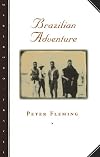
In 1932, Peter Fleming (brother of Ian Fleming of James Bond fame) joined an expedition to the interior of Brazil to search for explorer Percy Fawcett who had disappeared in 1925. Fleming writes of how he came to join the expedition, the journey from England to Brazil, the setbacks that delayed their departure (including a revolution), the boat journey on multiple rivers, his traveling companions, the indigenous peoples they encountered, the privations they endured, and the conflict that show more tore the group apart. I found it difficult to completely engage with Fleming’s narrative due to the racist and classist attitudes that surfaced from time to time. I wonder how much Fleming contributed to the interpersonal conflicts that arose in the course of the journey. He seems like a person who likes to call the shots. show less
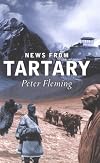
"Kini's acute sense of smell I have mentioned as a handicap in travel; but here it stood us in good stead. She went out to have a look at the surviving camels and caught a whiff of rotting flesh; it came from the Prime Minister's camel, originally christened The Pearl of the Tsaidam and now known as The Pearl for short. Kini brought him into camp and we took his packsaddle off; on the spine between the humps an ancient sore under the skin had reopened and was festering fast. We pegged his show more head down and with little help from the Turkis, who were hopeless with animals, Kini doctored it despite his bellows. It looked a terrible place, but she made such a good job of it that it healed completely within a few days."
Do not be led by the star rating. There is a reason for the three stars, but on no accounts do 3 stars mean that this book is not worth your time.
News from Tartary is a great book. Peter Fleming had a marvellous ability to write. This report of his travel from Beijing across China and into India via Kashmir is a fantastic account of what it was like for a European to set out on a trip that very few people had accomplished before and that few adventurers have managed to describe to a Western readership since the days of Marco Polo.
When Fleming set out on his trip in 1935, he soon had to abandon his plans of travelling alone. Because of the political upheaval in China at the time - Japanese invasion of Manchuria, the rise of the Communist army - roads were blocked and warrants issued for anyone who did not have the right papers, the right connections, or the right demeanor. It was at this point that Fleming joined forces with Ella ("Kini") Maillart, a Swiss traveller and writer, who had also planned to follow the Silk Road across China - by herself.
Neither of them wanted to join forces, but the alternative for both would have been to abandon the trip. Together, they could produce enough languages, life skills, money, and passports/visa to at least leave Beijing - and try and by-pass the official control posts. Maillart also wrote an account of this trip in her book Forbidden Journey , but unlike Fleming her outlook on the trip and the content of her observations are quite different.
When reading News from Tartary, I probably learned more about Fleming than about the people he meets and the countries he passes through. It is also good to remember that when Fleming set out on his trip, he worked as a political correspondent for The Times, and much of Fleming's interests in the book focus on the political and military situation in China. For example, Fleming goes into quite some detail about the political leaders he meets, and troop movements he observes. As it turns out, however, his enthusiasm for political analysis may not have made up for a lack of expertise or indeed a lack of understanding of Chinese culture and society.
And this is really the crux of my hesitation to rate this book any higher: Fleming tried hard to transcend the stifled English attitude and open up to experience this different world that he threw himself into, but he never really manages to fully do this. As a result, the book reads like a boy's own adventure story - which it is, of course - but which could have been so much more in that his preoccupation with the British perspective seems to have blinded him to the marvels and wonders of the people and landscape he took so much trouble to encounter. show less
Do not be led by the star rating. There is a reason for the three stars, but on no accounts do 3 stars mean that this book is not worth your time.
News from Tartary is a great book. Peter Fleming had a marvellous ability to write. This report of his travel from Beijing across China and into India via Kashmir is a fantastic account of what it was like for a European to set out on a trip that very few people had accomplished before and that few adventurers have managed to describe to a Western readership since the days of Marco Polo.
When Fleming set out on his trip in 1935, he soon had to abandon his plans of travelling alone. Because of the political upheaval in China at the time - Japanese invasion of Manchuria, the rise of the Communist army - roads were blocked and warrants issued for anyone who did not have the right papers, the right connections, or the right demeanor. It was at this point that Fleming joined forces with Ella ("Kini") Maillart, a Swiss traveller and writer, who had also planned to follow the Silk Road across China - by herself.
Neither of them wanted to join forces, but the alternative for both would have been to abandon the trip. Together, they could produce enough languages, life skills, money, and passports/visa to at least leave Beijing - and try and by-pass the official control posts. Maillart also wrote an account of this trip in her book Forbidden Journey , but unlike Fleming her outlook on the trip and the content of her observations are quite different.
When reading News from Tartary, I probably learned more about Fleming than about the people he meets and the countries he passes through. It is also good to remember that when Fleming set out on his trip, he worked as a political correspondent for The Times, and much of Fleming's interests in the book focus on the political and military situation in China. For example, Fleming goes into quite some detail about the political leaders he meets, and troop movements he observes. As it turns out, however, his enthusiasm for political analysis may not have made up for a lack of expertise or indeed a lack of understanding of Chinese culture and society.
And this is really the crux of my hesitation to rate this book any higher: Fleming tried hard to transcend the stifled English attitude and open up to experience this different world that he threw himself into, but he never really manages to fully do this. As a result, the book reads like a boy's own adventure story - which it is, of course - but which could have been so much more in that his preoccupation with the British perspective seems to have blinded him to the marvels and wonders of the people and landscape he took so much trouble to encounter. show less

Peter Fleming, in some ways 'a person of interest' to us as the brother of the much better known Ian Fleming (of Bond 007 fame if it is necessary to make that point), was back in those days just 'one of the gang'. That gang was, in the 1930's a pretty exclusive club, the wealthiest, best educated and best connected sons and daughters of an Empire that was about to plunge over the precipice into World War II. And oddly enough, for an Empire with vast military resources, and a history of using show more them without compunction (particularly against much less well equipped foes), a lot of the work of maintaining and extending its borders was done by projecting 'soft' power - the influence of trade agreements, playing contending forces off against each other, and slipping a little (or a lot of) cash into a pocket here and there. Britain had been playing a role in Central Asia (think of all the countries with the names ending in '-stan) between the Caspian Sea and Western China since the 1800's, bumping up against the Russian Empire (and later the Soviet Empire) along a thousand mile front. Known as the 'Great Game', the prize was not so much the colonisation of any of that territory by one power or the other, but the denial of it to the other. It was true, however, that India (and access to the indian Ocean) lay as a glittering jewel that the Russians from time to time dreamed of picking up. And it is true that Britain struggling to hold India against a rising tide of Nationalism couldn't afford not to take the Russian threats seriously. In this context Britain had a problem in the mid 1930's. They had lost track of (and influence over..) what was happening in Western China. In the days before satellites, and monitoring of radio traffic, they responded in the great tradition of British espionage, by sending a reporter from the Times Newspaper to have a bit of a 'look-see'. This is not to suggest that Peter Fleming was a spy and the inspiration for his brother's literary creation, well not entirely (in either case), in any case. But Peter Fleming's subsequent career working with Military Intelligence (and Deception) does, however, suggest a certain talent in that direction.
Peter Fleming's description of this journey, accompanied somewhat improbably by a Swiss female journalist Ella Kini Maillart, doesn't 'spill the beans'. There's no secret pen-guns, and the closest thing to a car fitted with ejector seats is an old horse with a loose saddle. But he does hide his diaries and has an extraordinary confidence in bluffing his way out of tight corners, and seems to carry a lot of photographic gear. And his description of how he obtains a look at the photograph of the half brother of a local potentate (and thereby confirms the half-brother's enrolment in the Soviet Army) is pure Bond. No, the book maintains the cover story, just a journalist wandering into a vast 'forbidden area' without proper documents, for no particular reason - 'a bit of a lark', 'see what's there old bean', 'pick up a story or two..' British author (and 'not in the spy business either') John Le Carre caught the role perfectly in his novel The Honourable Schoolboy. Somewhere about two thirds through the book is Fleming's 'report' on the political situation in the region, presumably largely the same story that he filed with his newspaper. He wrote that Russia was winning the game in bringing a railway line close to the region, thereby gaining military and trade access. But he also notes that the local tribes weren't happy with either Russian - or Chinese - control. At the same time he observes the mountain passes into India were proof against invasion from the north. His assessment is probably as valid today as it was then, and putting it in print (or at least that version of the story) was perhaps the main purpose of the exercise; gee up a bit of public sentiment among the locals and the Chinese to resist the Russian expansion, calm the folks at home about the prospects of a successful Russian invasion of Afghanistan (!) and India, and let the Indian Nationalists understand that the Russians weren't coming to their aid any time soon. If Fleming had 'other business' in Central Asia he isn't saying. But you could observe that his description of the condition of the roads, the water supply, bridges and fords, and mountain passes is incredibly detailed and - supplemented by photographs - would make a pretty good guide for anyone planning to move an army (or to resist an army) through that country.
The writing style is perfect British understatement. He was an amateur adventurer, but I suspect that he might have chosen to appear more 'amateur' than he really was, or perhaps due to his honesty about his own abilities he comes across as less 'professional' than some who write about their successes and cover up their mistakes. The situations that he threw himself into, and got out of, would (I suspect) give the modern 'adventure writers' such as Newby and Theroux cause to run home to their mothers. After listening (in a metaphorical sense) to Newby complain that boats couldn't be purchased for his convenience at the 'drop of a hat' on the Ganges, or Theroux complain about being pestered by his fans while travelling I must say I have nothing but contempt for their efforts. Peter Fleming is not just an engaging, amusing and interesting writer who is travelling through a fascinating time and place, but he is above all, the 'real deal'. Highly recommended. show less
Peter Fleming's description of this journey, accompanied somewhat improbably by a Swiss female journalist Ella Kini Maillart, doesn't 'spill the beans'. There's no secret pen-guns, and the closest thing to a car fitted with ejector seats is an old horse with a loose saddle. But he does hide his diaries and has an extraordinary confidence in bluffing his way out of tight corners, and seems to carry a lot of photographic gear. And his description of how he obtains a look at the photograph of the half brother of a local potentate (and thereby confirms the half-brother's enrolment in the Soviet Army) is pure Bond. No, the book maintains the cover story, just a journalist wandering into a vast 'forbidden area' without proper documents, for no particular reason - 'a bit of a lark', 'see what's there old bean', 'pick up a story or two..' British author (and 'not in the spy business either') John Le Carre caught the role perfectly in his novel The Honourable Schoolboy. Somewhere about two thirds through the book is Fleming's 'report' on the political situation in the region, presumably largely the same story that he filed with his newspaper. He wrote that Russia was winning the game in bringing a railway line close to the region, thereby gaining military and trade access. But he also notes that the local tribes weren't happy with either Russian - or Chinese - control. At the same time he observes the mountain passes into India were proof against invasion from the north. His assessment is probably as valid today as it was then, and putting it in print (or at least that version of the story) was perhaps the main purpose of the exercise; gee up a bit of public sentiment among the locals and the Chinese to resist the Russian expansion, calm the folks at home about the prospects of a successful Russian invasion of Afghanistan (!) and India, and let the Indian Nationalists understand that the Russians weren't coming to their aid any time soon. If Fleming had 'other business' in Central Asia he isn't saying. But you could observe that his description of the condition of the roads, the water supply, bridges and fords, and mountain passes is incredibly detailed and - supplemented by photographs - would make a pretty good guide for anyone planning to move an army (or to resist an army) through that country.
The writing style is perfect British understatement. He was an amateur adventurer, but I suspect that he might have chosen to appear more 'amateur' than he really was, or perhaps due to his honesty about his own abilities he comes across as less 'professional' than some who write about their successes and cover up their mistakes. The situations that he threw himself into, and got out of, would (I suspect) give the modern 'adventure writers' such as Newby and Theroux cause to run home to their mothers. After listening (in a metaphorical sense) to Newby complain that boats couldn't be purchased for his convenience at the 'drop of a hat' on the Ganges, or Theroux complain about being pestered by his fans while travelling I must say I have nothing but contempt for their efforts. Peter Fleming is not just an engaging, amusing and interesting writer who is travelling through a fascinating time and place, but he is above all, the 'real deal'. Highly recommended. show less
Lists
Awards


You May Also Like


Associated Authors
Statistics
- Works
- 23
- Also by
- 16
- Members
- 1,902
- Popularity
- #13,533
- Rating
- 3.8
- Reviews
- 37
- ISBNs
- 191
- Languages
- 9
- Favorited
- 4
