
Brian McNaughton (1935–2004)
Author of The Throne of Bones
About the Author
Works by Brian McNaughton
Ringard And Dendra 2 copies
Nothing But The Best 2 copies
The Doom That Came to Innsmouth 2 copies
Ghoulmaster 1 copy
Associated Works
Graven Images: Fifteen Tales of Dark Magic and Ancient Myth (2000) — Contributor — 57 copies, 1 review
Tagged
Common Knowledge
- Birthdate
- 1935-09-23
- Date of death
- 2004-05-13
- Gender
- male
- Education
- Harvard University
- Occupations
- journalist
horror writer
fantasy writer - Organizations
- Newark Evening News
- Nationality
- USA
- Birthplace
- Red Bank, New Jersey, USA
- Associated Place (for map)
- New Jersey, USA
Members
Reviews
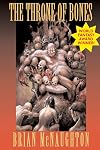
Throne of Bones could be considered McNaughton's opus. The collection first put out by Terminal Frights (now defunct), with tantalizing hints that there is significantly more material set in this world, collects McNaughton's work centered around ghouls of the vaguely Lovecraftian sort. I say vaguely because, if you're familiar with that style of ghoul its a good starting point, but this expands greatly on the lore of ghouls, taking it in some interesting and unforeseen directions. Hence it show more being generally regarded as the 'Dracula' or 'Frankenstein' of ghoul stories. Its also McNaughton's foray in to serious worldbuilding, as these interconnected stories span multiple clearly well developed and thought through cultures and across time in a world that, while horrific in its own right, shows clear influences of early 20th century/late 19th century fantasy and sword & sorcery authors.
I was prepared for the explicity ghoul-porn (though there was far less of that than I was led to believe), I was prepared for the sometimes cumbersone/tiresome older/weirder fantasy world-building naming schemes, I was prepared for the weird/lovecraftian elements. What I was not prepared for was the humor. Because there's been some intense worldbuilding going on, the interconnected nature of the story telling gave McNaughton the chance to do more character development in these short works than we would normally expected from short fiction. Getting to know and understand the internal lives of necromancers, scholars, the bumbling nobles, and the ghouls themselves set up a great deal of dramatic irony for the reader to laugh at. And while much of the action sequences are well written in the sword and sorcery style, even there we get to see and frequently find humor in the exploits of one of our more reluctant protagonists.
Honestly, I think is really where McNaughton's work shines in this collection, though I'm likely to be in the minority. Not the world building, not the horror, not the exceptionally well polished and carefully crafted writing. But in showing us characters and events in the midst of a world every bit as horrific and grey as the skin of his ghouls that can make also make us laugh, and in a few cases, evoke sadness and pity.
Is it my favorite work of weird fiction? No. Is it even the best of the novel length collections Terminal Fright put out in its heyday? Not in my opinion. And I would say lovers of Robert E. Howard sword and sorcery are likely to find more to enjoy here than the lovers of Lovecraftian weird fiction I think its normally directed at. But there are definitely some things to enjoy here. If nothing else, I think the humor alone makes it worth a read. And even the old Terminal Fright hardbacks are out there on secondary markets for relatively low prices, let alone the newer editions. show less
I was prepared for the explicity ghoul-porn (though there was far less of that than I was led to believe), I was prepared for the sometimes cumbersone/tiresome older/weirder fantasy world-building naming schemes, I was prepared for the weird/lovecraftian elements. What I was not prepared for was the humor. Because there's been some intense worldbuilding going on, the interconnected nature of the story telling gave McNaughton the chance to do more character development in these short works than we would normally expected from short fiction. Getting to know and understand the internal lives of necromancers, scholars, the bumbling nobles, and the ghouls themselves set up a great deal of dramatic irony for the reader to laugh at. And while much of the action sequences are well written in the sword and sorcery style, even there we get to see and frequently find humor in the exploits of one of our more reluctant protagonists.
Honestly, I think is really where McNaughton's work shines in this collection, though I'm likely to be in the minority. Not the world building, not the horror, not the exceptionally well polished and carefully crafted writing. But in showing us characters and events in the midst of a world every bit as horrific and grey as the skin of his ghouls that can make also make us laugh, and in a few cases, evoke sadness and pity.
Is it my favorite work of weird fiction? No. Is it even the best of the novel length collections Terminal Fright put out in its heyday? Not in my opinion. And I would say lovers of Robert E. Howard sword and sorcery are likely to find more to enjoy here than the lovers of Lovecraftian weird fiction I think its normally directed at. But there are definitely some things to enjoy here. If nothing else, I think the humor alone makes it worth a read. And even the old Terminal Fright hardbacks are out there on secondary markets for relatively low prices, let alone the newer editions. show less
A fantastic series of stories in the Weird Tales tradition that are unabashedly delicious, dark and deranged. A must read for everyone who has the ability to fall in love with dangerous places and enjoy being aroused at taboo and atrocity.
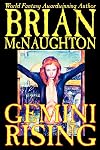
This is a re-publication of Satan's Lovechild series from the 60s/70s. I'm still trying to get a copy of the original, Star Publishing, edition as my understanding is there have been actual revisions as well as possible additions/omissions and I'm curious to see what exactly that entails. I am assuming that the original, being published by Playboy under one of its imprints and from some comments made by the author over the years, is more explicitly racy than this reprint. I would be tempted show more to say that perhaps it is only a difference in socio-cultural norms between then and now as to what would be considered explicit sexual content, however even some of McNaughton's other works are more direct in their sexuality than this one leading me to believe that some of the changes lie there.
This falls pretty solidly into the satanic/witch cults genre of horror literature and film so prevalent from the 60s-80s. You never know if your neighbor, wife, daughter, those hermit farmers, weird hippies, or literally anyone else in society might be secret satan worshipers, looking to kidnap and/or sexually exploit children and sacrifice babies. The same ideas that the satanic panic and religious right of the 80s decided were real instead of just fiction. We get some hints that this might be a stranger, less judeo-christian, world with to the supernatural goings on than mere satan worship though. Specifically, the nature of certain brothers and sisters begins to show that perhaps this is a more Lovecraftian universe. I believe the farther one gets in the series, the more 'weird' and less just 'horrific' it gets.
As is the case with all McNaughton's work, the prose is beautifully polished throughout. He is an expert wordsmith. However, the pacing feels distinctly uneven. This is fairly short for a novel, coming in at just 144 pages, but long compared to a lot of his short fiction work. I think the pacing suffers from trying to bridge the gap between the more action oriented demands of short fiction (barring atmospheric pieces) and the internal character driven demands of long-form work. We get just enough of characters internal lives to make us want to know more, but not enough for them to feel fully developed. Engaging, more action packed scenes that seem to drop too quickly into denoument. In some of his anthologized works like Throne of Bones, we see characters more fully explored and developed over longer sequences of tales, and I think that may be where McNaughton shines. If there's every an omnibus of this series of books published, it may be better to read them that way, though I'll reserve judgment until I've read the rest of the series. show less
This falls pretty solidly into the satanic/witch cults genre of horror literature and film so prevalent from the 60s-80s. You never know if your neighbor, wife, daughter, those hermit farmers, weird hippies, or literally anyone else in society might be secret satan worshipers, looking to kidnap and/or sexually exploit children and sacrifice babies. The same ideas that the satanic panic and religious right of the 80s decided were real instead of just fiction. We get some hints that this might be a stranger, less judeo-christian, world with to the supernatural goings on than mere satan worship though. Specifically, the nature of certain brothers and sisters begins to show that perhaps this is a more Lovecraftian universe. I believe the farther one gets in the series, the more 'weird' and less just 'horrific' it gets.
As is the case with all McNaughton's work, the prose is beautifully polished throughout. He is an expert wordsmith. However, the pacing feels distinctly uneven. This is fairly short for a novel, coming in at just 144 pages, but long compared to a lot of his short fiction work. I think the pacing suffers from trying to bridge the gap between the more action oriented demands of short fiction (barring atmospheric pieces) and the internal character driven demands of long-form work. We get just enough of characters internal lives to make us want to know more, but not enough for them to feel fully developed. Engaging, more action packed scenes that seem to drop too quickly into denoument. In some of his anthologized works like Throne of Bones, we see characters more fully explored and developed over longer sequences of tales, and I think that may be where McNaughton shines. If there's every an omnibus of this series of books published, it may be better to read them that way, though I'll reserve judgment until I've read the rest of the series. show less
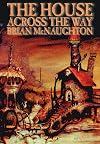
This is the 4th of Mr. McNaughton's novels to be published by Wildside Press. Unfortunately, unlike the others, this book as far as I can tell is only available in a nice hardcover with a pretty high list price, $37.95. It is discounted on Amazon, but not much. Page count was 209, pretty slim for the cost, but is McNaughton's final novel, I think. Originally the text was published in 1982 as Satan's Surrogate; used copies of this are quite expensive in their own right and I never saw a copy. show more Unlike Satan's Love Child, which was a pornographic version of Gemini Rising, I do not believe Satan's Surrogate had any objectionable material; the author reports that the text was substantially altered and we may regard THATW as his final thoughts on the text. Production qualities are good; cover art by Jaime Oberschlake was pretty good but did not blow me away.
Where Gemini Rising, Downward to Darkness and Worse Things Waiting had clear Lovecraftian motifs and themes, The House Across the Way was not in the same vein. Do not expect that it is part of the same series of stories. It owes a little bit more to Robert Chambers, with some character names, a maid named Cassilda for example, and a few place names. I have not made a study of reading Chambers' fiction like I have Lovecraft's, but I think there is no other big debt to Chambers beyond this. Similarly, in what I think is a nod towards some of McNaughton's favorite writers, there are place names from Lovecraft: the Whateley Library and the Pickman Museum.
The plot is extremely complicated and the truth only gradually becomes apparent to some of the characters. There are so many characters with such complicated relationships and points of view, and wild twistings of time, that they defy synopsis. The Otherworld is occupied by...the Others, who might be considered as Faerie. Not in the sense of lightness and good, Tolkienesque elves, but dark and incomprehensible, capricious and malicious. They love to torment humans and control them through both their uncontrolled passions and their dreams. The title house of the story occupies an important point of overlap between these realities which makes life fraught with menace for the current occupants. The Eldritch King has dark and mysterious reasons for manipulating humans, as he/it has done through the centuries.
None of this is clear to the characters in the book who fumble through their disorienting lives trying to grasp what is going on. Like in all of Mr. McNaughton's novels that I have read, all the threads come together to make perfect sense of the complex tapestry by the end. Along this wild ride, McNaughton's considerable gifts are on display: he takes us inside the minds of the characters; when it is their point of view, the world is clearly seen out of their eyes. I love the way he lets us sink into the characters' skins. Dialogue is sharp, the plot is propulsive and descriptions of the gory consequences of losing yourself to the Others are deftly written. The denouement was a fitting conclusion to a majestic effort. I was very glad to have read The House Across the Way and highly recommend it to all fans of dark fantasy literature. What a great loss that we will have no more such novels from Mr. McNaughton's pen! show less
Where Gemini Rising, Downward to Darkness and Worse Things Waiting had clear Lovecraftian motifs and themes, The House Across the Way was not in the same vein. Do not expect that it is part of the same series of stories. It owes a little bit more to Robert Chambers, with some character names, a maid named Cassilda for example, and a few place names. I have not made a study of reading Chambers' fiction like I have Lovecraft's, but I think there is no other big debt to Chambers beyond this. Similarly, in what I think is a nod towards some of McNaughton's favorite writers, there are place names from Lovecraft: the Whateley Library and the Pickman Museum.
The plot is extremely complicated and the truth only gradually becomes apparent to some of the characters. There are so many characters with such complicated relationships and points of view, and wild twistings of time, that they defy synopsis. The Otherworld is occupied by...the Others, who might be considered as Faerie. Not in the sense of lightness and good, Tolkienesque elves, but dark and incomprehensible, capricious and malicious. They love to torment humans and control them through both their uncontrolled passions and their dreams. The title house of the story occupies an important point of overlap between these realities which makes life fraught with menace for the current occupants. The Eldritch King has dark and mysterious reasons for manipulating humans, as he/it has done through the centuries.
None of this is clear to the characters in the book who fumble through their disorienting lives trying to grasp what is going on. Like in all of Mr. McNaughton's novels that I have read, all the threads come together to make perfect sense of the complex tapestry by the end. Along this wild ride, McNaughton's considerable gifts are on display: he takes us inside the minds of the characters; when it is their point of view, the world is clearly seen out of their eyes. I love the way he lets us sink into the characters' skins. Dialogue is sharp, the plot is propulsive and descriptions of the gory consequences of losing yourself to the Others are deftly written. The denouement was a fitting conclusion to a majestic effort. I was very glad to have read The House Across the Way and highly recommend it to all fans of dark fantasy literature. What a great loss that we will have no more such novels from Mr. McNaughton's pen! show less
Lists
Awards


You May Also Like


Associated Authors
Statistics
- Works
- 18
- Also by
- 22
- Members
- 369
- Popularity
- #65,263
- Rating
- 3.7
- Reviews
- 13
- ISBNs
- 30
- Favorited
- 1