
Scott Mebus
Author of Gods of Manhattan
About the Author
Scott Mebus is a novelist, songwriter, playwright, comic, and music producer. His rock musical Tarnish appeared in the New York International Fringe Festival. Most recently, Scott was a producer for MTV and VH1, where he worked on the Tom Green Show, Real World, and MTV Yoga. He lives in New York show more City show less
Series
Works by Scott Mebus
Associated Works
Tagged
Common Knowledge
- Birthdate
- 20th Century
- Gender
- male
- Places of residence
- Manhattan, New York, USA
- Associated Place (for map)
- New York, USA
Members
Reviews
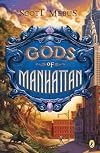
Mebus, S. (2008). Gods of Manhattan. New York: Puffin Books.
340 pages.
Appetizer: When thirteen-year-old Rory witnesses a magic trick at his little sister's ninth birthday party that can't be explained, he starts to realize that magic is real and that he has the special ability to see magic throughout New York City.
But when a sorcerer, the gods of the city (who are historical figures--Walt Whitman is the god of optimism!), the gods' children, the memory of the Munsee Native Americans who show more originally inhabited the city and other magical creatures learn that there is a boy with the power to see the many layers of reality, some will try to protect him while others will try to use him for their own purposes.
On top of all that, for the first time ever, someone has found a way to kill the gods as part of a way to grab power. It falls to Rory and his sister Bridget to figure out who to trust and the best way to maintain balance within the city.
I was surprised by how much I enjoyed Gods of Manhattan. At first I was a little suspicious because both Rory and Bridget didn't really feel very child-like to me. Well, Bridget did feel young. But no way her voice was that of a nine-year-old. Plus, the book jumped point of view A LOT. So, it didn't feel very middle grade or even YA.
But as I kept reading, I really started to like the story. It reminded me of Harry Potter. At one point Rory has to break into a bank to steal a magical object, at another point Bridget magically becomes the luckiest girl in the world (and the way her luck works manages to be even more amusing than when Harry takes the Felix Felicis potion in The Half-Blood Prince.
I liked Rory's reaction when he started to realize that magic existed in Manhattan:
He dives "back into the safety of his apartment, his room, his bed, his world--where everything was just as it was supposed to be" (p. 13).
I liked this because this is very similar to my reaction when I encounter something that upsets me: Take a nap. Works every time when I feel the need to avoid reality.
And whether like a nine-year-old or not, I absolutely loved Rory's little sister, Bridget. She was a very fun character. Intent on protecting her brother, she buys steel toed boots and imagines herself to be a heroine, Malibu Death Barbie.
I also like the way the story attempted to take on the historical mistreatments of the Munsee Indians. In the spirit world of the story, Mannahatta, the Munsee spirits were trapped in Central Park by the gods of the city. Throughout the story questions of guilt and reparations are addressed, which could trigger some very thoughtful discussions about American history and the modern implications. (This aspect of the book has *totally* made it into Dudley the Dissertation.)
This series may not be for everyone. But if a middle grade reader already waded their way through Rirodan's Percy Jackson epics, chances are good they'll be up to the challenge of taking on Scott Mebus's Manhattan and seeing some figures of New York's history as gods (which can also lead to a lot of googling about the founding of the city. I know that's what I did.).
On to the second book, Spirits in the Park!
Dinner Conversation:
"Adriaen van der Donck raced over the Henry Hudson Bridge at the northern tip of Manhattan, urging his steaming horse to go faster as he made a break for the Bronx. Maybe he'd be lucky. Maybe his enemy had neglected to pick an assassin with the right kind of blood" (p. 3).
"Maybe he'd save his city, though he couldn't save himself. The assassin sprang, and Adriaen van der Donck stepped forward to meet him, his final trick ready to be played" (p. 4).
"Rory Hennessy, thirteen years old and never fooled, leaned in closer to watch the magician at work. There had never been a magic trick, or a sleight-of-hand maneuver, or any other so-called illusion, that had not been picked apart, seen through, or laid bare by the eagle eyes of the elder Hennessy. He could always spy the magician slipping the twenty-dollar bill into the volunteer's pocket. He unerringly knew where the five of spades was hidden. He would point to the shell with the marble under it every time. He couldn't really explain how he knew. He just did. Rory would look a magician in the eye and suddenly the performer would no longer be a mystical practitioner of wonder, he'd be a sad little man with a weird hat. He'd start to stammer, his rabbit would fall out of his sleeve, and he'd press the wrong button and pour water all over his pants. Rory didn't do it on purpose. It was just his gift" (p. 5).
"There is a world all around you that most mortals cannot see. We call it Mannahatta. Some say it is the spirit world, while others believe it is the city itself dreaming, or rather remembering. If something or someone was important enough, loved enough, feared enough, imagined enough, remembered enough, then it is reborn here in Mannahatta" (p. 59).
"But I'm giving you another option, a chance to take control of your destiny. You can do what they're afraid you'll do--ruin all their plans--and then it will be too late for them. You'll do a great service to our city and protect yourself forever at the same time" (p. 62). show less
340 pages.
Appetizer: When thirteen-year-old Rory witnesses a magic trick at his little sister's ninth birthday party that can't be explained, he starts to realize that magic is real and that he has the special ability to see magic throughout New York City.
But when a sorcerer, the gods of the city (who are historical figures--Walt Whitman is the god of optimism!), the gods' children, the memory of the Munsee Native Americans who show more originally inhabited the city and other magical creatures learn that there is a boy with the power to see the many layers of reality, some will try to protect him while others will try to use him for their own purposes.
On top of all that, for the first time ever, someone has found a way to kill the gods as part of a way to grab power. It falls to Rory and his sister Bridget to figure out who to trust and the best way to maintain balance within the city.
I was surprised by how much I enjoyed Gods of Manhattan. At first I was a little suspicious because both Rory and Bridget didn't really feel very child-like to me. Well, Bridget did feel young. But no way her voice was that of a nine-year-old. Plus, the book jumped point of view A LOT. So, it didn't feel very middle grade or even YA.
But as I kept reading, I really started to like the story. It reminded me of Harry Potter. At one point Rory has to break into a bank to steal a magical object, at another point Bridget magically becomes the luckiest girl in the world (and the way her luck works manages to be even more amusing than when Harry takes the Felix Felicis potion in The Half-Blood Prince.
I liked Rory's reaction when he started to realize that magic existed in Manhattan:
He dives "back into the safety of his apartment, his room, his bed, his world--where everything was just as it was supposed to be" (p. 13).
I liked this because this is very similar to my reaction when I encounter something that upsets me: Take a nap. Works every time when I feel the need to avoid reality.
And whether like a nine-year-old or not, I absolutely loved Rory's little sister, Bridget. She was a very fun character. Intent on protecting her brother, she buys steel toed boots and imagines herself to be a heroine, Malibu Death Barbie.
I also like the way the story attempted to take on the historical mistreatments of the Munsee Indians. In the spirit world of the story, Mannahatta, the Munsee spirits were trapped in Central Park by the gods of the city. Throughout the story questions of guilt and reparations are addressed, which could trigger some very thoughtful discussions about American history and the modern implications. (This aspect of the book has *totally* made it into Dudley the Dissertation.)
This series may not be for everyone. But if a middle grade reader already waded their way through Rirodan's Percy Jackson epics, chances are good they'll be up to the challenge of taking on Scott Mebus's Manhattan and seeing some figures of New York's history as gods (which can also lead to a lot of googling about the founding of the city. I know that's what I did.).
On to the second book, Spirits in the Park!
Dinner Conversation:
"Adriaen van der Donck raced over the Henry Hudson Bridge at the northern tip of Manhattan, urging his steaming horse to go faster as he made a break for the Bronx. Maybe he'd be lucky. Maybe his enemy had neglected to pick an assassin with the right kind of blood" (p. 3).
"Maybe he'd save his city, though he couldn't save himself. The assassin sprang, and Adriaen van der Donck stepped forward to meet him, his final trick ready to be played" (p. 4).
"Rory Hennessy, thirteen years old and never fooled, leaned in closer to watch the magician at work. There had never been a magic trick, or a sleight-of-hand maneuver, or any other so-called illusion, that had not been picked apart, seen through, or laid bare by the eagle eyes of the elder Hennessy. He could always spy the magician slipping the twenty-dollar bill into the volunteer's pocket. He unerringly knew where the five of spades was hidden. He would point to the shell with the marble under it every time. He couldn't really explain how he knew. He just did. Rory would look a magician in the eye and suddenly the performer would no longer be a mystical practitioner of wonder, he'd be a sad little man with a weird hat. He'd start to stammer, his rabbit would fall out of his sleeve, and he'd press the wrong button and pour water all over his pants. Rory didn't do it on purpose. It was just his gift" (p. 5).
"There is a world all around you that most mortals cannot see. We call it Mannahatta. Some say it is the spirit world, while others believe it is the city itself dreaming, or rather remembering. If something or someone was important enough, loved enough, feared enough, imagined enough, remembered enough, then it is reborn here in Mannahatta" (p. 59).
"But I'm giving you another option, a chance to take control of your destiny. You can do what they're afraid you'll do--ruin all their plans--and then it will be too late for them. You'll do a great service to our city and protect yourself forever at the same time" (p. 62). show less
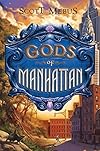
This book is a great leap-off point for anyone who wants to inadvertently learn a bit about New York City history while reading a fun adventure story. But it's also right for the children's fantasy market of today. The suspense is high, mystery driven, and well paced. I thoroughly enjoyed the story and I'm not one of those people who is in LOVE with NYC. In fact, as a general rule, I try to avoid the people who are in love with it. It is clearly the first part of a trilogy though, so if you show more read book one you're going to be in it for the long haul. You won't be able to walk away believing that everything in the book you just read was resolved by the last page. This one is more of a set-up for what's to come in book two and three. I'd recommend it though. Mr. Mebus keeps things pretty tense throughout. Well done. show less
I liked this one, partly because it is very kooky. There are a million and one stories about a supernatural city that exists within (or sometimes underground, or sometimes side-by-side) with another city, usually London or New York, but this one is pretty unique. Rory witnesses an impossible magic trick one day at his sister's birthday party, and suddenly he sees crazy things everywhere, like a squirrel and a rat fighting kung fu (the squirrel wins, btw, but only because it has help); a show more cockroach riding a rat like a pony, complete with little reins; and an Indian that shoots arrows at him in Central Park. The magician tells Rory that he is a Light, one of the few humans capable of seeing this other world. The other world, Mannahatta, is basically one big New York history lesson, because all of New York's famous and infamous people and places are reborn there, and exist as long as they are remembered by present New Yorkers. There's a larger plot at work, involving Rory righting an ancient wrong and some bickering historical figures, but it's really the unique concept that I like and the great characters. My favorite is Rory's sister Bridget, who carries around a cardboard sword named Buttkicker and wants to be Malibu Death Barbie. You can't beat that. show less
Thirteen year old Rory was happily believing that the world was a completely normal place until the magician Hex played a trick on him that opened his eyes to Mannahatta. Now, he sees strange things everywhere he looks – cockroaches riding on rats, people made of paper mache, as well as people and animals that no one else can see. Rory soon learns that he is a Light – a person who can see the truth, and can make others see the truth of what is really there. Hex is excited about the fact show more that Rory is a Light – most Lights don’t live more than a few years, so Rory is the oldest one to be found in a Very Long Time. But is Hex just trying to manipulate Rory and take advantage of what he is in order to get what he wants?
Mannahatta, the world that Rory can now see, is a world parallel to the real Manhattan. It’s comprised of gods and other spirits – the gods being people in our own world who, after their death, return to Mannahatta because of something they were remembered for in our world. The gods in Mannahatta don’t die, they just fade away when people in our world stop remembering them. Except recently, someone has been murdering these gods.
Will Rory’s ability to see the truth help figure out who is murdering these gods? And does he really want to help Hex in his plot?
Starting this, I was not completely sure whether I would enjoy it or not… but it turns out that I completely loved it. I think this may be one of my favourite young adults/childrens books that I have read in a while. It was imaginative, and it was quite different. Had all of the things I consider necessary in a really good book: magic, girls kicking butt, and boys prancing about in early 19th century clothing. (But make no mistake, this isn’t a book about girls kicking butt, it’s about boys kicking butt, but there were a couple of awesome female characters.)
The characters were all great. Rory was a little concerning at first – he seemed to sound more like a adult than a young teen, but considering his father left his family when he was super young, and he had to take care of his younger sister since their mother works ALL THE TIME… he had to grow up quickly, so the fact that he sounded quite a bit older than he’s supposed to be seemed a bit more understandable.
The supporting characters were fabulous – especially some of the people who inhabit Mannahatta. I most particularly loved the Rattle Watch. They are definitely people I would like to have on my side in trouble. As for other characters in Mannahatta, well, I was a little upset about the fact that my favourite character ended up being the assassin. He was so much fun, and he reminded me of Draco from Cassie Claire’s Draco Trilogy.
Definitely looking forward to more books about Mannahatta. There’s so many questions I have unanswered about this – especially since Rory saw his father in Mannahatta. I’m dying to know what happened to him. show less
Mannahatta, the world that Rory can now see, is a world parallel to the real Manhattan. It’s comprised of gods and other spirits – the gods being people in our own world who, after their death, return to Mannahatta because of something they were remembered for in our world. The gods in Mannahatta don’t die, they just fade away when people in our world stop remembering them. Except recently, someone has been murdering these gods.
Will Rory’s ability to see the truth help figure out who is murdering these gods? And does he really want to help Hex in his plot?
Starting this, I was not completely sure whether I would enjoy it or not… but it turns out that I completely loved it. I think this may be one of my favourite young adults/childrens books that I have read in a while. It was imaginative, and it was quite different. Had all of the things I consider necessary in a really good book: magic, girls kicking butt, and boys prancing about in early 19th century clothing. (But make no mistake, this isn’t a book about girls kicking butt, it’s about boys kicking butt, but there were a couple of awesome female characters.)
The characters were all great. Rory was a little concerning at first – he seemed to sound more like a adult than a young teen, but considering his father left his family when he was super young, and he had to take care of his younger sister since their mother works ALL THE TIME… he had to grow up quickly, so the fact that he sounded quite a bit older than he’s supposed to be seemed a bit more understandable.
The supporting characters were fabulous – especially some of the people who inhabit Mannahatta. I most particularly loved the Rattle Watch. They are definitely people I would like to have on my side in trouble. As for other characters in Mannahatta, well, I was a little upset about the fact that my favourite character ended up being the assassin. He was so much fun, and he reminded me of Draco from Cassie Claire’s Draco Trilogy.
Definitely looking forward to more books about Mannahatta. There’s so many questions I have unanswered about this – especially since Rory saw his father in Mannahatta. I’m dying to know what happened to him. show less
Lists
Awards


You May Also Like


Associated Authors
Statistics
- Works
- 5
- Also by
- 1
- Members
- 628
- Popularity
- #40,131
- Rating
- 3.5
- Reviews
- 20
- ISBNs
- 39
- Languages
- 1