
Patricia Morrisroe
Author of Mapplethorpe: A Biography
About the Author
Works by Patricia Morrisroe
Tagged
Common Knowledge
Members
Reviews
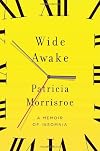
If you are looking for a general overview of theories of insomnia and practical advice as to how to deal with it, this is a good place to start. But what makes "Wide Awake" really good is that it is a scream to read. I was not seeking it out because it was funny. But I finished the book, reading it like it was a novel, because it was funny.
I checked this book out because I was interested in the subject of insomnia and wanted more information and ideas as to how to treat it. What I got was show more something which might actually be even better, a personal memoir about the author's struggles with insomnia. You get a quick tour of the major ideas and theories from a very personal point of view: that of an author who has been there and done that. Topics include sleeping pills, sleep clinics, cognitive behavioral therapy, sleep courses, hypnotherapy, wake-promoting drugs, shift-work disorder, sleep apnea, mattresses, power napping, searching for a quieter neighborhood, trying to sleep in an ice hotel north of the arctic circle, meditation, and the study of dreams.
Morrisroe is on a mission, to get some sleep, and so it is a succession of stories as she tries one thing after another. None of them are completely without merit, but none of them give her satisfaction until a combination of factors at the end finally seems to get her back on track. I won't reveal the ending, but I am not convinced that what worked for her will work for everyone, and she doesn't seem to think so either, and certainly isn't promoting it. In fact, it's not even clear what it was, exactly, that helped.
She leaves the impression that there is no real "science" of sleep. Even the best, brightest, and smartest of those in the field are still struggling to make sense of the whole thing. The really smart people understand that while we've got quite a bit of interesting research, there are just a whole bunch of things that we still don't really know -- like why we sleep at all, for example.
Because it's a memoir, and because the author doesn't present herself as an expert, she isn't committed to defending or attacking this or that idea or set of ideas. In the end this is actually more helpful for us than it would be if she had just tried to write a more systematic treatise. Thanks for the book! show less
I checked this book out because I was interested in the subject of insomnia and wanted more information and ideas as to how to treat it. What I got was show more something which might actually be even better, a personal memoir about the author's struggles with insomnia. You get a quick tour of the major ideas and theories from a very personal point of view: that of an author who has been there and done that. Topics include sleeping pills, sleep clinics, cognitive behavioral therapy, sleep courses, hypnotherapy, wake-promoting drugs, shift-work disorder, sleep apnea, mattresses, power napping, searching for a quieter neighborhood, trying to sleep in an ice hotel north of the arctic circle, meditation, and the study of dreams.
Morrisroe is on a mission, to get some sleep, and so it is a succession of stories as she tries one thing after another. None of them are completely without merit, but none of them give her satisfaction until a combination of factors at the end finally seems to get her back on track. I won't reveal the ending, but I am not convinced that what worked for her will work for everyone, and she doesn't seem to think so either, and certainly isn't promoting it. In fact, it's not even clear what it was, exactly, that helped.
She leaves the impression that there is no real "science" of sleep. Even the best, brightest, and smartest of those in the field are still struggling to make sense of the whole thing. The really smart people understand that while we've got quite a bit of interesting research, there are just a whole bunch of things that we still don't really know -- like why we sleep at all, for example.
Because it's a memoir, and because the author doesn't present herself as an expert, she isn't committed to defending or attacking this or that idea or set of ideas. In the end this is actually more helpful for us than it would be if she had just tried to write a more systematic treatise. Thanks for the book! show less
Robert Mapplethorpe was an anomaly. A sometimes mediocre photographer with a keen eye for disrupting scenes through being a punk, sometimes shaking things up in ways that nobody else had done before him.
He seems also to have been a parasite, a racist, a nice guy, brutal and a relentless self-serving publicity-machine.
So, what draws people to Mapplethorpe? Is it because of his images of people, especially the sexually toned ones? His near-marriage with Patti Smith while living with her for show more seven years? Anything else? Probably the sex-related pictures, and the American trials for obscenity charges that followed after Mapplethorpe's death due to AIDS in 1989.
Mapplethorpe was a shining example of "niceness" until he left the military academy where his parents had sent him to become "a man".
Mapplethorpe dropped out, moved, dabbled with drugs and blew into the art world with Patti Smith, with whom he lived for seven years.
Discovering his homosexuality, which he hid from his parents for his entire life, was key. Then, interlocked with religion, pain, sex and discovering photography, everything changed. He found Sam Wagstaff, his sugar daddy and main curator, who made his career lift.
The following quote from this book seems to expose a lot about Mapplethorpe:
He seemed almost like an utter misfit version of Truman Capote: a social butterfly who used his subjects to his own benefit, not for anything else; his models often spoke of feeling used in a bad way.
Due to a highly promiscuous lifestyle without the use of condoms - and also due to Mapplethorpe's liking of coprophagy - he was often ill, and finally was hit with AIDS, which he denied having until the bitter end.
Also:
This book is the result of a massive amount of work, collected, analysed and edited over five years. The author has first and foremost interviewed Robert Mapplethorpe, and then Patti Smith, on a lot of details. This book sprawls, uncovers a lot of details - if you believe them to be true - and unveils a lot more than Smith's own book about her life with Mapplethorpe, "Just Kids".
Morrisroe has interviewed Mapplethorpe's family, friends, lovers, dealers (both in art and drugs), socialites, colleagues and fans.
At the very end of his life, Mapplethorpe mustered enough energy to see a Warhol exhibition, having outlived his former idol by a couple of years:
The last show he went to was his own, where he sold loads of his photographs. Surrounded by people he didn't know he called shots from a chair while hooked up to medical equipment, "floating on air", and then, collapsing and vomiting. That might be the final word on Mapplethorpe's persona in every single way, Patti Smith exempt.
All in all, the start of this book was a bit slow for me, a bit of dragging its heels, but then it got off to its real start, just as Mapplethorpe started to find himself during his latter teen years. It's a grand tale of a maladjusted man who wanted to live forever. Pissing nearly everybody off with everything he did must amount to something, right? show less
He seems also to have been a parasite, a racist, a nice guy, brutal and a relentless self-serving publicity-machine.
So, what draws people to Mapplethorpe? Is it because of his images of people, especially the sexually toned ones? His near-marriage with Patti Smith while living with her for show more seven years? Anything else? Probably the sex-related pictures, and the American trials for obscenity charges that followed after Mapplethorpe's death due to AIDS in 1989.
Mapplethorpe was a shining example of "niceness" until he left the military academy where his parents had sent him to become "a man".
"Robert was a little too intense and conservative for me. He was almost the stereotypic 'good boy.' "
-Nancy Nemeth, ROTC Military Ball Queen, 1964
Mapplethorpe dropped out, moved, dabbled with drugs and blew into the art world with Patti Smith, with whom he lived for seven years.
Discovering his homosexuality, which he hid from his parents for his entire life, was key. Then, interlocked with religion, pain, sex and discovering photography, everything changed. He found Sam Wagstaff, his sugar daddy and main curator, who made his career lift.
The following quote from this book seems to expose a lot about Mapplethorpe:
At the beginning of the semester Mapplethorpe had moved from the apartment on Willoughby Avenue to a ground-floor studio on DeKalb Avenue, which he shared with a pet monkey named Scratch. Of all the stories connected to the photographer, the monkey saga remains one of the strangest. He had purchased the animal from a Brooklyn pet store, where the owner had given him a discount because the monkey was already an adult. The owner failed to tell Mapplethorpe that Scratch wasn't housebroken, and while Mapplethorpe made a few feeble attempts at training Scratch, he pronounced the monkey "uncontrollable" and gave it the run of the apartment. The studio was soon covered in urine and feces, and when friends first came to visit they were rendered speechless by the squalor and by Scratch's habit of entertaining Mapplethorpe by masturbating in front of him.
Scratch's brief and bizarre history encapsulated many of the major themes of Mapplethorpe's adult life - his preoccupation with images of death and violence; his fascination with the devil; his desire to transform the ugly, or freakish, into works of beauty. It also pointed to a darker side of his nature, which would later emerge in his sexual relationships with other men - a need to break all the rules and transgress taboos.
He seemed almost like an utter misfit version of Truman Capote: a social butterfly who used his subjects to his own benefit, not for anything else; his models often spoke of feeling used in a bad way.
Due to a highly promiscuous lifestyle without the use of condoms - and also due to Mapplethorpe's liking of coprophagy - he was often ill, and finally was hit with AIDS, which he denied having until the bitter end.
"Robert was really running away," Myers explained. "He was so angry I kept waiting for him to explode."
And explode he did, by rampaging through the gay bars to pick up black men. Mapplethorpe had confided to several friends that he blamed a black man for infecting him with the AIDS virus, but given his boast of having had sex with an estimated thousand men, he couldn't possibly know for sure. Still, he approached his task like an avenging angel, picking up one black man after another with offers of cocaine, then baiting them with the word "nigger." One man screamed at him to stop, but when Mapplethorpe still kept repeating the word, the man grabbed his clothes and ran out the door. "You're evil," the man shouted, in parting. "Evil!"
Also:
Mapplethorpe's racism intensified with the progression of his disease, and Kelly Edey, who had presumably heard everything, was so startled by Mapplethorpe's venomous comments that he noted one incident in his diary. Mapplethorpe was standing outside Keller's on the evening of August 2 when he suddenly began to shout, "This is the sleaziest corner in New York. How can it be that I'm standing here in the midst of all this human garbage? They're so stupid, every last one of them is so unbelievably stupid." And yet he kept returning to Keller's, hoping his demigod might rise from the debris. "A lot of people yelled at him for continuing to go to the bars," Mark Isaacson explained. "But he looked at it, like, well, that's their problem - if they're not protecting themselves, why should I worry about it? When Robert first got sick, I said to him, 'You've got to stop your old lifestyle,' and he said to me, 'If I have to change my lifestyle, I don't want to live.'"
This book is the result of a massive amount of work, collected, analysed and edited over five years. The author has first and foremost interviewed Robert Mapplethorpe, and then Patti Smith, on a lot of details. This book sprawls, uncovers a lot of details - if you believe them to be true - and unveils a lot more than Smith's own book about her life with Mapplethorpe, "Just Kids".
Morrisroe has interviewed Mapplethorpe's family, friends, lovers, dealers (both in art and drugs), socialites, colleagues and fans.
At the very end of his life, Mapplethorpe mustered enough energy to see a Warhol exhibition, having outlived his former idol by a couple of years:
[...] he stayed for two hours while Tom Peterman wheeled him past Warhol's celebrity icons - the Ten Lizes, the Gold Marilyn, the Silver Marlon, the Red Elvis, the Sixteen Jackies. Peterman found the whole event distasteful, for clearly Mapplethorpe was yesterday's story, and by fame's mercurial standards he had outlived his moment. But to Peterman's surprise, Mapplethorpe didn't seem to notice.
The last show he went to was his own, where he sold loads of his photographs. Surrounded by people he didn't know he called shots from a chair while hooked up to medical equipment, "floating on air", and then, collapsing and vomiting. That might be the final word on Mapplethorpe's persona in every single way, Patti Smith exempt.
All in all, the start of this book was a bit slow for me, a bit of dragging its heels, but then it got off to its real start, just as Mapplethorpe started to find himself during his latter teen years. It's a grand tale of a maladjusted man who wanted to live forever. Pissing nearly everybody off with everything he did must amount to something, right? show less

Proust had his madeleines, Patricia Morrisroe has her shoes. Each triggers memories to bring us stories of the author's life. But while Proust disguises his in fiction, Morrisroe gives us a memoir. And an interesting one it is, too, as she tells us stories of her childhood in an Irish-Catholic family, her days as a college student and aspiring journalist, as a wife and daughter and caretaker. I expect I am not the only person in the world who has items in her closet that she no longer wears, show more for reasons of style or size or condition, but keeps because they represent a particular moment in life that holds special meaning. We can all relate to that connection between material and memory which forms the basis of this delightful book. show less
 This review was written for LibraryThing Early Reviewers.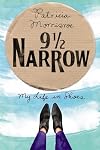
I happen to be a 9 1/2 Medium and also own way to many shoes for my own good so I can totally relate to Patricia Morrisroe's love of a beautiful shoe. Her coming of age story with the thread of shoes and life events interwoven is a delight. I gobbled up this book, it was so much fun and yet so poignant with the sharing of her family's trials and tribulations. It is obvious how much she loves her parents even though her father was a little distant with his own demons and Patricia and her show more mother sometimes squabbled. The history of shoes is sprinkled throughout this memoir and the only thing that would have made it more interesting for me would have been to have photos of some of the shoes she talked about. I enjoyed this book immensely. Very highly recommended. show less
This review was written for LibraryThing Early Reviewers.You May Also Like


Associated Authors
Statistics
- Works
- 4
- Members
- 532
- Popularity
- #46,803
- Rating
- 3.7
- Reviews
- 52
- ISBNs
- 22
- Languages
- 4
