

Reiner Stach
Author of Kafka: The Decisive Years
About the Author
Reiner Stach worked extensively on the definitive edition of Kafka's collected works before embarking on this three-volume biography. The third volume, Kafka: The Years of Insight (Princeton), covering Kafka's final years, is also available. The first volume, covering Kafka's childhood and youth, show more is forthcoming. show less
Image credit: http://commons.wikimedia.org/wiki/User:Dontworry
Series
Works by Reiner Stach
Associated Works
Tagged
Common Knowledge
- Canonical name
- Stach, Reiner
- Birthdate
- 1951
- Gender
- male
- Education
- Johann Wolfgang Goethe Universität, Frankfurt am Main
- Nationality
- Germany
- Birthplace
- Rochlitz, Saxony, Germany
- Places of residence
- Frankfurt am Main, Hesse, Germany
Berlin, Germany - Associated Place (for map)
- Germany
Members
Reviews
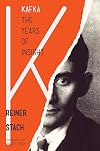
As the last in Reiner Stach's magisterial 3-volume biography of Franz Kafka, "The Years of Insight" covers Kafka's last decade, the years 1914-1924. I opened it with some curiosity, and was quickly captivated by its prose. I love this work ! -- it gave me the insight into this odd, enigmatic author that I was seeking.
The time span covered in this biography includes Kafka's publication of his best-known, non-posthumous works. These include "The Metamorphosis" (published in 1915), "The show more Judgment" (1916), "In the Penal Colony" (1919), and "A Country Doctor" (1920). It also includes his re-engagement and 2nd breakup with his fiancé Felice Bauer; his contraction of tuberculosis; his relationships with Julie and Milena, and finally Dora, who was with him until he died (of TB) at the early age of 40.
I found "The Years of Insight" to be brilliant, insightful, beautifully written (and therefore, beautifully translated into English), engaging, and entertaining. Despite being 570 pages (with another 65 pages of notes), for me it never dragged, and I looked forward each night to being able to pick up where I'd left off. I underlined passages, made marginal notes, bent down page corners, stick post-it notes at places to go back to -- this is a book that I consumed, and plan to refer to in the future.
This volume and the others have been criticized on the grounds that the author goes too far beyond the written record to infer what Kafka must have been thinking at given times, and reasons for his actions. This criticism has some merit; but in light of the extensive written record provided by Kafka's voluminous, daily correspondence, as well as his writings, diaries, and the reminiscences of his friends, Reiner Stach's inferences appear on the whole to be well-founded. Another potential criticism is that the book gives little insight into the meaning of his various literary works. This point is off-the-mark in my view. Analyses of Kafka's writing has occupied literary critics for many decades and has yielded many thousands of works and a wide diversity of views. This biography offers insight into his writings by presenting the circumstances under which they were written. In that respect, it meets the goal of a literary biography, while leaving quarrels over meaning and significance to the self- appointed literary critics.
The muted language of my short review does not express my great enthusiasm for this magnificent work. Kafka studies cannot, or at least should not, ever be the same. It's an essential work. I loved reading it. show less
The time span covered in this biography includes Kafka's publication of his best-known, non-posthumous works. These include "The Metamorphosis" (published in 1915), "The show more Judgment" (1916), "In the Penal Colony" (1919), and "A Country Doctor" (1920). It also includes his re-engagement and 2nd breakup with his fiancé Felice Bauer; his contraction of tuberculosis; his relationships with Julie and Milena, and finally Dora, who was with him until he died (of TB) at the early age of 40.
I found "The Years of Insight" to be brilliant, insightful, beautifully written (and therefore, beautifully translated into English), engaging, and entertaining. Despite being 570 pages (with another 65 pages of notes), for me it never dragged, and I looked forward each night to being able to pick up where I'd left off. I underlined passages, made marginal notes, bent down page corners, stick post-it notes at places to go back to -- this is a book that I consumed, and plan to refer to in the future.
This volume and the others have been criticized on the grounds that the author goes too far beyond the written record to infer what Kafka must have been thinking at given times, and reasons for his actions. This criticism has some merit; but in light of the extensive written record provided by Kafka's voluminous, daily correspondence, as well as his writings, diaries, and the reminiscences of his friends, Reiner Stach's inferences appear on the whole to be well-founded. Another potential criticism is that the book gives little insight into the meaning of his various literary works. This point is off-the-mark in my view. Analyses of Kafka's writing has occupied literary critics for many decades and has yielded many thousands of works and a wide diversity of views. This biography offers insight into his writings by presenting the circumstances under which they were written. In that respect, it meets the goal of a literary biography, while leaving quarrels over meaning and significance to the self- appointed literary critics.
The muted language of my short review does not express my great enthusiasm for this magnificent work. Kafka studies cannot, or at least should not, ever be the same. It's an essential work. I loved reading it. show less

This remarkable little book is an outgrowth of Reiner Stach's magisterial, 3 volume biography of Franz Kafka. It present a more accurate picture of the man that one would ever imagine existed from his fiction, much less from the endless volumes of literary analyses. The Kafka that emerges turns out to be a real person, though a very odd one, and very far from the Kafka-esque version in the public imagination.
Stach has assembled 99 “Finds” – tidbits that collectively humanize Franz show more Kafka by offering glimpses into his life, his personality, his experiences. Each of the short pieces takes up 1 to 5 pages, and most are accompanied by photographs, excerpts from his sketches and handwriting. Many are extracts from his diaries, letters, or other writings, and from memoirs of those who knew him. Each is accompanied by Stach’s brief explanations of their context, significance, and meaning.
The tidbits are organized into 8 major categories, listed below with examples. The first is “Idiosyncrasies” (Kafka’s Diploma; Kafka Cheats on his Exams; Kafka’s Exercise Routine; Kafka Cannot Tell a Lie; Kafka’s Favorite Song; Kafka’s Only Enemy”). Next is “Emotions” (What Makes Kafka Cry; Kafka’s No Prude; Gone Whoring; Three Letters to his Father; Kafka Doesn’t Believe the Doctors), followed by “Reading and Writing” (Kafka’s Desk; The First Postcard; Kafka Writes a Poem and Likes it; Kafka Writes in Hebrew) and then “Slapstick” (Kafka Laughs at the President; Kafka is Afraid of Mice; An Attempt to Throw Kafka in the River). Next comes “Illusions” (Kafka Falls for an April Fool’s Joke; How Kafka Almost Won a Literary Prize; How Kafka and Brod Almost Became Millionaires), and Elsewhere (“A Cat Accident in Paris; Kafka Takes the Subway; Kafka Rides the Carousel) and “Reflections” (Kafka Gets Mail from a Reader; Frank and Milena; A Love Poem for Kafka). And finally, “The End” (The Final Letter; Kafka’s Wills; The Epitaph, Milena’s Obituary).
This book’s title is reprised in two of the tidbits – photographs of crowd scenes that include a figure that might be Franz Kafka. (In both cases, I am skeptical, and cannot see much resemblance; but who knows). But in reference to the book’s contents, Stach notes in the introduction: ” It would be trivial to say that all this was Kafka. Rather, the key thing… is that that we really can recognize him in all of these unassuming fragments. What, that’s Kafka? Yes, that’s him.” show less
Stach has assembled 99 “Finds” – tidbits that collectively humanize Franz show more Kafka by offering glimpses into his life, his personality, his experiences. Each of the short pieces takes up 1 to 5 pages, and most are accompanied by photographs, excerpts from his sketches and handwriting. Many are extracts from his diaries, letters, or other writings, and from memoirs of those who knew him. Each is accompanied by Stach’s brief explanations of their context, significance, and meaning.
The tidbits are organized into 8 major categories, listed below with examples. The first is “Idiosyncrasies” (Kafka’s Diploma; Kafka Cheats on his Exams; Kafka’s Exercise Routine; Kafka Cannot Tell a Lie; Kafka’s Favorite Song; Kafka’s Only Enemy”). Next is “Emotions” (What Makes Kafka Cry; Kafka’s No Prude; Gone Whoring; Three Letters to his Father; Kafka Doesn’t Believe the Doctors), followed by “Reading and Writing” (Kafka’s Desk; The First Postcard; Kafka Writes a Poem and Likes it; Kafka Writes in Hebrew) and then “Slapstick” (Kafka Laughs at the President; Kafka is Afraid of Mice; An Attempt to Throw Kafka in the River). Next comes “Illusions” (Kafka Falls for an April Fool’s Joke; How Kafka Almost Won a Literary Prize; How Kafka and Brod Almost Became Millionaires), and Elsewhere (“A Cat Accident in Paris; Kafka Takes the Subway; Kafka Rides the Carousel) and “Reflections” (Kafka Gets Mail from a Reader; Frank and Milena; A Love Poem for Kafka). And finally, “The End” (The Final Letter; Kafka’s Wills; The Epitaph, Milena’s Obituary).
This book’s title is reprised in two of the tidbits – photographs of crowd scenes that include a figure that might be Franz Kafka. (In both cases, I am skeptical, and cannot see much resemblance; but who knows). But in reference to the book’s contents, Stach notes in the introduction: ” It would be trivial to say that all this was Kafka. Rather, the key thing… is that that we really can recognize him in all of these unassuming fragments. What, that’s Kafka? Yes, that’s him.” show less
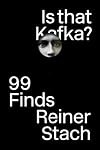
I really hope that coffee-table-books-about-modernist-writers becomes a profitable sub-genre, so I can go on reading pleasant books like this one. It's funny, touching, and wonderfully fanboyish; luckily, Stach knows everything (he wrote a three volume biography of Kafka, for goodness sake), so it's also informative and responsible. My only complaint is that quoted texts are presented in a sans-serif bold font. What the hell, typesetters?
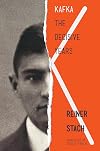
Excellent--as good as the 'first' (i.e., last?) volume was, this is substantially better. Stach inserts less quasi-philosophical meditations, and his writing about the books and stories is outstanding. I still suspect that he takes Kafka too much as his word, but then, so does everyone; there's a curious reluctance to admit that Kafka's diaries are just as performative as his letters, and that all the self-flagellation need not be an accurate representation of his mental state.
Particularly show more important is Stach's tracing of Kafka's relationship with Felice Bauer. show less
Particularly show more important is Stach's tracing of Kafka's relationship with Felice Bauer. show less
Lists
Awards


You May Also Like


Associated Authors
Statistics
- Works
- 17
- Also by
- 6
- Members
- 788
- Popularity
- #32,299
- Rating
- 4.0
- Reviews
- 15
- ISBNs
- 59
- Languages
- 8