
Eliza Griswold
Author of Amity and Prosperity: One Family and the Fracturing of America
About the Author
Eliza Griswold is the author of Wideawake Field and The Tenth Parallel: Dispatches from the Fault Line Between Christianity and Islam, as well as the translator of I Am the Beggar of the World, a collection of Afghan women's folk poems. A contributing writer at The New Yorker, she was awarded the show more 2019 Pulitzer Prize in General Nonfiction for Amity and Prosperity: One Family and the of America. show less
Works by Eliza Griswold
The Tenth Parallel: Dispatches from the Fault Line Between Christianity and Islam (2010) 324 copies, 15 reviews
Circle of Hope: A Reckoning with Love, Power, and Justice in an American Church (2024) 90 copies, 4 reviews
Associated Works
The Year's Best Fantasy and Horror 2008: 21st Annual Collection (2008) — Contributor — 177 copies, 5 reviews
Tagged
Common Knowledge
- Birthdate
- 1973-12-17
- Gender
- female
- Education
- Princeton University
Johns Hopkins University - Organizations
- New America Foundation
- Awards and honors
- Rome Fellowship in Literature (2009)
- Nationality
- USA
- Associated Place (for map)
- USA
Members
Reviews
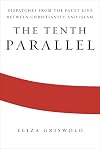
Griswold travels the 10th parallel, spending time in Northern Nigeria, Sudan, Somalia, Indonesia, the Philippines, etc., exploring the frontier between the Muslim world and the (southern) Christian world.
This book is a reminder that much of the Muslim world isn't the way we see it described in the Middle East, and much of the Christian world is very much different from our Western context. Nearly a quarter of the world’s Christians now live south of the 10th parallel, next door to show more Muslims, many of whom are migrating from the north to escape the impact of global climate change and other concerns. Along this frontier, there are clashes which get simplified in the West as religious violence, but which are far more complicated than that.
I was reminded that the narratives we receive are often simplified so much as to make them false--this became clear when, while reading this book, I read in the media and in dispatches from aid organizations very different accounts of the clashes between Fulani herders and Christian farmers in northern Nigeria. I serve on the board of an international relief and development organization called World Renew, and the varying accounts has been a topic of discussion even at the board level, since some of our donors often hear different stories from other aid organizations than they do from our (Christian) staff people who are working closely with (Muslim) Fulani herders, and therefore have a somewhat different take on the violence.
This book was even more interesting to me as a person of faith, because of Griswold herself: she grew up in a very religious (Christian) family (her father was an Anglican bishop), but grew up wondering how "smart people could believe in God." Griswold not only interacts with everyday Christians and Muslims in the countries she visits, but also with missionaries on both sides (including Gracia Burnham, who was held captive by abu-Sayyaf in the Philippines for years), and with those in power, including Franklin Graham and Omar el-Bashir (the president of Sudan). While one sees her own biases at play, she readily admits them and works to get beyond them, thus adding to the depth of her writing. Whether you are a person of faith or not, whether or not you are deeply involved in development and justice issues in some of the countries discussed, this book is a worthwhile read. show less
This book is a reminder that much of the Muslim world isn't the way we see it described in the Middle East, and much of the Christian world is very much different from our Western context. Nearly a quarter of the world’s Christians now live south of the 10th parallel, next door to show more Muslims, many of whom are migrating from the north to escape the impact of global climate change and other concerns. Along this frontier, there are clashes which get simplified in the West as religious violence, but which are far more complicated than that.
I was reminded that the narratives we receive are often simplified so much as to make them false--this became clear when, while reading this book, I read in the media and in dispatches from aid organizations very different accounts of the clashes between Fulani herders and Christian farmers in northern Nigeria. I serve on the board of an international relief and development organization called World Renew, and the varying accounts has been a topic of discussion even at the board level, since some of our donors often hear different stories from other aid organizations than they do from our (Christian) staff people who are working closely with (Muslim) Fulani herders, and therefore have a somewhat different take on the violence.
This book was even more interesting to me as a person of faith, because of Griswold herself: she grew up in a very religious (Christian) family (her father was an Anglican bishop), but grew up wondering how "smart people could believe in God." Griswold not only interacts with everyday Christians and Muslims in the countries she visits, but also with missionaries on both sides (including Gracia Burnham, who was held captive by abu-Sayyaf in the Philippines for years), and with those in power, including Franklin Graham and Omar el-Bashir (the president of Sudan). While one sees her own biases at play, she readily admits them and works to get beyond them, thus adding to the depth of her writing. Whether you are a person of faith or not, whether or not you are deeply involved in development and justice issues in some of the countries discussed, this book is a worthwhile read. show less

Landays are short poems (usually sang and not recited) which have exactly 22 syllables - 9 in their first line and 13 in the second one, and always finish with -na or -ma. They don't get written and invented as much as they get changed and modified with time - they are part of the oral tradition of the Pashtun women who live mainly in Afghanistan, near the border with Pakistan. As girls in these area get pulled out from school very young and get locked into a house until they get married show more (after which they get locked in a different house), these poems become their only connection to the external world and to any kind of knowledge. There are some landays sang by men but most of them are only ever uttered by women. And they get adapted - most women know hundreds of them and by replacing words and contexts, they can be made relevant in many situations - the old ones singing of the British are not about the Americans, technology slowly shows up in them (these days they get exchanged as text messages or on facebook or other online platforms - the author traced a series of them on a facebook page which would have taken decades to get changed that way in the old world but now took hours). And even if they are everywhere, most women hide them - they are considered a bad thing in the very strict Islamic world of Afghanistan; the drums that were used to keep the rhythm while women sang them to each other had been outlawed and women can get in serious trouble when they sing them.
Eliza Griswold decided to collect some of these poems because of a young woman who set herself on fire to escape her world. That young woman used to belong to an illegal female literary group which uses the radio to share poetry - their own, landays and anything in between. Meeting the women who sing them in the middle of a war zone was never going to be easy (and with her not speaking the language, her translators were young women and in the society they live in, they often needed to be explained what some of the more baudy poems said.) Getting the women to trust her enough to actually share them was even harder. And then came the translation - because of their very formal requirement on length, they are usually almost obscure and trying to render them in English (or any other language) is not easy (even if you do not try to keep the number of syllables in tact - which these translations don't). The process was a kind of double translation - the translator into English, word by word, then Griswold into something which is understandable as English. That process meant discarding some which just could not work in English - too flowery, too abstract or too hard to figure out.
So what do the Pashtun women sing about? Pretty much everything. Some of these couplets are almost pornographic (in a flowery way mostly). Some of them are violent and wish for someone's death. Some of them describe the stark reality they live in. And some are optimistic and hopeful. Griswold adds notes on the symbolism and meaning of some of the images in a lot of these small poems. Her notes also trace how these were found and heard, painting a picture of the life of the women of the country. Seamus Murphy adds a lot of photographs of Afghanistan in the early 21st century - a country in the middle of a war. I wish some of these were not just black and white - while for some the lack of color enhances them, some probably would be a lot more effective if they were in color.
The poems themselves are not that impressive as poetry, not in English anyway. They sound almost mundane or like clever puns. But add to that their back story, add the story of the women who sing them and they become a lot more. They are the literature of a population which is essentially illiterate and kept that way; the voice of the women who have no other voice that anyone bothers to listen to. And they tell the stories of their lives - of the fact that a Pashtun woman should never show that she is in love (or she is considered a fallen woman), of their inability to sing (singers are considered to be prostitutes), of their longings and desires - and not only from the romantic types. They are the couplets that mothers sing when their sons get killed in the war or when they disappear in a jail. These are the words that allow the voiceless to scream.
Even if you do not care about the poetry, the book is worth it because of the background and the photographs. But don't dismiss these short poems - they stay with you and haunt you. Some will make you chuckle, some will make you laugh and some will make your heart bleed. But then, isn't that exactly how poetry is supposed to work? show less
Eliza Griswold decided to collect some of these poems because of a young woman who set herself on fire to escape her world. That young woman used to belong to an illegal female literary group which uses the radio to share poetry - their own, landays and anything in between. Meeting the women who sing them in the middle of a war zone was never going to be easy (and with her not speaking the language, her translators were young women and in the society they live in, they often needed to be explained what some of the more baudy poems said.) Getting the women to trust her enough to actually share them was even harder. And then came the translation - because of their very formal requirement on length, they are usually almost obscure and trying to render them in English (or any other language) is not easy (even if you do not try to keep the number of syllables in tact - which these translations don't). The process was a kind of double translation - the translator into English, word by word, then Griswold into something which is understandable as English. That process meant discarding some which just could not work in English - too flowery, too abstract or too hard to figure out.
So what do the Pashtun women sing about? Pretty much everything. Some of these couplets are almost pornographic (in a flowery way mostly). Some of them are violent and wish for someone's death. Some of them describe the stark reality they live in. And some are optimistic and hopeful. Griswold adds notes on the symbolism and meaning of some of the images in a lot of these small poems. Her notes also trace how these were found and heard, painting a picture of the life of the women of the country. Seamus Murphy adds a lot of photographs of Afghanistan in the early 21st century - a country in the middle of a war. I wish some of these were not just black and white - while for some the lack of color enhances them, some probably would be a lot more effective if they were in color.
The poems themselves are not that impressive as poetry, not in English anyway. They sound almost mundane or like clever puns. But add to that their back story, add the story of the women who sing them and they become a lot more. They are the literature of a population which is essentially illiterate and kept that way; the voice of the women who have no other voice that anyone bothers to listen to. And they tell the stories of their lives - of the fact that a Pashtun woman should never show that she is in love (or she is considered a fallen woman), of their inability to sing (singers are considered to be prostitutes), of their longings and desires - and not only from the romantic types. They are the couplets that mothers sing when their sons get killed in the war or when they disappear in a jail. These are the words that allow the voiceless to scream.
Even if you do not care about the poetry, the book is worth it because of the background and the photographs. But don't dismiss these short poems - they stay with you and haunt you. Some will make you chuckle, some will make you laugh and some will make your heart bleed. But then, isn't that exactly how poetry is supposed to work? show less
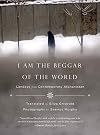
Landays, Afghan two-line poems, some centuries old, have an ephemeral quality, like a scrap of smoke in the air, or a remembered scent, hardly there. They are sung, or recited accompanied by a drum to keep time. Landays began among nomads and farmers and were sung around a campfire, though now both men and women use them in their daily life, as humor, as riposte, as an expression of grief or protest.
Eliza Griswold travelled to Afghanistan with the photographer Seamus Murphy when they’d show more heard a young woman was persecuted, and died, for writing poems. Her name was Zarmina. Zarmina also recited ancient landays, perhaps changing a word or two to reflect her own life. Griswold began to collect landays and with the collection she has shared with us, we are allowed deep into the national psyche.
Griswold explains her translation process, for which she won the 2015 PEN Award for Poetry in Translation. First the translation would be literal and then she would work with academics, writers, journalists to achieve something in English approaching the power of the poem in Pashto. By every measure, she has succeeded.
It is extremely rare for a journalist to manage to portray with such depth, honesty, clarity, and humanity a culture foreign to readers. Griswold manages it in a slim book of poetry. On two facing pages she has placed one of Seamus Murphy’s photographs, and a two line poem. On the overleaf she explains the context of the poem and its meaning. Griswold’s restraint highlights the power of the landays.
Some landays are just about the length of a tweet.
Some landays recited or sung at celebrations are recorded and shared with relatives or friends. Landays are commonly heard on the radio, or are shared now via Facebook or texted on a phone. What was a form of entertainment around a fire during a celebration has lingered in the national consciousness and become a coveted means of self-expression.
What makes this book so precious is the fact that it could have been nothing--a failure. It must have felt that way many times during the time Griswold and Murphy were working on the collecting, translating, polishing of the landays they present to us. But they really did something here: we get a sense of popular culture, and of the centuries-old richness of Afghan ancient culture. We see, finally, the rich internal life under the burqa.
The final landay and story in the book is extremely affecting: a fifteen-year-old calling herself “the new Zarmina” agrees to meet the author in a market town teeming with militants. She is unwilling to have her landays recorded or translated into the “language of the enemy,” though she has several written in a thin notebook with an apple tree on its cover. She instead recites an ancient landay:
Griswold herself is a poet and a journalist. Some years ago I reviewed her account of the area in Africa where the clash of religions seems to originate, called The Tenth Parallel: Dispatches from the Fault Line Between Christianity and Islam. The concept of that book also showed Griswold’s instinct to finger the pulse of a hotspot and take a reading. Griswold is more experienced now and she has gotten very good indeed at finding life where many others cannot. show less
Eliza Griswold travelled to Afghanistan with the photographer Seamus Murphy when they’d show more heard a young woman was persecuted, and died, for writing poems. Her name was Zarmina. Zarmina also recited ancient landays, perhaps changing a word or two to reflect her own life. Griswold began to collect landays and with the collection she has shared with us, we are allowed deep into the national psyche.
Griswold explains her translation process, for which she won the 2015 PEN Award for Poetry in Translation. First the translation would be literal and then she would work with academics, writers, journalists to achieve something in English approaching the power of the poem in Pashto. By every measure, she has succeeded.
It is extremely rare for a journalist to manage to portray with such depth, honesty, clarity, and humanity a culture foreign to readers. Griswold manages it in a slim book of poetry. On two facing pages she has placed one of Seamus Murphy’s photographs, and a two line poem. On the overleaf she explains the context of the poem and its meaning. Griswold’s restraint highlights the power of the landays.
Some landays are just about the length of a tweet.
Your eyes aren’t eyes. They’re bees.
I can find no cure for their sting.
Some landays recited or sung at celebrations are recorded and shared with relatives or friends. Landays are commonly heard on the radio, or are shared now via Facebook or texted on a phone. What was a form of entertainment around a fire during a celebration has lingered in the national consciousness and become a coveted means of self-expression.
What makes this book so precious is the fact that it could have been nothing--a failure. It must have felt that way many times during the time Griswold and Murphy were working on the collecting, translating, polishing of the landays they present to us. But they really did something here: we get a sense of popular culture, and of the centuries-old richness of Afghan ancient culture. We see, finally, the rich internal life under the burqa.
The final landay and story in the book is extremely affecting: a fifteen-year-old calling herself “the new Zarmina” agrees to meet the author in a market town teeming with militants. She is unwilling to have her landays recorded or translated into the “language of the enemy,” though she has several written in a thin notebook with an apple tree on its cover. She instead recites an ancient landay:
Separation, you set fire
In the heart and home of every lover.
Griswold herself is a poet and a journalist. Some years ago I reviewed her account of the area in Africa where the clash of religions seems to originate, called The Tenth Parallel: Dispatches from the Fault Line Between Christianity and Islam. The concept of that book also showed Griswold’s instinct to finger the pulse of a hotspot and take a reading. Griswold is more experienced now and she has gotten very good indeed at finding life where many others cannot. show less
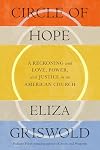
This is the first book I've read about religion in the US, and it's a very thoughtful view of an Anabaptist congregation in Philadelphia divided by issues of color and sexual preferences. There's a helpful look back at the "Jesus Freak" movement of the late '60s-early '70s and how many churchgoers sought a more equitable and anti-capitalist atmosphere for worship. However, Circle of Hope, with its origins in segregated inner city Philadelphia, struggles with attracting Black congregants and show more with overly loud and dominant white male leaders. The writer imbedded herself with the founders and the four pastors, one a son of the founders, two women, and one Egyptian-American, who seek to diversify their practices and their missions. Their internal conflicts are confusing and painful for the church members as Covid takes its toll. This is an empathetic deep look into people with good intentions being sidelined by their need for power and control. show less
Lists
Awards


You May Also Like


Associated Authors
Statistics
- Works
- 9
- Also by
- 4
- Members
- 928
- Popularity
- #27,658
- Rating
- 4.0
- Reviews
- 36
- ISBNs
- 42
- Languages
- 3
- Favorited
- 1