
Jackson Guice (1961–2025)
Author of The Death of Superman
About the Author
Series
Works by Jackson Guice
Black Panther and the Crew, Volume 1: We Are the Streets (2017) — Illustrator — 119 copies, 2 reviews
Black Panther and the Crew [2017] #3 - We Are the Streets, Part 3: Black Against the Empire (2017) — Illustrator — 13 copies, 1 review
Black Panther and the Crew [2017] #1 - We Are the Streets, Part 1: Double Consciousness (2017) — Illustrator — 12 copies, 1 review
Black Panther and the Crew [2017] #5 - We Are the Streets, Part 5: Down These Mean Streets (2017) — Illustrator — 12 copies, 1 review
Black Panther and the Crew [2017] #6 - We Are the Streets, Part 6: Everybody Loves the Sunshine (2017) — Illustrator — 12 copies, 1 review
Black Panther and the Crew [2017] #2 - We Are the Streets, Part 2: Afro-Blue (2017) — Illustrator — 11 copies, 1 review
Black Panther and the Crew [2017] #4 - We Are the Streets, Part 4: Nothing But a Man (2017) — Illustrator — 11 copies, 1 review
Southern Knights: The Graphic Novel — Illustrator — 9 copies
Aquaman: Sword of Atlantis #44 — Illustrator — 3 copies
Aquaman: Sword of Atlantis #40 — Illustrator — 3 copies
Aquaman: Sword of Atlantis #45 — Illustrator — 2 copies
Aquaman: Sword of Atlantis #43 — Illustrator — 2 copies
Legends of the DC Universe #18 (The New Teen Titans) — Illustrator — 2 copies
Deathlok Special #1 — Illustrator — 1 copy
Ruse, Tome 3 : Apparences 1 copy
Associated Works
The Death of Captain America Volume 2: The Burden of Dreams (2008) — Illustrator — 219 copies, 7 reviews
Savage Avengers Vol. 3: Enter the Dragon (Savage Avengers, 3) (2021) — Illustrator — 21 copies, 2 reviews
Marvel Comics Super Special #30: Indiana Jones and the Temple of Doom (1984) — Cover artist, some editions; Illustrator — 21 copies
Tagged
Common Knowledge
- Canonical name
- Guice, Jackson
- Legal name
- Guice, Jackson N., Jr.
- Other names
- Guice, Butch
- Birthdate
- 1961-06-27
- Date of death
- 2025-05-01
- Gender
- male
- Occupations
- fanzine artist
comics artist - Nationality
- USA
- Birthplace
- Chattanooga, Tennessee, USA
- Place of death
- Cincinnati, Ohio, USA
- Associated Place (for map)
- USA
Members
Reviews

In the early 1990s, comic book writers decided to kill off Superman, knowing that it would allow them to sell a bazillion copies, even to schmucks who don't buy comic books. Rather than have someone awesome kill of Superman, like Lex Luthor, they decided to invent someone totally lame to do it instead. Meet the Darth Maul of the DC Universe: Doomsday.
We're introduced to Doomsday as a big green fist smashing its way through a wall. The best part of this is that breaking your way out of a show more subterranean capsule apparently makes the sound effect KRAAKK! KARAAKK! KRAKA-DOOM! I hope someone out there is collecting the stupid textually-represented sound effects comics are filled with; this one deserves to be on the list. As the issue's main plot progresses, we get little snaps of what this gigantic fellow is up to. His first act of violence? He kills a bird. Exactly how this is supposed to establish him as a threat is beyond me. "Oh no, how will Superman defeat the horrendous... BIRD KILLER? He has the power to crunch two-pound lifeforms with his bare hands!" He can also fell trees.
After that excitement-filled, opening, we cut to an orphan kid buying spraypaint in a hardware store. Apparently, his mother's been kidnapped by a gang of thugs looking to "steal electricity". Lois Lane gets some sort of tip, and leaves Clark a message on his computer. "Very high tech of her," comments Clark when he shows up at work. I think this is sort of putting paid to the notion that this story somehow takes place four years ago as DC's current timeline would claim. The underground monsters end up stealing Metropolis's electricity, but Superman defeats them fairly easily. They're lead by a scruffy homeless man named Charlie who's actually working for Superman in any case; we're not exactly talking about a strong opposition. They come from a place called "War World"; no one ever bothers to explain why they're hanging out in the sewers or what they're going to do with their electricity. Superman leaves Charlie in the sewer in the end, because homeless people can't aspire to live better lives.
After this thrilling adventure, we cut back to the monster thing, who has just attacked a tanker... in Ohio! Apparently the monster thing came from Ohio. This makes me mildly better disposed towards him. Actually, I think this is the first time I've ever seen Ohio in a superhero comic. I bet he comes from Cleveland, though. The Justice League has been called in to deal with the tanker fire, as apparently they don't have firefighters in the DC Universe. An officer of the highway patrol thanks the Leaguers for helping out: "I'm well aware that Ohio is out of your normal area of jurisdiction--" What! I'm pretty sure this is set during the era when the Justice League was all "International" and worked for the UN; is Ohio not a UN member?
After the monster kills a deer, the Justice League springs into action (in Blue Beetle's totally awesome flying beetle) and combats him. They catch up to him outside Lex Oil's Ohio facility, where they are trounced pretty easily. Superman ditched a TV talk show where he's been doing an interview and flies to the rescue. "How could one man stand against the whole League?" he thinks. Whoa, slow down Superman. It's not like Wonder Woman, Batman, or even the Flash are part of the League now; we're talking about Blue Beetle, Booster Gold, Bloodwynd, Fire and Ice, Guy Gardner, and Maxima. These aren't exactly heavy hitters. Guy, as much as I love him, is in one of the periods where he's been kicked out of the Green Lantern Corps, so he's dressed even worse than usual, and I'm pretty sure I could take out Blue Beetle. And I've never even heard of Bloodwynd or Maxima. This comic doesn't exactly inspire me to want to know more about them, either. I'm pretty sure Maxima's power is being stupid. And having an invincible midriff.
Superman finally shows up after half the League has been incapacitated. "I'm telling you, right now--" says Booster Gold "--it's like doomsday is here!" Yes, Booster, I can certainly see how wiping out a tanker and an oil facility would make this the biggest threat the League's ever seen. For some reason, Superman decides that "Doomsday" must be the monster's name. Not good with comprehension, our Superman.
It's the early 1990s, so unfortunately about half of Superman's opening battle with Doomsday is intercut with a long-haired teenager with attitude who hates his mother. Superman hates this kid even more than I do, however; when he's trapped in a rampaging inferno, Superman flies away, thinking, "I have to... block out that plea for help!" What a nice guy.
Superman decides that even if the whole Justice League couldn't take Doomsday down, he can. He's got a point. Superman refers to the monster as "Mr. Destructo" at one point; I wish that name had stuck instead of "Doomsday"; it would have given this story the gravitas it deserves. We learn that the battle is occurring in "Kirby County, Ohio"-- there's no such place, though Wikipedia informs me that there is a "Kirby, Ohio" south of Findlay. On the other hand, Route 110 runs through the area, which is actually an 11-mile state highway in Henry County, west of Bowling Green. The governor of Ohio is mentioned; during this time, that would have been George Voinovich. The lieutenant governor actually particaptes in a phone conversation, where he is repeatedly insulted. Poor Mike DeWine.
For some reason, there's a sequence where Jimmy Olsen is dressed as a giant turtle. Then, a news anchor informs us that "It appears 'Doomsday' is on a straight path crossing from Ohio through New York State... Some theorize that the creature is on a straight course to-- or through-- Metropolis." Apparently, the news has magically got wind of Superman's misbegotten nickname for the creature. And Pennsylvania does not exist in the DC Universe. Thank God.
Superman fights Doomsday by a gas station. Can't anyone ever catch up to this guy not in proximity to flammable materials? Now we learn that the gas station is in "the village of Griffith in upstate Kirby County." Doomsday must be fluctuating the fabric of space or something, because Griffith is in eastern Ohio, nowhere near Kirby or Route 110. Alarmed by the fact that the writers don't know a thing about geography, Jack Kirby's Golden Guardian shows up. Now, I like random appearances by Fourth World characters as much as the next guy, but all he does is talk to Superman and telepathically commune with Dubbilex. Thanks a lot, dude.
All of a sudden, Doomsday's attacking a Lex-Mart in Midvale, which is about fifty miles northwest of Griffith. So much for his beeline towards Metropolis. And "Lex-Mart"? Are there any other megacorporations in the DC Universe? At the Lex-Mart, Doomsday watches an ad for a wrestling match at the Metropolis Arena. Why wrestling matches an eight-hour drive away are being advertized on this TV station is beyond me. Doomsday is intrigued by this ad and decides to head for Metropolis... despite a reporter telling us fifteen pages ago that he was heading straight towards it.
Superman and Doomsday continue to punch each other a lot. This has been going on for about fifty pages, now. I'm starting to miss the sewer folks. They might have been stupid, but that made them entertaining. Doomsday is pure tedium.
More proof that it's the early 1990s materializes with Lois Lane's awful aviators and Lex Luthor's long, flowing locks. Since when did Lex Luthor have hair, anyway? Or hang out with Supergirl?
Doomsday looks at a sign and learns that he's only sixty miles from Metropolis. Which would place him and Superman somewhere in New Jersey, I think. What the heck? What happened to Midvale? Or all of Pennsylvania, for that matter? If you're wondering why I'm focusing on the geography so much, it's because it's the only interesting thing happening here. Unless you count Superman and Doomsday throwing each other at things again and again. Including the Wild Area, which is a giant treehouse outside of Metropolis. Why wasn't this retconned out of existence during the Crisis? The Golden Guardian is still tagging along, still doing nothing. He finally decides that Doomsday is too big for Superman to handle alone... and promptly never appears in the story again. Way to go, dude.
It wouldn't help much, though. Supergirl attacks Doomsday and gets turned into a featurelss purple thing with googly eyes. I don't know what kind of punch can do that, but it's one I'd stay away from.
"This insanity ends in Metropolis!" Superman shouts outside of a Lexpark Garage. What, were the geographically confused inhabitants of Kirby County, Ohio not worthy of your best efforts? I guess not-- Ohio's not part of the UN after all.
As sensitive as ever, Jimmy Olsen (thankfully not dressed like a turtle) is excited that Doomsday's killing hundreds of Metropolis residents because it gives him some good photographs. No wonder he can't ever get a girlfriend.
Superman's cape is torn off and wraps itself around a convenient wooden pole.
Superman and Doomday punch each other for a series of one-panel pages. Superman takes one in the jaw. "Bony protrustions... so sharp.. he cut me!" he shouts. Yes, my natural reaction getting punched is also to describe the punch.
PUNCH PUNCH PUNCH PUNCH PUNCH PUNCH. PUNCH. PUNCH.
Finally, Superman decides to punch Doomsday really hard. Hard enough to kill him. Why didn't he think of this earlier? I don't know, but it's too late. Because he dies.
The narrator tells me that everyone will remember this day for years because Superman dies. He doesn't bother to mention that he only stays dead for a few months. Personally, I wasn't crying; I was rejoicing. Because the whole mess was finally over. show less
We're introduced to Doomsday as a big green fist smashing its way through a wall. The best part of this is that breaking your way out of a show more subterranean capsule apparently makes the sound effect KRAAKK! KARAAKK! KRAKA-DOOM! I hope someone out there is collecting the stupid textually-represented sound effects comics are filled with; this one deserves to be on the list. As the issue's main plot progresses, we get little snaps of what this gigantic fellow is up to. His first act of violence? He kills a bird. Exactly how this is supposed to establish him as a threat is beyond me. "Oh no, how will Superman defeat the horrendous... BIRD KILLER? He has the power to crunch two-pound lifeforms with his bare hands!" He can also fell trees.
After that excitement-filled, opening, we cut to an orphan kid buying spraypaint in a hardware store. Apparently, his mother's been kidnapped by a gang of thugs looking to "steal electricity". Lois Lane gets some sort of tip, and leaves Clark a message on his computer. "Very high tech of her," comments Clark when he shows up at work. I think this is sort of putting paid to the notion that this story somehow takes place four years ago as DC's current timeline would claim. The underground monsters end up stealing Metropolis's electricity, but Superman defeats them fairly easily. They're lead by a scruffy homeless man named Charlie who's actually working for Superman in any case; we're not exactly talking about a strong opposition. They come from a place called "War World"; no one ever bothers to explain why they're hanging out in the sewers or what they're going to do with their electricity. Superman leaves Charlie in the sewer in the end, because homeless people can't aspire to live better lives.
After this thrilling adventure, we cut back to the monster thing, who has just attacked a tanker... in Ohio! Apparently the monster thing came from Ohio. This makes me mildly better disposed towards him. Actually, I think this is the first time I've ever seen Ohio in a superhero comic. I bet he comes from Cleveland, though. The Justice League has been called in to deal with the tanker fire, as apparently they don't have firefighters in the DC Universe. An officer of the highway patrol thanks the Leaguers for helping out: "I'm well aware that Ohio is out of your normal area of jurisdiction--" What! I'm pretty sure this is set during the era when the Justice League was all "International" and worked for the UN; is Ohio not a UN member?
After the monster kills a deer, the Justice League springs into action (in Blue Beetle's totally awesome flying beetle) and combats him. They catch up to him outside Lex Oil's Ohio facility, where they are trounced pretty easily. Superman ditched a TV talk show where he's been doing an interview and flies to the rescue. "How could one man stand against the whole League?" he thinks. Whoa, slow down Superman. It's not like Wonder Woman, Batman, or even the Flash are part of the League now; we're talking about Blue Beetle, Booster Gold, Bloodwynd, Fire and Ice, Guy Gardner, and Maxima. These aren't exactly heavy hitters. Guy, as much as I love him, is in one of the periods where he's been kicked out of the Green Lantern Corps, so he's dressed even worse than usual, and I'm pretty sure I could take out Blue Beetle. And I've never even heard of Bloodwynd or Maxima. This comic doesn't exactly inspire me to want to know more about them, either. I'm pretty sure Maxima's power is being stupid. And having an invincible midriff.
Superman finally shows up after half the League has been incapacitated. "I'm telling you, right now--" says Booster Gold "--it's like doomsday is here!" Yes, Booster, I can certainly see how wiping out a tanker and an oil facility would make this the biggest threat the League's ever seen. For some reason, Superman decides that "Doomsday" must be the monster's name. Not good with comprehension, our Superman.
It's the early 1990s, so unfortunately about half of Superman's opening battle with Doomsday is intercut with a long-haired teenager with attitude who hates his mother. Superman hates this kid even more than I do, however; when he's trapped in a rampaging inferno, Superman flies away, thinking, "I have to... block out that plea for help!" What a nice guy.
Superman decides that even if the whole Justice League couldn't take Doomsday down, he can. He's got a point. Superman refers to the monster as "Mr. Destructo" at one point; I wish that name had stuck instead of "Doomsday"; it would have given this story the gravitas it deserves. We learn that the battle is occurring in "Kirby County, Ohio"-- there's no such place, though Wikipedia informs me that there is a "Kirby, Ohio" south of Findlay. On the other hand, Route 110 runs through the area, which is actually an 11-mile state highway in Henry County, west of Bowling Green. The governor of Ohio is mentioned; during this time, that would have been George Voinovich. The lieutenant governor actually particaptes in a phone conversation, where he is repeatedly insulted. Poor Mike DeWine.
For some reason, there's a sequence where Jimmy Olsen is dressed as a giant turtle. Then, a news anchor informs us that "It appears 'Doomsday' is on a straight path crossing from Ohio through New York State... Some theorize that the creature is on a straight course to-- or through-- Metropolis." Apparently, the news has magically got wind of Superman's misbegotten nickname for the creature. And Pennsylvania does not exist in the DC Universe. Thank God.
Superman fights Doomsday by a gas station. Can't anyone ever catch up to this guy not in proximity to flammable materials? Now we learn that the gas station is in "the village of Griffith in upstate Kirby County." Doomsday must be fluctuating the fabric of space or something, because Griffith is in eastern Ohio, nowhere near Kirby or Route 110. Alarmed by the fact that the writers don't know a thing about geography, Jack Kirby's Golden Guardian shows up. Now, I like random appearances by Fourth World characters as much as the next guy, but all he does is talk to Superman and telepathically commune with Dubbilex. Thanks a lot, dude.
All of a sudden, Doomsday's attacking a Lex-Mart in Midvale, which is about fifty miles northwest of Griffith. So much for his beeline towards Metropolis. And "Lex-Mart"? Are there any other megacorporations in the DC Universe? At the Lex-Mart, Doomsday watches an ad for a wrestling match at the Metropolis Arena. Why wrestling matches an eight-hour drive away are being advertized on this TV station is beyond me. Doomsday is intrigued by this ad and decides to head for Metropolis... despite a reporter telling us fifteen pages ago that he was heading straight towards it.
Superman and Doomsday continue to punch each other a lot. This has been going on for about fifty pages, now. I'm starting to miss the sewer folks. They might have been stupid, but that made them entertaining. Doomsday is pure tedium.
More proof that it's the early 1990s materializes with Lois Lane's awful aviators and Lex Luthor's long, flowing locks. Since when did Lex Luthor have hair, anyway? Or hang out with Supergirl?
Doomsday looks at a sign and learns that he's only sixty miles from Metropolis. Which would place him and Superman somewhere in New Jersey, I think. What the heck? What happened to Midvale? Or all of Pennsylvania, for that matter? If you're wondering why I'm focusing on the geography so much, it's because it's the only interesting thing happening here. Unless you count Superman and Doomsday throwing each other at things again and again. Including the Wild Area, which is a giant treehouse outside of Metropolis. Why wasn't this retconned out of existence during the Crisis? The Golden Guardian is still tagging along, still doing nothing. He finally decides that Doomsday is too big for Superman to handle alone... and promptly never appears in the story again. Way to go, dude.
It wouldn't help much, though. Supergirl attacks Doomsday and gets turned into a featurelss purple thing with googly eyes. I don't know what kind of punch can do that, but it's one I'd stay away from.
"This insanity ends in Metropolis!" Superman shouts outside of a Lexpark Garage. What, were the geographically confused inhabitants of Kirby County, Ohio not worthy of your best efforts? I guess not-- Ohio's not part of the UN after all.
As sensitive as ever, Jimmy Olsen (thankfully not dressed like a turtle) is excited that Doomsday's killing hundreds of Metropolis residents because it gives him some good photographs. No wonder he can't ever get a girlfriend.
Superman's cape is torn off and wraps itself around a convenient wooden pole.
Superman and Doomday punch each other for a series of one-panel pages. Superman takes one in the jaw. "Bony protrustions... so sharp.. he cut me!" he shouts. Yes, my natural reaction getting punched is also to describe the punch.
PUNCH PUNCH PUNCH PUNCH PUNCH PUNCH. PUNCH. PUNCH.
Finally, Superman decides to punch Doomsday really hard. Hard enough to kill him. Why didn't he think of this earlier? I don't know, but it's too late. Because he dies.
The narrator tells me that everyone will remember this day for years because Superman dies. He doesn't bother to mention that he only stays dead for a few months. Personally, I wasn't crying; I was rejoicing. Because the whole mess was finally over. show less

Published after Gibson's The Peripheral and sharing many broad points of its premise, I'd assumed Archangel was a spin-off with minimal or perhaps no overlapping characters. Turns out the germ for Archangel came first, though Gibson admits it underwent significant revision from its origin as a television pitch (never developing even so far as a proper treatment).
In any case, there are strong parallels: split timelines and the ability to communicate between them via live feeds. In the case show more of Archangel, it's also possible physically to relocate to a split timeline (the question of a return is moot given the scenario explored). The provenance of the technology allowing all this, however, is radically different between the novel and this limited series comic, as are the geopolitical circumstances. It would appear Archangel's future world also experienced a Jackpot event, so if they are not the same worlds perhaps one is a stub of the other? Perhaps our timeline is a stub of one of those, no reason to believe ours is the primary branch, and I think that realisation is part of Gibson's point. Archangel's trigger event is of a piece with that strain of industrial-military incompetence so prevalent in our world.
Full colour throughout and in a style I vaguely connect with vintage Lost Patrol or Haunted Tank comics I came across in the 1970s and early 80s, Berlin 1945 looks in permanent brownout.
synopsis | A secret U.S. government project sends the current Vice President back to 1945 Berlin, attempting to steer events toward a more desirable future -- presumably one avoiding the nuclear holocaust referenced in the opening panels and briefly explained later in the story. The project is compromised by fifth columnists who see in this secret project only a repeat doomsday on another stage. Events play out in both 1945 and 2016, and seeded throughout are references to recognisable bits from our world: pulp fiction, Allies-Axis backroom deals, blackmarket necessities. Like much Gibson some of the most intriguing bits are offscreen. show less
In any case, there are strong parallels: split timelines and the ability to communicate between them via live feeds. In the case show more of Archangel, it's also possible physically to relocate to a split timeline (the question of a return is moot given the scenario explored). The provenance of the technology allowing all this, however, is radically different between the novel and this limited series comic, as are the geopolitical circumstances. It would appear Archangel's future world also experienced a Jackpot event, so if they are not the same worlds perhaps one is a stub of the other? Perhaps our timeline is a stub of one of those, no reason to believe ours is the primary branch, and I think that realisation is part of Gibson's point. Archangel's trigger event is of a piece with that strain of industrial-military incompetence so prevalent in our world.
Full colour throughout and in a style I vaguely connect with vintage Lost Patrol or Haunted Tank comics I came across in the 1970s and early 80s, Berlin 1945 looks in permanent brownout.
synopsis | A secret U.S. government project sends the current Vice President back to 1945 Berlin, attempting to steer events toward a more desirable future -- presumably one avoiding the nuclear holocaust referenced in the opening panels and briefly explained later in the story. The project is compromised by fifth columnists who see in this secret project only a repeat doomsday on another stage. Events play out in both 1945 and 2016, and seeded throughout are references to recognisable bits from our world: pulp fiction, Allies-Axis backroom deals, blackmarket necessities. Like much Gibson some of the most intriguing bits are offscreen. show less
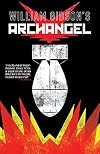
Gibson's newest book is a graphic novel. In a 2016 that is not ours, the world's great cities are smashed and radioactive. The US government has been moved to Montana, and scientists there have built a form of time machine - a "splitter", which can reach into the past to create a branching timeline. People can be sent back, into a past filled with new possibily, to create a new future, separate from the disastrous one they left.
The denizens of the radioactive 2016 have sharply divergent show more views on what this renewed world should become, and so two rival expeditions travel back to the 1945 they, and we, remember, each determined to bring about their preferred alternate history by any means necessary.
In August 1945, in the ruins of Berlin, British intelligence officer Naomi Givens must make sense of a film showing the crash of an aircraft unlike any in the world, a plane that appeared out of thin air. The Soviets have the wreckage, but she has the still-living pilot, and samples of materials no one in 1945 knows how to make. Working with an American counterpart, she must understand a secret war over the future.
Graphic novels are group projects; there are 12 names on the title page, artists, writers, and editors. I'm familiar only with Gibson. The panels are drawn realistically, although in action sequences the choices of views and viewing angles sometimes make it a bit difficult to see who is doing what. The book presents a splendid vision of a noir Berlin.
Thoughts of how history can branch at crucial moments are on the minds of many of us these days, and Gibson's book is an extremely timely investigation of the idea. show less
The denizens of the radioactive 2016 have sharply divergent show more views on what this renewed world should become, and so two rival expeditions travel back to the 1945 they, and we, remember, each determined to bring about their preferred alternate history by any means necessary.
In August 1945, in the ruins of Berlin, British intelligence officer Naomi Givens must make sense of a film showing the crash of an aircraft unlike any in the world, a plane that appeared out of thin air. The Soviets have the wreckage, but she has the still-living pilot, and samples of materials no one in 1945 knows how to make. Working with an American counterpart, she must understand a secret war over the future.
Graphic novels are group projects; there are 12 names on the title page, artists, writers, and editors. I'm familiar only with Gibson. The panels are drawn realistically, although in action sequences the choices of views and viewing angles sometimes make it a bit difficult to see who is doing what. The book presents a splendid vision of a noir Berlin.
Thoughts of how history can branch at crucial moments are on the minds of many of us these days, and Gibson's book is an extremely timely investigation of the idea. show less
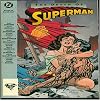
Doomsday. The villain that exists with no past and no future, apparently arriving on the scene for one purpose, to create a believable way for Superman to die. Okay, two purposes: to sell a collector's item, the comic book in which Superman dies. This was the 90s after all. This collection, which includes issues of Superman, Superman: Man of Steel, Superman in Action Comics, The Adventures of Superman, and Justice League America, is not good. It is six issues of various heroes getting their show more butts handed to them by Doomsday, a bad guy who has bones protruding from his body (again, the 90s), who laughs as he chokes a deer and destroys a Lex-Mart. The final issue, Superman #75, is odd in that every page is a splash page, with the final two pages being one double-sized splash page. That makes for a lot less story and, for me, it doesn't work. And the death, well, it wasn't very heroic. This is Superman. He should die saving the planet, or the universe, or Lois Lane or Ma and Pa Kent. Instead he proves ineffectual for seven issues as Doomsday causes billions of dollars in damage and murders countless civilians, and then both he and Doomsday appear to battle each other to the death off-screen (because of the lack of story room thanks to the splash pages). This is anti-climactic to the nth degree. I do not miss the comics from the 90s. Well, okay, I miss Valiant comics from the 90s. And now Dark Horse is re-doing most of them. Go figure. show less
Lists
You May Also Like
Associated Authors
Statistics
- Works
- 65
- Also by
- 27
- Members
- 2,884
- Popularity
- #8,883
- Rating
- 3.7
- Reviews
- 69
- ISBNs
- 92
- Languages
- 6
- Favorited
- 1