
W. D. Wetherell
Author of The Smithsonian Guides to Natural America: Northern New England
About the Author
W. D. Wetherell is the author of eleven previous works of fiction & non-fiction. He has received two fellowships from the National Endowment for the Arts, two O. Henry Awards, the Drue Heinz Literature Prize, & most recently, the American Academy of Arts & Letters' Strauss Living Award. He lives in show more Lyme, New Hampshire. (Bowker Author Biography) show less
Image credit: IDENTITY THEORY
Works by W. D. Wetherell
Associated Works
Tagged
Common Knowledge
- Birthdate
- 1948
- Gender
- male
- Occupations
- short story writer
novelist
non-fiction writer - Nationality
- USA
- Places of residence
- Lyme Center, New Hampshire, USA
Garden City, New Jersey, USA - Associated Place (for map)
- USA
Members
Reviews
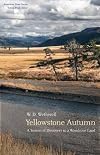
W. D. Wetherell's Yellowstone Autumn: A Season of Discovery in a Wondrous Land is a finely crafted, deeply introspective work, at once both a memoir of a wry and insightful writer who chooses to spend his fifty-fifth birthday alone at Yellowstone National Park, and an ode to this most awe-inspiring and majestic part of the American landscape.
His introspection starts immediately, with the first words: "What kind of man wants to be alone on his birthday?" And his long, hard mid-life look in show more the mirror (quite literally at one point) weaves in and out of the narrative along with some interesting nuggets of Yellowstone's history, observations of the park's natural wonders, and his considerable time spent fishing its many rivers and streams. At one point he imagines himself as one of the early party of men who first encountered Yellowstone, and he provides a series of inspired mock-journal entries that show how he would have recorded such sublime adventures.
Along the way, Wetherell takes stock of his conflicting emotions at this milestone age, his marriage, and offers a truly riveting account of how it feels to be part of the "sandwich generation," simultaneously responsible for his teenage children and his aging father, and the conflicts that inevitably result. show less
His introspection starts immediately, with the first words: "What kind of man wants to be alone on his birthday?" And his long, hard mid-life look in show more the mirror (quite literally at one point) weaves in and out of the narrative along with some interesting nuggets of Yellowstone's history, observations of the park's natural wonders, and his considerable time spent fishing its many rivers and streams. At one point he imagines himself as one of the early party of men who first encountered Yellowstone, and he provides a series of inspired mock-journal entries that show how he would have recorded such sublime adventures.
Along the way, Wetherell takes stock of his conflicting emotions at this milestone age, his marriage, and offers a truly riveting account of how it feels to be part of the "sandwich generation," simultaneously responsible for his teenage children and his aging father, and the conflicts that inevitably result. show less
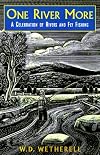
The classification for this book reads “Fly fishing – Anecdotes”, but this does little justice to this fine book. The third of a trilogy on fly fishing, this book is “impelled by a reformer’s zeal…the feeling that the tremendous surge in popularity that fly fishing has undergone in the last ten years has seen much lost in terms of quietude and contentment, modesty and simplicity, solidarity and fellowship”. One%20River%20More.jpg
This is the book’s strength – a point of show more view, strongly held. Behind that disarming folksy style that defines a whole genre of fly fishing travelogue, Mr Wetherell asks an uncomfortable question: “How does a sport for loners and traditionalists and the few suddenly become yet another fad in the massive, exaggerated way of American fads?” With the commercialisation as evidenced by fly fishing schools, personality cults, technology and advertising, the fly fishing media, the de rigueur $1000 fly rod, the demise of stream etiquette, Wetherell urges “what we need constantly - is to remember why fly fishing is worth doing in the first place”. And cutting to the chase, we get to it: “whosoever would be a fly fisher must be a non-conformist, a paraphrase of Emerson”.
Is this a retreat into nostalgia for a time and place that never actually existed other than in Mr Wetherell’s mind? Is it a symptom of some loony backwoodsman survivalist tradition? Is it just the natural outcome of the doubts of a man in the rearguard of his life at the end of a turbulent century? I think not. There is too much in this book that encourages optimism despite the problems that he describes. “I’m going to find what I have always found – the miraculous current that connects simple pleasure to great joy – and try ten times harder to put delight back into the river from whence it all springs”. Rather than dwell on the macro-economic and the global, Wetherell advises local involvement on local issues.
Elsewhere Wetherell provides good travelogue (Yellowstone), chatty fishing logs in the time-honoured tradition of the genre, and miscellania, as in his musings of what occupies a fisherman’s mind in the closed season, but his best is reserved for his essays on his home waters.
The Upper Connecticut, the streams of Vermont and New Hampshire, the small towns where “like the river, the money has always flowed south here and probably always will”, the river logging industry; these seem to be the areas closest to his heart, and it shows. In his writing we get a glimpse of the man. A sense of much time spent alone; fishing as a solitary pursuit (of what and whom?); of talking to oneself and rehearsing conversations; of cleansing and renewal. The solitude of the fisherman and the solitude of the writer merging. Wetherell closes “this is my third book on fly fishing – I don’t think there will be a fourth”. A pity, but I can understand the sentiment. show less
This is the book’s strength – a point of show more view, strongly held. Behind that disarming folksy style that defines a whole genre of fly fishing travelogue, Mr Wetherell asks an uncomfortable question: “How does a sport for loners and traditionalists and the few suddenly become yet another fad in the massive, exaggerated way of American fads?” With the commercialisation as evidenced by fly fishing schools, personality cults, technology and advertising, the fly fishing media, the de rigueur $1000 fly rod, the demise of stream etiquette, Wetherell urges “what we need constantly - is to remember why fly fishing is worth doing in the first place”. And cutting to the chase, we get to it: “whosoever would be a fly fisher must be a non-conformist, a paraphrase of Emerson”.
Is this a retreat into nostalgia for a time and place that never actually existed other than in Mr Wetherell’s mind? Is it a symptom of some loony backwoodsman survivalist tradition? Is it just the natural outcome of the doubts of a man in the rearguard of his life at the end of a turbulent century? I think not. There is too much in this book that encourages optimism despite the problems that he describes. “I’m going to find what I have always found – the miraculous current that connects simple pleasure to great joy – and try ten times harder to put delight back into the river from whence it all springs”. Rather than dwell on the macro-economic and the global, Wetherell advises local involvement on local issues.
Elsewhere Wetherell provides good travelogue (Yellowstone), chatty fishing logs in the time-honoured tradition of the genre, and miscellania, as in his musings of what occupies a fisherman’s mind in the closed season, but his best is reserved for his essays on his home waters.
The Upper Connecticut, the streams of Vermont and New Hampshire, the small towns where “like the river, the money has always flowed south here and probably always will”, the river logging industry; these seem to be the areas closest to his heart, and it shows. In his writing we get a glimpse of the man. A sense of much time spent alone; fishing as a solitary pursuit (of what and whom?); of talking to oneself and rehearsing conversations; of cleansing and renewal. The solitude of the fisherman and the solitude of the writer merging. Wetherell closes “this is my third book on fly fishing – I don’t think there will be a fourth”. A pity, but I can understand the sentiment. show less
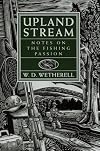
Reading Wetherell's last book in his fly-fishing trilogy first, "One River More", is to have the side of history in your favour. One can see the path Wetherell trod and also appreciate why he has decided to call it quits with this particular genre. Although I enjoyed "One River More" immensely, compared to "Upland Stream", it was self-indulgent, like soft sticky toffee.
Upland Stream has a more direct and immediate style with fewer excursions into existential thoughts and doubts. It is a show more tighter read and better for it.
Three real gems light up this book: Wetherell's wonderful thoughts on New England small stream brook trout fishing in "Copper Run", where "hemlock-dwelling trout mock you with their inaccessibility". His trip to the mecca of fly-fishing, Yellowstone, in "Big (Smoky) Sky" at a time when the rivers are closed down to forest fires; and Two Places Well, where Wetherell re-discovers the joys of wet fly fishing in Scotland and visits the place of my own ancestors, Galloway. And it's obvious to this reader which waters Wetherell likes to fish. The quiet unassuming shaded stream where small wild trout glide beneath undercut banks and the heavy scent of wild garlic fills the air.
We "see" through our fly. It's the thrill of being hunted that gives fishing its charm. And, like the trout he catches, I am one reader who will return to take a look at the the lure which is his first book - "Vermont River". show less
Upland Stream has a more direct and immediate style with fewer excursions into existential thoughts and doubts. It is a show more tighter read and better for it.
Three real gems light up this book: Wetherell's wonderful thoughts on New England small stream brook trout fishing in "Copper Run", where "hemlock-dwelling trout mock you with their inaccessibility". His trip to the mecca of fly-fishing, Yellowstone, in "Big (Smoky) Sky" at a time when the rivers are closed down to forest fires; and Two Places Well, where Wetherell re-discovers the joys of wet fly fishing in Scotland and visits the place of my own ancestors, Galloway. And it's obvious to this reader which waters Wetherell likes to fish. The quiet unassuming shaded stream where small wild trout glide beneath undercut banks and the heavy scent of wild garlic fills the air.
We "see" through our fly. It's the thrill of being hunted that gives fishing its charm. And, like the trout he catches, I am one reader who will return to take a look at the the lure which is his first book - "Vermont River". show less
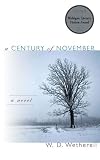
In A Century of November, W. D. Wetherell tells the heartbreaking story of Charles Marden's quest to understand his son's death. Marden travels from British Columbia to the scarred, still smoldering battlefield in Belgium where his son died shortly before the November 11, 1918 Armistice that ended World War I.
This is a beautiful book, poetically written. Wetherell creates images with words – snowy train tracks through the mountains, street celebrations that verge on riots, misty moonscapes show more of battlefields laced with barbed wire – that linger even after the emotional impact of the story begins to fade.
One small drawback is that the book is very short, so some of the scenes seem truncated. As with most quest literature, the hero encounters several people along his journey who help or teach him in some way and then drop out of the story. In a longer book, these episodes can be drawn in more detail, or there are enough of them that a pattern is more apparent. But in a short book, the quick comings and goings of side characters feels a little choppy.
That is a minor criticism for what is otherwise a forceful book. They are making A Century of November into a movie, which could be very good because Wetherell’s images should translate to the screen easily.
Also posted on Rose City Reader. show less
This is a beautiful book, poetically written. Wetherell creates images with words – snowy train tracks through the mountains, street celebrations that verge on riots, misty moonscapes show more of battlefields laced with barbed wire – that linger even after the emotional impact of the story begins to fade.
One small drawback is that the book is very short, so some of the scenes seem truncated. As with most quest literature, the hero encounters several people along his journey who help or teach him in some way and then drop out of the story. In a longer book, these episodes can be drawn in more detail, or there are enough of them that a pattern is more apparent. But in a short book, the quick comings and goings of side characters feels a little choppy.
That is a minor criticism for what is otherwise a forceful book. They are making A Century of November into a movie, which could be very good because Wetherell’s images should translate to the screen easily.
Also posted on Rose City Reader. show less
Awards


You May Also Like


Associated Authors
Statistics
- Works
- 28
- Also by
- 6
- Members
- 444
- Popularity
- #55,178
- Rating
- 3.7
- Reviews
- 7
- ISBNs
- 51
- Languages
- 1