

Laura Wiess
Author of Such a Pretty Girl
About the Author
Image credit: Author Laura Wiess
Works by Laura Wiess
Tagged
Common Knowledge
- Canonical name
- Wiess, Laura
- Legal name
- Laura Battyanyi Wiess
- Birthdate
- 20th Century
- Gender
- female
- Nationality
- USA
- Birthplace
- New Jersey, USA
- Places of residence
- Pennsylvania, USA
- Associated Place (for map)
- USA
Members
Reviews
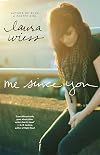
El Extraño Gato del cuento
Me gustan los dramones, la gente que me conoce lo sabe, sobre todo este tipo de dramas, en Goodreads tiene la etiqueta "Muerte", lo vi y salte a pedírsela a la editorial. El libro me sorprendió de una trágica manera, cuando terminé de leerlo pensé "¿Y ahora como lo reseño sin entrar en spoilers?"
Este es uno de esos libros donde vas con una idea clara, o sinopsis engañosas, o tan bien hechas que luego te destruyen el corazón, además con la portada pensé show more que era solo un libro dramático simplecito, que me haría derramar una lágrima y luego quedaría como un buen recuerdo. Laura Weiss te va dando la historia de una manera tan sutil, hasta el punto en el cual llegas a pensar que todo ya está dicho, te da tranquilidad lectora, pero luego reírse malvadamente y quitarte todas las esperanzas de que este mundo es bueno y justo. Okay, quizá estoy siendo demasiado dramática, es solo que el libro lo merece.
Los personajes están bien construidos, hay detalles de los cuales Rowan nos hace notar de la gente a su alrededor, de como se comportan, que en el personal habría pasado por alto, que te hacen pensar en la manera de comportarse de las personas a tu alrededor. Me gustó también que los personajes secundarios no estuvieron todo el tiempo pendiente de la protagonista, es que ¿qué haces cuando ya no puedes hacer nada más? Puede ser... No, tacha eso, algunas de las acciones de las personas alrededor de Rowan fueron crueles, solo que a veces, debes seguir con tu vida, de la forma en la que decidas, a veces también sin importar qué o quién dejas atrás. Lo hemos hecho, al menos yo lo he hecho, dejar a personas que en lugar de hacerme sentir mejor, me hacían sentir mal, a veces puede llamarse cobarde, pero también puede llamarse supervivencia.
Me Since You es un libro que me ha tocado mucho la fibra sensible, no se que haría si estuviera en el lugar de Rowan, aunque lo que más me afectó fue el hecho de que estuve y estoy (a veces, peleo mucho con eso) en lo que desencadena todo la historia.
Reseña Completa: El Extraño Gato del cuento show less
Teens and tragedy appear to go hand-in-hand lately. It is unfortunate in a way because it makes the teen years much more difficult than they already are. Still, there is an attraction between the two that is difficult to ignore, if only because misery does love company. Besides, people find solace in another person’s pain – to some extent.
The most emotionally difficult scenes within the story are also the ones that emphasize Ms. Wiess’ mastery of the emotions within the story. show more Rowan’s, as well as her mother’s, struggles through the grief process are tough, honest, and surprisingly gripping. One expects to be a remote observer to the proceedings, but this ends quickly with Ms. Wiess’ knack for capturing in a few taut words everything Rowan emotionally and mentally experiences. The reader becomes something more than a bystander, not just a witness to Rowan’s pain but a fellow sufferer.
Ms. Wiess touches on the debilitating effects of depression, not just on the sufferer but also on the sufferer’s loved ones, with grace and gravitas. As a result, it is an intense story that makes one reevaluate the growing concern about bullying, especially online. She shows that one cannot just hope to wake up one day and feel happy, that it is not a mindset one can change at will, that it is truly a disease every bit as insidious and damaging as the sneakiest cancer or pathogen.
There is nothing truly remarkable about Rowan. She is not the queen bee of her school’s hierarchy, nor is she the delightfully quirky free spirit who follows her own social rules. She is neither a talented athlete nor artist. She is a normal teen with normal fears, desires, dreams, and parental battles. She seeks independence without gaining too much adult responsibility and looks for ways to test the boundaries set by her parents. There is nothing good or bad about her position. She is a typical teen, but one who has to experience the toughest type of loss. Rowan’s ordinariness is refreshing because it is a reminder that even those who spend their entire lives flying under the radar and living by the rules cannot hide from grief. It is also significant because it allows readers to better empathize with her, as there is nothing extraordinary about her that makes it impossible to step into her shoes and experience her emotions.
Me Since You is not a cheery novel. The tragedy that occurs to Rowan is almost as bad as one imagines it will be, and there is no getting around the seriousness of the plot. This does not mean that the novel is entirely depressing. There are hopeful moments and scenes of growth and maturity that offset the more upsetting scenes, with the story ending on a positive note that no matter how bad things get, they almost always improve. It is as important a message as one could portray to its teen audience, and one worth remembering for adult readers as well. show less
The most emotionally difficult scenes within the story are also the ones that emphasize Ms. Wiess’ mastery of the emotions within the story. show more Rowan’s, as well as her mother’s, struggles through the grief process are tough, honest, and surprisingly gripping. One expects to be a remote observer to the proceedings, but this ends quickly with Ms. Wiess’ knack for capturing in a few taut words everything Rowan emotionally and mentally experiences. The reader becomes something more than a bystander, not just a witness to Rowan’s pain but a fellow sufferer.
Ms. Wiess touches on the debilitating effects of depression, not just on the sufferer but also on the sufferer’s loved ones, with grace and gravitas. As a result, it is an intense story that makes one reevaluate the growing concern about bullying, especially online. She shows that one cannot just hope to wake up one day and feel happy, that it is not a mindset one can change at will, that it is truly a disease every bit as insidious and damaging as the sneakiest cancer or pathogen.
There is nothing truly remarkable about Rowan. She is not the queen bee of her school’s hierarchy, nor is she the delightfully quirky free spirit who follows her own social rules. She is neither a talented athlete nor artist. She is a normal teen with normal fears, desires, dreams, and parental battles. She seeks independence without gaining too much adult responsibility and looks for ways to test the boundaries set by her parents. There is nothing good or bad about her position. She is a typical teen, but one who has to experience the toughest type of loss. Rowan’s ordinariness is refreshing because it is a reminder that even those who spend their entire lives flying under the radar and living by the rules cannot hide from grief. It is also significant because it allows readers to better empathize with her, as there is nothing extraordinary about her that makes it impossible to step into her shoes and experience her emotions.
Me Since You is not a cheery novel. The tragedy that occurs to Rowan is almost as bad as one imagines it will be, and there is no getting around the seriousness of the plot. This does not mean that the novel is entirely depressing. There are hopeful moments and scenes of growth and maturity that offset the more upsetting scenes, with the story ending on a positive note that no matter how bad things get, they almost always improve. It is as important a message as one could portray to its teen audience, and one worth remembering for adult readers as well. show less
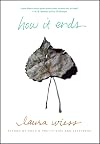
The first chapter, told from Helen's viewpoint as she remembers watching Hanna grow up and how their lives drifted apart, made me tear up. And that pretty much sums up how I felt about this book in general.
I wasn't depressed by the novel, or unduly unhappy after reading it, but so much affection could be felt between Helen and Hanna that it made me miss my grandmother (who died a year and half ago, but who battled Alzheimer's for years before that). A lot of what Hanna feels--in regards to show more the changes in her 'Gran's' behavior and mannerisms, though different from what changed my grandmother, resonated strongly within me.
Other pieces of How It Ends, such as Hanna's relationship with her boyfriend and the communication block that seemed to be in place between herself and her parents, spoke less to me. In regards to her parents, there seemed to be a loss of understanding between Hanna and her parents. In one scene Hanna questions her mother about what she would do if she caught her husband cheating on her.
And I don't know what I was expecting, but it wasn't her easy, "Divorce him."
...
"You would break up our family?"
...
"I can't stand that you just said that," she said, grabbing a bottle of Italian dressing by the neck and shaking it like she was trying to kill it. "If your father cheated on me, then he made the decision to risk every single thing we had together, knowing that this would destroy us, so no, Hanna, it wouldn't be me breaking up the family, it would be him."
(pages 252-253, How It Ends)
And then a discussion of unconditional love ensues. I think Hanna's viewpoint and her mother's (and her father's for that matter) are so skewed in opposite directions that Hanna can honestly not understand where they are coming from. But you love him, so why wouldn't you forgive him? Throughout the book she struggles with this question. She loves Seth, so she should forgive him because of that love, not because he deserves it or she truly believes he will change.
At times Hanna is an interesting character, but others she is so typically 'teenager' that I grind my teeth in frustration. Maybe because I am beyond the age where I want to hear about petty friendship squabbles or minor dramas involving clothing and nails. Helen, by contrast, is a very interesting woman. She tries so hard to be what Hanna needs, but still Hanna slips away and Helen doesn't understand why (her and her husband Lon are childless, she is Hanna's honorary grandmother). Then as she grows older and more frail everything she ever wanted to tell Hanna--about the truth of her life, about the truth of life in general--becomes vastly important, but it becomes almost impossible.
The ending left me a little hollow inside, from feeling so much tension and emotions throughout the book. Like Hanna I always want to hear stories with Happy Endings when I feel sad, or conflicted with the world. I turn to romances more often when I'm depressed then my normal standby of dark fantasy specifically because I want to read about a tormented relationship that in the end works out happily no matter what ridiculous things happen. Reading about the bittersweet solution the heroine finds to save the world at the cost of her lover, family and life...not so much. show less
I wasn't depressed by the novel, or unduly unhappy after reading it, but so much affection could be felt between Helen and Hanna that it made me miss my grandmother (who died a year and half ago, but who battled Alzheimer's for years before that). A lot of what Hanna feels--in regards to show more the changes in her 'Gran's' behavior and mannerisms, though different from what changed my grandmother, resonated strongly within me.
Other pieces of How It Ends, such as Hanna's relationship with her boyfriend and the communication block that seemed to be in place between herself and her parents, spoke less to me. In regards to her parents, there seemed to be a loss of understanding between Hanna and her parents. In one scene Hanna questions her mother about what she would do if she caught her husband cheating on her.
And I don't know what I was expecting, but it wasn't her easy, "Divorce him."
...
"You would break up our family?"
...
"I can't stand that you just said that," she said, grabbing a bottle of Italian dressing by the neck and shaking it like she was trying to kill it. "If your father cheated on me, then he made the decision to risk every single thing we had together, knowing that this would destroy us, so no, Hanna, it wouldn't be me breaking up the family, it would be him."
(pages 252-253, How It Ends)
And then a discussion of unconditional love ensues. I think Hanna's viewpoint and her mother's (and her father's for that matter) are so skewed in opposite directions that Hanna can honestly not understand where they are coming from. But you love him, so why wouldn't you forgive him? Throughout the book she struggles with this question. She loves Seth, so she should forgive him because of that love, not because he deserves it or she truly believes he will change.
At times Hanna is an interesting character, but others she is so typically 'teenager' that I grind my teeth in frustration. Maybe because I am beyond the age where I want to hear about petty friendship squabbles or minor dramas involving clothing and nails. Helen, by contrast, is a very interesting woman. She tries so hard to be what Hanna needs, but still Hanna slips away and Helen doesn't understand why (her and her husband Lon are childless, she is Hanna's honorary grandmother). Then as she grows older and more frail everything she ever wanted to tell Hanna--about the truth of her life, about the truth of life in general--becomes vastly important, but it becomes almost impossible.
The ending left me a little hollow inside, from feeling so much tension and emotions throughout the book. Like Hanna I always want to hear stories with Happy Endings when I feel sad, or conflicted with the world. I turn to romances more often when I'm depressed then my normal standby of dark fantasy specifically because I want to read about a tormented relationship that in the end works out happily no matter what ridiculous things happen. Reading about the bittersweet solution the heroine finds to save the world at the cost of her lover, family and life...not so much. show less

12-year-old Meredith's father is sent to prison for nine years for raping her repeatedly. But he's paroled in only three, when Meredith is 15, and, because Meredith's selfish, narcissistic mother wants her husband back, he sets about working his way back into Meredith's life and continuing where he left off.
Let's just get one thing out of the way: this book requires an enormous suspension of disbelief, at least if you have even the most tangential contact with the real justice system. First show more of all: nine years for raping your own daughter? Nowhere but Bizarro World -- I don't care what kind of psychiatric testimony the guy presented. 40 years would be more like it for that crime. And parole after three years? For sex with your 12-year-old? Nuh-uh. Not anywhere in America, certainly. And finally, there would be no way in hell that the guy would be allowed anywhere near his minor daughter after his parole. Just no way in hell -- it would probably be a condition of his parole that he not get within 500 yards of her, much less live in the same condo development. But that's just what he does here. Uh, no. (Please don't leave comments saying, "You're wrong! I know someone, and her sister-in-law's cousin had this EXACT SAME THING happen to her." If you want to send me a documented story showing that something like this actually happened in the United States sometime within the last 20 years or so, fine, but please, spare me the fifth-hand accounts that you overheard at a party a couple months ago.) There's more than just a suspension of disbelief problem here -- by presenting such an unbelievable story, Wiess sensationalizes her subject.
Let's put that aside, though, and make believe, for the sake of argument, that the wildly unbelievable plot is actually chock full of verisimilitude. Wouldn't matter: although this book is a page turner, it still isn't all that impressive. Wiess is on a mission, and she will never let us forget it for one second. And as with all writers whose mission overcomes their craft, her writing has an unfortunate tendency to become melodramatic and, even worse, overly expository. Long passages describing the effects of sexual abuse don't really do much to advance your story, even when they're disguised as inner monologues. And Meredith's mother, a figure of pure evil and nothing more, actually has dialog like, ""We're supposed to stick together, family is supposed to stick together. He made a mistake! Lots of people make mistakes and no one tells on them! How could you?" and "Why did you have to ruin our family?" This sort of thing is not, to put it kindly, the apex of psychological realism. She might as well have been named Snidely Whiplash for how well she was portrayed -- if she had had a mustache, she surely would have twirled it while cackling and tying Meredith to the railroad tracks.
And frankly, even if you could point to a case that tracks this one, it would take a certain finesse, along with an exceedingly deft touch, to fictionalize so awful a story. Unfortunately, this book has neither, and too readily descends into pathos and self-importance. The author interview included at the end doesn't help matters, I'm sorry to say. Wiess's earnest remarks about the "white-hot blast of terror, fury, and despair" that she felt while writing the first draft just strengthened my impression that she wasn't interested so much in writing fiction as she was in writing a political tract.
Although the strong narrative does carry the reader along, Such a Pretty Girl ultimately isn't able to stand up under the weight of its own outrage. show less
Let's just get one thing out of the way: this book requires an enormous suspension of disbelief, at least if you have even the most tangential contact with the real justice system. First show more of all: nine years for raping your own daughter? Nowhere but Bizarro World -- I don't care what kind of psychiatric testimony the guy presented. 40 years would be more like it for that crime. And parole after three years? For sex with your 12-year-old? Nuh-uh. Not anywhere in America, certainly. And finally, there would be no way in hell that the guy would be allowed anywhere near his minor daughter after his parole. Just no way in hell -- it would probably be a condition of his parole that he not get within 500 yards of her, much less live in the same condo development. But that's just what he does here. Uh, no. (Please don't leave comments saying, "You're wrong! I know someone, and her sister-in-law's cousin had this EXACT SAME THING happen to her." If you want to send me a documented story showing that something like this actually happened in the United States sometime within the last 20 years or so, fine, but please, spare me the fifth-hand accounts that you overheard at a party a couple months ago.) There's more than just a suspension of disbelief problem here -- by presenting such an unbelievable story, Wiess sensationalizes her subject.
Let's put that aside, though, and make believe, for the sake of argument, that the wildly unbelievable plot is actually chock full of verisimilitude. Wouldn't matter: although this book is a page turner, it still isn't all that impressive. Wiess is on a mission, and she will never let us forget it for one second. And as with all writers whose mission overcomes their craft, her writing has an unfortunate tendency to become melodramatic and, even worse, overly expository. Long passages describing the effects of sexual abuse don't really do much to advance your story, even when they're disguised as inner monologues. And Meredith's mother, a figure of pure evil and nothing more, actually has dialog like, ""We're supposed to stick together, family is supposed to stick together. He made a mistake! Lots of people make mistakes and no one tells on them! How could you?" and "Why did you have to ruin our family?" This sort of thing is not, to put it kindly, the apex of psychological realism. She might as well have been named Snidely Whiplash for how well she was portrayed -- if she had had a mustache, she surely would have twirled it while cackling and tying Meredith to the railroad tracks.
And frankly, even if you could point to a case that tracks this one, it would take a certain finesse, along with an exceedingly deft touch, to fictionalize so awful a story. Unfortunately, this book has neither, and too readily descends into pathos and self-importance. The author interview included at the end doesn't help matters, I'm sorry to say. Wiess's earnest remarks about the "white-hot blast of terror, fury, and despair" that she felt while writing the first draft just strengthened my impression that she wasn't interested so much in writing fiction as she was in writing a political tract.
Although the strong narrative does carry the reader along, Such a Pretty Girl ultimately isn't able to stand up under the weight of its own outrage. show less
Lists
Awards


You May Also Like


Statistics
- Works
- 5
- Members
- 1,647
- Popularity
- #15,595
- Rating
- 3.9
- Reviews
- 91
- ISBNs
- 32
- Languages
- 1
- Favorited
- 4

