
Gulzar
Author of Half a Rupee: Stories
About the Author
Image credit: Indian lyricist and film director Gulzar at the launch of the album Chand Parosa Hai in 2008 By Bollywood Hungama, CC BY 3.0, https://commons.wikimedia.org/w/index.php?curid=11441513
Works by Gulzar
Angoor 3 copies
Kuchh Aur Nazmein 3 copies
KINARA 2 copies
MERA KUCHH SAMAAN 2 copies
MEELON SE DIN 1 copy
Koshish 1 copy
Triveni (Marathi) 1 copy
Meelo Se Din Gulzaar 1 copy
Aandhi [DVD] 1 copy
रात पश्मीने की 1 copy
Pluto - Hindi 1 copy
Pukhraj / पुखराज 1 copy
Jaan-e-mann 1 copy
पुखराज 1 copy
Associated Works
Tagged
Common Knowledge
- Other names
- Kalra, Sampooran Singh
- Birthdate
- 1934-08-18
- Gender
- male
- Occupations
- filmmaker
- Nationality
- India
- Birthplace
- Dina, British India (now Pakistan)
- Associated Place (for map)
- Dina, British India
Members
Reviews
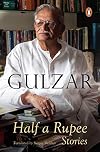
"A good storyteller is the conscience-keeper of a nation. And Gulzar saab is a good storyteller." – Thus goes a line in the introduction to this book by the translator Sunjoy Shekhar. I would agree with his sentiment: Gulzar saab is a class apart. Unfortunately, even he needs translators for a story to create an impact equivalent to the original language of writing. Converting his mellifluous words to English is no mean task. Needless to say, Sunjoy Shekhar’s work fell short of show more requirements.
‘Half a Rupee: Stories’ is a collection of 25 stories. At first, the tales seem abrupt and disconnected to each other. But soon you realise that the index of the book provides a big clue. The book bunches the 25 stories in sets of 3-4 and each set deals with a particular theme. The sets aren’t inter-connected. Some sets work fabulously, the rest fall flat. Many of the stories are written in a slice-of-life style, but with an abrupt ending where you can’t even take a shot at guessing what might have happened next. The ending spoiled the rest of the story for me. Add to it the below-par translation and grammatical errors and you have an entirely sullied experience.
When you pick up a book authored by Gulzar saab, you expect a richness of emotions in the writing. And that doesn’t happen. The beauty of the original thought came through at times. Sample this line, referencing the Indo-Pak Partition of 1947: “My roots still remain on the other side. I have only cut loose the branches and tugged them along with me.” What a lovely sentence it would have been originally if even this simple English version evokes so much heartache. But this happens very rarely. Most of the work has very simplistically written lines. I would have let it go if the words were merely bland. But when you see phrases like “Cut it out, man!” appearing in a Gulzar work, you don’t know whether to laugh or cry!
Gulzar saab has vouched for the efficacy of the editor and the translator in his foreword. And hence I don’t know whom to blame for this experience: the author, the editor, the translator, my expectations...? All I know is that this turned out to be below satisfactory levels.
Here’s my story-wise rating.
(Note that the individual sets aren’t named in the index. I’ve added the title based on the common theme across the stories.)
Set I: Real-life Reminiscences.
1. Kuldip Nayyar and Pir Sahib - show less
‘Half a Rupee: Stories’ is a collection of 25 stories. At first, the tales seem abrupt and disconnected to each other. But soon you realise that the index of the book provides a big clue. The book bunches the 25 stories in sets of 3-4 and each set deals with a particular theme. The sets aren’t inter-connected. Some sets work fabulously, the rest fall flat. Many of the stories are written in a slice-of-life style, but with an abrupt ending where you can’t even take a shot at guessing what might have happened next. The ending spoiled the rest of the story for me. Add to it the below-par translation and grammatical errors and you have an entirely sullied experience.
When you pick up a book authored by Gulzar saab, you expect a richness of emotions in the writing. And that doesn’t happen. The beauty of the original thought came through at times. Sample this line, referencing the Indo-Pak Partition of 1947: “My roots still remain on the other side. I have only cut loose the branches and tugged them along with me.” What a lovely sentence it would have been originally if even this simple English version evokes so much heartache. But this happens very rarely. Most of the work has very simplistically written lines. I would have let it go if the words were merely bland. But when you see phrases like “Cut it out, man!” appearing in a Gulzar work, you don’t know whether to laugh or cry!
Gulzar saab has vouched for the efficacy of the editor and the translator in his foreword. And hence I don’t know whom to blame for this experience: the author, the editor, the translator, my expectations...? All I know is that this turned out to be below satisfactory levels.
Here’s my story-wise rating.
(Note that the individual sets aren’t named in the index. I’ve added the title based on the common theme across the stories.)
Set I: Real-life Reminiscences.
1. Kuldip Nayyar and Pir Sahib - show less
"A good storyteller is the conscience-keeper of a nation. And Gulzar saab is a good storyteller." – Thus goes a line in the introduction to this book by the translator Sunjoy Shekhar. I would agree with his sentiment: Gulzar saab is a class apart. Unfortunately, even he needs translators for a story to create an impact equivalent to the original language of writing. Converting his mellifluous words to English is no mean task. Needless to say, Sunjoy Shekhar’s work fell short of show more requirements.
‘Half a Rupee: Stories’ is a collection of 25 stories. At first, the tales seem abrupt and disconnected to each other. But soon you realise that the index of the book provides a big clue. The book bunches the 25 stories in sets of 3-4 and each set deals with a particular theme. The sets aren’t inter-connected. Some sets work fabulously, the rest fall flat. Many of the stories are written in a slice-of-life style, but with an abrupt ending where you can’t even take a shot at guessing what might have happened next. The ending spoiled the rest of the story for me. Add to it the below-par translation and grammatical errors and you have an entirely sullied experience.
When you pick up a book authored by Gulzar saab, you expect a richness of emotions in the writing. And that doesn’t happen. The beauty of the original thought came through at times. Sample this line, referencing the Indo-Pak Partition of 1947: “My roots still remain on the other side. I have only cut loose the branches and tugged them along with me.” What a lovely sentence it would have been originally if even this simple English version evokes so much heartache. But this happens very rarely. Most of the work has very simplistically written lines. I would have let it go if the words were merely bland. But when you see phrases like “Cut it out, man!” appearing in a Gulzar work, you don’t know whether to laugh or cry!
Gulzar saab has vouched for the efficacy of the editor and the translator in his foreword. And hence I don’t know whom to blame for this experience: the author, the editor, the translator, my expectations...? All I know is that this turned out to be below satisfactory levels.
Here’s my story-wise rating.
(Note that the individual sets aren’t named in the index. I’ve added the title based on the common theme across the stories.)
Set I: Real-life Reminiscences.
1. Kuldip Nayyar and Pir Sahib - show less
‘Half a Rupee: Stories’ is a collection of 25 stories. At first, the tales seem abrupt and disconnected to each other. But soon you realise that the index of the book provides a big clue. The book bunches the 25 stories in sets of 3-4 and each set deals with a particular theme. The sets aren’t inter-connected. Some sets work fabulously, the rest fall flat. Many of the stories are written in a slice-of-life style, but with an abrupt ending where you can’t even take a shot at guessing what might have happened next. The ending spoiled the rest of the story for me. Add to it the below-par translation and grammatical errors and you have an entirely sullied experience.
When you pick up a book authored by Gulzar saab, you expect a richness of emotions in the writing. And that doesn’t happen. The beauty of the original thought came through at times. Sample this line, referencing the Indo-Pak Partition of 1947: “My roots still remain on the other side. I have only cut loose the branches and tugged them along with me.” What a lovely sentence it would have been originally if even this simple English version evokes so much heartache. But this happens very rarely. Most of the work has very simplistically written lines. I would have let it go if the words were merely bland. But when you see phrases like “Cut it out, man!” appearing in a Gulzar work, you don’t know whether to laugh or cry!
Gulzar saab has vouched for the efficacy of the editor and the translator in his foreword. And hence I don’t know whom to blame for this experience: the author, the editor, the translator, my expectations...? All I know is that this turned out to be below satisfactory levels.
Here’s my story-wise rating.
(Note that the individual sets aren’t named in the index. I’ve added the title based on the common theme across the stories.)
Set I: Real-life Reminiscences.
1. Kuldip Nayyar and Pir Sahib - show less
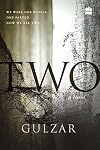
"The country was divided, but then it divided the people too. Earlier, they were one people, now there are two."
An intricate work that draws the attention of people to the unsaid stories of people during the Partition. Gulzar has done an amazing job in writing this book.
"She doesn't understand that one may cut a mountain into two, but people? It's a hard task, to cut people into two. They bleed."
Totally loved it.
An intricate work that draws the attention of people to the unsaid stories of people during the Partition. Gulzar has done an amazing job in writing this book.
"She doesn't understand that one may cut a mountain into two, but people? It's a hard task, to cut people into two. They bleed."
Totally loved it.
Timeless...
Even though the stories on partition have been read before, the earthy fragrance of Gulzar's words manages to leave the reader breathless...
Even though the stories on partition have been read before, the earthy fragrance of Gulzar's words manages to leave the reader breathless...
You May Also Like


Associated Authors
Statistics
- Works
- 81
- Also by
- 1
- Members
- 415
- Popularity
- #58,724
- Rating
- 4.4
- Reviews
- 17
- ISBNs
- 79
- Languages
- 3