
Maura McHugh
Author of Witchfinder Omnibus Volume 1
Works by Maura McHugh
Vic 2 copies
The Diet 1 copy
Wake the Dead 1 copy
Valerie (short story) 1 copy
Mustn't Grumble 1 copy
Involuntary Muscle 1 copy
Roisin Dubh: From The Grave 1 copy
Associated Works
Tagged
Common Knowledge
- Gender
- female
- Birthplace
- USA
- Places of residence
- Galway, Ireland
Members
Reviews
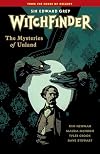
Mike Mignola's comic book universe based around Hellboy and the BPRD is a fine and amazing thing, but this is an unusually distinctive entry that stands out a bit. 1881, and Sir Edward Grey, England's official Witchfinder, is dispatched to the town of Hallam to investigate the odd death of a Crown official. At first disgruntled at what he perceives to be a mundane murder mystery, he soon finds himself attacked by giant eels, and so starts to feel right at home. Hallam is the source of a show more popular health tonic, a model industrial town reclaimed from the marshes. naturally there are all sorts of evil goings-on going on, secrets and mysteries and monsters for Grey to explore unravel and fight.
It all has the feel of a wonderfully British period gothic Hammer horror. There's a terrific and loving attention to detail, with glimpses of life in a town dredged from ancient marshes and propelled to a glorious and progressive future by a reforming baron of industry. The cylinders of instructive music played to the workers in the factory, the penny dreadful version of the constable's suspicions, the touches of local dialect, successfully used without mocking or demeaning the speaker and effortlessly touching on tensions between class and education, and eels, lots and lots of eels. It also has a rather bleak sting at the end, a vision of the glorious future everyone's heading towards, and tying in with later evens in the Mignolaverese too, I think.
A splendidly entertaining read that can be enjoyed without much reference to other titles in series, but why deny yourself the pleasure? It's a lot of fun, even if this is a particularly rich and satisfying example. show less
It all has the feel of a wonderfully British period gothic Hammer horror. There's a terrific and loving attention to detail, with glimpses of life in a town dredged from ancient marshes and propelled to a glorious and progressive future by a reforming baron of industry. The cylinders of instructive music played to the workers in the factory, the penny dreadful version of the constable's suspicions, the touches of local dialect, successfully used without mocking or demeaning the speaker and effortlessly touching on tensions between class and education, and eels, lots and lots of eels. It also has a rather bleak sting at the end, a vision of the glorious future everyone's heading towards, and tying in with later evens in the Mignolaverese too, I think.
A splendidly entertaining read that can be enjoyed without much reference to other titles in series, but why deny yourself the pleasure? It's a lot of fun, even if this is a particularly rich and satisfying example. show less
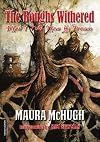
The Boughs Withered When I Told Them My Dreams
Early reviewer from Library-thing
I was not familiar with this author when I started to read this collection, which in some ways colors this review; but I knew from the very first paragraph that she has an enchanting (if dark) voice.
She weaves a story like a spider weaves its web—the deeper you venture in, the less chance you have of putting it down. All starts innocently enough with plausible scenarios that are only a little wonky. The more show more hints she drops, the more your curiosity is piqued until by the end you kind of just sit there and question what just happened.
Sometimes, she takes familiar stories and rewrites them from an alternate point of view. Or she will flesh out legends that are only approached in whispers. Some stories border upon being “urban legends” in a rural setting. Wherever the author decides to take the reader there is enough trust on her part to refrain from spelling things out in detail and thereby letting the reader chuckle at his own gullibility. She lets you hang struggling for a sure foot hold that might clarify her ideas.
She does write some strange stories, but I liked them—they are not run of the mill in any way. show less
Early reviewer from Library-thing
I was not familiar with this author when I started to read this collection, which in some ways colors this review; but I knew from the very first paragraph that she has an enchanting (if dark) voice.
She weaves a story like a spider weaves its web—the deeper you venture in, the less chance you have of putting it down. All starts innocently enough with plausible scenarios that are only a little wonky. The more show more hints she drops, the more your curiosity is piqued until by the end you kind of just sit there and question what just happened.
Sometimes, she takes familiar stories and rewrites them from an alternate point of view. Or she will flesh out legends that are only approached in whispers. Some stories border upon being “urban legends” in a rural setting. Wherever the author decides to take the reader there is enough trust on her part to refrain from spelling things out in detail and thereby letting the reader chuckle at his own gullibility. She lets you hang struggling for a sure foot hold that might clarify her ideas.
She does write some strange stories, but I liked them—they are not run of the mill in any way. show less
 This review was written for LibraryThing Early Reviewers.
I'd not heard of 'Witchfinder' when I picked it up, and it has been a pleasing discovery. Sir Edward Grey is an investigator of the supernatural by appointment to Her Majesty, Queen Victoria. In 1888 he investigates a seemingly mundane murder in Hallam, Somerset, which turns out to have many secrets. The story definitely has a hat-tip to 'The Shadow Over Innsmouth' by H.P. Lovecraft, but pleasingly is not a carbon copy of that tale. Mike Mignola does not disappoint with his artwork. There show more are horrific moments but Sir Edward is steadfast in the face of danger. This is the third 'Witchfinder' book; I will seek out the first two based on this reading. show less
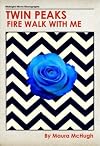
_Twin Peaks: Fire Walk With Me_ is a film that always captures my attention. If I happen across it when flipping through channels, chances are that I'll get sucked in and end up watching it again.
My brother and I were very much into _Twin Peaks_ when it aired on TV. We had recently gotten a VCR, and so we would record each episode, while watching it carefully live, then rewind the tape and watch it again. We certainly read, if not actively participated in, the Usenet newsgroup devoted to the show more show—alt.tv.twin-peaks.
_Fire Walk With Me_, coming out in 1992, was amazingly powerful, especially in a theater. It focused on the things I'd always been most interested in—the Black Lodge, BOB, The Man From Another Place_, and, of course, _why_ Laura Palmer was killed, and how she ended up there. Don't get me wrong, I love Dale Cooper (and, actually, Kyle MacLaughlin), but the showrunners really lost their way in the second season of _Twin Peaks_ when they stepped back from the mystical stuff and decided to torture us with storylines focused on the most annoying characters (Andy and Lucy), even going so far as to introduce new ones who were even worse (Dick). Not coincidentally, both Frost and Lynch were off working on other projects at that point. Things didn't get better until Lynch came back, took a look at what was happening, and yanked things back on track, leaving us with a chilling ending for the series. (Pretty much the opposite of what happened with _Millennium_, which died after show creator Chris Carter noticed how awesome it was and came back and wrecked it.)
McHugh sees _Fire Walk With Me_ as Lynch's rescue and rehabilitation of the core of _Twin Peaks_, the show: the true horror underlying everything happening in the town, especially the ways in which sexual abuse pushed Laura Palmer into prostitution and drug use to try to avoid the awful truth about BOB's identity, the investigation of Theresa Banks's murder, and what happened to Ronette Pulaski, all of which would have been awful without the supernatural aspects of their deaths/injuries.
Along with her personal interpretation of the film's action, McHugh's gives us a bunch of background information about both Lynch's career and reoccurring themes in his work and his choices in making the film, taken from various interviews, articles, books, and other sources.
Unfortunately, the ebook is not especially well edited—it almost seems like it was created from a first draft of the manuscript, and never updated. I also had some issues with it on my Kobo—there were a bunch of "broken image" icons scattered through the text, which turn out to be stills from the film. (I was able to fix things up with Calibre's built-in eBook editor application, but still.)
I learned some things I hadn't known (about both Lynch and the film), and I'm thinking about watching the film again to catch some of the subtle things I've somehow missed on previous viewings. I also have pointers to various other sources of information should I decide to follow up on anything McHugh talked about. But the editing and technical issues made the book more of a chore to read than it should have been, so I've knocked off one star. show less
My brother and I were very much into _Twin Peaks_ when it aired on TV. We had recently gotten a VCR, and so we would record each episode, while watching it carefully live, then rewind the tape and watch it again. We certainly read, if not actively participated in, the Usenet newsgroup devoted to the show more show—alt.tv.twin-peaks.
_Fire Walk With Me_, coming out in 1992, was amazingly powerful, especially in a theater. It focused on the things I'd always been most interested in—the Black Lodge, BOB, The Man From Another Place_, and, of course, _why_ Laura Palmer was killed, and how she ended up there. Don't get me wrong, I love Dale Cooper (and, actually, Kyle MacLaughlin), but the showrunners really lost their way in the second season of _Twin Peaks_ when they stepped back from the mystical stuff and decided to torture us with storylines focused on the most annoying characters (Andy and Lucy), even going so far as to introduce new ones who were even worse (Dick). Not coincidentally, both Frost and Lynch were off working on other projects at that point. Things didn't get better until Lynch came back, took a look at what was happening, and yanked things back on track, leaving us with a chilling ending for the series. (Pretty much the opposite of what happened with _Millennium_, which died after show creator Chris Carter noticed how awesome it was and came back and wrecked it.)
McHugh sees _Fire Walk With Me_ as Lynch's rescue and rehabilitation of the core of _Twin Peaks_, the show: the true horror underlying everything happening in the town, especially the ways in which sexual abuse pushed Laura Palmer into prostitution and drug use to try to avoid the awful truth about BOB's identity, the investigation of Theresa Banks's murder, and what happened to Ronette Pulaski, all of which would have been awful without the supernatural aspects of their deaths/injuries.
Along with her personal interpretation of the film's action, McHugh's gives us a bunch of background information about both Lynch's career and reoccurring themes in his work and his choices in making the film, taken from various interviews, articles, books, and other sources.
Unfortunately, the ebook is not especially well edited—it almost seems like it was created from a first draft of the manuscript, and never updated. I also had some issues with it on my Kobo—there were a bunch of "broken image" icons scattered through the text, which turn out to be stills from the film. (I was able to fix things up with Calibre's built-in eBook editor application, but still.)
I learned some things I hadn't known (about both Lynch and the film), and I'm thinking about watching the film again to catch some of the subtle things I've somehow missed on previous viewings. I also have pointers to various other sources of information should I decide to follow up on anything McHugh talked about. But the editing and technical issues made the book more of a chore to read than it should have been, so I've knocked off one star. show less
Awards

You May Also Like


Associated Authors
Statistics
- Works
- 20
- Also by
- 23
- Members
- 324
- Popularity
- #73,084
- Rating
- 3.7
- Reviews
- 16
- ISBNs
- 15
