
Irene Latham
Author of Can I Touch Your Hair?: Poems of Race, Mistakes, and Friendship
About the Author
Image credit: via Bhamwiki
Works by Irene Latham
When the Sun Shines on Antarctica: And Other Poems about the Frozen Continent (2016) 10 copies, 1 review
Tagged
Common Knowledge
Members
Reviews
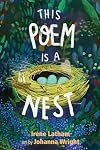
This Poem is a Nest was a beautiful collection of "nesting poems" or poems within a poem. It was amazing just how many poems the author, Irene Latham, created- the grand total was one hundred and sixty-one poems. This poetry exuded a poised brevity I never experienced before in reading poetry for children. I guess I expected something simple and boring. Latham's words took me on adventures around the world, in my mind, and through my backyard. She prompts children to think about their show more emotions and relationships in the same stroke of abstract through as thinking about lions, the four seasons, and the North American plains. She creates original words that somehow just make sense, like wordflight and skyboat. These fantastical images she prompts readers to create in their heads is a magical journey. As someone who loves more sublime, ethereal poetry, much of Latham's work fit the bill. Wright's illustrations add to this sublime sensation I felt the entire time reading. The images helped give a face to the words of the poems they complimented, and further enhanced the poems meaning.
Genre: Poetry show less
Genre: Poetry show less

Co-authors Irene Latham and Karim Shamsi-Basha tell the story of Mohammad Alaa Aljaleel, the eponymous Cat Man of Aleppo, in this deeply moving picture-book. A man who had always loved his home city, Alaa refused to leave Aleppo when civil war broke out in Syria, working as an ambulance driver in order to help his fellow citizens. As he traveled the increasingly bombed-out streets, he encountered many stray cats, left behind by their human families, who had fled in the face of war. Filled show more with pity for these creatures who suffered because of humanity's actions, he began to feed the stray cats, an action that soon won him international media attention, and aid from abroad. With this help, he built an animal sanctuary, a playground for the local children, and did many other wonderful things...
Chosen this year (2021) as one of four Caldecott Honor Books - the others are: Zetta Elliott and Noa Denmon's A Place Inside of Me: A Poem to Heal the Heart, Cozbi A. Cabrera's Me & Mama, and Deborah Underwood and Cindy Derby's Outside In - The Cat Man of Aleppo features the striking artwork of illustrator Yuko Shimizu. Drawn in black ink and then colorized digitally, the illustrations here often have an immediacy that complements and builds upon the pathos of the story. The scene, toward the beginning of the book, in which Alaa stands in a dark room, with bombs going off and fires burning, in the view from his window, is a powerful example of this:
Other scenes, such as the one in which Alaa and some helpers feed the street cats, have great charm, capturing the beauty and appeal of these felines, even in the midst of carnage:
As I mentioned in my review of Carole Lindstrom and Michaela Goade's We Are Water Protectors, which won this year's Caldecott Medal, the hallmark of an excellent picture-book is the way in which text (or story) works together with artwork, and The Cat Man of Aleppo exemplifies this perfectly. As much as I enjoyed the artwork here - hard to believe that this is only Shimizu's second picture-book! - I also found the story itself very moving, and I was in tears on more than one occasion, while reading. At times of crisis, our minds often turn to the suffering of our fellow human beings, and this is both natural and commendable. But it should also be remembered that animals suffer beside us, and they suffer because of us, both as individuals and as societies. However little power the common man or woman has, and it is little enough, it bears remembering that our animal friends have less. When I read stories like this, I am always reminded of the words of Cooroo the fox, who in Pat O'Shea's marvelous fantasy novel, The Hounds of the Morrigan, tells Pidge that "it is a sad and puzzling fate to share the world with man, but what can we do?" What indeed?
This is one I highly recommend, to any picture-book readers looking for stories about war - about the suffering it causes, for both humans and animals, and about the courage and compassion it sometimes evokes, in those caught up in it. Would you or I, reader, stay behind in an Aleppo, helping both our fellow humans and our fellow creatures? Until it happens to us, who can say? show less
Chosen this year (2021) as one of four Caldecott Honor Books - the others are: Zetta Elliott and Noa Denmon's A Place Inside of Me: A Poem to Heal the Heart, Cozbi A. Cabrera's Me & Mama, and Deborah Underwood and Cindy Derby's Outside In - The Cat Man of Aleppo features the striking artwork of illustrator Yuko Shimizu. Drawn in black ink and then colorized digitally, the illustrations here often have an immediacy that complements and builds upon the pathos of the story. The scene, toward the beginning of the book, in which Alaa stands in a dark room, with bombs going off and fires burning, in the view from his window, is a powerful example of this:
Other scenes, such as the one in which Alaa and some helpers feed the street cats, have great charm, capturing the beauty and appeal of these felines, even in the midst of carnage:
As I mentioned in my review of Carole Lindstrom and Michaela Goade's We Are Water Protectors, which won this year's Caldecott Medal, the hallmark of an excellent picture-book is the way in which text (or story) works together with artwork, and The Cat Man of Aleppo exemplifies this perfectly. As much as I enjoyed the artwork here - hard to believe that this is only Shimizu's second picture-book! - I also found the story itself very moving, and I was in tears on more than one occasion, while reading. At times of crisis, our minds often turn to the suffering of our fellow human beings, and this is both natural and commendable. But it should also be remembered that animals suffer beside us, and they suffer because of us, both as individuals and as societies. However little power the common man or woman has, and it is little enough, it bears remembering that our animal friends have less. When I read stories like this, I am always reminded of the words of Cooroo the fox, who in Pat O'Shea's marvelous fantasy novel, The Hounds of the Morrigan, tells Pidge that "it is a sad and puzzling fate to share the world with man, but what can we do?" What indeed?
This is one I highly recommend, to any picture-book readers looking for stories about war - about the suffering it causes, for both humans and animals, and about the courage and compassion it sometimes evokes, in those caught up in it. Would you or I, reader, stay behind in an Aleppo, helping both our fellow humans and our fellow creatures? Until it happens to us, who can say? show less
A flat, dry presentation for material about which I have mixed feelings.
I get the love for pets -- I have two dogs -- but I'm weirded out when donations of money and resources are directed to saving animals in a war zone when there are people in that same area who need the same stuff. And this book draws attention to that by having the protagonist himself actually start diverting some of the charity he receives for the cats to helping the people around him, which then opens an ethical can show more of worms, I suppose, because there is some donor somewhere who gets to be indignant that a human stole a meal they intended for a cat and could demand their money back.
Larger picture, it solidifies concerns I have about our reliance on a patchwork system of charities that occasionally over-saturates some problem areas while others go completely neglected because they are not, y'know, photogenic enough. At its core, this is implicit bias in action.
Finally, I sometimes wonder about books like this where the creators are profiting off the story of a person or persons who are still actively in need of financial or other support. I mean, the Syrian Civil War is still ongoing, but I see nothing on the book or marketing website about this being a work for charitable benefit or even anyone involved having paid the Cat Man for rights to his story. I guess it raises awareness and provides links for making donations in the tiny print at the end, but is that really sufficient when there are people (and cats) currently living in a war zone? show less
I get the love for pets -- I have two dogs -- but I'm weirded out when donations of money and resources are directed to saving animals in a war zone when there are people in that same area who need the same stuff. And this book draws attention to that by having the protagonist himself actually start diverting some of the charity he receives for the cats to helping the people around him, which then opens an ethical can show more of worms, I suppose, because there is some donor somewhere who gets to be indignant that a human stole a meal they intended for a cat and could demand their money back.
Larger picture, it solidifies concerns I have about our reliance on a patchwork system of charities that occasionally over-saturates some problem areas while others go completely neglected because they are not, y'know, photogenic enough. At its core, this is implicit bias in action.
Finally, I sometimes wonder about books like this where the creators are profiting off the story of a person or persons who are still actively in need of financial or other support. I mean, the Syrian Civil War is still ongoing, but I see nothing on the book or marketing website about this being a work for charitable benefit or even anyone involved having paid the Cat Man for rights to his story. I guess it raises awareness and provides links for making donations in the tiny print at the end, but is that really sufficient when there are people (and cats) currently living in a war zone? show less

Ten-year-old Ludelphia Bennett has never stepped food out of her tiny hometown of Gee's Bend, Alabama. Honestly, she's never seen a reason to. Her family, her small community of sharecroppers, and her quilting are more than enough to keep her busy and happy right at home. Even though she's only got one working eye, Lu's a natural at stitching, though she doesn't always have the materials she needs for a good quilt. Mama says that every quilt tells a story, and Lu dreams of stitching a quilt show more that will tell a great story and make her mama smile.
Suddenly, though, things in Ludelphia's life go awry, and she finds her story changing in a big way. When Mama falls ill and is near death and the only advice forthcoming is to wait it out, Lu knows she can't just stand by and watch while her mama slips away. Soon she determines that the only way to save Mama is to leave Gee's Bend and travel to Camden in search of a doctor. Thus begins a journey fraught with danger but also with excitement during which Lu will meet both good and evil people and hopefully emerge on the other side with a better story for her quilt than she could have ever imagined.
Drawing inspiration from the real Gee's Bend's rich quilting history, Irene Latham has crafted a beautiful story of her own. Leaving Gee's Bend is a coming of age story set in a vividly drawn 1930s sharecropping community. In it, readers can find a realistic few of the hardscrabble lives lived by sharecroppers and the fine line between getting by and dire unsurvivable poverty. Ludelphia is a precocious and lovable narrator, always with the best of intentions, but occasionally getting into some scrapes due to her impulsiveness and trusting nature. Seeing her grow through her journey and collect the many experiences and pieces that will go into her quilt makes Leaving Gee's Bend a heartwarming story and a satisfying read. show less
Suddenly, though, things in Ludelphia's life go awry, and she finds her story changing in a big way. When Mama falls ill and is near death and the only advice forthcoming is to wait it out, Lu knows she can't just stand by and watch while her mama slips away. Soon she determines that the only way to save Mama is to leave Gee's Bend and travel to Camden in search of a doctor. Thus begins a journey fraught with danger but also with excitement during which Lu will meet both good and evil people and hopefully emerge on the other side with a better story for her quilt than she could have ever imagined.
Drawing inspiration from the real Gee's Bend's rich quilting history, Irene Latham has crafted a beautiful story of her own. Leaving Gee's Bend is a coming of age story set in a vividly drawn 1930s sharecropping community. In it, readers can find a realistic few of the hardscrabble lives lived by sharecroppers and the fine line between getting by and dire unsurvivable poverty. Ludelphia is a precocious and lovable narrator, always with the best of intentions, but occasionally getting into some scrapes due to her impulsiveness and trusting nature. Seeing her grow through her journey and collect the many experiences and pieces that will go into her quilt makes Leaving Gee's Bend a heartwarming story and a satisfying read. show less
Lists
Awards


You May Also Like


Associated Authors
Statistics
- Works
- 22
- Members
- 1,354
- Popularity
- #18,990
- Rating
- 4.1
- Reviews
- 112
- ISBNs
- 86
- Languages
- 3
