
Lee Bennett Hopkins (1938–2019)
Author of Surprises
About the Author
Lee Bennett Hopkins was born in Scranton, Pennsylvania on April 13, 1938. Hopkins' education was rather sporadic, since he often had to care for his younger sister while his mother worked to support the family. As a child, Hopkins read little other than comic books and movie magazines until a show more teacher inspired in him a love of the theatre and, subsequently, of reading. Though Hopkins did well in his high school English courses, he did not enjoy other subjects and his grades in those were poor. Still, he had decided on an eventual career as a teacher and after graduating high school he began classes at the Newark State Teachers College, working several jobs in order to afford his tuition. After receiving his Bachelor of Arts degree in 1960, Hopkins began teaching sixth grade at a public school in Fair Lawn, New Jersey. In his third year at Westmoreland School in Fair Lawn he became the school's resource teacher. Through the principal at his own school, Hopkins obtained a scholarship to pursue a master's degree at the Bank Street College of Education in New York City. While working toward this degree, which he received in 1964, Hopkins continued as Resource Teacher at Westmoreland. In 1966 he took a position as senior consultant for Bank Street College's new Learning Resource Center in the Harlem area of New York City. Hopkins also began writing articles on children's literature and the use of poetry in the classroom, which were published in journals such as Horn Book and Language Arts. With colleague Annette F. Shapiro he wrote Creative Activities for Gifted Children, his first book. In 1967 Hopkins received a Professional Diploma in Educational Supervision and Administration from Hunter College of the City University of New York. Racial tension following the assassination of Dr. Martin Luther King, Jr., in 1968 forced Hopkins and others to reluctantly leave Harlem. He then secured another position as a curriculum and editorial specialist at Scholastic, Inc. Hopkins' career as a writer progressed; more than two dozen of his books were published during his eight-years at Scholastic. In 1976 Hopkins quit his job at Scholastic in order to become a full- time writer and poetry anthologist. He has written or compiled more than seventy-five books for children and young adults, in addition to his professional texts and his numerous contributions to education and children's literature journals. Apart from his many poetry anthologies and professional texts, Hopkins has also written young adult novels, children's stories, and non-fiction books for children. He hosted the fifteen-part children's educational television series Zebra Wings, and has also served as a literature consultant for Harper and Row's Text Division. Hopkins has won numerous honors and awards, including an honorary doctor of laws degree from Kean College in 1980 and the University of Southern Mississippi's Silver Medallion in 1989. His poetry autobiography, Been to Yesterdays, received both the Christopher Medal and a Golden Kite Honor. He has also received awards from Booklist, School Library Journal, The New York Times, The American Library Association and the American Booksellers Association. Hopkins founded the Lee Bennett Hopkins Poetry Award presented annually since 1993, and the Lee Bennett Hopkins/International Reading Association Promising Poet Award presented every three years since 1995. Lee Bennett Hopkins passsed away on August 8, 2019, at the age of 81. (Bowker Author Biography) show less
Series
Works by Lee Bennett Hopkins
Days to Celebrate: A Full Year of Poetry, People, Holidays, History, Fascinating Facts, and More (2004) 142 copies, 4 reviews
Wonderful Words: Poems About Reading, Writing, Speaking, and Listening (2004) — Editor — 96 copies, 3 reviews
Behind the Museum Door: Poems to Celebrate the Wonders of Museums (2007) — Editor — 89 copies, 11 reviews
World Make Way: New Poems Inspired by Art from The Metropolitan Museum (2018) — Editor — 55 copies, 2 reviews
Beat the Drum, Independence Day Has Come: Poems for the Fourth of July (1977) — Editor — 28 copies, 1 review
Books Are by People: Interviews With 104 Authors and Illustrators of Books for Young Children (1969) 14 copies
More books by more people;: Interviews with sixty-five authors of books for children (1974) 5 copies
Me! A Book of Poems 2 copies
Jungle sounds 1 copy
Creative activities to stimulate children : in the classroom, in the school, in the community 1 copy
The Sky is Full of Gold 1 copy
My America 1 copy
Associated Works
Tagged
Common Knowledge
- Legal name
- Hopkins, Lee Bennett
- Birthdate
- 1938-04-13
- Date of death
- 2019-08-08
- Gender
- male
- Education
- Bank Street College of Education (MA)
Newark State College (BA - Education) - Occupations
- poet
teacher
editor - Awards and honors
- NCTE Award for Excellence in Poetry for Children (2009)
- Nationality
- USA
- Birthplace
- Scranton, Pennsylvania, USA
- Places of residence
- New Jersey, USA
- Place of death
- Cape Coral, Florida, USA
- Associated Place (for map)
- USA
Members
Reviews

As the front flap of the book importantly explains, this is a collection of autobiographical poems about the author’s “unstable” family life growing up, including his parents’ divorce, his family’s many moves, and his being forced to constantly change schools, ever “the new boy.” Inside the front and back covers, there are photos of Lee as a boy, his family, his beloved grandmother, and the family’s original modest home in industrial Scranton, Pennsylvania.
The book opens with show more a poem about the family posing for a photograph with a professional photographer. All is still well. “The five of you,” observes the photographer, “look like birds of a feather nestled together.” Lee’s father “tenderly” holds his mother, with the baby perched on his knee. As the photograph shows, the two boys sit in front of their parents and little sister. Everyone smiles.
Most of the poems that follow are very sad. They concern the family’s move to Newark where Grandma (an immensely loving and stabilizing figure) lives; Lee’s parents’ loud and bitter late-night arguments, which the boy can’t help but hear; their divorce; Lee’s loneliness for his dad; and the family’s repeated flights from rented rooms when his father sends no check and his mother can’t pay up. Some of the best poems are ones that point to his mother’s failings without judging or condemning her: her roughness, lack of education, and bigotry, the late nights out at the bar (even on Christmas Eve), and the stream of boyfriends that the siblings are instructed to refer to as “uncles.” Hope finally glimmers in a poem about the time Lee’s teacher defends his wish to become a writer when a classmate mocks him.
While the content of this book is evidently most suitable for middle-school and up, I found the language of many of the poems unsophisticated, simplistic, and even clichéd. (“Someday/ you will understand/ that life can’t flow/ as you always planned.”) Rhyming often seems convenient rather than carefully considered. Furthermore, some of the wording is extremely vague. (“Just/ when/ everything/ seems just fine/ Life/ comes by/ and/ throws/ you/ its line.” Throws you its line? Hmm.(The context in which Hopkins uses these words suggests that life does just the opposite: it upends your plans.) What puzzles me most, though, are the frequent line breaks. There’s often only a single word per line, creating a consistently unpleasant, choppy effect.
This is the only book I’ve ever read by Hopkins himself (who died in 2019), though I’m aware of him as a prolific children’s poetry anthologist. I have no idea how Been to Yesterdays compares to his other personal collections of poems. While a few of the pieces effectively communicate the emotions of a young boy struggling to understand the adult world and trying to cope in very difficult circumstances, many poems feel inconsequential. I’m disinclined to seek out his other work. show less
The book opens with show more a poem about the family posing for a photograph with a professional photographer. All is still well. “The five of you,” observes the photographer, “look like birds of a feather nestled together.” Lee’s father “tenderly” holds his mother, with the baby perched on his knee. As the photograph shows, the two boys sit in front of their parents and little sister. Everyone smiles.
Most of the poems that follow are very sad. They concern the family’s move to Newark where Grandma (an immensely loving and stabilizing figure) lives; Lee’s parents’ loud and bitter late-night arguments, which the boy can’t help but hear; their divorce; Lee’s loneliness for his dad; and the family’s repeated flights from rented rooms when his father sends no check and his mother can’t pay up. Some of the best poems are ones that point to his mother’s failings without judging or condemning her: her roughness, lack of education, and bigotry, the late nights out at the bar (even on Christmas Eve), and the stream of boyfriends that the siblings are instructed to refer to as “uncles.” Hope finally glimmers in a poem about the time Lee’s teacher defends his wish to become a writer when a classmate mocks him.
While the content of this book is evidently most suitable for middle-school and up, I found the language of many of the poems unsophisticated, simplistic, and even clichéd. (“Someday/ you will understand/ that life can’t flow/ as you always planned.”) Rhyming often seems convenient rather than carefully considered. Furthermore, some of the wording is extremely vague. (“Just/ when/ everything/ seems just fine/ Life/ comes by/ and/ throws/ you/ its line.” Throws you its line? Hmm.(The context in which Hopkins uses these words suggests that life does just the opposite: it upends your plans.) What puzzles me most, though, are the frequent line breaks. There’s often only a single word per line, creating a consistently unpleasant, choppy effect.
This is the only book I’ve ever read by Hopkins himself (who died in 2019), though I’m aware of him as a prolific children’s poetry anthologist. I have no idea how Been to Yesterdays compares to his other personal collections of poems. While a few of the pieces effectively communicate the emotions of a young boy struggling to understand the adult world and trying to cope in very difficult circumstances, many poems feel inconsequential. I’m disinclined to seek out his other work. show less

Children's poet and poetry anthologist Lee Bennett Hopkins presents twenty Thanksgiving poems in this lovely little collection, with the poetic selections paired with black and white illustrations from Ben Shecter. Here we have poems celebrating the beauties of the season, the history of the holiday, and the pleasure of the feast. The happiness of gathering with friends and family, and the importance of thankfulness are also explored. One of my favorite selections was Alice Crowell Hoffman's show more November's Gift:
November is a lady
In a plain gray coat
That's very closely buttoned
Up around her throat.
And after she's been roaming
All around the town,
She reaches in her pocket,
Deep, deep down,
Then pulls out a present,
And with laughter gay,
Says to everybody,
"Here's Thanksgiving Day!"
That being said, I enjoyed most of the poem here, both for the themes they explore and for their well-constructed form and readability. Thanksgiving Magic by Rowena Bastin Bennett was another particular favorite, with its descriptions of the enchantment of seasonal cookery. There are one or two poems here that some readers might found outdated—chiefly those addressing the "Pilgrims and Indians" narrative of the First Thanksgiving—but for the most part these poems are as delightful now as when this collection was first published, back in 1978. Recommended to picture-book readers looking for fun, poetic Thanksgiving titles. show less
November is a lady
In a plain gray coat
That's very closely buttoned
Up around her throat.
And after she's been roaming
All around the town,
She reaches in her pocket,
Deep, deep down,
Then pulls out a present,
And with laughter gay,
Says to everybody,
"Here's Thanksgiving Day!"
That being said, I enjoyed most of the poem here, both for the themes they explore and for their well-constructed form and readability. Thanksgiving Magic by Rowena Bastin Bennett was another particular favorite, with its descriptions of the enchantment of seasonal cookery. There are one or two poems here that some readers might found outdated—chiefly those addressing the "Pilgrims and Indians" narrative of the First Thanksgiving—but for the most part these poems are as delightful now as when this collection was first published, back in 1978. Recommended to picture-book readers looking for fun, poetic Thanksgiving titles. show less

Lee Bennett Hopkins presents twenty-two spooky poems in this delightful collection, some of them explicitly about Halloween, some simply appropriate for the season and holiday. Like Daisy Wallace's Witch Poems, published just two years after Hey-How for Halloween!, we see e.e. cumming's famous "Hist Whist" among the selections here. Other famous authors to be included range from Carson McCullers ("Trick or Treat") to Carl Sandburg ("Theme in Yellow"). There is even a delightful selection show more ("October") from children's literature luminary Maurice Sendak...
I enjoyed this collection immensely, reading the poems silently to myself, and then aloud, and finding them absolutely delightful! As someone who loves all things "witchy," my favorite selections included Leland B. Jacobs' "What Witches Do" and B.J. Lee's "Eight Witches." I also enjoyed May Justus' "Luck for Halloween," which seemed to have some of the flavor of its author's native Appalachia: "It was a wise old woman / Who gave this charm to me. / It works the best on Halloween - / Or so said she!" The accompanying black and white artwork from Janet McCaffery, whose illustrations I know from such titles as Mary Calhoun's The Witch of Hissing Hill and The Runaway Brownie, were well-suited to the text - fun, and deliciously spooky! Having read this only a few days after Witch Poems, which was illustrated by the incomparable Trina Schart Hyman, it is natural to compare the artwork. Although be no means the equal of the Hyman (a difficult task for anyone!), the visuals here do have charm. Recommended to young poetry lovers at Halloween. show less
I enjoyed this collection immensely, reading the poems silently to myself, and then aloud, and finding them absolutely delightful! As someone who loves all things "witchy," my favorite selections included Leland B. Jacobs' "What Witches Do" and B.J. Lee's "Eight Witches." I also enjoyed May Justus' "Luck for Halloween," which seemed to have some of the flavor of its author's native Appalachia: "It was a wise old woman / Who gave this charm to me. / It works the best on Halloween - / Or so said she!" The accompanying black and white artwork from Janet McCaffery, whose illustrations I know from such titles as Mary Calhoun's The Witch of Hissing Hill and The Runaway Brownie, were well-suited to the text - fun, and deliciously spooky! Having read this only a few days after Witch Poems, which was illustrated by the incomparable Trina Schart Hyman, it is natural to compare the artwork. Although be no means the equal of the Hyman (a difficult task for anyone!), the visuals here do have charm. Recommended to young poetry lovers at Halloween. show less
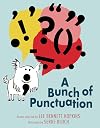
This collection of poems -- written by a number of well-known children's authors such as Jane Yolen and Charles Ghigna -- is all about the functions of punctuation. That might sound dull, but it's actually done in a clever and humorous way.
For instance, the colon laments about its lack of use by saying things like: "I'm hidden away in a textbook: Punctuation Made Easy, no less. Page forty-three is devoted to me, but nobody reads it, I guess. The comma, incredibly common, butts right into show more line after line. Couldn't there be a small place for me: just one little sentence that's mine?"
The accompanying illustrations for each poem incorporate the punctuation mark(s) into the scene, which is generally funny, although I do personally find the quotation marks as eyes a little bit creepy.
Because a somewhat working knowledge of punctuation is required to 'get' these poems, I'd recommend this book for children in first grade and up. It will definitely help reinforce what they're learning/have learned by giving them these funny poems and illustrations that make the point of each punctuation mark readily apparent. show less
For instance, the colon laments about its lack of use by saying things like: "I'm hidden away in a textbook: Punctuation Made Easy, no less. Page forty-three is devoted to me, but nobody reads it, I guess. The comma, incredibly common, butts right into show more line after line. Couldn't there be a small place for me: just one little sentence that's mine?"
The accompanying illustrations for each poem incorporate the punctuation mark(s) into the scene, which is generally funny, although I do personally find the quotation marks as eyes a little bit creepy.
Because a somewhat working knowledge of punctuation is required to 'get' these poems, I'd recommend this book for children in first grade and up. It will definitely help reinforce what they're learning/have learned by giving them these funny poems and illustrations that make the point of each punctuation mark readily apparent. show less
Lists
Awards


You May Also Like


Associated Authors
Statistics
- Works
- 161
- Also by
- 6
- Members
- 9,097
- Popularity
- #2,642
- Rating
- 4.0
- Reviews
- 493
- ISBNs
- 349
- Favorited
- 2
