
Mark Dawidziak
Author of A Mystery of Mysteries: The Death and Life of Edgar Allan Poe
About the Author
Mark Dawidziak is the television critic at the Cleveland Plain Dealer.
Image credit: Mark Dawidziak
Works by Mark Dawidziak
Everything I Need to Know I Learned in the Twilight Zone: A Fifth-Dimension Guide to Life (2017) 70 copies, 3 reviews
Mark Twain's Guide to Diet, Exercise, Beauty, Fashion, Investment, Romance, Health and Happiness (2015) 52 copies, 14 reviews
Associated Works
Tagged
Common Knowledge
- Birthdate
- 1956-09-07
- Gender
- male
- Occupations
- author
editor
journalist - Awards and honors
- Press Club of Cleveland Journalism Hall of Fame
- Birthplace
- Huntington, New York, USA
- Places of residence
- Cuyahoga Falls, Ohio, USA
- Associated Place (for map)
- USA
Members
Discussions
Interview with Mark Dawidziak about A Mystery of Mysteries in Book talk (May 2024)
Reviews
Everything I Need to Know I Learned in the Twilight Zone: A Fifth-Dimension Guide to Life by Mark Dawidziak
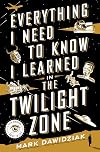
It has forever been thus: so long as men write what they think, then all of the other freedoms--all of them--may remain intact. And it is then that writing becomes a weapon of truth, and article of faith, an act of courage. Rod Serling, January 15, 1968 speech
When I read a review of Everything I Need to Know I Learned in the Twilight Zone: A Fifth Dimension Guide to Life in the local paper I couldn't believe I had missed this book. Here was a book that spoke to what I had long believed: that show more Rod Serling had taught me my basic values.
I was seven years old in 1959 when Twilight Zone first aired. It became my 'must see' tv show. Over the years I enjoyed the reruns but it was while my son and I watched hours of marathon reruns that I realized that perhaps more than any book or Sunday school class it was Rod Serling who had instructed me in how to live.
Rod Serling
As a kid, I liked the ironic endings, the comeuppances, and just desserts. I thrilled to the eerie and chilled to the scary. The episode that most scared me was The Invaders, told without dialog, about a witchlike old woman whose primitive cabin is invaded by tiny spacemen. They were more frightening because of their diminutive size, for they could creep up unseen. Then came the reveal--the spaceship was from the United States, the menacing spacemen were human and the woman was the alien.
The Invaders
After reading the preview available online I ordered Mark Dawidziak's book and began reading it upon arrival.
Born in a Reform Jewish family in Binghamton, NY, Serling had an ideal childhood but encountered prejudice as he grew up. In 1943 he enlisted and served in the Pacific front as a paratrooper, the roots of his horror of war and hope for humanity. He entered Antioch College, founded by Horace Mann who wrote, "Be ashamed to die until you have won some victory for humanity." After graduation, Serling lived in Cincinnati where he wrote for the radio station, then for television. As he matured, his writing incorporated social commentary, convicted it was "the writer's role to menace the public's conscience."
The Twilight Zone stories are teaching parables. As Anne Serling writes in her forward, her father "truly and deeply cared about all of us." If we have ears to hear, Dawidziak shows us, there are fifty lessons to be gleaned from these stories.
Some of my favorite examples from the book, whose lessons need to be heard again, include:
Divided We Fall, highlighting Serling's script The Monsters are Due on Maple Street. It warns us about mob mentality, fear of people who are 'different', and shows how evil arises from suspicion and division. Many chapters end with a guest lesson; for this chapterMarc Scott Zicree writes, "we can live in a universe of love and compassion, or chaos and destruction. The choice is ours, made every day, every moment, by the actions we conscious or unconsciously take...and you can file that under L for Life Lessons."
Share With Others, gleaned from I Shot An Arrow into the Air, written by Serling. A spaceship crashes into a desert, leaving the astronauts with limited supplies. One man decides he will not share, he will survive at any cost. As the last man alive he learns they had landed on Earth, with civilization just over the hill. Adversity brings out the monster and the best of humanity. Dawidziak connects this lesson to the Flint water crisis and the challenge of providing clean water to everyone in need across the world.
Imagine a Better World, arising from Richard Matheson's script A World Of His Own, a comedic story of a man who can manipulate reality through a dictation machine. Dawidziak notes that the power of imagination is basic to the series, and this episode is a nod to storytellers and dreamers who unlock doors to possibilities.
Fill Your Life With Something Other Than Hate is a reoccurring theme in Twilight Zone, including one of my personal favorites, Two, written by Montgomery Pittman. In a post-war, empty world, one lone female and one lone man survive; they are from opposing armies, distrustful and full of hate. The episode is without dialog, for the two do not share a common language. They have a choice: to carry on the war or to assume their common humanity and lay down arms. He also lists Two under Everybody Needs Somebody Sometime.
Payback is a...Or, What Goes Around Comes Around, is another theme shared by many episodes. This was a favorite saying of a neighbor many years ago, meant as consolation while rejected by a petty community. Serling hated fascism; in his script Deaths-head Revisited, a Nazi visiting Dachau enjoys memories of his time there--until he is put on trial by the ghosts of the dead.
Serling ends the show saying, "All the Dachaus must remain standing. The Dachaus, the Belsens, the Buchenwalds, the Auschwitzs, all of them. They must remain standing because they are a monument to a moment in time when some men decided to turn the Earth into a graveyard. Into it they shoveled all of their reason, their logic, their knowledge, but worst of all, their conscience. And the moment we forget this, the moment we cease to be haunted by its remembrance, then we become the gravediggers."
My heart ached reading this, for I fear we are forgetting.
Don't Be A Bully also is a message found in over a half dozen episodes, wish fulfillment stories where bullies get their just desserts. The Guest Lesson is from Scott Skelton who wrote, "As I got older...the series' strong ethical undercurrents surfaced in my consciousness: its indignant stance on social injustice, its rage at the too often petty nature of our species--prejudice, mob rule, the ever-present threat of fascism, the shadow of superstition and ignorance that has, throughout history, halted the progress of our species. From these bite-sized morality plays I drew an unshakable belief in the basic dignity of man--that despite our individual mistakes, our foibles, our follies, and our general bad behavior, we all have a right to respect, to a collective esteem based on the actions and sacrifices of a few of our more noble representatives."
The Civilization That Does Not Value the Printed Word and the Individual is Not Civilized. The Obsolete Man by Serling has a librarian as the hero, a man who clings to his outlawed, obsolete, books, standing up to totalitarian authorities by announcing, "I am nothing more than a reminder to you that you cannot destroy truth by burning pages." Serling's closing narrative states, "Any state, any entity, any ideology that fails to recognize the worth, the dignity, the rights of man, that state is obsolete."
These don't even include some of my favorite episodes, including Time Enough at Last (Nobody Said Life Was Fair/Be Careful What You Wish For); those with Jack Klugman, including A Passage for Trumpet, the lesson being Follow Your Passion); Kick the Can (You're Only Truly Old When You Decide You're Old); and Nothing in the Dark (Death, Where is Thy Sting). Nothing in the Dark has Robert Redford as a gentle and kind Mr. Death, an image that stuck with me.
I could go on, but instead, I will advise you to just read the book.
Thank you, Mr. Serling. And Thank you, Mr. Dawidziak, for confirming that I learned my values in The Twilight Zone. show less
When I read a review of Everything I Need to Know I Learned in the Twilight Zone: A Fifth Dimension Guide to Life in the local paper I couldn't believe I had missed this book. Here was a book that spoke to what I had long believed: that show more Rod Serling had taught me my basic values.
I was seven years old in 1959 when Twilight Zone first aired. It became my 'must see' tv show. Over the years I enjoyed the reruns but it was while my son and I watched hours of marathon reruns that I realized that perhaps more than any book or Sunday school class it was Rod Serling who had instructed me in how to live.
Rod Serling
As a kid, I liked the ironic endings, the comeuppances, and just desserts. I thrilled to the eerie and chilled to the scary. The episode that most scared me was The Invaders, told without dialog, about a witchlike old woman whose primitive cabin is invaded by tiny spacemen. They were more frightening because of their diminutive size, for they could creep up unseen. Then came the reveal--the spaceship was from the United States, the menacing spacemen were human and the woman was the alien.
The Invaders
After reading the preview available online I ordered Mark Dawidziak's book and began reading it upon arrival.
Born in a Reform Jewish family in Binghamton, NY, Serling had an ideal childhood but encountered prejudice as he grew up. In 1943 he enlisted and served in the Pacific front as a paratrooper, the roots of his horror of war and hope for humanity. He entered Antioch College, founded by Horace Mann who wrote, "Be ashamed to die until you have won some victory for humanity." After graduation, Serling lived in Cincinnati where he wrote for the radio station, then for television. As he matured, his writing incorporated social commentary, convicted it was "the writer's role to menace the public's conscience."
The Twilight Zone stories are teaching parables. As Anne Serling writes in her forward, her father "truly and deeply cared about all of us." If we have ears to hear, Dawidziak shows us, there are fifty lessons to be gleaned from these stories.
Some of my favorite examples from the book, whose lessons need to be heard again, include:
Divided We Fall, highlighting Serling's script The Monsters are Due on Maple Street. It warns us about mob mentality, fear of people who are 'different', and shows how evil arises from suspicion and division. Many chapters end with a guest lesson; for this chapterMarc Scott Zicree writes, "we can live in a universe of love and compassion, or chaos and destruction. The choice is ours, made every day, every moment, by the actions we conscious or unconsciously take...and you can file that under L for Life Lessons."
Share With Others, gleaned from I Shot An Arrow into the Air, written by Serling. A spaceship crashes into a desert, leaving the astronauts with limited supplies. One man decides he will not share, he will survive at any cost. As the last man alive he learns they had landed on Earth, with civilization just over the hill. Adversity brings out the monster and the best of humanity. Dawidziak connects this lesson to the Flint water crisis and the challenge of providing clean water to everyone in need across the world.
Imagine a Better World, arising from Richard Matheson's script A World Of His Own, a comedic story of a man who can manipulate reality through a dictation machine. Dawidziak notes that the power of imagination is basic to the series, and this episode is a nod to storytellers and dreamers who unlock doors to possibilities.
Fill Your Life With Something Other Than Hate is a reoccurring theme in Twilight Zone, including one of my personal favorites, Two, written by Montgomery Pittman. In a post-war, empty world, one lone female and one lone man survive; they are from opposing armies, distrustful and full of hate. The episode is without dialog, for the two do not share a common language. They have a choice: to carry on the war or to assume their common humanity and lay down arms. He also lists Two under Everybody Needs Somebody Sometime.
Payback is a...Or, What Goes Around Comes Around, is another theme shared by many episodes. This was a favorite saying of a neighbor many years ago, meant as consolation while rejected by a petty community. Serling hated fascism; in his script Deaths-head Revisited, a Nazi visiting Dachau enjoys memories of his time there--until he is put on trial by the ghosts of the dead.
Serling ends the show saying, "All the Dachaus must remain standing. The Dachaus, the Belsens, the Buchenwalds, the Auschwitzs, all of them. They must remain standing because they are a monument to a moment in time when some men decided to turn the Earth into a graveyard. Into it they shoveled all of their reason, their logic, their knowledge, but worst of all, their conscience. And the moment we forget this, the moment we cease to be haunted by its remembrance, then we become the gravediggers."
My heart ached reading this, for I fear we are forgetting.
Don't Be A Bully also is a message found in over a half dozen episodes, wish fulfillment stories where bullies get their just desserts. The Guest Lesson is from Scott Skelton who wrote, "As I got older...the series' strong ethical undercurrents surfaced in my consciousness: its indignant stance on social injustice, its rage at the too often petty nature of our species--prejudice, mob rule, the ever-present threat of fascism, the shadow of superstition and ignorance that has, throughout history, halted the progress of our species. From these bite-sized morality plays I drew an unshakable belief in the basic dignity of man--that despite our individual mistakes, our foibles, our follies, and our general bad behavior, we all have a right to respect, to a collective esteem based on the actions and sacrifices of a few of our more noble representatives."
The Civilization That Does Not Value the Printed Word and the Individual is Not Civilized. The Obsolete Man by Serling has a librarian as the hero, a man who clings to his outlawed, obsolete, books, standing up to totalitarian authorities by announcing, "I am nothing more than a reminder to you that you cannot destroy truth by burning pages." Serling's closing narrative states, "Any state, any entity, any ideology that fails to recognize the worth, the dignity, the rights of man, that state is obsolete."
These don't even include some of my favorite episodes, including Time Enough at Last (Nobody Said Life Was Fair/Be Careful What You Wish For); those with Jack Klugman, including A Passage for Trumpet, the lesson being Follow Your Passion); Kick the Can (You're Only Truly Old When You Decide You're Old); and Nothing in the Dark (Death, Where is Thy Sting). Nothing in the Dark has Robert Redford as a gentle and kind Mr. Death, an image that stuck with me.
I could go on, but instead, I will advise you to just read the book.
Thank you, Mr. Serling. And Thank you, Mr. Dawidziak, for confirming that I learned my values in The Twilight Zone. show less
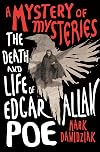
As Mark Dawidziak points out, we all "know" what Edgar Allan Poe was like: gloomy, alcoholic, drug addict—also, gloomy. But as Dawidziak takes pains to explain in A Mystery of Mysteries: The Death and Life of Edgar Allan Poe, this view of Poe is based largely on the poorly documented last years of Poe's life and on not-necessarily-accurate posthumous stories about Poe. Dawidziak's Poe does suffer some hard downs, but that aspect of his character is balanced by a general optimism, belief in show more himself as a writer, willingness to take on new projects, and intense work ethic.
Mystery of Mysteries offers a combined biography of Poe and investigation of his death. The chapters alternate: one chunk of bio, one look at the final days, another chunk of bio, another look at the final days, and so on. The idea underlying this structure is interesting—alternately dealing out the the big picture and the—but I found it to be a mixed success. The larger-scale biography feels rushed at times. The changes in timeline occasionally confuse. And readers don't get to explore Poe's death with a full sense of the trajectory of his life because his life story isn't completed until the book's end.
In addition to pushing for a more complex, less stereotypically glum picture of Poe, Dawidziak emphasizes how much we don't know—and probably never will. Over twenty-five years, the doctor treating Poe at the time of his death wrote three different and conflicting accounts of Poe's last days. Those who felt slighted by Poe's literary criticism—and he wrote many smart, but uncompromising reviews—used his death as an opportunity for revenge. For them, Poe is an habitual drunkard. Others, who didn't face Poe's criticism—or did, but weren't as thinned skinned—emphasize his many years of sobriety. Poe knew alcohol had a hugely deleterious effect on his work and relationships and repeatedly managed to hold off from the drink in order to retain a job or to better care for those he loved.
The consistent features in accounts of Poe's demise were that he was fevered, anxious, and sometimes hallucinating. Unfortunately, these aren't diagnostically useful symptoms. Fever, anxiety, and hallucination can correlate with any number of medical conditions. None of the symptoms recorded at the time is unique enough to enable diagnosis. Dawidziak reviews a number of major theories about his cause of death, but each of these involves some guesswork and use of dubious evidence.
If I could read this book over again (and, of course, I could) I would move through it reading the large-scale biographical chapters first and reading the chapters on his death after. That reading would miss some interesting moments of juxtaposition, but would allow for a fuller grasp of all the material Dawidziak offers.
I received a free electronic review copy of this title from the publisher via EdelweissPlus; the opinions are my own. show less
Mystery of Mysteries offers a combined biography of Poe and investigation of his death. The chapters alternate: one chunk of bio, one look at the final days, another chunk of bio, another look at the final days, and so on. The idea underlying this structure is interesting—alternately dealing out the the big picture and the—but I found it to be a mixed success. The larger-scale biography feels rushed at times. The changes in timeline occasionally confuse. And readers don't get to explore Poe's death with a full sense of the trajectory of his life because his life story isn't completed until the book's end.
In addition to pushing for a more complex, less stereotypically glum picture of Poe, Dawidziak emphasizes how much we don't know—and probably never will. Over twenty-five years, the doctor treating Poe at the time of his death wrote three different and conflicting accounts of Poe's last days. Those who felt slighted by Poe's literary criticism—and he wrote many smart, but uncompromising reviews—used his death as an opportunity for revenge. For them, Poe is an habitual drunkard. Others, who didn't face Poe's criticism—or did, but weren't as thinned skinned—emphasize his many years of sobriety. Poe knew alcohol had a hugely deleterious effect on his work and relationships and repeatedly managed to hold off from the drink in order to retain a job or to better care for those he loved.
The consistent features in accounts of Poe's demise were that he was fevered, anxious, and sometimes hallucinating. Unfortunately, these aren't diagnostically useful symptoms. Fever, anxiety, and hallucination can correlate with any number of medical conditions. None of the symptoms recorded at the time is unique enough to enable diagnosis. Dawidziak reviews a number of major theories about his cause of death, but each of these involves some guesswork and use of dubious evidence.
If I could read this book over again (and, of course, I could) I would move through it reading the large-scale biographical chapters first and reading the chapters on his death after. That reading would miss some interesting moments of juxtaposition, but would allow for a fuller grasp of all the material Dawidziak offers.
I received a free electronic review copy of this title from the publisher via EdelweissPlus; the opinions are my own. show less
Mark Twain's Guide to Diet, Exercise, Beauty, Fashion, Investment, Romance, Health and Happiness by Mark Dawidziak
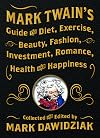
This edited collection of Mark Twain's comments is a clever idea. However, I think I would suggest that one be sure to read Twain's original works as well. It is merely a potpourri of his witticisms and makes for a lovely gift for a Twain fan. It is a small book and a clever idea but I think it lacks a certain sense of continuity and is a bit confusing when reading it. The thing about Twain is that so much of his humor is best revealed within the context of the circumstances that taken so show more out of context simply does not work as well for his writings. show less
 This review was written for LibraryThing Early Reviewers.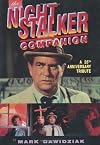
There are lots of little tidbits, production information, and general trivia about the ultra-popular, but short-lived cult favorite, "The Night Stalker" in Mark Dawidziak's literary tribute. The first half of the book is dedicated to the genesis of the series and all the effort that went into creating the first two made-for-TV movies starring Darrin McGavin as the eponymous news reporter.
The second half of the book covers each of the 20 hour-long episodes in some detail with listings for show more all of the writers, directors, and various players, along with short plot details. It's clear from the amount of research and effort that went into the creation of this compilation that it was a labor of love for Dawidiak.
There are a few editing snafus that will grate on some readers, but true fans of the show will overlook those and will definitely want to check out "The Night Stalker Companion - A 25th Anniversary Tribute". It's very likely that those readers will have to search diligently for this hard-to-find reference, but if they can snag one, it will be well worth the effort. show less
The second half of the book covers each of the 20 hour-long episodes in some detail with listings for show more all of the writers, directors, and various players, along with short plot details. It's clear from the amount of research and effort that went into the creation of this compilation that it was a labor of love for Dawidiak.
There are a few editing snafus that will grate on some readers, but true fans of the show will overlook those and will definitely want to check out "The Night Stalker Companion - A 25th Anniversary Tribute". It's very likely that those readers will have to search diligently for this hard-to-find reference, but if they can snag one, it will be well worth the effort. show less
Lists
Awards


You May Also Like


Associated Authors
Statistics
- Works
- 17
- Also by
- 4
- Members
- 882
- Popularity
- #29,045
- Rating
- 3.9
- Reviews
- 38
- ISBNs
- 38
- Languages
- 1
- Favorited
- 1
