
P. M. S. Hacker
Author of Neuroscience and Philosophy: Brain, Mind, and Language
About the Author
P.M.S. Hacker is the leading authority on the philosophy of Wittgenstein. He is Emeritus Fellow at St John's College, Oxford University, where he was a Tutorial Fellow in philosophy from 1966 to 2006, and has held visiting chairs in North America and both British Academy and Leverhulme Senior show more Research Fellowships. He is the author of nineteen books and over 150 papers, and has written extensively on the philosophy of Wittgenstein, the history of analytic philosophy, philosophy of language, philosophy of mind, and cognitive neuroscience. show less
Works by P. M. S. Hacker
Wittgenstein: Meaning and Mind (An Analytical Commentary on the Philosophical Investigations, Vol. 3, Part 2: Exegesis 243-427) (1990) 36 copies
Wittgenstein: Mind and Will, Analytical Commentary on the Philosophical Investigations (1996) 30 copies
Wittgenstein: Meaning and Mind: Meaning and Mind, Volume 3 of an Analytical Commentary on the Philosophical Investigations, Part I: Essays (1993) 23 copies
Appearance and Reality: A Philosophical Investigation into Perception and Perceptual Qualities (1987) 11 copies
Wittgenstein - Mind and Will: Volume 4 of an Analytical Commentary on the Philosophical Investigations: Exegesis Sections 428-693 Pt. II (2000) 8 copies
The Hamas Massacre and the Transmutation of Antisemitism (Studies in Contemporary Antisemitism) (2025) 3 copies
Solving, Resolving, and Dissolving Philosophical Problems: Essays in Connective, Contrastive and Contextual Analysis (2025) 2 copies
Intellectual Entertainments: Eight Dialogues on Mind, Consciousness and Thought (Anthem Studies in Wittgenstein) (2020) 2 copies
Associated Works
Tagged
Common Knowledge
- Canonical name
- Hacker, P. M. S.
- Birthdate
- 1939-07-15
- Gender
- male
Members
Reviews

A useful brief look. Wittgenstein rejected mind-body duality and the idea that I can know something of my inner state but only believe something about yours; it is the visible behavior of me or you that provides the logical basis of philosophical concepts. Without behavior it would seem there is nothing (thus computers cannot think because they do not have behaviors).
Notes from the book:
The task of philosophy is to resolve or dissolve philosophical problems by clarification of what makes show more sense... There can be no discoveries in philosophy, for everything that is relevant to a philosophical problem lies open to view in our rule-governed use of words... Philosophical problems are symptoms of conceptual entanglement in the web of language... To have a pain is no more to own anything, logically or otherwise, than is to have a bus to catch...
We construe the mind as an inner world to which only its 'owner' has access... But private ownership of experience is an illusion. Epistemic privacy is also illusory... In repudiating the idea of privileged, direct access to our own mental states, Wittgenstein was not affirming the idea that we have unprivileged, indirect access. In denying that we always know what mental states we are in, he was not claiming that we are sometimes ignorant that we are, for example, in pain... it and its negation alike are nonsense or, at least, do not mean what philosophical reflection takes them to mean... We mistakenly construe a grammatical connection or exclusion of words for an empirical or metaphysical connection or exclusion determining the essential nature of the mind...
an ascription of knowledge is supposed to be an empirical proposition which is informative in so far as it excludes an alternative... 'I know I am in pain' can be a claim to know something only if 'I do not know whether I am in pain' is intelligible... Where we speak of knowing that p, we can also speak of guessing, surmising and conjecturing that p. But it makes no sense to guess that one is in pain. In short, our conception of epistemic privacy of experience confuses the grammatical exclusion of ignorance with the presence of knowledge...
In place of the descriptivist, cognitivist, conception, Wittgenstein proposes a completely different picture - an expressivist, naturalist one... A child who wants his teddy reaches for it and cries out in frustration - we teach him the use of 'I want'. In reaching for his teddy, he does not first introspectively identify his inner state as volitional, and he no more does so when he says, 'I want teddy'... primitive forms of natural behaviour are antecedent to our learnt language-games... Spontaneous expressions of emotion, 'I like', 'I love', 'I hate,' are manifestations of affective attitudes. And like the natural forms of behaviour which these learnt utterances replace, such verbal forms of behaviour are logical criteria for corresponding third-person ascriptions of sensation, desire and emotion...
'I think' and 'I believe' are not learnt or used to describe an inner state which we observe within ourselves and then describe for the benefit of others. Rather, they are used to qualify a claim about how things are - to signify that we are not in a position to guarantee the sequel... The pegs upon which different psychological terms hang are various, but the differences do not reinstate the classical picture of the inner...
The complement of the misconception of privileged access is that we can know how things are with others only indirectly, that the 'inner' is hidden behind the 'outer' (ie, mere behavioural externalities - bodily movements and the sound of speech). This, too, Wittgenstein argued, is a misconception - but not because the inner is, as the behaviourists argued, a fiction... Joy, distress or amusement are not hidden behind the face that manifests them, but visible on it. What we so misleadingly call 'the inner' infuses the outer...
The thought that another person can only surmise that I am in pain (whereas I know I am) is wrong. "If we are using the word 'know' as it is normally used (and how else are we to use it?), then other people very often know when I am in pain."...
"The human body is the best picture of the human soul." (PI, p. 178)
Our psychological concepts are logically connected with the behaviour that manifests the inner. For it is the behaviour of a human being that constitutes the logical criteria for saying of him that he is perceiving or feeling something, thinking or recollecting, joyful or sad...
if it is nonsense to say 'my brain has a toothache', it is nonsense on stilts to claim that the brain poses questions and answers them, constructs hypotheses or understands arguments... Brains do not have opinions, argue, hypothesize or conjecture. It is we who do so. To be sure, we could not do so if our brain were destroyed; but then we could not have toothache or walk without a brain either - yet it is not the brain that has toothache and walks to the dentist.
show less
Notes from the book:
The task of philosophy is to resolve or dissolve philosophical problems by clarification of what makes show more sense... There can be no discoveries in philosophy, for everything that is relevant to a philosophical problem lies open to view in our rule-governed use of words... Philosophical problems are symptoms of conceptual entanglement in the web of language... To have a pain is no more to own anything, logically or otherwise, than is to have a bus to catch...
We construe the mind as an inner world to which only its 'owner' has access... But private ownership of experience is an illusion. Epistemic privacy is also illusory... In repudiating the idea of privileged, direct access to our own mental states, Wittgenstein was not affirming the idea that we have unprivileged, indirect access. In denying that we always know what mental states we are in, he was not claiming that we are sometimes ignorant that we are, for example, in pain... it and its negation alike are nonsense or, at least, do not mean what philosophical reflection takes them to mean... We mistakenly construe a grammatical connection or exclusion of words for an empirical or metaphysical connection or exclusion determining the essential nature of the mind...
an ascription of knowledge is supposed to be an empirical proposition which is informative in so far as it excludes an alternative... 'I know I am in pain' can be a claim to know something only if 'I do not know whether I am in pain' is intelligible... Where we speak of knowing that p, we can also speak of guessing, surmising and conjecturing that p. But it makes no sense to guess that one is in pain. In short, our conception of epistemic privacy of experience confuses the grammatical exclusion of ignorance with the presence of knowledge...
In place of the descriptivist, cognitivist, conception, Wittgenstein proposes a completely different picture - an expressivist, naturalist one... A child who wants his teddy reaches for it and cries out in frustration - we teach him the use of 'I want'. In reaching for his teddy, he does not first introspectively identify his inner state as volitional, and he no more does so when he says, 'I want teddy'... primitive forms of natural behaviour are antecedent to our learnt language-games... Spontaneous expressions of emotion, 'I like', 'I love', 'I hate,' are manifestations of affective attitudes. And like the natural forms of behaviour which these learnt utterances replace, such verbal forms of behaviour are logical criteria for corresponding third-person ascriptions of sensation, desire and emotion...
'I think' and 'I believe' are not learnt or used to describe an inner state which we observe within ourselves and then describe for the benefit of others. Rather, they are used to qualify a claim about how things are - to signify that we are not in a position to guarantee the sequel... The pegs upon which different psychological terms hang are various, but the differences do not reinstate the classical picture of the inner...
The complement of the misconception of privileged access is that we can know how things are with others only indirectly, that the 'inner' is hidden behind the 'outer' (ie, mere behavioural externalities - bodily movements and the sound of speech). This, too, Wittgenstein argued, is a misconception - but not because the inner is, as the behaviourists argued, a fiction... Joy, distress or amusement are not hidden behind the face that manifests them, but visible on it. What we so misleadingly call 'the inner' infuses the outer...
The thought that another person can only surmise that I am in pain (whereas I know I am) is wrong. "If we are using the word 'know' as it is normally used (and how else are we to use it?), then other people very often know when I am in pain."...
"The human body is the best picture of the human soul." (PI, p. 178)
Our psychological concepts are logically connected with the behaviour that manifests the inner. For it is the behaviour of a human being that constitutes the logical criteria for saying of him that he is perceiving or feeling something, thinking or recollecting, joyful or sad...
if it is nonsense to say 'my brain has a toothache', it is nonsense on stilts to claim that the brain poses questions and answers them, constructs hypotheses or understands arguments... Brains do not have opinions, argue, hypothesize or conjecture. It is we who do so. To be sure, we could not do so if our brain were destroyed; but then we could not have toothache or walk without a brain either - yet it is not the brain that has toothache and walks to the dentist.
show less

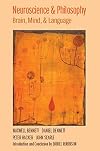
Spin-off van het boek Philosophical Foundations of Neuroscience door neurowetenschapper Maxwell Bennet en filosoof Peter Hacker. Naast representatieve stukken uit het bovengenoemde boek, komen Daniel Dennet en John Searle aan het woord, gevolgd door een antwoord van Bennet en Hacker op hun tegenwerpingen, en tenslotte een nawoord door filosoof Daniel Robinson.
Het is vooral Hacker die de show steelt in dit korte en goed leesbare boek. Hij houdt in goed angelsaksisch-analytische traditie de show more concepten tegen het licht waarvan de neurowetenschap zich bedient, en vindt de nodige ongerijmdheden. De voornaamste bron van verwarring komt volgens hem voort uit wat hij de mereologische fout noemt: het toeschrijven van eigenschappen aan een deel van het geheel, die op zinvolle wijze alleen aan het geheel kunnen worden toegeschreven. Concreet in het geval van de neurowetenschap: het toekennen van psychologische attributen aan onze hersenen. Het is niet ons brein dat denkt, oordeelt, boos is of twijfelt, het is de gehele mens. Wanneer we zeggen dat iemand een beslissing neemt, dingen waarneemt of een plan maakt, weten we wat dat betekent, omdat we kunnen zien wat de persoon in kwestie doet en hem zo nodig vragen kunnen stellen. Bovengegeven termen krijgen hun betekenis in de context van ons gedrag en onze onderlinge interactie. Maar wat het wil zeggen wanneer we datzelfde beweren over onze hersenen, is volledig onduidelijk. Meer nog, het kan ook nooit duidelijk worden, omdat we ons niet kunnen voorstellen, wat ons precies zou tonen dat de hersenen een dergelijke activiteit ondernemen. En dat maakt, volgens Hacker, het gebruik van deze woorden toegepast op ons brein zinloos.
Om het met Wittgenstein te zeggen -op wie hij natuurlijk in hoge mate steunt: 'Es kommt darauf hinaus: man könne nur vom lebenden Menschen, und was ihm ähnlich ist (sich ähnlich benimmt) sagen, es habe Empfindungen; es sähe; sei blind; höre; sei taub; sei bei Bewusstsein oder bewusstlos.'
Overigens wie gelooft dat Hacker luchtkastelen bestrijdt, hoeft slechts een boek als ‘Wij zijn ons brein’ -de titel alleen al!- van Schwaab open te slaan om te zien dat bovenbeschreven gebruik (misbruik zou Hacker zeggen) van psychologische en cognitieve concepten in verband met onze hersenen schering en inslag is. show less
Het is vooral Hacker die de show steelt in dit korte en goed leesbare boek. Hij houdt in goed angelsaksisch-analytische traditie de show more concepten tegen het licht waarvan de neurowetenschap zich bedient, en vindt de nodige ongerijmdheden. De voornaamste bron van verwarring komt volgens hem voort uit wat hij de mereologische fout noemt: het toeschrijven van eigenschappen aan een deel van het geheel, die op zinvolle wijze alleen aan het geheel kunnen worden toegeschreven. Concreet in het geval van de neurowetenschap: het toekennen van psychologische attributen aan onze hersenen. Het is niet ons brein dat denkt, oordeelt, boos is of twijfelt, het is de gehele mens. Wanneer we zeggen dat iemand een beslissing neemt, dingen waarneemt of een plan maakt, weten we wat dat betekent, omdat we kunnen zien wat de persoon in kwestie doet en hem zo nodig vragen kunnen stellen. Bovengegeven termen krijgen hun betekenis in de context van ons gedrag en onze onderlinge interactie. Maar wat het wil zeggen wanneer we datzelfde beweren over onze hersenen, is volledig onduidelijk. Meer nog, het kan ook nooit duidelijk worden, omdat we ons niet kunnen voorstellen, wat ons precies zou tonen dat de hersenen een dergelijke activiteit ondernemen. En dat maakt, volgens Hacker, het gebruik van deze woorden toegepast op ons brein zinloos.
Om het met Wittgenstein te zeggen -op wie hij natuurlijk in hoge mate steunt: 'Es kommt darauf hinaus: man könne nur vom lebenden Menschen, und was ihm ähnlich ist (sich ähnlich benimmt) sagen, es habe Empfindungen; es sähe; sei blind; höre; sei taub; sei bei Bewusstsein oder bewusstlos.'
Overigens wie gelooft dat Hacker luchtkastelen bestrijdt, hoeft slechts een boek als ‘Wij zijn ons brein’ -de titel alleen al!- van Schwaab open te slaan om te zien dat bovenbeschreven gebruik (misbruik zou Hacker zeggen) van psychologische en cognitieve concepten in verband met onze hersenen schering en inslag is. show less
Feb 2, 2011Dutch
Lists
You May Also Like


Associated Authors
Statistics
- Works
- 33
- Also by
- 2
- Members
- 725
- Popularity
- #35,031
- Rating
- 4.3
- Reviews
- 4
- ISBNs
- 107
- Languages
- 8
- Favorited
- 2