
Ray Monk
Author of Ludwig Wittgenstein: The Duty of Genius
About the Author
Series
Works by Ray Monk
天才的責任:維根斯坦傳[上] 1 copy
天才的責任:維根斯坦傳[下] 1 copy
Associated Works
Tagged
Common Knowledge
- Canonical name
- Monk, Ray
- Birthdate
- 1957-02-15
- Gender
- male
- Education
- York University (BA)
University of Oxford (MLitt) - Occupations
- professor of philosophy
biographer
teacher - Organizations
- University of Southampton
- Agent
- Gill Coleridge
- Nationality
- UK
- Associated Place (for map)
- UK
Members
Reviews
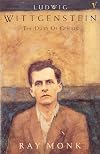
How can you talk about Wittgenstein without descending into silly caricature? Ray Monk does it. Having re-read it recently I was struck bu the skillful way Monk relates LW the man to his philospohical interests. And most importantly, how Monk shows how 'the child is the father of the man.' A great job of humanising LW - making him less scarey by unpacking some of the myth - but also making him more admirable. It is easy to accept LW as 'a great man' (having talked to someone who knew him) show more but Monk's book also shows LW as an admirable man. show less
The strength of this book lies equally in its brevity and its authorship. Only a truly informed lover of Russell such as Monk could achieve so concise and elucidatory a review. What's more, by situating Russell's life's work in his early childhood traumas, one gleans so much more than just a clear and accessible panoramic overview of the evolution in his thinking, itself an incredible achievement for subject matter so heavy, but one also appreciates the personal mission in Russell's life's show more work to prove the existence of absolute truth. In this way, [spoiler alert] when one reaches the end of these 58 printed pages, one is able thus to interpret its ending not as a failure of mission but as transcendence. So Russell renounces the search for absolute truth, and in this way, finally is able to accept, integrate and overcome the great loss and uncertainty of his early life. At a spiritual level we come to understand his superficial failure as his most meaningful success. This is a movingly universal and inspirational tale with meaning beyond the history of western philosophical thought. And how charming to by the way come to understand the genealogy of the language of my high school mathematics teachers. This story of a man who largely did his thinking alone and can be said to have achieved nothing in his life, can also so clearly be understood to have created the language and frameworks from which entire field(s) of thinking would arise within a generation. A fantastic introduction to Russell - and Wittgenstein - and very well told. Bravo! show less
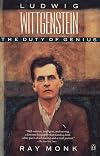
I believe this biography helped me understand what Wittgenstein was up to more than anything else I've read about him. Not many thinkers have propounded one set of ideas, then stopped, reconsidered, then came back with a new way of looking at philosophy.
Second reading:
I have to admit I had no memory of reading this book before, and was surprised to find this ten year old review.
This time I took seven pages of notes, and was interested in his later work more than the early writings. I read show more this book as a biography, but even more for its discussions of what Wittgenstein believed philosophically. He comes across as a complex character, strong willed and at the same time full of doubts about himself.
Philosophers still argue over what Wittgenstein meant, like they do over the work of any important thinker, so I am not ashamed to say I still don't really understand him. Still he's considered one of the greats of the 20th century.
The best thing a good intellectual biography can do is give its readers something to think about, and Ray Monk has certainly done that for me. show less
Second reading:
I have to admit I had no memory of reading this book before, and was surprised to find this ten year old review.
This time I took seven pages of notes, and was interested in his later work more than the early writings. I read show more this book as a biography, but even more for its discussions of what Wittgenstein believed philosophically. He comes across as a complex character, strong willed and at the same time full of doubts about himself.
Philosophers still argue over what Wittgenstein meant, like they do over the work of any important thinker, so I am not ashamed to say I still don't really understand him. Still he's considered one of the greats of the 20th century.
The best thing a good intellectual biography can do is give its readers something to think about, and Ray Monk has certainly done that for me. show less
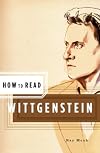
This was a really marvelous little book--it really broke down Wittengenstein's arguments and made me excited to try to actually engage with Wittgenstein's writings on my own, especially the later stuff. I think the parts explaining Wittegenstein's earlier work was not as clear to me, which I'm gonna call a me thing and not a problem with Monk's writing or explanation. The later work though felt much more clear to me through Monk's explanations, and I found the chapter on language games to be show more particularly helpful and interesting! I definitely feel better equipped to try to go forth and read Wittgenstein's actual works after this, which means it did its job! show less
Lists
Awards


You May Also Like


Associated Authors
Statistics
- Works
- 15
- Also by
- 1
- Members
- 2,998
- Popularity
- #8,508
- Rating
- 4.2
- Reviews
- 27
- ISBNs
- 72
- Languages
- 15
- Favorited
- 3
