
David Edmonds
Author of Wittgenstein's Poker : The Story of a Ten-minute Argument Between Two Great Philosophers
About the Author
David Edmonds is the author, with John Eidinow, of the best-selling Wittenstein's Poker, as well as Rousseau's Dog and Bobby Fischer goes to War. The cofounder of the popular Philosophy Bites podcast series, Edmonds is a senior research associate at the University of Oxford's Uehiro Centre for show more Practical Ethics and a multi-award-winning radio Feature maker at the BBC. He holds a PhD in philosophy. show less
Disambiguation Notice:
(yid) VIAF:32273779
Series
Works by David Edmonds
Wittgenstein's Poker : The Story of a Ten-minute Argument Between Two Great Philosophers (2001) — Author — 1,732 copies, 19 reviews
Bobby Fischer Goes to War: How the Soviets Lost the Most Extraordinary Chess Match of All Time (2004) — Author — 694 copies, 16 reviews
Would You Kill the Fat Man?: The Trolley Problem and What Your Answer Tells Us about Right and Wrong (2013) 235 copies, 8 reviews
The Murder of Professor Schlick: The Rise and Fall of the Vienna Circle (2020) 155 copies, 5 reviews
Undercover Robot – Mein erstes Jahr als Mensch: Lustiger Roman über Roboter und Menschen | für Mädchen und Jungen ab 10 Jahre (2020) 7 copies, 1 review
O Inglês de A a Z 2 copies
Practical ethics bites [podcast] — Producer; Interviewer — 1 copy
Tagged
Common Knowledge
- Canonical name
- Edmonds, David
- Birthdate
- 1964-04-06
- Gender
- male
- Education
- Worcester College, Oxford University (BA|MA)
Open University (Ph.D) - Occupations
- journalist
radio feature maker
philosopher
columnist - Organizations
- BBC
Oxford University
New Statesman - Relationships
- Eidinow, John (co-author)
- Nationality
- UK
- Places of residence
- England, UK
- Disambiguation notice
- VIAF:32273779
- Associated Place (for map)
- England, UK
Members
Reviews
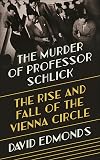
Come for the intimation of true crime, but stay for an examination of the collective life and times of a group of academicians and philosophers who wanted to make the practice of philosophy an exercise in formal logic, and purge it of metaphysical claptrap, thus making philosophy a fit support for modern science. Unfortunately, there are people who like their metaphysical claptrap, most notably fascists and hard-line nationalists, and this had a great deal to do with the demise of the Vienna show more Circle, sometime before the unfortunate demise of Moritz Schlick. I actually liked this book a great deal, and found it quite readable. show less
Would You Kill the Fat Man? – The Trolley Problem and What Your Answer Tells Us about Right and Wrong by David Edmonds
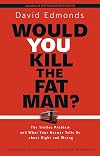
Let me tell you, this book was a PHENOMENAL read (at least for me, who is obsessed with all things philosophy and ethics right now). It was assigned reading for my favorite class, and it has taught me about so many ethical theories and new ideas while keeping me interested and engaged the whole time. No prior knowledge of “trolleyology” is needed and it is great for beginners and experienced philosophers alike. It causes the reader to examine their own morals and question why we feel the show more way we do about certain issues, while examining research from several other fields as well. I learned so much and this will stay on my bookshelf for life. Normally having to take chapter quizzes/writing essays on books for a class takes some of the joy out of reading, but not for this book- my experience was actually enriched. show less
The title of the book sounds like we are in for a mystery story, and that’s kind of indicative of how engaging a history of the Vienna Circle Edmonds has written. This could be really dry material, but Edmonds puts together a story, delving into events, characters, motivations, and context to make this very readable, maybe even for the interested non-specialist.
The Vienna Circle was an unusually collaborative small community of philosophers, physicists, mathematicians, and others, active show more primarily in the 1930s, centered in Vienna but with connections throughout Europe, the UK, and the United States. Its members included some of the brightest lights of the time — Rudolph Carnap, Alfred Tarski, Karl Menger, Kurt Gödel, the murdered professor Moritz Schlick, . . . And the Circle was surrounded by a penumbra of truly historical figures — Albert Einstein, for one. And there was Ludwig Wittgenstein, with whom the Circle had a mostly unrequited philosophical love affair.
Their “movement,” and it really was an attempt at a movement-like takeover of philosophical thinking, at least about the sciences and mathematics, was founded on a radically empiricist claim about knowledge. All knowledge was to be grounded in direct perceptual experiences of the world, their articulation in language (a controversial subject within the Circle), and their logical relationships.
While empiricism per se was nothing new — the Vienna Circle traced its roots at least as far back as Hume in the eighteenth century — what was new was the coming of age of formal logic during the time leading up to the Circle. Logic theory and systems of formal notation exploded at least from the time of Frege forward through Bertrand Russell and the Circle itself, with applications to the foundations of mathematics and the foundations of scientific knowledge.
Formal logic was essentially a new toy, and the Circle applied it everywhere. The marriage of formal logic and empiricism came to be known as the more or less official position of the Vienna Circle, “logical positivism.”
Ignoring internal differences, at least for the moment, our knowledge of the external world was a logical and linguistic construction beginning with what were called “protocol” statements. What exactly protocol statements state is one of the difficulties members of the Circle debated, but the gist is that they were statements of perceptual experience — sense perceptions articulated in language.
Any purported knowledge not resolvable into such protocol statements and their logical relationships was not knowledge at all. In fact, in what really seems an enthusiastic over-reach, any attempts to even speak of anything not resolvable into those components were regarded as futile, resulting in nonsense.
“Verificationism” arose as a theoretical statement of the Circle’s position, as a test of the meaningfulness of a statement. If the statement could not, in principle, be verified by perceptual experience (or pure logical analysis), then it was nonsense.
Thus one thing that united the Vienna Circle as a philosophical movement was its rejection of metaphysics as a useless and futile gesture. Metaphysics, for the Circle, was an attempt to do the undoable, to speak about reality independently of our experience of it. The very language of metaphysics — the “thing-in-itself”, “ultimate reality”, “realism”, “idealism” — fails to be truly meaningful. What are meaningful are the statements of science.
It may be difficult for a reader now to understand the motivation of the Circle’s members’ vehemence toward metaphysics, but we have to remember how strong the metaphysical legacy of German-oriented philosophy was at the turn of the twentieth century, with a century of Kantian and Hegelian influence in its wake. And of course Heidegger was a contemporary of the Circle.
Much of the lasting influence of the Vienna Circle centers on topics and approaches in the philosophy of mathematics and the philosophy of science, and also in the way that many scientists understand what they are doing. In fact, I think it’s much easier now to find remnants of logical positivism among practicing scientists than among philosophers of science. We can especially find its influence in current debates among scientists about what counts as “good science,” e.g., in discussions of the testability of multiverse theories, string theory, etc.
The decline of the Vienna Circle was just as much a matter of politics and history as of philosophical decline per se. Certainly it met philosophical resistance, and its over-reach became apparent. If you observe and think for a few moments about the bulk of what happens when people speak, you find little of what logical positivism would regard as meaningful. We ask questions, make promises, make jokes, express emotions — all the everyday stuff of language. There’s actually relatively little of what the logical positivists could test out as truly meaningful.
Arguably, the logical positivists wrongly conceived what we primarily do with language altogether. And, in fact, one strong strand of philosophical thought that developed partly in reaction to the over-reach was “ordinary language philosophy,” championed by John Austin and at least in some version by one of the Circle’s own north stars, Wittgenstein.
But the practical decline of the Circle was brought about by the rise of fascism in Europe, Austrian and then German Nazism. The majority of the Circle’s members were either Jewish, leftist, Jewish and leftist, or at least known to consort with Jews and/or leftists. Edmonds accounts for a kind of Vienna Circle diaspora, much of it to England and the United States, starting in the late 1930s. The Circle was literally broken.
The Circle’s practical demise is one of the strongest parts of Edmond’s story, and of course the murder of Professor Schlick is one event within it.
The Vienna Circle, as I’ve implied, didn’t disappear without a trace. Some of the work of the Circle’s members and associated figures are landmarks in philosophy, mathematics, and scientific thought:
Rudolph Carnap’s Logical Structure of the World
Kurt Gödel’s Incompleteness theorem
Alfred Tarski’s theory of truth
Otto Neurath’s Isotypes
Karl Popper’s falsifiability as the very defining feature of scientific theory
And there was more.
All in all, my own perspective on the Vienna Circle, now informed by Edmond’s work, is that it was a philosophical position that needed to be articulated and tested. It does have intuitive appeal — the same appeal that lies at the core of historical empiricist theories of knowledge. History tested it and found it not to be wholly right, but it continues to frame discussions in the fields it most affected. show less
The Vienna Circle was an unusually collaborative small community of philosophers, physicists, mathematicians, and others, active show more primarily in the 1930s, centered in Vienna but with connections throughout Europe, the UK, and the United States. Its members included some of the brightest lights of the time — Rudolph Carnap, Alfred Tarski, Karl Menger, Kurt Gödel, the murdered professor Moritz Schlick, . . . And the Circle was surrounded by a penumbra of truly historical figures — Albert Einstein, for one. And there was Ludwig Wittgenstein, with whom the Circle had a mostly unrequited philosophical love affair.
Their “movement,” and it really was an attempt at a movement-like takeover of philosophical thinking, at least about the sciences and mathematics, was founded on a radically empiricist claim about knowledge. All knowledge was to be grounded in direct perceptual experiences of the world, their articulation in language (a controversial subject within the Circle), and their logical relationships.
While empiricism per se was nothing new — the Vienna Circle traced its roots at least as far back as Hume in the eighteenth century — what was new was the coming of age of formal logic during the time leading up to the Circle. Logic theory and systems of formal notation exploded at least from the time of Frege forward through Bertrand Russell and the Circle itself, with applications to the foundations of mathematics and the foundations of scientific knowledge.
Formal logic was essentially a new toy, and the Circle applied it everywhere. The marriage of formal logic and empiricism came to be known as the more or less official position of the Vienna Circle, “logical positivism.”
Ignoring internal differences, at least for the moment, our knowledge of the external world was a logical and linguistic construction beginning with what were called “protocol” statements. What exactly protocol statements state is one of the difficulties members of the Circle debated, but the gist is that they were statements of perceptual experience — sense perceptions articulated in language.
Any purported knowledge not resolvable into such protocol statements and their logical relationships was not knowledge at all. In fact, in what really seems an enthusiastic over-reach, any attempts to even speak of anything not resolvable into those components were regarded as futile, resulting in nonsense.
“Verificationism” arose as a theoretical statement of the Circle’s position, as a test of the meaningfulness of a statement. If the statement could not, in principle, be verified by perceptual experience (or pure logical analysis), then it was nonsense.
Thus one thing that united the Vienna Circle as a philosophical movement was its rejection of metaphysics as a useless and futile gesture. Metaphysics, for the Circle, was an attempt to do the undoable, to speak about reality independently of our experience of it. The very language of metaphysics — the “thing-in-itself”, “ultimate reality”, “realism”, “idealism” — fails to be truly meaningful. What are meaningful are the statements of science.
It may be difficult for a reader now to understand the motivation of the Circle’s members’ vehemence toward metaphysics, but we have to remember how strong the metaphysical legacy of German-oriented philosophy was at the turn of the twentieth century, with a century of Kantian and Hegelian influence in its wake. And of course Heidegger was a contemporary of the Circle.
Much of the lasting influence of the Vienna Circle centers on topics and approaches in the philosophy of mathematics and the philosophy of science, and also in the way that many scientists understand what they are doing. In fact, I think it’s much easier now to find remnants of logical positivism among practicing scientists than among philosophers of science. We can especially find its influence in current debates among scientists about what counts as “good science,” e.g., in discussions of the testability of multiverse theories, string theory, etc.
The decline of the Vienna Circle was just as much a matter of politics and history as of philosophical decline per se. Certainly it met philosophical resistance, and its over-reach became apparent. If you observe and think for a few moments about the bulk of what happens when people speak, you find little of what logical positivism would regard as meaningful. We ask questions, make promises, make jokes, express emotions — all the everyday stuff of language. There’s actually relatively little of what the logical positivists could test out as truly meaningful.
Arguably, the logical positivists wrongly conceived what we primarily do with language altogether. And, in fact, one strong strand of philosophical thought that developed partly in reaction to the over-reach was “ordinary language philosophy,” championed by John Austin and at least in some version by one of the Circle’s own north stars, Wittgenstein.
But the practical decline of the Circle was brought about by the rise of fascism in Europe, Austrian and then German Nazism. The majority of the Circle’s members were either Jewish, leftist, Jewish and leftist, or at least known to consort with Jews and/or leftists. Edmonds accounts for a kind of Vienna Circle diaspora, much of it to England and the United States, starting in the late 1930s. The Circle was literally broken.
The Circle’s practical demise is one of the strongest parts of Edmond’s story, and of course the murder of Professor Schlick is one event within it.
The Vienna Circle, as I’ve implied, didn’t disappear without a trace. Some of the work of the Circle’s members and associated figures are landmarks in philosophy, mathematics, and scientific thought:
Rudolph Carnap’s Logical Structure of the World
Kurt Gödel’s Incompleteness theorem
Alfred Tarski’s theory of truth
Otto Neurath’s Isotypes
Karl Popper’s falsifiability as the very defining feature of scientific theory
And there was more.
All in all, my own perspective on the Vienna Circle, now informed by Edmond’s work, is that it was a philosophical position that needed to be articulated and tested. It does have intuitive appeal — the same appeal that lies at the core of historical empiricist theories of knowledge. History tested it and found it not to be wholly right, but it continues to frame discussions in the fields it most affected. show less
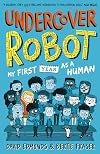
Dotty is endearing as she figures out how to live as a “human” and makes fun mistakes about gift-giving, truth-telling, and learns about friendship and relationships. The contest to become the world’s best robot—undetectable by humans—is a wonderful frame for thinking about what it means to be human, what the difference between moral and polite choices is, and why being unique and one-of-a-kind is so precious to people, to us. The scientists have thought of everything in Dotty’s show more design—even body fluids—fortunately the “gassy release function” won’t be installed until her “2.3X update, due in October.” She has special programs that are triggered by various situations, a little like most of us. (Rage program, Emergency Tact, Emergency Save Life Code). Kids will be able to relate to Dotty’s confusion about the inconsistency of adults’ rules for kids. Wouldn’t we all like to delete the “parts of the program that simulate Depression, Anxiety, Jealousy” and “turn on Bliss, and keep it running permanently.” Can she pass a lie detector test? (After installing the still-under-development “Love Patch”?) Funny and philosophical! show less
Lists
Awards


You May Also Like


Associated Authors
Statistics
- Works
- 22
- Members
- 3,822
- Popularity
- #6,632
- Rating
- 3.6
- Reviews
- 58
- ISBNs
- 128
- Languages
- 14
- Favorited
- 2