
Edward William Fudge (1944–2017)
Author of The Fire that Consumes: The Biblical Case for Conditional Immortality
About the Author
Edward William Fudge is a Christian theologian, Bible teacher, author, and, for more than twenty years, a practicing attorney. He maintains an international internet ministry at www.EdwardFudge.com.
Works by Edward William Fudge
The Divine Rescue: The Gripping Drama of a Lost World and of the Creator Who Will Not Let It Go. (2010) 17 copies
Sunday-night sermons 4 copies
One Life, death & judgment 2 copies
New Testaments Helps: Romans 1 copy
Tagged
Common Knowledge
- Legal name
- Fudge, Edward William
- Birthdate
- 1944-07-14
- Date of death
- 2017-11-25
- Gender
- male
- Occupations
- evangelist, Churches of Christ
lawyer - Organizations
- Churches of Christ
- Relationships
- Fudge, Bennie Lee (father)
- Short biography
- He started preaching in 1960 as a junior in high school and preached and taught the Bible for the rest of his life. In his more than 45 years as a pastor, teacher and lecturer.Edward graduated from Athens Bible School, Florida College, and Abilene Christian University, where he earned two degrees in biblical languages. He attended Covenant Theological Seminary and Eden Theological Seminary in St. Louis, Mo. Edward also earned a law degree from the University of Houston in 1988 and for the next 29 years, he practiced law with Jenkens & Gilchrist, Simmons & Fletcher, and The Lanier Law Firm.For 21 years he produced an internationally-distributed email devotional called gracEmail. He wrote numerous Christian books and published articles in Christianity Today and other popular and scholarly journals.
Edward’s church family since 1982 was Bering Drive Church of Christ in Houston, where he served as a Bible teacher and for 18 years as an elder. - Birthplace
- Lester, Limestone County, Alabama, USA
- Place of death
- Houston, Harris County, Texas, USA
- Burial location
- Mount Hope Cemetery, Franklin, Williamson County, Tennessee, USA
- Associated Place (for map)
- USA
Members
Reviews
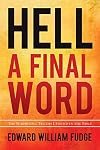
While some have criticized "Hell: A Final Word" for being too shallow or fast to make conclusions, this book is in essence a summary or follow up to his much larger book, "The Fire That Consumes." His original book is the more thought out, all encompassing volume. This smaller version gives a quick, still detailed overview of his argument that Scripturally, Hell is a place of final destruction for the wicked (known traditionally as annihilationism). Fudge compares this view with the orthodox show more view of eternal suffering and misery instead. I imagine that Fudge would be quite happy with the result of my reading: while not completely converted to the idea of annihilationism, I am passionate about researching the topic more thoroughly. While the traditional view is more readily accepted and taught, there are serious issues with its Scriptural basis in both Old and New Testament. I found Fudge's book to be a well written, humble, and Bible centered book that focused more on finding the real truth of God rather than proving himself to be right. Definitely a must read for Christians trying to understand their faith or for non-Christians who oppose the traditional view of hell. show less
 This review was written for LibraryThing Early Reviewers.
A short-hand explanation of the author's research and conclusions regarding hell, marketed as a companion to a movie coming out in the near future.
The author stops at nothing to prejudice the reader toward himself and his views with no end of rhetoric which would be intolerable in a truly academic setting. He expects the reader to agree with him, seeks to first prejudice the reader toward him, presents the evidence as he wishes, minimizes the evidence which is inconvenient for his position, show more and then expects the reader to make their decision purely on the basis of what he has written. Throughout he speaks uncharitably toward those who do not accept his position.
It would seem that the position the author advances is worthy of consideration and more robust analysis, and the author has presented two other books referred to in this book (which I have not personally read) which, I hope, provide that more thorough analysis.
Therefore, it is hard to really see this book as anything but a way to capitalize on the interest generated by the movie and to gain adherents for a position using less-than-honest methods in the name of "simplicity" and a resistance toward critical thinking or examination of the other side. It is hard to read this book and not think of the proverb, "the one who states his case first seems right, until the other comes and examines him" (Proverbs 18:17).
If you're interested in a more simplistic and highly prejudiced defense of conditional annihilationism, this book is for you. If you're looking for a well-reasoned analysis which takes detractions seriously, it won't be found here. One has to wonder why the author seems so concerned with critical thinking regarding his position and feels compelled to argue the case like a defense lawyer. show less
The author stops at nothing to prejudice the reader toward himself and his views with no end of rhetoric which would be intolerable in a truly academic setting. He expects the reader to agree with him, seeks to first prejudice the reader toward him, presents the evidence as he wishes, minimizes the evidence which is inconvenient for his position, show more and then expects the reader to make their decision purely on the basis of what he has written. Throughout he speaks uncharitably toward those who do not accept his position.
It would seem that the position the author advances is worthy of consideration and more robust analysis, and the author has presented two other books referred to in this book (which I have not personally read) which, I hope, provide that more thorough analysis.
Therefore, it is hard to really see this book as anything but a way to capitalize on the interest generated by the movie and to gain adherents for a position using less-than-honest methods in the name of "simplicity" and a resistance toward critical thinking or examination of the other side. It is hard to read this book and not think of the proverb, "the one who states his case first seems right, until the other comes and examines him" (Proverbs 18:17).
If you're interested in a more simplistic and highly prejudiced defense of conditional annihilationism, this book is for you. If you're looking for a well-reasoned analysis which takes detractions seriously, it won't be found here. One has to wonder why the author seems so concerned with critical thinking regarding his position and feels compelled to argue the case like a defense lawyer. show less
This review was written for LibraryThing Early Reviewers.The Fire That Consumes: A Biblical and Historical Study of the Doctrine of Final Punishment. 3rd edition, fully updated, revised and expanded by Edward W. Fudge
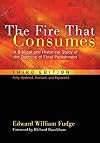
Edward Fudge's magnum opus was highly impressive on a number of counts: (1) his humility and respect for God's Word shines, (2) his treatment of all the relevant texts is incredibly thorough, (3) his interaction with both contemporary critics and the historical development of this doctrine is well done, and (4) as a lawyer, his writing is very good – clear, concise, and descriptive. Not every Christian will agree with Fudge, but I believe every Christian should at least have some show more familiarity with his work, because he presents a plausible case that matters. And, not that truth is determined by a vote, but I was surprised to learn of all those who have espoused his views for themselves, men such as F.F. Bruce, Richard Bauckham, N.T. Wright, John Stott, F. Lagard Smith, Homer Hailey, and (to a certain extent) Jimmy Allen. show less
The author is a committed evangelical scholar who, through his investigation of divinely inspired scripture, has come to the conclusion that there is no evidence for the popular image of Hell as a place where the soul is tormented for eternity. In this, his third book on the subject, he carefully lays out the evidence from both the Old and New Testaments for Hell as the final and irreversible destruction of the soul of the wicked. He carefully defines terms, explaining the common usage of show more the times of the Greek words that have been used to support current conceptions of Hell. He deconstructs the "4 pillars" that support Hell as eternal torment, showing how they do not hold up, and finally concludes that the primary reason for that view is the introduction of Platonism by Tertullian, with its concept of an eternal, indestructible soul, a view that is not supported in scripture. In scripture, the immortality of the soul is a gift that is granted at the final Judgment to the just.
This book is very clear, using short, precise chapters to make the author's points with summaries of the evidence supporting them. Only one chapter doesn't seem to work. Although Chapter 46 presents Tertullian and his views, it also gives very brief summaries of a number of other early Church theologians such as Origen, Augustine and Anselm. As these were widely differing, what we get is a potpourri of very surface characterizations which do not contribute to the overall point.
Clearly Fudge's work is within the worldview of Scripture as divinely ordained and inerrant. Yet within that, he just as clearly seeks to place writings and words within appropriate context and to recognize scholarship about probably authors of various books; he comes across as a highly trained and intelligent scholar. show less
This book is very clear, using short, precise chapters to make the author's points with summaries of the evidence supporting them. Only one chapter doesn't seem to work. Although Chapter 46 presents Tertullian and his views, it also gives very brief summaries of a number of other early Church theologians such as Origen, Augustine and Anselm. As these were widely differing, what we get is a potpourri of very surface characterizations which do not contribute to the overall point.
Clearly Fudge's work is within the worldview of Scripture as divinely ordained and inerrant. Yet within that, he just as clearly seeks to place writings and words within appropriate context and to recognize scholarship about probably authors of various books; he comes across as a highly trained and intelligent scholar. show less
This review was written for LibraryThing Early Reviewers.You May Also Like


Statistics
- Works
- 31
- Members
- 750
- Popularity
- #33,912
- Rating
- 4.0
- Reviews
- 11
- ISBNs
- 24

