
William V. Crockett
Author of Four Views on Hell
About the Author
Works by William V. Crockett
Associated Works
Tagged
Common Knowledge
- Legal name
- Crockett, William V.
- Other names
- Crockett, Bill
- Birthdate
- 1946-09-05
- Gender
- male
- Education
- University of Winnipeg
Princeton Theological Seminary
University of Glasgow - Occupations
- professor
- Organizations
- Society of Biblical Literature
Evangelical Theological Society - Short biography
- Married to Karen, with two sons, Richard and Brian.
- Nationality
- USA
Canada - Birthplace
- Tisdale, Saskatchewan, Canada
- Places of residence
- Hamburg, New Jersey, USA
- Associated Place (for map)
- Tisdale, Saskatchewan, Canada
Members
Reviews
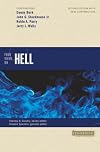
Ever since Rob Bell's Love Wins, evangelicals have rushed to the defense of the traditional doctrine of hell. Bell's book was more suggestion than substance and raised the most ire among those who never read it, but there have also been a number of intelligent treatments on the fate of unbelievers and the nature of hell. Four Views on Hell, Second Edition showcases four options currently being discussed among evangelicals. Under the editorial eye of Preston Sprinkle (coauthor of Erasing show more Hell) with contributions from Denny Burk, John G. Stackhouse Jr, Robin Parry and Jerry Walls, this book presents the case for hell as eternal conscious torment, annihilationism, universalism and purgatory.
9780310516460_5This new edition of Four Views on Hell reveal how the contours of the debate have changed since the publication of the first edition in 1992. The original edition had two contributors arguing hell consists as 'eternal conscious torment,' one arguing for literal fire (John Walvoord) and metaphorical (William Crocket), one contributor arguing for annilationism (Clark Pinnock) and a Catholic contributor extols the virtues of purgatory (Zachary Hayes). In the current edition, the traditional doctrine on hell is represented by Burk. Burk doesn't take eternal fire as a literal flame as Walvoord did (28), though he does emphasize the eternal aspects of hell's duration. John Stackhouse takes up Pinnock's mantle in arguing the terminal/conditionalist/annihilationist position. Parry provides the biblical, theological case for Christian universalism (a new tothis edition) having previously published The Evangelical Universalist (under the pseudonym of Gregory McDonald). Jerry Walls gives a protestant case for purgatory for the faithful who die in Christ, arguing that purgatory is not about offering satisfaction for sin (which Christ offered on our behalf) but is about sanctification.
Each of these contributors has their strengths. After sharing a brief parable illustrating the seriousness of sin being measured 'by the value of the one sin against,' Burke makes the biblical case for hell as eternal conscious torment (19) based on ten foundational passages drawn from both testaments. Stackhouse also makes a strong exegetical and theological case for annilationism, arguing that eternal punishment and 'unquenchable fire' indicate the certainty of implications rather than duration, and eternal life is a gift to those who are in Christ. Parry's chapter emphasizes how Christ came to restore all things, and how having a sinner suffer eternal torment, or the eradication of a sinner doesn't appear to embody that end. Parry places his case within a biblical theological frame, emphasing the scope and trajectory of redemption. Walls is the odd man out in that he affirms with Burk the the reality of eternal conscious torment for those who are in hell, and posits purgatory, for those who trust in Christ as their savior (though he does allow for a post-mordem conversion). The respondents each give strong critiques of one-another's views, citing their various interpretive strategies, their use of theology, and interpretive strategies.
I generally don't find these 'four views' books to be exciting reading. Because of the way they are organized, a brief case with critical responses, by the time you get to last couple of chapters, you already have a pretty good idea of what the author will say before you read it. The effect is mitigated somewhat in this volume in that Parry's and Wall's chapters are by far the most interesting chapters in this volume. And Sprinkle has a fantastic concluding essay which highlights the relative strengths of each response.
The Christians with whom I hang around with most generally hold to the traditional view of hell, though I find the arguments for annihilationism to be fairly convincing. Sprinkle makes the case in his conclusion that annihilationism is the only view that logically precludes the possibility of Christian universalism, because if hell is eternal, that than there is the possibility of redemption (205). Certainly if Burke is right and Hell is wholly punitive, than the possibility remains unlikely. Parry's case sets universalism with in Christocentric framework with a hopeful trajectory (Stackhouse calls the case for univeralism ' the triumph of hope over exegesis', p.134). I am interested in exploring Parry's argument further and will likely read his Evangelical Universalist. Because of the brevity of each chapter, no respondent in this volume makes as comprehensive of a case as they otherwise could have, and each overstates their case in places. I give this four stars.
Note: I received this book from BookLook Bloggers in exchange for my honest review. show less
9780310516460_5This new edition of Four Views on Hell reveal how the contours of the debate have changed since the publication of the first edition in 1992. The original edition had two contributors arguing hell consists as 'eternal conscious torment,' one arguing for literal fire (John Walvoord) and metaphorical (William Crocket), one contributor arguing for annilationism (Clark Pinnock) and a Catholic contributor extols the virtues of purgatory (Zachary Hayes). In the current edition, the traditional doctrine on hell is represented by Burk. Burk doesn't take eternal fire as a literal flame as Walvoord did (28), though he does emphasize the eternal aspects of hell's duration. John Stackhouse takes up Pinnock's mantle in arguing the terminal/conditionalist/annihilationist position. Parry provides the biblical, theological case for Christian universalism (a new tothis edition) having previously published The Evangelical Universalist (under the pseudonym of Gregory McDonald). Jerry Walls gives a protestant case for purgatory for the faithful who die in Christ, arguing that purgatory is not about offering satisfaction for sin (which Christ offered on our behalf) but is about sanctification.
Each of these contributors has their strengths. After sharing a brief parable illustrating the seriousness of sin being measured 'by the value of the one sin against,' Burke makes the biblical case for hell as eternal conscious torment (19) based on ten foundational passages drawn from both testaments. Stackhouse also makes a strong exegetical and theological case for annilationism, arguing that eternal punishment and 'unquenchable fire' indicate the certainty of implications rather than duration, and eternal life is a gift to those who are in Christ. Parry's chapter emphasizes how Christ came to restore all things, and how having a sinner suffer eternal torment, or the eradication of a sinner doesn't appear to embody that end. Parry places his case within a biblical theological frame, emphasing the scope and trajectory of redemption. Walls is the odd man out in that he affirms with Burk the the reality of eternal conscious torment for those who are in hell, and posits purgatory, for those who trust in Christ as their savior (though he does allow for a post-mordem conversion). The respondents each give strong critiques of one-another's views, citing their various interpretive strategies, their use of theology, and interpretive strategies.
I generally don't find these 'four views' books to be exciting reading. Because of the way they are organized, a brief case with critical responses, by the time you get to last couple of chapters, you already have a pretty good idea of what the author will say before you read it. The effect is mitigated somewhat in this volume in that Parry's and Wall's chapters are by far the most interesting chapters in this volume. And Sprinkle has a fantastic concluding essay which highlights the relative strengths of each response.
The Christians with whom I hang around with most generally hold to the traditional view of hell, though I find the arguments for annihilationism to be fairly convincing. Sprinkle makes the case in his conclusion that annihilationism is the only view that logically precludes the possibility of Christian universalism, because if hell is eternal, that than there is the possibility of redemption (205). Certainly if Burke is right and Hell is wholly punitive, than the possibility remains unlikely. Parry's case sets universalism with in Christocentric framework with a hopeful trajectory (Stackhouse calls the case for univeralism ' the triumph of hope over exegesis', p.134). I am interested in exploring Parry's argument further and will likely read his Evangelical Universalist. Because of the brevity of each chapter, no respondent in this volume makes as comprehensive of a case as they otherwise could have, and each overstates their case in places. I give this four stars.
Note: I received this book from BookLook Bloggers in exchange for my honest review. show less
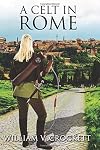
A CELT IN ROME is an engrossing read that follows a journey through the vast Roman Empire and all the colorful characters along the way. As the Romans continue to encroach on Northern Britannia, Neeve sets out for Rome to rescue her brother, a Caledonian warrior captured by the Romans, and faces near impossible obstacles. She also seeks to reunite with her lost Roman husband, a centurion sent on a bleak mission, trailed by a ruthless yet conflicted assassin. Meanwhile, a nouveau-riche show more commoner and his calculating mistress threaten to devastate their lives as collateral damage for their political aspirations, as well as the life of a young patrician involved in the mysterious cult of Chrestus.
Virtually every chapter ends with a cliffhanger that leaves you wanting more. There are a lot of surprising twists that you don't see coming, and as the plot develops it's satisfying to discover how each character's story is intertwined with the others. Additionally, it's fascinating to learn how Christianity was viewed by the Empire in the early stages, with all the outlandish rumors surrounding the new religion, and the conflicts that Christians faced because of the hostility. A CELT IN ROME is a stand alone novel that can be thoroughly enjoyed even without having read the first book (though reading this will make you want to read Worlds Apart to find out the back story of the characters). show less
Virtually every chapter ends with a cliffhanger that leaves you wanting more. There are a lot of surprising twists that you don't see coming, and as the plot develops it's satisfying to discover how each character's story is intertwined with the others. Additionally, it's fascinating to learn how Christianity was viewed by the Empire in the early stages, with all the outlandish rumors surrounding the new religion, and the conflicts that Christians faced because of the hostility. A CELT IN ROME is a stand alone novel that can be thoroughly enjoyed even without having read the first book (though reading this will make you want to read Worlds Apart to find out the back story of the characters). show less
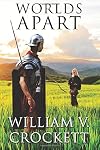
Worlds Apart is about two characters from completely different worlds whose lives converge - but on opposites sides of a major conflict. Neeve is a young Celtic woman from Caledonia who has witnessed firsthand the brutality of the Roman Empire against her people and joins the fight to rid Britannia of the enemy. Vectis is a Roman prefect who vowed never to be deceived by lying, barbaric Celts or provincials ever again. But when Neeve goes undercover as a mapmaker at the outpost Vectis show more commands, their biases and loyalties are put to the test. There's political intrigue, espionage, mysterious Druidic rituals, complex human relationships, and colorful characters who become very real. I'm usually not into military stuff, but I actually found the descriptions of the battles scenes, weapons, forts, and warfare strategies very engaging. Though there were a few violent or disturbing scenes, they showed the reality of life during the Roman Empire and makes the reader even more concerned for the characters. What I love about reading historical fiction is being able to envision day to day aspects of how people lived - what people wore, what people ate, what people did to pass the time, and how people thought. In Worlds Apart, both the Celtic and Roman cultures and differing perspectives come alive in a way that renders the reader unable to put the book down because of the urgent need to know what happens next. show less
This book is a significant improvement on the previous edition, and is a completely new book, written by a different set of authors. It is an extremely helpful primer on the topic, laying out the arguments for each of the views, and the authors manage to do this in anionic way, without disparaging one another. Well worth the read, and all four of the sections are written in a way that is persuasive and handles the evidence well.
You May Also Like


Associated Authors
Statistics
- Works
- 7
- Also by
- 1
- Members
- 974
- Popularity
- #26,440
- Rating
- 3.9
- Reviews
- 8
- ISBNs
- 14
- Languages
- 1
- Favorited
- 1
