
Alexandra Duncan
Author of Salvage
Series
Works by Alexandra Duncan
Associated Works
Our Stories, Our Voices: 21 YA Authors Get Real About Injustice, Empowerment, and Growing Up Female in America (2018) — Contributor — 169 copies, 1 review
The Magazine of Fantasy and Science Fiction May/June 2013, Vol. 124, Nos. 5 & 6 (2013) — Contributor — 21 copies, 4 reviews
The Magazine of Fantasy and Science Fiction November/December 2010, Vol. 119, No. 5 & 6 (2010) — Author — 13 copies, 1 review
Tagged
Common Knowledge
- Gender
- female
Members
Reviews
Salvage is one of those books that I feel was written just for me. I loved it. It was such an emotional roller coaster that I became a bit teary-eyed at different parts. I was left feeling content after the fantastic emotional ending. However, I do admit that it did get off to a rocky start. I stopped reading for a while at 200 pages (out of 528). I wasn't sure how I felt about the odd language and the slow start, so I came back to it a day later. When I picked it back up things had changed. show more The dialogue progressed and the atmosphere was considerably different. It had me intrigued.
Ava is my ultimate heroine. We meet her on the Parastrata with her crew and "friends". Ava struggles in dealing with the snobby, talk-behind-your-back crewmates on her ship; they snicker and frown at her. She is the captain's daughter, yet she is treated different from all the others. She has a slightly darker complexion than everyone else because her mother's father was from Earth. Scandalous. On the ship, the Parastrata, it is customary for the men to do the flying, the reading, the guard duty, and the fixing. It is also customary for the women to do the menial work, such as cleaning, milking the goats, cooking, and keeping their heads down in the presence of men. I thought Duncan did a great job of touching on the subject of inequality and kept Ava likable with her progressive thoughts. Because Ava is considered important in her position as a captain’s daughter, her marriage is of utmost importance to the crew. This is where the romance begins.
We are given a small insight to Ava’s past, only to show us her intended love interest. She believes she is in love with her best friend Soli’s brother, Luck. After they got along so well when they were little kids she believes they are perfect for each other. She hopes that she will marry him at the next trade, and be a wife to a future captain. But when a trade deal goes wrong, Ava is sent spiraling into a place she never thought she would end up. She is thrown out and left alone towards a journey of meeting new friends and seeing a whole new environment she never knew existed. We see her gain strength and learn things she thought were impossible for her to learn. Throughout Salvage, Ava grows as a young woman. She begins to see where things could be different on the ship, and she starts to see how she could make a difference, at least, in her own life. This is where the second love interest is introduced.
Real life teenage romance often involves multiple crushes and believing that you love someone, even if it is nonsensical. It’s a part of growing up; searching for true love... among other things. That said, Ava does find someone else, and continues to think about Luck whenever she feels guilty. I was a bit wary after seeing that there would be two love interests, but Ava impressed me. Duncan impressed me. The boy she meets is a complete mystery to Ava. She wonders about his motives for accepting her as she is. He is something that she used to learn how to gain the strength she always knew was hiding inside her.
As a standalone debut novel, Duncan has done a brilliant job integrating parts of teenage life into an unpredictable dystopian-like future with bits of teenage romance. I would recommend Salvage to anyone who has struggled with finding who they are. The ability to rely on your own inner strength and believe in the impossible were a few of the valuable lessons I took from this book. show less
Ava is my ultimate heroine. We meet her on the Parastrata with her crew and "friends". Ava struggles in dealing with the snobby, talk-behind-your-back crewmates on her ship; they snicker and frown at her. She is the captain's daughter, yet she is treated different from all the others. She has a slightly darker complexion than everyone else because her mother's father was from Earth. Scandalous. On the ship, the Parastrata, it is customary for the men to do the flying, the reading, the guard duty, and the fixing. It is also customary for the women to do the menial work, such as cleaning, milking the goats, cooking, and keeping their heads down in the presence of men. I thought Duncan did a great job of touching on the subject of inequality and kept Ava likable with her progressive thoughts. Because Ava is considered important in her position as a captain’s daughter, her marriage is of utmost importance to the crew. This is where the romance begins.
We are given a small insight to Ava’s past, only to show us her intended love interest. She believes she is in love with her best friend Soli’s brother, Luck. After they got along so well when they were little kids she believes they are perfect for each other. She hopes that she will marry him at the next trade, and be a wife to a future captain. But when a trade deal goes wrong, Ava is sent spiraling into a place she never thought she would end up. She is thrown out and left alone towards a journey of meeting new friends and seeing a whole new environment she never knew existed. We see her gain strength and learn things she thought were impossible for her to learn. Throughout Salvage, Ava grows as a young woman. She begins to see where things could be different on the ship, and she starts to see how she could make a difference, at least, in her own life. This is where the second love interest is introduced.
Real life teenage romance often involves multiple crushes and believing that you love someone, even if it is nonsensical. It’s a part of growing up; searching for true love... among other things. That said, Ava does find someone else, and continues to think about Luck whenever she feels guilty. I was a bit wary after seeing that there would be two love interests, but Ava impressed me. Duncan impressed me. The boy she meets is a complete mystery to Ava. She wonders about his motives for accepting her as she is. He is something that she used to learn how to gain the strength she always knew was hiding inside her.
As a standalone debut novel, Duncan has done a brilliant job integrating parts of teenage life into an unpredictable dystopian-like future with bits of teenage romance. I would recommend Salvage to anyone who has struggled with finding who they are. The ability to rely on your own inner strength and believe in the impossible were a few of the valuable lessons I took from this book. show less
This is the book that I want all other books to be like. I just wanted to start with that before I launch into my explanations and adorations.
I read the first few chapters of this book in 2012 at the Denver Publishing Institute. We were given the first few chapters of four young adult novels and told to decide which we would publish, given the choice, and of the two to which I said, "absolutely," this was the one that said, "this MUST be published." (The joke was on us: all the books had show more already been accepted!). I've been waiting for this book ever since.
And let me tell you, it did the opposite of disappoint.
I based by "decision" on the first few chapters, which take place in a very different world: a restrictive, regressive society on board long-range merchant space ships in which Ava Parastrata, the main character, is so girl, the oldest daughter of the next generation of whom everyone expects the best behavior. She's told that she's to be married and she cautiously hopes for a future for the only boy she's ever really interacted with who's thought of her as a human being, and it looks like everything is going her way...
This culture is so skillfully built that it comes alive, and in a few pages we have full-fledged characters. (Writer's envy alert!) Of course, I knew the change was coming, the conflict that makes literature tick--and boy did it ever!
Let me put it this way, usually when I like a book I read it too fast and feel disappointed that there's so little. With Salvage, I was reading fast but things kept happening, the world kept changing, curves kept coming, and I still wasn't at the end and I still wasn't antsy to move on to the next book!
Ava is the very definition of a strong female character: her struggles and emotions feel real and relatable even as her circumstances certainly aren't. She overcomes physical weakness, an uneven education, and feelings of worthlessness only at great price and with great pain. Nothing is easy, nothing is straightforward. Every advance is earned.
The biggest shock to those who know me is a testament to how well done Ava is: I did not think the sort-of love triangle was stupid. I know, right? Have I ever thought that? Ava is as deeply practical as she is hopeful--she builds her life even as she hangs onto a few wisps of her past. Her complex love for everyone in her life is so powerful that the two men she loves don't dominate the scene. It's practically perfect.
For complex world building and the creation of at least four full cultures: five stars. For realistic characters who are almost never oversimplified: five stars. For characters of color, of all ages, of all sizes and shapes: five stars.
And don't let me leave out the language! I'm sure there will be some people complaining that it sounds stiff and strange, but that was part of what drew me to it. I can't imagine what it must have taken to write the whole book in this style, incorporating both familiar, archaic, and futuristic elements. I appreciated the changed emphasis of sentences with words put together that we don't usually see side by side and I loved that the foreign words were spelled as Ava heard them, like Perpetue's pet name, "fi". (Also, shout out to my Southern family: Ava says "might can"!)
I have only two small complaints, both of which are sort of spoiler-y even though so much happens in this book that giving them away doesn't "ruin" the book at all.
First (and this happens in the third to last chapter, so DO NOT click if you don't want to know), I was disappointed that no one ever straight-up told Ava, "You are worth so much more than your 'virginity', and down here on earth, we're not going to condemn you just for having sex before you're married." It's implied a lot, from Ava overhearing people getting in the mood to Soraya's offer to take her to the doctor for contraception, but no one says it outright. This isn't something that Ava is going to find out for herself! It's the same kind of avoidance-for-propriety that kept me so, well, judgmental for so long. I would hope that a world this far in the future would be more open to talking about sex.
Honestly, I wanted Rushil to say it. I wanted him to tell Ava--slowly, carefully--that people earthside don't place a woman's value solely on whether or not she's had sex before, that they will see her for herself rather than her reproductive organs. I know this isn't at all what's intended in that scene, but the way it reads is that Rushil is this amazingly forgiving person willing to overlook what she still sees as a major failing. I could see her feeling like she can't leave him because she doesn't know if anyone else would be as accepting as Rushil is.
So, in my headcanon, Ava has this conversation with Rushil and Soraya at some point. So there.
That was a much longer rant than I expected. It turns out, once I'm in the spoiler cut, I let loose with the details that I'm afraid to mention in the review proper for fear or giving away how great the story is.
Anyhoo, the second thing is that this is another book where I really feel as though the last chapter could have been left off and the story would have been just as good...maybe, I cautiously say, better. The closing scene of the penultimate chapter was just so perfect there was no real way to top it.
I'd also kind of started to hope that Ava would never meet Luck again, would never know what became of him. While I thought it would be that way, I was satisfied--it felt real, and honest. And, frankly, I felt like this journey had been so great already that Ava didn't need to say the things she says to Luck out loud for them to be there--except maybe the part about not wanting children, which I think is very important. There's so much emphasis on motherhood being part of femininity and it's so important for young people to know that that's not the only way for a woman to live.
All that said, since we did get the last chapter, I wanted Ava to say that she know she was she good enough to be a captain's wife because she was a captain herself! But I guess that is a bit much like bragging, which is not something Ava would do. My preferred response wouldn't really be in her character.
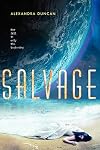
I'm so glad I knew about this book because I don't know how I would have found it otherwise. The jacket description leaves much to be desired and the cover was clearly a victim of the cheap stock image catalogue. Also, it's sad to say, but many boys will not pick up this book because there's a girl on the cover--especially a girl who looks so powerless and uninteresting (they were never going to find a stock image with Parastrata fashion, but couldn't they have found some unusual clothes). I feel bad for all the boys who will never read this remarkable story.
So if you're reading this review, read Salvage! It's a fantastic, feminist book, a great vision of the future that's not totally dystopian, and it will take you to places so vivid you'll feel like you've been there. I can't recommend it enough!
Quote Roundup
p 52. "You are the sails, Ava. My girl. You are the sails."
It's early on but it sets the tone for the whole novel. It's nonsense coming from the mouth of Ava's ill and dying mother, but its interpretations can change depending on which part of the book you apply it to. How is Ava the sails? As a future mother bearing the children who will keep the ship sailing. As the catalyst of change. As the one who brings others, literally and metaphorically, to places they have never been but need or want to be.
p 113. I'm just bringing this up because this is when we find out what a biolume is and it's freakin' awesome!
p 180. I'm shamed, thinking on it. What kind of woman am I that wouldn't want a child?
This was such an important moment, one that (as I've said) I wish got a bit more attention. There's so much emphasis on motherhood as a sign of being a woman, but not all women want to be mothers--and they need to know that that's okay. This piece of Ava's spaceside world is all to easy to find in our own.
p 227. "At best, you'll spend your life trying not to get hurt, but trying not to do the hurting, either. You won't always come through, but it's the best anyone can do. It's the trying I'd call good."
I love Perpetue so much, and I love her description of what it is to be good. It's so easy to feel that we're not good enough, but for those who sincerely try, well, maybe that is enough in itself.
p 285. I hurry away before she can salt me with more questions and offers of help.
This is a fantastic image, such a clever turn to a familiar phrase. Just enough to feel different without being different enough to feel strange.
p 320. I'm back with my crewe, bowing my head and scraping and terrified.
This, ladies and gentlemen, is what makes Ava's character so good--everyone's had these moments when they feel like they're four years old and being scolded for doing something you didn't know was wrong. Life is difficult and messy and it doesn't always move forward.
p 448. Some months earlier, I might have left steaming with anger that the boys clung so hard to their crewe ways, that they wouldn't deign to talk to me. But now, looking at them, I only feel sad. How will they ever make their way in this world if they can't bring themselves to talk to anyone but men?
This moment of insight Ava has was so well done. She understands why they are the way they are--she doesn't fall into the trap of thinking that if she can change, it should be easy for other people to change as well--but she doesn't accept it for herself and she sees it in the wider context. This isn't just about them, it's about everything they know. Fixing that is almost impossible. Now what does that remind you of?
p 462. For some reason, it feels better to be alone with my ghosts, like if I told someone about them, they might vanish, and then I might forget.
A feeling I've had all too often myself. Sometimes it feels like the telling acts as an eraser, and sometimes you don't want to get rid of even the bad memories because they were the ones that made us who we are, made us grow. It's a melancholy place to be, treasuring something painful because its importance to you may not be understood by even someone you love.
p 519. The ending of the lopsided love triangle I didn't hate. Perhaps I can accept it because Ava doesn't settle for just one love. She's full of it, brimming with it for so many people in her life, and her choice of future does not change her past. She contains multitudes now, and she chooses to stay that way. show less
I read the first few chapters of this book in 2012 at the Denver Publishing Institute. We were given the first few chapters of four young adult novels and told to decide which we would publish, given the choice, and of the two to which I said, "absolutely," this was the one that said, "this MUST be published." (The joke was on us: all the books had show more already been accepted!). I've been waiting for this book ever since.
And let me tell you, it did the opposite of disappoint.
I based by "decision" on the first few chapters, which take place in a very different world: a restrictive, regressive society on board long-range merchant space ships in which Ava Parastrata, the main character, is so girl, the oldest daughter of the next generation of whom everyone expects the best behavior. She's told that she's to be married and she cautiously hopes for a future for the only boy she's ever really interacted with who's thought of her as a human being, and it looks like everything is going her way...
This culture is so skillfully built that it comes alive, and in a few pages we have full-fledged characters. (Writer's envy alert!) Of course, I knew the change was coming, the conflict that makes literature tick--and boy did it ever!
Let me put it this way, usually when I like a book I read it too fast and feel disappointed that there's so little. With Salvage, I was reading fast but things kept happening, the world kept changing, curves kept coming, and I still wasn't at the end and I still wasn't antsy to move on to the next book!
Ava is the very definition of a strong female character: her struggles and emotions feel real and relatable even as her circumstances certainly aren't. She overcomes physical weakness, an uneven education, and feelings of worthlessness only at great price and with great pain. Nothing is easy, nothing is straightforward. Every advance is earned.
The biggest shock to those who know me is a testament to how well done Ava is: I did not think the sort-of love triangle was stupid. I know, right? Have I ever thought that? Ava is as deeply practical as she is hopeful--she builds her life even as she hangs onto a few wisps of her past. Her complex love for everyone in her life is so powerful that the two men she loves don't dominate the scene. It's practically perfect.
For complex world building and the creation of at least four full cultures: five stars. For realistic characters who are almost never oversimplified: five stars. For characters of color, of all ages, of all sizes and shapes: five stars.
And don't let me leave out the language! I'm sure there will be some people complaining that it sounds stiff and strange, but that was part of what drew me to it. I can't imagine what it must have taken to write the whole book in this style, incorporating both familiar, archaic, and futuristic elements. I appreciated the changed emphasis of sentences with words put together that we don't usually see side by side and I loved that the foreign words were spelled as Ava heard them, like Perpetue's pet name, "fi". (Also, shout out to my Southern family: Ava says "might can"!)
I have only two small complaints, both of which are sort of spoiler-y even though so much happens in this book that giving them away doesn't "ruin" the book at all.
First (and this happens in the third to last chapter, so DO NOT click if you don't want to know),
Honestly, I wanted Rushil to say it. I wanted him to tell Ava--slowly, carefully--that people earthside don't place a woman's value solely on whether or not she's had sex before, that they will see her for herself rather than her reproductive organs. I know this isn't at all what's intended in that scene, but the way it reads is that Rushil is this amazingly forgiving person willing to overlook what she still sees as a major failing. I could see her feeling like she can't leave him because she doesn't know if anyone else would be as accepting as Rushil is.
So, in my headcanon, Ava has this conversation with Rushil and Soraya at some point. So there.
That was a much longer rant than I expected. It turns out, once I'm in the spoiler cut, I let loose with the details that I'm afraid to mention in the review proper for fear or giving away how great the story is.
Anyhoo, the second thing is that this is another book where I really feel as though the last chapter could have been left off and the story would have been just as good...maybe, I cautiously say, better. The closing scene of the penultimate chapter was just so perfect there was no real way to top it.
All that said, since we did get the last chapter, I wanted Ava to say that she know she was she good enough to be a captain's wife because she was a captain herself! But I guess that is a bit much like bragging, which is not something Ava would do. My preferred response wouldn't really be in her character.
I'm so glad I knew about this book because I don't know how I would have found it otherwise. The jacket description leaves much to be desired and the cover was clearly a victim of the cheap stock image catalogue. Also, it's sad to say, but many boys will not pick up this book because there's a girl on the cover--especially a girl who looks so powerless and uninteresting (they were never going to find a stock image with Parastrata fashion, but couldn't they have found some unusual clothes). I feel bad for all the boys who will never read this remarkable story.
So if you're reading this review, read Salvage! It's a fantastic, feminist book, a great vision of the future that's not totally dystopian, and it will take you to places so vivid you'll feel like you've been there. I can't recommend it enough!
Quote Roundup
p 52. "You are the sails, Ava. My girl. You are the sails."
It's early on but it sets the tone for the whole novel. It's nonsense coming from the mouth of Ava's ill and dying mother, but its interpretations can change depending on which part of the book you apply it to. How is Ava the sails? As a future mother bearing the children who will keep the ship sailing. As the catalyst of change. As the one who brings others, literally and metaphorically, to places they have never been but need or want to be.
p 113. I'm just bringing this up because this is when we find out what a biolume is and it's freakin' awesome!
p 180. I'm shamed, thinking on it. What kind of woman am I that wouldn't want a child?
This was such an important moment, one that (as I've said) I wish got a bit more attention. There's so much emphasis on motherhood as a sign of being a woman, but not all women want to be mothers--and they need to know that that's okay. This piece of Ava's spaceside world is all to easy to find in our own.
p 227. "At best, you'll spend your life trying not to get hurt, but trying not to do the hurting, either. You won't always come through, but it's the best anyone can do. It's the trying I'd call good."
I love Perpetue so much, and I love her description of what it is to be good. It's so easy to feel that we're not good enough, but for those who sincerely try, well, maybe that is enough in itself.
p 285. I hurry away before she can salt me with more questions and offers of help.
This is a fantastic image, such a clever turn to a familiar phrase. Just enough to feel different without being different enough to feel strange.
p 320. I'm back with my crewe, bowing my head and scraping and terrified.
This, ladies and gentlemen, is what makes Ava's character so good--everyone's had these moments when they feel like they're four years old and being scolded for doing something you didn't know was wrong. Life is difficult and messy and it doesn't always move forward.
p 448. Some months earlier, I might have left steaming with anger that the boys clung so hard to their crewe ways, that they wouldn't deign to talk to me. But now, looking at them, I only feel sad. How will they ever make their way in this world if they can't bring themselves to talk to anyone but men?
This moment of insight Ava has was so well done. She understands why they are the way they are--she doesn't fall into the trap of thinking that if she can change, it should be easy for other people to change as well--but she doesn't accept it for herself and she sees it in the wider context. This isn't just about them, it's about everything they know. Fixing that is almost impossible. Now what does that remind you of?
p 462. For some reason, it feels better to be alone with my ghosts, like if I told someone about them, they might vanish, and then I might forget.
A feeling I've had all too often myself. Sometimes it feels like the telling acts as an eraser, and sometimes you don't want to get rid of even the bad memories because they were the ones that made us who we are, made us grow. It's a melancholy place to be, treasuring something painful because its importance to you may not be understood by even someone you love.
p 519. The ending of the lopsided love triangle I didn't hate. Perhaps I can accept it because Ava doesn't settle for just one love. She's full of it, brimming with it for so many people in her life, and her choice of future does not change her past. She contains multitudes now, and she chooses to stay that way. show less
Let me start my adoring gush by saying that I had this book preordered. PREORDERED! Me! The person who considers reading The Orphan Master's Son this year a reasonable time frame for getting around to a book I really want to read! And the best part about preordering? It was like a surprise gift to myself: I'd forgotten when exactly it was coming, and then one day there was a package waiting on my doorstep.
Duncan's strengths are on stunning display once again: her strong, feminist characters show more and unique but believeable cultures. The latter was a bit slow off the ground--the story takes place in deep, empty space rather than overcrowded earth--but when it comes...wow!
There's a little less urgency in the opening chapters, though that should come as no surprise to those who read the previous book. We catch up with Miyole about ten years after we left her in Salvage, having grown up in privilege she could never have imagined on the Gyre. Yes, she stands out--maybe a bit more than expected, given the amount of cultural mixing going on in other parts of the universe, but kudos to Duncan for showing us how race and gender can still be treated as serious issues that still need addressing (unlike certain sci-fi reboots that strip down representation of both because we're all *equal* now, so why bother with the *effort* of adding diversity?). Even more kudos for tying those issues into a real culture instead of inventing an alien race of white people who are a *metaphor* for racism.
While Miyole's situation is less tense up front--simply because embarking on her adventure is actually a conscious choice, unlike Ava's whirlwind rush to escape certain death. What Sound's opening lacks in action, though, it more than makes up for in the end. I was about four chapters from the end when I reached my stop on the subway today and I was seriously tempted to grab a private call room and just finish it so I wouldn't be in agony all day.
That, friends, is a good book. Because let's face it, this is a young adult book. It's highly unlikely that a character we've been following since the beginning is going to die--but I was still almost literally on my toes (on the R train, no less!) as the plot came to a head.
One word of note that very few other people will care about: there's a bit more romance in Sound than in Salvage, simply because the love interest is actually present. That does mean that we see more human interactions: this is no super-unhealthy Twilight story, perfect soulmate tale, or fable of absence and pining. Miyole's relationship with Cassia progresses slowly because they both have other things on their mind--and they talk about this fact rather than ignoring it, which means they avoid some of the most cliched misunderstandings. This and both characters' complexity (as well as the refreshing relief of a non-heterosexual relationship) made the romance bearable for this curmudgeonly (demisexual) crocodile. In the past I've felt like I had to seek out those authors who write only about homosexual relationships to get any front-and-center diversity, though this was often at the expense of a story about something other than sex and sexuality...so while it's not surprising to see that Duncan writes both hetero and homo superbly, it's an extra nice treat to see an author with characters who aren't straight at front-and-center without making the whole story about the fact that they aren't straight.
Funny, isn't it, how easily Duncan shows us how race and sexual orientation can still be important parts of a character without stripping that character of any other defining characteristics or story arcs. It's almost like...like characters can reflect real life! Gasp! Is that legal in fiction? (Heavy sarcasm for that whole paragraph.)
On a completely unrelated topic:
1) I desperately want to see a bioengineered deep space vessel. I have this image of a drifting blue-black seashell, but that doesn't really do it justice. I always thought about what it would be like to live in a shell, when I was a little girl--Duncan makes it sound even more delightful than I would have expected.
2) How in heck has no one snatched up the movie rights? These books are so cinematic! On the other hand, thank goodness no one's bought the movie rights--you know they'd whitewash as many of the roles as possible. Rubio definitely would succumb. Probably the Enceladans as well.
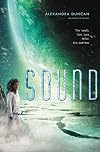
Last note: Once again, what is with the cover? I mean, props for actually showing a young black woman, but her jeans and zippered down jacket are way too obviously contemporary to feel very space-y. At least she's better than the limp, helpless figure on the front of Salvage. Still, I feel like the planet and the ice would have been enough.
On to the Quote Roundup!
p. 188 - "Apex. Isn't that one of those company-states?"
This gave me the willies, mostly because I can definitely see that happening. As companies get bigger and conglomerates start running out of rivals to merge with, what will they turn to next? Why not a city? A state? A country? It's all too easy for me to imagine that happening in the future.
p. 228 - "It took balls, is all."
Rubio wins the "most un-feminist comment in the otherwise feminist book" award. "Guts," Rubio--think gender neutral/universal! And yet on the same page...
"[As you get older] you start seeing so much wrong everywhere you go, and you know you can't fix all of it, so you start to think you can't fix any of it."
Rubio perfectly voices a major part of my crippling apathy and depression. To be honest, I'd be lying if I said I felt anything when I read that. It was more like, I read it and I recognized it. I don't often do that, for all I read and like so many books.
p. 375 - "Feelings are the worst." "Yeah," I agree. "They're the worst." ... "If there's something i'm supposed to be doing, you have to tell me. I usually get my friends drunkwhen they break up , but, I don't know . . . is that a guy thing?"
A) More recognition--though while I hate feelings, I hate even more how shallow they seem lately. I get emotional but I don't really feel any of it. Sorry. I mope in my reviews because I know no one actually reads them. Anyway, B) Rubio shows us that it is, in fact, possible to recognize general societal assumptions about the differences between the sexes in a society closer to legal and occupational equality than our own. Feminism is not the desire to erase sexual difference, but to be conscious of it in a way that will ultimately benefit society overall. Okay, off my soapbox...
p. 380 - Ava and Soraya love me, but they don't depend on me. The only things that have ever truly depended on me were the butterflies, and someone else could care for them as easily as I did. There's nothing unique about me, nothing irreplaceable. So doesn't my life have more worth if I'm using it to save other people?
Further recognition. Minus the duty to my interesting history, tragic backstory, and resolve to buck the authority in order to do something that feels right. But that's why we read, right?
All in all, this was another amazing book, not slavishly following the formula of Salvage but also not completely discarding that book's characters and strengths. I did miss Ava's language quirks, though from the GoodReads reviews I read, I might be the only one! But there's more to love in here in the way that the lucky can love their siblings: they're related, but they're different, but you love them both uniquely and truly.
Like sci-fi? Feminism? Strong female characters? Diversity? World building? Good storytelling and vivid writing?
Read it! show less
Duncan's strengths are on stunning display once again: her strong, feminist characters show more and unique but believeable cultures. The latter was a bit slow off the ground--the story takes place in deep, empty space rather than overcrowded earth--but when it comes...wow!
There's a little less urgency in the opening chapters, though that should come as no surprise to those who read the previous book. We catch up with Miyole about ten years after we left her in Salvage, having grown up in privilege she could never have imagined on the Gyre. Yes, she stands out--maybe a bit more than expected, given the amount of cultural mixing going on in other parts of the universe, but kudos to Duncan for showing us how race and gender can still be treated as serious issues that still need addressing (unlike certain sci-fi reboots that strip down representation of both because we're all *equal* now, so why bother with the *effort* of adding diversity?). Even more kudos for tying those issues into a real culture instead of inventing an alien race of white people who are a *metaphor* for racism.
While Miyole's situation is less tense up front--simply because embarking on her adventure is actually a conscious choice, unlike Ava's whirlwind rush to escape certain death. What Sound's opening lacks in action, though, it more than makes up for in the end. I was about four chapters from the end when I reached my stop on the subway today and I was seriously tempted to grab a private call room and just finish it so I wouldn't be in agony all day.
That, friends, is a good book. Because let's face it, this is a young adult book. It's highly unlikely that a character we've been following since the beginning is going to die--but I was still almost literally on my toes (on the R train, no less!) as the plot came to a head.
One word of note that very few other people will care about: there's a bit more romance in Sound than in Salvage, simply because the love interest is actually present. That does mean that we see more human interactions: this is no super-unhealthy Twilight story, perfect soulmate tale, or fable of absence and pining. Miyole's relationship with Cassia progresses slowly because they both have other things on their mind--and they talk about this fact rather than ignoring it, which means they avoid some of the most cliched misunderstandings. This and both characters' complexity (as well as the refreshing relief of a non-heterosexual relationship) made the romance bearable for this curmudgeonly (demisexual) crocodile. In the past I've felt like I had to seek out those authors who write only about homosexual relationships to get any front-and-center diversity, though this was often at the expense of a story about something other than sex and sexuality...so while it's not surprising to see that Duncan writes both hetero and homo superbly, it's an extra nice treat to see an author with characters who aren't straight at front-and-center without making the whole story about the fact that they aren't straight.
Funny, isn't it, how easily Duncan shows us how race and sexual orientation can still be important parts of a character without stripping that character of any other defining characteristics or story arcs. It's almost like...like characters can reflect real life! Gasp! Is that legal in fiction? (Heavy sarcasm for that whole paragraph.)
On a completely unrelated topic:
1) I desperately want to see a bioengineered deep space vessel. I have this image of a drifting blue-black seashell, but that doesn't really do it justice. I always thought about what it would be like to live in a shell, when I was a little girl--Duncan makes it sound even more delightful than I would have expected.
2) How in heck has no one snatched up the movie rights? These books are so cinematic! On the other hand, thank goodness no one's bought the movie rights--you know they'd whitewash as many of the roles as possible. Rubio definitely would succumb. Probably the Enceladans as well.
Last note: Once again, what is with the cover? I mean, props for actually showing a young black woman, but her jeans and zippered down jacket are way too obviously contemporary to feel very space-y. At least she's better than the limp, helpless figure on the front of Salvage. Still, I feel like the planet and the ice would have been enough.
On to the Quote Roundup!
p. 188 - "Apex. Isn't that one of those company-states?"
This gave me the willies, mostly because I can definitely see that happening. As companies get bigger and conglomerates start running out of rivals to merge with, what will they turn to next? Why not a city? A state? A country? It's all too easy for me to imagine that happening in the future.
p. 228 - "It took balls, is all."
Rubio wins the "most un-feminist comment in the otherwise feminist book" award. "Guts," Rubio--think gender neutral/universal! And yet on the same page...
"[As you get older] you start seeing so much wrong everywhere you go, and you know you can't fix all of it, so you start to think you can't fix any of it."
Rubio perfectly voices a major part of my crippling apathy and depression. To be honest, I'd be lying if I said I felt anything when I read that. It was more like, I read it and I recognized it. I don't often do that, for all I read and like so many books.
p. 375 - "Feelings are the worst." "Yeah," I agree. "They're the worst." ... "If there's something i'm supposed to be doing, you have to tell me. I usually get my friends drunk
A) More recognition--though while I hate feelings, I hate even more how shallow they seem lately. I get emotional but I don't really feel any of it. Sorry. I mope in my reviews because I know no one actually reads them. Anyway, B) Rubio shows us that it is, in fact, possible to recognize general societal assumptions about the differences between the sexes in a society closer to legal and occupational equality than our own. Feminism is not the desire to erase sexual difference, but to be conscious of it in a way that will ultimately benefit society overall. Okay, off my soapbox...
p. 380 - Ava and Soraya love me, but they don't depend on me. The only things that have ever truly depended on me were the butterflies, and someone else could care for them as easily as I did. There's nothing unique about me, nothing irreplaceable. So doesn't my life have more worth if I'm using it to save other people?
Further recognition. Minus the duty to my interesting history, tragic backstory, and resolve to buck the authority in order to do something that feels right. But that's why we read, right?
All in all, this was another amazing book, not slavishly following the formula of Salvage but also not completely discarding that book's characters and strengths. I did miss Ava's language quirks, though from the GoodReads reviews I read, I might be the only one! But there's more to love in here in the way that the lucky can love their siblings: they're related, but they're different, but you love them both uniquely and truly.
Like sci-fi? Feminism? Strong female characters? Diversity? World building? Good storytelling and vivid writing?
Read it! show less
4.5 stars. This was a great read and so much happened that I don't have the time to put it all down here. I will say that I do wish there were more science fiction stories like this in general and in YA & NA in particular. This very much reminded me in tone of A Long Long Sleep by Anna Sheehan. These are the sorts of standalone books that make me wish they had a sequel because the world is so well rendered and the characters well done.
I enjoyed Ava's evolution from her hiding her ability to show more perform fixes to her banishment and basically being reborn on earth. She had to learn to walk, read, fly a ship and take care of another in her charge after tragedy. And that wasn't even the totality of her journey. She had to find her Aunt Soraya in Mumbai and learn the truth of how she ultimately came to be a part of the community on the Parastrata and what that means for the life she can choose now. I found it all satisfying a read and understood where she was coming from most of the time. I understood her attraction to both Luck and Rushil and understood her decisions regarding them at the end. It didn't feel like there was a love triangle to me and as I loathe those, I'm calling this exceptionally well done. I wanted so much more from Ava but had to remind myself that considering where she'd come from, she was on schedule and probably ahead on exercising her own agency and embracing it. I wished to know more about Soraya and also the camp where the cast away boys from the merchant ships were living. It made me wonder about the government and what sorts of regulations there are with the merchant ships who seem to have human rights infractions across both sexes. This book says so much about different societies, ethics in anthropological research, natural disasters, pollution, population over-crowding, financial stratification in society, personal rights versus group advancement and so much more. It was worth every single page & I could've gone 200 pages more here alone.
If the writer decides to write another book in this verse, I'll be thrilled to read it. Well done. show less
I enjoyed Ava's evolution from her hiding her ability to show more perform fixes to her banishment and basically being reborn on earth. She had to learn to walk, read, fly a ship and take care of another in her charge after tragedy. And that wasn't even the totality of her journey. She had to find her Aunt Soraya in Mumbai and learn the truth of how she ultimately came to be a part of the community on the Parastrata and what that means for the life she can choose now. I found it all satisfying a read and understood where she was coming from most of the time. I understood her attraction to both Luck and Rushil and understood her decisions regarding them at the end. It didn't feel like there was a love triangle to me and as I loathe those, I'm calling this exceptionally well done. I wanted so much more from Ava but had to remind myself that considering where she'd come from, she was on schedule and probably ahead on exercising her own agency and embracing it. I wished to know more about Soraya and also the camp where the cast away boys from the merchant ships were living. It made me wonder about the government and what sorts of regulations there are with the merchant ships who seem to have human rights infractions across both sexes. This book says so much about different societies, ethics in anthropological research, natural disasters, pollution, population over-crowding, financial stratification in society, personal rights versus group advancement and so much more. It was worth every single page & I could've gone 200 pages more here alone.
If the writer decides to write another book in this verse, I'll be thrilled to read it. Well done. show less
Lists
Awards


You May Also Like


Associated Authors
Statistics
- Works
- 9
- Also by
- 6
- Members
- 518
- Popularity
- #47,944
- Rating
- 3.7
- Reviews
- 27
- ISBNs
- 14