
Corinne Duyvis
Author of On the Edge of Gone
Works by Corinne Duyvis
Associated Works
Sunspot Jungle: The Ever Expanding Universe of Fantasy and Science Fiction (2018) — Contributor — 39 copies, 1 review
Tagged
Common Knowledge
- Birthdate
- 20th century
- Gender
- female
- Education
- Wackers Academie
- Agent
- Erin Murphy
- Nationality
- Netherlands
- Birthplace
- Amsterdam, Netherlands
- Places of residence
- Amsterdam, Netherlands
- Map Location
- Netherlands
Members
Reviews
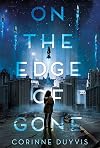
On the Edge of Gone by Corinne Duyvis is an apocalyptic YA novel. It's about an autistic girl, set about twenty years in the future when a comet hits the Earth. Location-wise, the book is set in the general vicinity of Amsterdam. Also, don't you think the cover is gorgeous? I think I would buy this book just for the cover, even if I was unfamiliar with the author's other work.
This book starts in a stressful place. Denise, the main character, and her mother are running late for their assigned show more temporary shelter. At the opening, the shelter will take longer for them to get to than they have time left before the predicted comet strike. This sets the stage for Denise's interactions with her mother for the rest of the book. Her mother is unreliable, in large part due to her drug addiction, and this reader got the impression that Denise would be much better off without her mother around. For a while there I was crossing my fingers for the mother's death.
Just about everyone else in Denise's life (that showed up in the present of this book) was a more positive force. The narrative is tightly in the first person, which means that often the reader is left to draw conclusions, mostly about people, that Denise does not reach. On the other hand, the tight narrative really gets us into Denise's head and I found myself sympathising with her quite strongly. I also really enjoyed watching Denise make friends when given the opportunity outside of school; that was a real highlight.
Duyvis does a particularly good job of maintaining tension in the narrative of On the Edge of Gone. Although Denise survives the apocalypse and, since it's written in first person, her survival until the end of the book is a safe bet, there is a lot of other uncertainty. Will Denise be safe? What trouble is her mum going to get (her) into next? What will be the consequence of the risky choices Denise makes throughout the book? It was very well written. Ordinarily I would have expected this to be the sort of book that I could read in one sitting, but I found myself having to pause a few times and get some distance because it was so intense. The apocalypse is obviously always going to be somewhat depressing, but the extra layer of tension that Duyvis writes over the top of it, really brings it home.
I strongly recommend On the Edge of Gone to anyone who is interested in apocalyptic fiction, YA or otherwise. Apart from anything else, this is a solid science fiction book centred around a scientifically plausible response to a disastrous event. People interested in reading about autistic main characters should also be aware that the author herself is autistic and, as noted in the afterword, is partly writing from experience.
5 / 5 stars
You can read more of my reviews on my blog. show less
This book starts in a stressful place. Denise, the main character, and her mother are running late for their assigned show more temporary shelter. At the opening, the shelter will take longer for them to get to than they have time left before the predicted comet strike. This sets the stage for Denise's interactions with her mother for the rest of the book. Her mother is unreliable, in large part due to her drug addiction, and this reader got the impression that Denise would be much better off without her mother around. For a while there I was crossing my fingers for the mother's death.
Just about everyone else in Denise's life (that showed up in the present of this book) was a more positive force. The narrative is tightly in the first person, which means that often the reader is left to draw conclusions, mostly about people, that Denise does not reach. On the other hand, the tight narrative really gets us into Denise's head and I found myself sympathising with her quite strongly. I also really enjoyed watching Denise make friends when given the opportunity outside of school; that was a real highlight.
Duyvis does a particularly good job of maintaining tension in the narrative of On the Edge of Gone. Although Denise survives the apocalypse and, since it's written in first person, her survival until the end of the book is a safe bet, there is a lot of other uncertainty. Will Denise be safe? What trouble is her mum going to get (her) into next? What will be the consequence of the risky choices Denise makes throughout the book? It was very well written. Ordinarily I would have expected this to be the sort of book that I could read in one sitting, but I found myself having to pause a few times and get some distance because it was so intense. The apocalypse is obviously always going to be somewhat depressing, but the extra layer of tension that Duyvis writes over the top of it, really brings it home.
I strongly recommend On the Edge of Gone to anyone who is interested in apocalyptic fiction, YA or otherwise. Apart from anything else, this is a solid science fiction book centred around a scientifically plausible response to a disastrous event. People interested in reading about autistic main characters should also be aware that the author herself is autistic and, as noted in the afterword, is partly writing from experience.
5 / 5 stars
You can read more of my reviews on my blog. show less
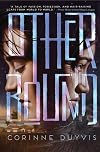
The two greatest things about this novel are its willingness to embrace intersectionality and the diversity that comes with it and its ability to balance a riveting plot with fascinating characterization. Together, these things created an addicting fantasy that allowed me to both see parts of myself in places I don't usually find them in literature (especially, in terms of Amara's sexuality, which felt more accurate than any other fictional portrayal of bisexuality I have read) and to show more grapple with issues like identity, duty, choice, privilege, and power in new ways as I read how each character handled those issues in their situation. I look forward to reading more from this author. show less
I received an advance copy of the book through the publisher via NetGalley.
THIS BOOK. Gah. I'm morbid and enjoy a good apocalyptic story. This blew me away. Denise is an autistic teenager who loves working with cats at a shelter in Amsterdam. Her mom is a drug addict. A comet is about to strike Earth. Everything changes, but some things do not--her mom makes them late to reach their assigned shelter during the blast, and they end up taking refuge on a generation ship stuck on earth. The ship show more doesn't want them aboard--how can Denise fit in, much less her mom? As Earth rattles with repercussions from the impact, all Denise wants is to find her beloved trans sister and somehow stay alive amid increasingly horrible circumstances.
The drama feels real. The science comes across as sound. The interpersonal drama is likewise intense: a teenager who struggles to interact with the world on a normal day, suddenly coping with a cataclysm, even as her mother is zoned out on drugs. The whole cast is fantastic. It's January and I already know this book will top my Norton Award shortlist for next year. show less
THIS BOOK. Gah. I'm morbid and enjoy a good apocalyptic story. This blew me away. Denise is an autistic teenager who loves working with cats at a shelter in Amsterdam. Her mom is a drug addict. A comet is about to strike Earth. Everything changes, but some things do not--her mom makes them late to reach their assigned shelter during the blast, and they end up taking refuge on a generation ship stuck on earth. The ship show more doesn't want them aboard--how can Denise fit in, much less her mom? As Earth rattles with repercussions from the impact, all Denise wants is to find her beloved trans sister and somehow stay alive amid increasingly horrible circumstances.
The drama feels real. The science comes across as sound. The interpersonal drama is likewise intense: a teenager who struggles to interact with the world on a normal day, suddenly coping with a cataclysm, even as her mother is zoned out on drugs. The whole cast is fantastic. It's January and I already know this book will top my Norton Award shortlist for next year. show less
Most apocalypse writers know that the readers who enjoy the end-of-the-world are looking for stories about survival, either individual or communal. On the Edge of Gone sidesteps this and focuses on Denise and her mom trying to get accepted on a 'generation' ship, which will offer the opportunity to escape the meteor-wrought destruction on Earth. It's an intriguing premise, but in this case, the apocalypse is a backdrop more than an integrated setting.
One of the issues for me could be that show more the story is told from Denise's point of view. Denise is sixteen and she is focused on three things: coping with the disaster (which means a place on the ship once they discover it); dealing with her mother, a drug addict; and finding her missing sister, Iris. She's also autistic, and I can't decide if Duyvis is brilliant or limited, because it allows Denise to be hyper-concerned with her topics of choice and incurious about others. It also allows for info-dumping during the few moments Denise needs to share information about the comet or generation ships ortsunamis or whatever. As I said, brilliant. Of course, I mean 'brilliant' in the same way I mean whoever invented drive-through windows was 'brilliant.'
Though the story opens with a quick window six months before disaster, the reader doesn't get much insight into the tech or culture of 2035, except the ubiquitous 'tabs,' that seem like tiny smartphones. Then it jumps into the day of the projected impact, when Denise and her mother are supposed to be heading to their assigned public shelter, and her mother is dithering, waiting for Iris. Here there are hints of how society has changed in six months (which sound somewhat familiar from The Last Policeman), but not many. It sounds like people are hoping to go to the shelter and then come out after (which also reminded me of the evacuation in London: Survival). But mostly Denise is working out her feelings about her mother, her own anxiety, and her own mixed feelings about waiting for Iris.
The writing feels very young adult, direct, with a lack of sophisticated words and concepts. The oft-quoted phrase, supposedly reflective of autism and the generational ship's focus on functionality: "Whether someone is useful only matters if you value people by their use" is fortune-cookie level writing, a mawkish sentiment that the book fails to stand behind.If this was true, there should be a place for both Denise and her addict mother, a person who will apparently bring very little use. I'll also note--though I'm not the originator--the author didn't stick the ending, Denise having been capable of contributing a great deal throughout the book and then acting like she would only be interested in cats at the end.
The solution at the end was intriguing, I think the Netherlands setting interesting (and so orderly in their adaptation to the apocalypse!), and the dialogue felt real. It was just the wrong focus for me--ugh, let's develop independence from an addict and learn to accept our ability levels--and even a comet couldn't save it. show less
One of the issues for me could be that show more the story is told from Denise's point of view. Denise is sixteen and she is focused on three things: coping with the disaster (which means a place on the ship once they discover it); dealing with her mother, a drug addict; and finding her missing sister, Iris. She's also autistic, and I can't decide if Duyvis is brilliant or limited, because it allows Denise to be hyper-concerned with her topics of choice and incurious about others. It also allows for info-dumping during the few moments Denise needs to share information about the comet or generation ships or
Though the story opens with a quick window six months before disaster, the reader doesn't get much insight into the tech or culture of 2035, except the ubiquitous 'tabs,' that seem like tiny smartphones. Then it jumps into the day of the projected impact, when Denise and her mother are supposed to be heading to their assigned public shelter, and her mother is dithering, waiting for Iris. Here there are hints of how society has changed in six months (which sound somewhat familiar from The Last Policeman), but not many. It sounds like people are hoping to go to the shelter and then come out after (which also reminded me of the evacuation in London: Survival). But mostly Denise is working out her feelings about her mother, her own anxiety, and her own mixed feelings about waiting for Iris.
The writing feels very young adult, direct, with a lack of sophisticated words and concepts. The oft-quoted phrase, supposedly reflective of autism and the generational ship's focus on functionality: "Whether someone is useful only matters if you value people by their use" is fortune-cookie level writing, a mawkish sentiment that the book fails to stand behind.
The solution at the end was intriguing, I think the Netherlands setting interesting (and so orderly in their adaptation to the apocalypse!), and the dialogue felt real. It was just the wrong focus for me--ugh, let's develop independence from an addict and learn to accept our ability levels--and even a comet couldn't save it. show less
Lists
Generation Ship (1)
LGBTQIA Horror (1)
Awards


You May Also Like


Associated Authors
Statistics
- Works
- 7
- Also by
- 6
- Members
- 887
- Popularity
- #28,886
- Rating
- 3.9
- Reviews
- 51
- ISBNs
- 26
- Languages
- 2
- Favorited
- 1