
Alaya Dawn Johnson
Author of The Summer Prince
About the Author
In 2004, writer Alaya Dawn Johnson received a BA in Eastern Asian Languages and Cultures from Columbia University. She has lived and traveled extensively in Japan and once discovered a cave of human bones while backpacking to a small island in the Keramas. She currently lives in New York City. She show more won the Andre Norton Award 2014 for Young adult Science Fiction and Fantasy for her title Love is the Drug. (Bowker Author Biography) show less
Image credit: Alaya Dawn Johnson promotional image
Series
Works by Alaya Dawn Johnson
Their Changing Bodies 3 copies
Down the Well 2 copies
The Score (short story) 2 copies
The Mirages 1 copy
The Yeast of Eire 1 copy
Among Their Bright Eyes 1 copy
Associated Works
The Memory Librarian and Other Stories of Dirty Computer (2022) — Contributor — 675 copies, 13 reviews
A Phoenix First Must Burn: Sixteen Stories of Black Girl Magic, Resistance, and Hope (2020) — Contributor — 381 copies, 11 reviews
Come On In: 15 Stories about Immigration and Finding Home (2020) — Contributor — 138 copies, 6 reviews
The Long List Anthology: More Stories From the Hugo Award Nomination List (2015) — Contributor — 126 copies, 6 reviews
Wilde Stories 2011: The Year's Best Gay Speculative Fiction (2011) — Contributor — 29 copies, 1 review
The Magazine of Fantasy and Science Fiction July/August 2014, Vol. 127, Nos. 1 & 2 (2014) — Contributor — 15 copies, 1 review
Asimov's Science Fiction: Vol. 44, No. 11 & 12 [November/December 2020] (2020) — Contributor — 4 copies
'Ike Pāpālua: Science Fiction & Fantasy Stories from the Hawaiian Islands (2023) — Contributor — 3 copies
Subterranean Magazine Summer 2011 — Contributor — 2 copies
Tagged
Common Knowledge
- Birthdate
- 1982
- Gender
- female
- Education
- Columbia University (BA ∙ East Asian Languages and Cultures)
National Cathedral School - Organizations
- Altered Fluid
- Awards and honors
- Speculative Literature Foundation Gulliver Travel Research Grant (2008)
- Agent
- Jill Grinberg
- Nationality
- USA
- Birthplace
- Washington, D.C., USA
- Places of residence
- New York, New York, USA
Mexico City, Mexico - Associated Place (for map)
- USA
Members
Reviews
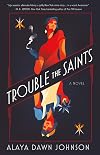
This novel lost a little something for me when it stepped away from Pea’s point of view, had it stuck with her until closer to the end this may have been five stars, as it is, it’s still a memorable read with an ending that packs an emotional punch.
Blessed or perhaps cursed with magic hands that make her an elite assassin, Pea spent years believing that the hits she did for a mafia kingpin had honor in them, that she had only killed those truly deserving of it, but as the book unfolds show more she learns that everything wasn’t as it seemed.
While it didn’t bother me that the magic often takes a backseat to other aspects of the story, it should be noted for those readers expecting more of a fantasy novel, there are elements of fantasy but this doesn’t entirely fall into that category.
The magic is tied into race and race is very much explored here, the difference between the way light skinned and dark skinned people are treated, how hair and speech affect the way Pea is seen and heard, there’s segregation in hospitals and restaurants and neighborhoods and the prejudice that Pea and Dev experience in their quest for a quiet small town life. There are smaller though still hurtful everyday indignities like a white woman refusing to shake Tamara’s hand and there’s a harrowing atrocity at the end of this book that will stay with you long after you close it.
I was interested in Dev attempting to reconcile his and Pea’s violent acts with his Hindu beliefs and I was interested in Tamara wrestling with her conscience, in Walter’s home (Walter is at times referred to as Redman, which is obviously problematic and the book addresses that), those pages were particularly gripping as Tamara came to the realization of what she needed to do.
But the thing is, even with the intrigue going on in country life, even with Dev and Tamara’s internal battles, as interesting as section two from Dev’s point of view was and section three from Tamara’s point of view was, I had first met Pea and I was so much more interested in her. That opening section, Pea’s bravery, her swagger, her vulnerability, the dual life she led as a black woman passing for white, as a mafia assassin who is also a loving aunt and sister, and also just even how much more noir everything felt in her POV, I missed all that when we started seeing things through Dev and then Tamara’s eyes. Most of all I missed Pea. Throughout the final two thirds of the novel I found myself going well, where’s Pea? Or when she did appear I craved answers about her, what’s she thinking here? What’s she feeling here? Unfortunately, I couldn’t get those firsthand answers when the book had been given over to Dev and then Tamara, who I liked, but to me, they were thoughtfully crafted secondary characters not main characters, this story much more belonged to Pea and I wish it had been structured to reflect that.
I received this ARC through a goodreads giveaway. show less
Blessed or perhaps cursed with magic hands that make her an elite assassin, Pea spent years believing that the hits she did for a mafia kingpin had honor in them, that she had only killed those truly deserving of it, but as the book unfolds show more she learns that everything wasn’t as it seemed.
While it didn’t bother me that the magic often takes a backseat to other aspects of the story, it should be noted for those readers expecting more of a fantasy novel, there are elements of fantasy but this doesn’t entirely fall into that category.
The magic is tied into race and race is very much explored here, the difference between the way light skinned and dark skinned people are treated, how hair and speech affect the way Pea is seen and heard, there’s segregation in hospitals and restaurants and neighborhoods and the prejudice that Pea and Dev experience in their quest for a quiet small town life. There are smaller though still hurtful everyday indignities like a white woman refusing to shake Tamara’s hand and there’s a harrowing atrocity at the end of this book that will stay with you long after you close it.
I was interested in Dev attempting to reconcile his and Pea’s violent acts with his Hindu beliefs and I was interested in Tamara wrestling with her conscience, in Walter’s home (Walter is at times referred to as Redman, which is obviously problematic and the book addresses that), those pages were particularly gripping as Tamara came to the realization of what she needed to do.
But the thing is, even with the intrigue going on in country life, even with Dev and Tamara’s internal battles, as interesting as section two from Dev’s point of view was and section three from Tamara’s point of view was, I had first met Pea and I was so much more interested in her. That opening section, Pea’s bravery, her swagger, her vulnerability, the dual life she led as a black woman passing for white, as a mafia assassin who is also a loving aunt and sister, and also just even how much more noir everything felt in her POV, I missed all that when we started seeing things through Dev and then Tamara’s eyes. Most of all I missed Pea. Throughout the final two thirds of the novel I found myself going well, where’s Pea? Or when she did appear I craved answers about her, what’s she thinking here? What’s she feeling here? Unfortunately, I couldn’t get those firsthand answers when the book had been given over to Dev and then Tamara, who I liked, but to me, they were thoughtfully crafted secondary characters not main characters, this story much more belonged to Pea and I wish it had been structured to reflect that.
I received this ARC through a goodreads giveaway. show less
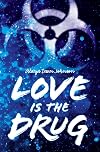
I've had this in my TBR pile too long and as 2017 is my year of focused clearing of backlist books, I decided to give this one a go. Prep school senior, Emily Bird wakes up in a hospital after having been drugged to the point that her memory of the events of a night are gone and Washington DC is on the verge of full on outbreak crisis intervention and none of that is the worst news.
I expected more intrigue and urgency given the global outbreak of a virus that's decimating the population show more with some martial law tossed in but this book was surprisingly low-key. I stayed with the story because I was very interested in the characters, most specifically Bird (Emily), Coffee (Alonso), Aaron, Marella, Nicky and even the villainous Roosevelt. I was confused by Bird's parents, Carol and Greg. I suppose that was to be expected as Bird is afraid of her mother (with good reason and so was I) and distant from her father but as this story is told in shifting POVs and not told strictly in Bird's voice, I feel there could have been more provided for clarity with the family dynamic. Aaron was the best kid I've had the pleasure to read in a while and I even liked Nicky. While he may not be a paragon of success, he worked consistently to provide for his family, wasn't in any way a criminal and his children knew they were loved. He treated Bird like a second daughter and made her feel a part of a family. One more reason for me to put Carol Bird on ignore. Marella won all the true BFF points and I was pulling for her too. If there's ever a sequel to Love is the Drug or a Marella in Paris story, I'd read that.
By book's end, while the answer to how Bird was drugged and why is given, it was revealed in a way that didn't deliver a punch given all the build up. Again, the urgency was just about non-existent. I thought the relationship between Bird and Coffee was well done and I really liked that this story allowed her to grow on her own so she could save herself and the boy she loved. Bird also didn't display any characteristics or abilities out of the blue to solve her problems and I was glad of that. No insta-solutions or insta-love here and if I could find more YA like this, I'd read them. Another thing that was refreshing was to have Bird be told by Marella and those who were supposed to be her friends before, that she (Bird) either wasn't holding up her end of the friend ship or she wasn't trustworthy. It's not often you have a main character girl in YA who isn't universally & inexplicably loved by all when she does nothing to draw those feelings. Bird had to earn them and improve herself. Well done, ADJ. Points also to the author for the Jack and Jill mentions. I can't recall the last time I came across that in a novel. I also liked the conflict in Bird, a privileged girl of color, on how to be Black in a world where her parents want her to be a proud and accomplished African American but "not too black" so as to single her out in the profoundly white world they've raised her in. This extends to something as simple as how she wears her hair. The socially acceptable pod of other African American teens she's around also exercise a certain amount of pressure to conform and it was interesting how they felt mostly sequestered off from white students (Charlotte notwithstanding). Making the chemist/drug dealer, conspiracy theorist, the root worthy character, is a hell of a feat to pull off but the author does so here and it's believable. He and Marella (who was Black & openly gay, so had her own outcast issues from the "socially acceptable" groups) were the only people who seemed able to accept Bird for who she was & wanted to be.
The way this ends, I could envision a sequel because the danger is still out there. Bird, Coffee & Marella globe trekking, just a step ahead of the enemy could be fun & hopefully have a high-octane feel now that they're out of high school. Recommended. show less
I expected more intrigue and urgency given the global outbreak of a virus that's decimating the population show more with some martial law tossed in but this book was surprisingly low-key. I stayed with the story because I was very interested in the characters, most specifically Bird (Emily), Coffee (Alonso), Aaron, Marella, Nicky and even the villainous Roosevelt. I was confused by Bird's parents, Carol and Greg. I suppose that was to be expected as Bird is afraid of her mother (with good reason and so was I) and distant from her father but as this story is told in shifting POVs and not told strictly in Bird's voice, I feel there could have been more provided for clarity with the family dynamic. Aaron was the best kid I've had the pleasure to read in a while and I even liked Nicky. While he may not be a paragon of success, he worked consistently to provide for his family, wasn't in any way a criminal and his children knew they were loved. He treated Bird like a second daughter and made her feel a part of a family. One more reason for me to put Carol Bird on ignore. Marella won all the true BFF points and I was pulling for her too. If there's ever a sequel to Love is the Drug or a Marella in Paris story, I'd read that.
By book's end, while the answer to how Bird was drugged and why is given, it was revealed in a way that didn't deliver a punch given all the build up. Again, the urgency was just about non-existent. I thought the relationship between Bird and Coffee was well done and I really liked that this story allowed her to grow on her own so she could save herself and the boy she loved. Bird also didn't display any characteristics or abilities out of the blue to solve her problems and I was glad of that. No insta-solutions or insta-love here and if I could find more YA like this, I'd read them. Another thing that was refreshing was to have Bird be told by Marella and those who were supposed to be her friends before, that she (Bird) either wasn't holding up her end of the friend ship or she wasn't trustworthy. It's not often you have a main character girl in YA who isn't universally & inexplicably loved by all when she does nothing to draw those feelings. Bird had to earn them and improve herself. Well done, ADJ. Points also to the author for the Jack and Jill mentions. I can't recall the last time I came across that in a novel. I also liked the conflict in Bird, a privileged girl of color, on how to be Black in a world where her parents want her to be a proud and accomplished African American but "not too black" so as to single her out in the profoundly white world they've raised her in. This extends to something as simple as how she wears her hair. The socially acceptable pod of other African American teens she's around also exercise a certain amount of pressure to conform and it was interesting how they felt mostly sequestered off from white students (Charlotte notwithstanding). Making the chemist/drug dealer, conspiracy theorist, the root worthy character, is a hell of a feat to pull off but the author does so here and it's believable. He and Marella (who was Black & openly gay, so had her own outcast issues from the "socially acceptable" groups) were the only people who seemed able to accept Bird for who she was & wanted to be.
The way this ends, I could envision a sequel because the danger is still out there. Bird, Coffee & Marella globe trekking, just a step ahead of the enemy could be fun & hopefully have a high-octane feel now that they're out of high school. Recommended. show less
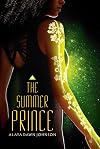
I read this YA book because it was on the Norton shortlist. It's not the sort of book I would have ever picked up otherwise, but I found it an intriguing read. Johnson created a very different sort of post-apocalyptic Earth. Generations after civilization restarted, June Costa is very much a "poor little rich girl." She's well off but plays at rebellion through her graffiti artwork. June is the sort of character I would hate if I actually met her, but the first person viewpoint grants more show more intimacy and understanding.
As a YA book, this surprised me with the fluid nature of sexuality. It's not a book I could send to my teenage niece, that's for sure... or some adults I know. But as a vision of the future, it made sense. show less
As a YA book, this surprised me with the fluid nature of sexuality. It's not a book I could send to my teenage niece, that's for sure... or some adults I know. But as a vision of the future, it made sense. show less

Due to life, it took me several weeks to finish this book. But like a good cup of hot chocolate, this was a book to be savored. It was twisty and full of political machinations, and I loved it. (Though side note: The plot was not nearly twisty enough, or subtle enough in its twists for me. But maybe that was the point? Since the book mimicked a season of a TV show, foreshadowing could be a little heavyhanded deliberately.)
I had not read the original Riverside books, though they are on my show more shelf. I will have to rectify that very soon because I am very intrigued by this world Kushner has created. And given how much I liked Tremontaine, I suspect I'll like the original books as well.
The good: It's complex, and gritty, and full of really compelling characters. The characters aren't black and white good and bad. They're as complex as the plot, fully realized, and realistic. They do selfish things in their own interest. They struggle with ethical quandaries and don't always do the right thing - and often, in this book, take a morally ambiguous path. Also, the diversity! I swoon at the diversity.The ended was satisfying, even though it was open ended. There will be more adventures and I look forward to reading them.
The bad: I think I gained about five pounds while reading this book, because I kept craving hot chocolate. And I have the good stuff from local family-owned and run chocolate shop, which means extra calories. My pants are a bit snugger than they were pre-Tremontaine.
Review copy courtesy of the publisher via NetGalley. show less
I had not read the original Riverside books, though they are on my show more shelf. I will have to rectify that very soon because I am very intrigued by this world Kushner has created. And given how much I liked Tremontaine, I suspect I'll like the original books as well.
The good: It's complex, and gritty, and full of really compelling characters. The characters aren't black and white good and bad. They're as complex as the plot, fully realized, and realistic. They do selfish things in their own interest. They struggle with ethical quandaries and don't always do the right thing - and often, in this book, take a morally ambiguous path. Also, the diversity! I swoon at the diversity.The ended was satisfying, even though it was open ended. There will be more adventures and I look forward to reading them.
The bad: I think I gained about five pounds while reading this book, because I kept craving hot chocolate. And I have the good stuff from local family-owned and run chocolate shop, which means extra calories. My pants are a bit snugger than they were pre-Tremontaine.
Review copy courtesy of the publisher via NetGalley. show less
Lists
Awards


You May Also Like


Associated Authors
Statistics
- Works
- 33
- Also by
- 35
- Members
- 2,057
- Popularity
- #12,502
- Rating
- 3.7
- Reviews
- 141
- ISBNs
- 75
- Languages
- 3
- Favorited
- 3
