
Ranya Idliby
Author of The Faith Club: A Muslim, A Christian, A Jew-- Three Women Search for Understanding
About the Author
Image credit: via Simon & Schuster
Works by Ranya Idliby
The Faith Club: A Muslim, A Christian, A Jew-- Three Women Search for Understanding (2006) 965 copies, 32 reviews
Tagged
Common Knowledge
- Gender
- female
Members
Reviews
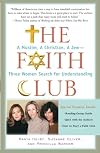
In the wake of 9/11, Ranya Idliby, a Muslim American of Palestinian descent was inspired by a passage in the Koran about Muhammad's Night Flight to write a children's interfaith book about the commonalities between Judaism, Christianity and Islam. She recruits two other mothers in the New York City area to help her write the book, Priscilla, a Reform Jew, and Suzanne, a Episcopalian Christian who was raised a Catholic. They find that before they can find common ground, they have to work show more through their differences. The book consists of their three intertwined first person narratives and snatches of transcripts of their conversations as they come together and clash and try to understand each other. I was raised as a Catholic and as an American I'm steeped in an overwhelmingly Christian culture. As a native New Yorker Judaism is also a religion that has represented something familiar and respected to me--I've had close Jewish friends and mentors, and I admit by and large I'm a fan of Israel. Nothing imparted about Christianity or Judaism or the views expressed by Priscilla or Suzanne surprised or challenged me.
That leaves Islam, which I'm a lot less familiar with. I can't say I've ever personally known a Muslim. Ranya Idliby says "When Americans think of Islam, they think of terrorism, fanatics, abused women, spoiled rich Arabs, a religion of the sword spread by the sword." Guilty. I admit I have a lot to learn about Islam. I had read the Koran, well before 9/11, but I didn't get much out of it. Unlike Judaism and Christianity, I just didn't have the cultural context to. I admit of the three women, I found myself most resistant to Ranya's representations of her faith. When Ranya speaks of her unhappiness with how many Americans see Muhammad as a fraud who plagiarized Jewish and Christian texts, I have to admit that isn't far from what I believe. And Muhammad from what I've read was a warlord--a man who did impose his religion by force--Ranya herself alludes to that military aspect elliptically a few times while at the same time calling Muhammad "a man of peace." Ranya claims Islam is a tolerant religion from which you can "come and go"--yet I've heard that in countries following Shari'a law that you can be executed for converting people from Islam. Ranya does go into the distinction between the Wahabi Islam that has promoted fundamentalism and militarist Jihad and a more peaceful, moderate tradition, but I admit I ended the book still skeptical--but at least curious and wishing to put a biography of Muhammad on my reading list. Perhaps the one by Armstrong recommended in the bibliography.
Yet at the same time it was easy to identify with Ranya and feel sympathy for the prejudice she had encountered. I was moved by the tale of how her family was driven out of Palestine and were unable to return, and yet unable to settle in Jordan and Kuwait but were made to feel like outsiders. She made me think about Israeli policy and feel for the displaced Palestinians. And she made at least her way of being Muslim sound very appealing. Ranya spoke of Islam's simplicity--about there being no Bar Mitzvah or Baptism making you a Muslim, but simply stating you recognize only one God, and that Muhammad is his prophet. That especially if you're a Sunni Muslim, that there is nothing standing between you and how you interpret the word of God and how you decide to worship. That as long as you acknowledge God, it doesn't really matter to your salvation whether you're a Jew, a Christian, or a Muslim nor can you be labeled an "infidel"--all three faiths are "people of the book." How a Muslim finds the proof of God in the beauty and order of the universe. And when Ranya spoke of her difficulties in finding a mosque that speaks to her needs to be part of a Muslim community in tune with her beliefs, I felt more than a bit of shame for my fellow New Yorkers' resistance against having a mosque go up near Ground Zero. All the more because her pastor, Imam Feisal Abdul Rauf, is involved. So Ranya's musings definitely was the portion of the book I found most valuable, where I found not just the most answers but questions.
It's probably no accident given their search for common ground that each was a rather liberal representative of her religion. Priscilla following Reform Judaism but unsure of her God, Ranya sure of her faith in God but Mosque-less, and Suzanne a convert to one of the most socially and theologically liberal Christian denominations. Each women definitely touched me, spoke to me. I identified with their emotions in the wake of 9/11, and the challenges of their lives as they grappled with questions about dying, good and evil, dealing with tradition and stereotypes and pressures to conform. I was moved by how their collaboration became a friendship that changed each of them. These women could be my neighbors and their journey together is more meaningful to me than some doctrinaire book by a imam, minister and rabbi. Now, this book isn't going to give you an in-depth grounding in Judaism, Christianity or Islam. No question. But this makes a good beginning at least in imparting what the three religions have in common and what divides them. It should pique your interest to learn more, and the bibliography at the end of the book is a good place to start. show less
That leaves Islam, which I'm a lot less familiar with. I can't say I've ever personally known a Muslim. Ranya Idliby says "When Americans think of Islam, they think of terrorism, fanatics, abused women, spoiled rich Arabs, a religion of the sword spread by the sword." Guilty. I admit I have a lot to learn about Islam. I had read the Koran, well before 9/11, but I didn't get much out of it. Unlike Judaism and Christianity, I just didn't have the cultural context to. I admit of the three women, I found myself most resistant to Ranya's representations of her faith. When Ranya speaks of her unhappiness with how many Americans see Muhammad as a fraud who plagiarized Jewish and Christian texts, I have to admit that isn't far from what I believe. And Muhammad from what I've read was a warlord--a man who did impose his religion by force--Ranya herself alludes to that military aspect elliptically a few times while at the same time calling Muhammad "a man of peace." Ranya claims Islam is a tolerant religion from which you can "come and go"--yet I've heard that in countries following Shari'a law that you can be executed for converting people from Islam. Ranya does go into the distinction between the Wahabi Islam that has promoted fundamentalism and militarist Jihad and a more peaceful, moderate tradition, but I admit I ended the book still skeptical--but at least curious and wishing to put a biography of Muhammad on my reading list. Perhaps the one by Armstrong recommended in the bibliography.
Yet at the same time it was easy to identify with Ranya and feel sympathy for the prejudice she had encountered. I was moved by the tale of how her family was driven out of Palestine and were unable to return, and yet unable to settle in Jordan and Kuwait but were made to feel like outsiders. She made me think about Israeli policy and feel for the displaced Palestinians. And she made at least her way of being Muslim sound very appealing. Ranya spoke of Islam's simplicity--about there being no Bar Mitzvah or Baptism making you a Muslim, but simply stating you recognize only one God, and that Muhammad is his prophet. That especially if you're a Sunni Muslim, that there is nothing standing between you and how you interpret the word of God and how you decide to worship. That as long as you acknowledge God, it doesn't really matter to your salvation whether you're a Jew, a Christian, or a Muslim nor can you be labeled an "infidel"--all three faiths are "people of the book." How a Muslim finds the proof of God in the beauty and order of the universe. And when Ranya spoke of her difficulties in finding a mosque that speaks to her needs to be part of a Muslim community in tune with her beliefs, I felt more than a bit of shame for my fellow New Yorkers' resistance against having a mosque go up near Ground Zero. All the more because her pastor, Imam Feisal Abdul Rauf, is involved. So Ranya's musings definitely was the portion of the book I found most valuable, where I found not just the most answers but questions.
It's probably no accident given their search for common ground that each was a rather liberal representative of her religion. Priscilla following Reform Judaism but unsure of her God, Ranya sure of her faith in God but Mosque-less, and Suzanne a convert to one of the most socially and theologically liberal Christian denominations. Each women definitely touched me, spoke to me. I identified with their emotions in the wake of 9/11, and the challenges of their lives as they grappled with questions about dying, good and evil, dealing with tradition and stereotypes and pressures to conform. I was moved by how their collaboration became a friendship that changed each of them. These women could be my neighbors and their journey together is more meaningful to me than some doctrinaire book by a imam, minister and rabbi. Now, this book isn't going to give you an in-depth grounding in Judaism, Christianity or Islam. No question. But this makes a good beginning at least in imparting what the three religions have in common and what divides them. It should pique your interest to learn more, and the bibliography at the end of the book is a good place to start. show less
The Faith Club I requested for Christmas. It's billed as a frank discussion between a Muslim, Christian, and Jew about all things spiritual, stereotypical, and religious. Largely, it succeeds. They actually make a distinction between spirituality and religion. They address the issues of religion being co-opted for political reasons. They talk about the stereotypes they had of one another based on preconceived ideas- including things people wouldn't admit in polite company. It's an honest show more book, which you can't say about everything out there today, and I enjoyed the read. I think there are a couple of places it fell down- not addressing the Christian Right in the same way (or as much as) they handled the vocal Muslim political sect, and they didn't involve a conservative Muslim woman or a conservative Christian. I understand that this particular book wasn't the goal of the project, but I think broadening the discussion would have had interesting implications. It's definitely worth picking up, even if it's just from the library. show less
A fairly easy and fast read but very well written, this seems to me to be an excellent book group book. The chapters are divided by event and further into sections which are written by the different women. Sometimes there are excerpts from their conversations between the sections which allows the reader to hear the interaction between the three women.
They bond over chocolate, their children, and chandeliers (Ranya and Priscilla have the same one hanging in their respective homes), but they show more don't ignore the tough stuff either. Priscilla and Suzanne butt heads over the cruxifiction; Ranya talks about her family's Palestinian roots; all three undergo their own unique crises in the book. After all, these three New Yorkers came together after 9-11.
Writing a coherent book with three authors isn't easy, but they make it look simple and the book flows very well. But in the end what makes this book compelling is that it gives the reader a chance to see three women from three different religions from a personal angle. After reading this I felt like I understood the followers of all three religions better. Definitely recommended.
Reviews, etc. show less
They bond over chocolate, their children, and chandeliers (Ranya and Priscilla have the same one hanging in their respective homes), but they show more don't ignore the tough stuff either. Priscilla and Suzanne butt heads over the cruxifiction; Ranya talks about her family's Palestinian roots; all three undergo their own unique crises in the book. After all, these three New Yorkers came together after 9-11.
Writing a coherent book with three authors isn't easy, but they make it look simple and the book flows very well. But in the end what makes this book compelling is that it gives the reader a chance to see three women from three different religions from a personal angle. After reading this I felt like I understood the followers of all three religions better. Definitely recommended.
Reviews, etc. show less
Memoir of three mothers -- a Jew, a Muslim and a Christian -- who meet over several years with the aim of writing a children's book capturing beloved stories of their respective faiths. In the meeting, they find much much more. They address their misconceptions and learn more about other faiths. In the process they deepen their understanding of what it means to be a person of faith in modern America. Ultimately, they discover what unites them as their friendship and intimacy grows.
It seems I show more am never more American than when I travel internationally. It is the process of explaining and comparing our culture, politics and way of life that forces us to to intentionally examine things which are often assumed automatically. So, too, with our three memoirists. The very process of describing their faith caused each to look more carefully at reflexive and inherited beliefs.
The three women have been castigated for not properly reflecting the received orthodoxy of the three Abrahamic faiths. They did not hold themselves out to be religious experts, nor did I expect them to be. Ecumenicism is not for everyone. There are those for whom religion is a set series of rules and law clearly separating "us" from "them". There is one true faith and the rest be damned. This book would not be for them. Our three authors are of more moderate stuff. To them, each faith embraces the radical gospel of love and care for God and God's creation in its many glorious forms.
This was the selected reading for my Church's book club. We did not find the prose particularly exciting, but certainly engaging and thought provoking. We were taken with each woman's openess and willingness to honestly and respectfully engage and accept. show less
It seems I show more am never more American than when I travel internationally. It is the process of explaining and comparing our culture, politics and way of life that forces us to to intentionally examine things which are often assumed automatically. So, too, with our three memoirists. The very process of describing their faith caused each to look more carefully at reflexive and inherited beliefs.
The three women have been castigated for not properly reflecting the received orthodoxy of the three Abrahamic faiths. They did not hold themselves out to be religious experts, nor did I expect them to be. Ecumenicism is not for everyone. There are those for whom religion is a set series of rules and law clearly separating "us" from "them". There is one true faith and the rest be damned. This book would not be for them. Our three authors are of more moderate stuff. To them, each faith embraces the radical gospel of love and care for God and God's creation in its many glorious forms.
This was the selected reading for my Church's book club. We did not find the prose particularly exciting, but certainly engaging and thought provoking. We were taken with each woman's openess and willingness to honestly and respectfully engage and accept. show less
Lists
Awards

You May Also Like


Associated Authors
Statistics
- Works
- 3
- Members
- 1,010
- Popularity
- #25,529
- Rating
- 3.8
- Reviews
- 34
- ISBNs
- 16
- Languages
- 1