
Daniel Nayeri
Author of Everything Sad Is Untrue: (a true story)
About the Author
Image credit: Daniel Nayeri with his sister and co-author Dina Nayeri
Series
Works by Daniel Nayeri
Straw House, Wood House, Brick House, Blow: Four Novellas by Daniel Nayeri (2011) 72 copies, 2 reviews
This Is a Door 1 copy
Associated Works
The Creativity Project: An Awesometastic Story Collection (2018) — Contributor — 115 copies, 3 reviews
Tagged
Common Knowledge
- Birthdate
- 1982-07-09
- Gender
- male
- Occupations
- writer
editor
pastry chef - Agent
- Joanna Volpe
- Relationships
- Nayeri, Dina (sister)
- Nationality
- Iran (birth)
USA - Birthplace
- Iran
- Places of residence
- New York, New York, USA
Members
Reviews
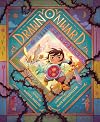
These illustrations capture the imagination and lead on a fantastical journey to delight the adventurer and encourage the soul.
A boy feels lost after the death of his mother and wanders into the forest, deeper than he should go. From there a grabbing, graphic adventure begins, which draws into a world of wonder.
This book is an illustrative delight. There is some text but just enough to set the stage and add needed highlights here and there to guide the tale through. The rest is a visual show more quest, which takes the boy on a rich journey of discovery, surprises, tension, and growth. The details are imaginative and awaken fascination. While the main thread of the boy's journey is clear, there's quite a bit of room for each reader to notice different moments and take everything in on a more personal direction. In other words, each reader will have subtle differences in how they see the boy's journey. Even visiting these images time and again will lead to new discoveries and let dreams fly each time. It flows a bit like a graphic novel with smaller panels overlayed on the main one...like a picture book hugging the graphic novel form. This keeps the tension high the entire way through.
While this book does handle grief, it is subtle. The reader needs to read a little between the lines, but it's still clear what the boy's problem is. While the first scene gives a basic impression of the relationship and worries the boy and his father have, the rest bounds into discovery and danger, keeping uncertainty close. This changes more toward the end into amazement with new-found understanding. The grief theme slides through as a very gentle side to the rich fantasy, drawing more meaning toward the end to wrap off with a final sense of hope.
These graphics are enjoyable for even adults to gaze through, and the meaning behind them carries enough depth to have this oldest age group thinking. I'm not sure the youngest end of the intended age group will catch much more than the basic message, since there is quite a bit of visual symbolism going on, but the older end of the intended reader level will be able to sink into the moment. It's masterfully woven and glides through the theme with wisdom and never a sense of preachy purpose. show less
A boy feels lost after the death of his mother and wanders into the forest, deeper than he should go. From there a grabbing, graphic adventure begins, which draws into a world of wonder.
This book is an illustrative delight. There is some text but just enough to set the stage and add needed highlights here and there to guide the tale through. The rest is a visual show more quest, which takes the boy on a rich journey of discovery, surprises, tension, and growth. The details are imaginative and awaken fascination. While the main thread of the boy's journey is clear, there's quite a bit of room for each reader to notice different moments and take everything in on a more personal direction. In other words, each reader will have subtle differences in how they see the boy's journey. Even visiting these images time and again will lead to new discoveries and let dreams fly each time. It flows a bit like a graphic novel with smaller panels overlayed on the main one...like a picture book hugging the graphic novel form. This keeps the tension high the entire way through.
While this book does handle grief, it is subtle. The reader needs to read a little between the lines, but it's still clear what the boy's problem is. While the first scene gives a basic impression of the relationship and worries the boy and his father have, the rest bounds into discovery and danger, keeping uncertainty close. This changes more toward the end into amazement with new-found understanding. The grief theme slides through as a very gentle side to the rich fantasy, drawing more meaning toward the end to wrap off with a final sense of hope.
These graphics are enjoyable for even adults to gaze through, and the meaning behind them carries enough depth to have this oldest age group thinking. I'm not sure the youngest end of the intended age group will catch much more than the basic message, since there is quite a bit of visual symbolism going on, but the older end of the intended reader level will be able to sink into the moment. It's masterfully woven and glides through the theme with wisdom and never a sense of preachy purpose. show less
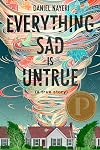
What an absolutely beautiful book. This is an ageless work of art.
The story is heartwarming and painful to read. As someone who grew up going to school with with kids like Daniel, the main character, it was brutal to read about the excruciating pain of being the outsider. More painful to know that I may have been a part of it or at least admit my culpability in not seeing that pain in others.
Khosrou (Daniel) is a brilliant storyteller who, despite his separation from his culture, maintains show more the voicing and the gravity of his inherited myths and legends. His is a modern version of those stories retold in a language that he had to learn on the fly as he traversed the globe. The magic in his words is that he never makes the reader feel alienated even as he tells his own story of alienation. His descriptions of his homeland and his loved ones ring to the reader as truth, even the lies. I know very little about Persian culture and much of what I do know I just learned from this book. One of the key points he discusses is the way that this culture welcomes visitors into the home, they honor their guests. Khosrou/Daniel made me feel so welcome in the home of his mind that I want to visit again.
This book should be required reading in every school in America. show less
The story is heartwarming and painful to read. As someone who grew up going to school with with kids like Daniel, the main character, it was brutal to read about the excruciating pain of being the outsider. More painful to know that I may have been a part of it or at least admit my culpability in not seeing that pain in others.
Khosrou (Daniel) is a brilliant storyteller who, despite his separation from his culture, maintains show more the voicing and the gravity of his inherited myths and legends. His is a modern version of those stories retold in a language that he had to learn on the fly as he traversed the globe. The magic in his words is that he never makes the reader feel alienated even as he tells his own story of alienation. His descriptions of his homeland and his loved ones ring to the reader as truth, even the lies. I know very little about Persian culture and much of what I do know I just learned from this book. One of the key points he discusses is the way that this culture welcomes visitors into the home, they honor their guests. Khosrou/Daniel made me feel so welcome in the home of his mind that I want to visit again.
This book should be required reading in every school in America. show less
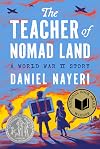
Iran in 1941 is occupied by two Allied powers, Russia in the north and Britain in the south, to protect the supply of Iranian oil and keep it from getting to Germany. Babak and his younger sister Sana are orphaned when their father is killed in a misunderstanding between soldiers and shepherds (their mother died when Sana was born). Fierce, bright Sana makes Babak promise they'll stay together; to that end, they try to go along with the nomads whose children their father taught, but Babak show more doesn't have his father's experience, and the leader of the tribe won't allow them to make the journey with them. Babak and Sana rely on their survival skills and the kindness of others, avoiding danger as much as possible (for example, from an apparent German spy called Vulf who is hunting an escaped Jewish child called Ben). Communication is a strong theme; in a pivotal scene near the end, Babak organizes a telephone-style chain of translators from Bakhtiari to Farsi to Polish to English to Russian to French, working out a deal in a magnificent feat of patient diplomacy. So much WWII fiction is set in Europe, but the war truly was global, and this is a less familiar setting to most readers. A map is included ahead of chapter 1. A slim, powerful story.
Cover reveal: https://afuse8production.slj.com/2025/01/25/cover-reveal-daniel-nayeris-the-teac...
Quotes
"But never forget this: If the map doesn't match the land, the map is wrong." (63)
Even here in Iran, the war is a shouting match between two inconsiderate guests and has little to do with them. In their own country, they are a third party... (74)
How can they even begin to communicate? Babak gets the suffocating feeling that this is the whole world, no one able to hear anyone else. Everyone with a different map for the same spot of ground. (86-87)
Babak gets the sense that a core part of teaching the art of making things the right size. Specific. (136)
Everywhere, it seems, the war has made piles of the dead and still we go on living under them. Stories emerge everywhere like flowers from a grave. (140) show less
Cover reveal: https://afuse8production.slj.com/2025/01/25/cover-reveal-daniel-nayeris-the-teac...
Quotes
"But never forget this: If the map doesn't match the land, the map is wrong." (63)
Even here in Iran, the war is a shouting match between two inconsiderate guests and has little to do with them. In their own country, they are a third party... (74)
How can they even begin to communicate? Babak gets the suffocating feeling that this is the whole world, no one able to hear anyone else. Everyone with a different map for the same spot of ground. (86-87)
Babak gets the sense that a core part of teaching the art of making things the right size. Specific. (136)
Everywhere, it seems, the war has made piles of the dead and still we go on living under them. Stories emerge everywhere like flowers from a grave. (140) show less

Khosrou - now called Daniel - was born in Iran, fled via the United Arab Emirates and Italy, and eventually came to the United States with his mother and sister. Now in seventh grade in Oklahoma, he stands at the front of Mrs. Miller's class, attempting to tell his story. But his classmates lack context, so he must continually loop back, filling them in on family history, Persian culture, myths and legends, life as a refugee, and more. After all Daniel's storytelling, he brings in a show more near-mythical figure: his father, who stayed in Isfahan with his new wife but who comes to the U.S. for one visit.
Drawing deeply on the style and appeal of Scheherazade's tales from 1,001 Arabian Nights, Daniel tries to put into words his memories and his family stories, which are necessarily piecemeal and incomplete ("A patchwork story is the shame of a refugee," p. 37).
See also: The Ungrateful Refugee by Dina Nayeri, Other Words for Home by Jasmine Warga, Inside Out & Back Again by Thanhha Lai
Quotes
[Epigraphs from Billy Collins, Amir Khosrou, The Brothers Karamazov]
Persians aren't liars. They're poets, which is worse.
Poets don't even know when they're lying. They're just trying to remember their dreams. (1)
Listen.
The quick version of this story is useless. Let's agree to have a complicated conversation....If we can just rise to the challenge of communication - here in the parlor of your mind - we can maybe reach across time and space and every ordinary thing to see so deep into the heart of each other that you might agree that I am like you. (16)
But see, this is the thing with legends. They are more detailed than myths, but not always more accurate. (26)
But tears are like genies. They will never go back into the bottle. (40)
But hiding is something you do while you wait to get stronger. (42)
You don't get to choose what you remember. (49)
...every story is the sound of a storyteller begging to stay alive. (59)
The lesson here is that you can fall in love with a story you have in your head. (79)
But you either get the truth, or you get good news - you don't often get both. (80)
People are like that.
They're immune to the sadness of others. (88)
There are moments in your life where you are alone with two cups and you have to pick one to drink. (95)
We don't owe anyone our sadness. (104)
Every side of an explosion looks different....That's why there's an infinite labyrinth of stories, even in just one family. (120)
Does writing poetry make you brave? ...I think making anything is a brave thing to do. (122)
And how do you know anything for certain anyway?
Maybe don't be so certain all the time. (198)
...in polite American society, they care more if you seem happy than if you're well. (269)
Reading is the act of listening and speaking at the same time, with someone you've never met, but love....What you're doing is listening to me, in the parlor of your mind, but also speaking to yourself....You evaluate....You think and wrestle with every word. (333)
But that was the moment I realized that myths are just legends that everybody agrees on, and legends are just stories that got bigger over time. (342)
...what you believe about the future will change how you live in the present. (347)
And what if, like a rug, they are flawed? Memories are just stories we tell ourselves, after all. What if we are telling ourselves lies? (349) show less
Drawing deeply on the style and appeal of Scheherazade's tales from 1,001 Arabian Nights, Daniel tries to put into words his memories and his family stories, which are necessarily piecemeal and incomplete ("A patchwork story is the shame of a refugee," p. 37).
See also: The Ungrateful Refugee by Dina Nayeri, Other Words for Home by Jasmine Warga, Inside Out & Back Again by Thanhha Lai
Quotes
[Epigraphs from Billy Collins, Amir Khosrou, The Brothers Karamazov]
Persians aren't liars. They're poets, which is worse.
Poets don't even know when they're lying. They're just trying to remember their dreams. (1)
Listen.
The quick version of this story is useless. Let's agree to have a complicated conversation....If we can just rise to the challenge of communication - here in the parlor of your mind - we can maybe reach across time and space and every ordinary thing to see so deep into the heart of each other that you might agree that I am like you. (16)
But see, this is the thing with legends. They are more detailed than myths, but not always more accurate. (26)
But tears are like genies. They will never go back into the bottle. (40)
But hiding is something you do while you wait to get stronger. (42)
You don't get to choose what you remember. (49)
...every story is the sound of a storyteller begging to stay alive. (59)
The lesson here is that you can fall in love with a story you have in your head. (79)
But you either get the truth, or you get good news - you don't often get both. (80)
People are like that.
They're immune to the sadness of others. (88)
There are moments in your life where you are alone with two cups and you have to pick one to drink. (95)
We don't owe anyone our sadness. (104)
Every side of an explosion looks different....That's why there's an infinite labyrinth of stories, even in just one family. (120)
Does writing poetry make you brave? ...I think making anything is a brave thing to do. (122)
And how do you know anything for certain anyway?
Maybe don't be so certain all the time. (198)
...in polite American society, they care more if you seem happy than if you're well. (269)
Reading is the act of listening and speaking at the same time, with someone you've never met, but love....What you're doing is listening to me, in the parlor of your mind, but also speaking to yourself....You evaluate....You think and wrestle with every word. (333)
But that was the moment I realized that myths are just legends that everybody agrees on, and legends are just stories that got bigger over time. (342)
...what you believe about the future will change how you live in the present. (347)
And what if, like a rug, they are flawed? Memories are just stories we tell ourselves, after all. What if we are telling ourselves lies? (349) show less
Lists
"Dark" Realistic (1)
READ in 2024 (1)
Awards


You May Also Like


Associated Authors
Statistics
- Works
- 22
- Also by
- 2
- Members
- 2,522
- Popularity
- #10,177
- Rating
- 3.9
- Reviews
- 107
- ISBNs
- 92
- Languages
- 4
- Favorited
- 1