
Simon J. Kistemaker (1930–2017)
Author of New Testament Commentary: Exposition of the First Epistle to the Corinthians
About the Author
Simon J. Kistemaker (Ph.D., Free University, Amsterdam) is emeritus professor of New Testament at Reformed Theological Seminary, Orlando
Image credit: Used by permission of Baker Publishing Group, copyright © 2008. All rights to this material are reserved. Materials are not to be distributed to other web locations for retrieval, published(see © info.)
Works by Simon J. Kistemaker
New Testament Commentary: Exposition of the First Epistle to the Corinthians (1993) 552 copies, 1 review
New Testament Commentary: Exposition of the Second Epistle to the Corinthians (1997) 504 copies, 1 review
Interpreting God's Word Toda 3 copies
A New Testament Commentary : Hebrews 2 copies
Atos vol. 2 2 copies
Atos volume 1 2 copies
The Parables of Jesus 1 copy
Introduction to Greek 1 copy
Atos - Vol 1 1 copy
New Testament Greek 1 copy
Epístolas de Pedro e Judas 1 copy
Thoughts on Revelation 1 copy
The Parables Understanding the Stories Jesus Told by Kistemaker, Simon J. [Baker,2002] (Paperback) 1 copy
2 Coríntios 1 copy
Apocalipse 1 copy
Atos, Volumes 1 e 2 1 copy
Hebreus 1 copy
Tiago e Epístolas de João 1 copy
Associated Works
The Glory of the Atonement: Biblical, Theological & Practical Perspectives (2004) — Contributor — 336 copies, 2 reviews
Tagged
Common Knowledge
- Birthdate
- 1930-10-21
- Date of death
- 2017-09-23
- Gender
- male
- Education
- Free University of Amsterdam (PhD)
Calvin College (AB)
Calvin Theological Seminary (BD) - Occupations
- theologian
- Organizations
- Reformed Theological Seminary
- Awards and honors
- Gold Medallion Evangelical Book of the Year Award
Members
Reviews
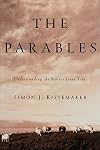
Jesus’ method of teaching has proven difficult for many students of the New Testament. His use of parables – or stories “told in order to convey a spiritual truth by means of a single point of comparison” – has led to a great deal of confusion and frustration, not only among those who were in Jesus’ immediate audience, but also down through the history of the Church (11). Many well-meaning interpreters fell into the trap of seeking an allegorical interpretation of each parable, show more often in the pursuit of interpreting them in the same manner as Jesus. In the introduction, Kistemaker writes, “an allegory is a series of symbols that need to be interpreted, while a parable is a single simile that has only one point of reference” (15). In The Parables, Simon Kistemaker (emeritus professor of New Testament at Reformed Theological Seminary) provides students of the Gospels with an invaluable resource to assist them in understanding Jesus’ parables.
Each parable – according to Kistemaker – has one major thrust, and attempts to interpret parables allegorically create confusion and cause the reader to lose sight of the major thrust due to the rampant speculation regarding other points. There are clearly exceptions to Kistemaker’s “single simile” rule, however these are exceptions in which Jesus interprets the parable for the sake of his disciples, and even then, not every element is given a definite meaning (15). Thus, responsible exegetes note the context, structure and main point of the parable (18). The preacher’s added responsibility is to, “translate its meaning in terms relevant to the needs of today” (18).
In The Parables, Kistemaker works through each parable in the Synoptic Gospels. He notes the similarities and distinctions between parables that are present in multiple Gospels, shows their respective contexts, notes highlights in each parable, and provides the reader with the main thrust of each. In doing this, Kistemaker has written a book that is crucial for pastors to keep at hand when preaching through the gospels, and accessible enough for the average layperson to use as a quick reference when confronted with an aspect of Jesus’ teaching that is less than clear.
Critique
Generally speaking, Kistemaker’s handling of each parable is well-done and exceptionally insightful. However, there are certain instances where, for the sake of brevity, he presents one particular perspective of a parable and fails to display a second, equally valid alternative.
For instance, in his discussion of the parable of the talents found in Matthew 25:14-30, Kistemaker presents the servant given one talent as indignantly asking, “Why did you put so little confidence in me by giving me only one talent? What could I really do with it, considering that if there were any profit I would not see much of it? To get even with you I decided not to do anything with the money?” (122).
While certainly a possible interpretation of the attitude of the servant, one might question if that attitude prevails among followers of Christ. Another possible interpretation would be to interpret the servant’s words differently. He claims to have been afraid of his master because he knew him to be a harsh man who reaped where he had not sown. Perhaps it would be better to view the actions of the servant as stemming from fear rather than indignation. His master was not a harsh man as was proven by his rewarding of the other (faithful) servants, however, the master judged the fearful servant according to his own misunderstanding and misjudgement. Kistemaker does not even regard this interpretation as worthy of mention.
Of course, without the author making such decisions, the book itself would be voluminous. Ultimately, Kistemaker treads the line between brevity and thorough-ness well, and the book provides a unique resource for pastors and students of the Bible as they strive to interpret and communicate the parables of Jesus. Yet, while this book may satiate the needs of many in search of a basic understanding of Jesus’ teachings, others will be left still thirsty for more than this book has to offer. show less
Each parable – according to Kistemaker – has one major thrust, and attempts to interpret parables allegorically create confusion and cause the reader to lose sight of the major thrust due to the rampant speculation regarding other points. There are clearly exceptions to Kistemaker’s “single simile” rule, however these are exceptions in which Jesus interprets the parable for the sake of his disciples, and even then, not every element is given a definite meaning (15). Thus, responsible exegetes note the context, structure and main point of the parable (18). The preacher’s added responsibility is to, “translate its meaning in terms relevant to the needs of today” (18).
In The Parables, Kistemaker works through each parable in the Synoptic Gospels. He notes the similarities and distinctions between parables that are present in multiple Gospels, shows their respective contexts, notes highlights in each parable, and provides the reader with the main thrust of each. In doing this, Kistemaker has written a book that is crucial for pastors to keep at hand when preaching through the gospels, and accessible enough for the average layperson to use as a quick reference when confronted with an aspect of Jesus’ teaching that is less than clear.
Critique
Generally speaking, Kistemaker’s handling of each parable is well-done and exceptionally insightful. However, there are certain instances where, for the sake of brevity, he presents one particular perspective of a parable and fails to display a second, equally valid alternative.
For instance, in his discussion of the parable of the talents found in Matthew 25:14-30, Kistemaker presents the servant given one talent as indignantly asking, “Why did you put so little confidence in me by giving me only one talent? What could I really do with it, considering that if there were any profit I would not see much of it? To get even with you I decided not to do anything with the money?” (122).
While certainly a possible interpretation of the attitude of the servant, one might question if that attitude prevails among followers of Christ. Another possible interpretation would be to interpret the servant’s words differently. He claims to have been afraid of his master because he knew him to be a harsh man who reaped where he had not sown. Perhaps it would be better to view the actions of the servant as stemming from fear rather than indignation. His master was not a harsh man as was proven by his rewarding of the other (faithful) servants, however, the master judged the fearful servant according to his own misunderstanding and misjudgement. Kistemaker does not even regard this interpretation as worthy of mention.
Of course, without the author making such decisions, the book itself would be voluminous. Ultimately, Kistemaker treads the line between brevity and thorough-ness well, and the book provides a unique resource for pastors and students of the Bible as they strive to interpret and communicate the parables of Jesus. Yet, while this book may satiate the needs of many in search of a basic understanding of Jesus’ teachings, others will be left still thirsty for more than this book has to offer. show less

A really interesting old book, not of great length but easier to read than you would imagine. It is full of the history of Protestant faith in Europe, having brief little biographies of all the key players of the time, the movements of faith across Europe and so on, not just a dry as dust theological old book. These people and times were real and vital and without all this stuff happening we wouldn't have our denominations today. Don't be put off by the cover!!! You'll be glad you read it!
DISCO D: BACKUP / TEOLOGIA
AYUDAS PASTORALES / COMENTARIOS / NUEVO TESTAMENTO / COMENTARIO DEL NUEVO TESTAMENTO
LIBRONIX SOFTWARE
AYUDAS PASTORALES / COMENTARIOS / NUEVO TESTAMENTO / COMENTARIO DEL NUEVO TESTAMENTO
LIBRONIX SOFTWARE
DISCO D: BACKUP / TEOLOGIA
AYUDAS PASTORALES / COMENTARIOS / NUEVO TESTAMENTO / COMENTARIO DEL NUEVO TESTAMENTO
AYUDAS PASTORALES / COMENTARIOS / NUEVO TESTAMENTO / COMENTARIO DEL NUEVO TESTAMENTO
Lists
You May Also Like


Associated Authors
Statistics
- Works
- 72
- Also by
- 1
- Members
- 4,248
- Popularity
- #5,919
- Rating
- 3.8
- Reviews
- 12
- ISBNs
- 59
- Languages
- 3
- Favorited
- 1