
Dany Laferrière
Author of The Return
About the Author
Image credit: Dany Laferrière au Salon du livre de Montréal 2018 By ActuaLitté - Dany Laferrière, CC BY-SA 2.0, https://commons.wikimedia.org/w/index.php?curid=74757392
Series
Works by Dany Laferrière
Obsession du rouge (L') 1 copy
Associated Works
The Butterfly's Way: Voices from the Haitian Dyaspora in the United States (2001) — Contributor — 70 copies, 1 review
Tagged
Common Knowledge
- Canonical name
- Laferrière, Dany
- Birthdate
- 1953-04-17
- Gender
- male
- Occupations
- novelist
journalist - Organizations
- Académie française (2013)
- Awards and honors
- Blue Metropolis Literary Grand Prix (2010)
- Nationality
- Haiti
Canada - Birthplace
- Port-au-Prince, Haiti
- Places of residence
- Port-au-Prince, Haïti
Petit Goâve, Haiti
Montréal, Québec, Canada
Miami, Florida, USA
Members
Reviews
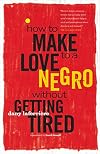
This is a sharp, provocative little novel that centers on the Black male immigrant experience in Montreal. I read the English translation by David Homel, which includes a fantastic foreword about the thoughtfulness behind translating something this layered. Every word choice matters when tone, race, and satire are intertwined. It’s raw, uncomfortable, and aware. Montreal is vivid and caricatured through its neighborhoods, jazz pretensions, and literary name-dropping (Leonard Cohen, of show more course). The writing is rough and alluring, filthy and philosophical, repulsive and attractive. It reminds me of Luster by Raven Leilani and Martyr! by Kaveh Akbar, each explores desire, alienation, and power. This one dissects how we fetishize and flatten each other across lines of race, class, and sex. It’s about sex, but it’s really about fear and control. We like things that scare us, it arouses us. But why does it scare us? Anyway, wow. I recommend it, but I also know you probably won’t like it. It’s gritty, dirty, messy, short but not sweet. show less

...history hasn't been good to us, but we can always use it as an aphrodisiac.
It's rare that a novel so punchy, vibrant, and hilarious is also so thoughtful, fierce, and precise. In How to Make Love to a Negro Without Getting Tired—a title that perfectly sets up the wry boldness of the book—Laferrière captures the infernal heat of a Montreal summer spent drinking cheap wine, listening to jazz, philosophizing, and fucking white women.
And if you thought you could avoid the thorny sexual show more politics of that last bit, you’d be dead wrong. The coupling of black men and white women is the central case of this book. Our unnamed narrator is constantly reckoning with it, assessing his own sexual value compared with the upper-crust white girls he beds, grappling with the fact that their perception of his virility comes largely from a racist colonialist narrative that he is savage and unclean. And it gets more subtle than that, even—fantasy and exoticism and history and stereotype and feminism all have a part to play.
He goes on to talk about how the most visceral sex is rooted in inequality. (Oscar Wilde comes to mind: “Everything in the world is about sex, except sex. Sex is about power.”) And everyone knows their place in the Great Chain of Being, so to speak—in the fucked-up racial pyramid of North America, white women might be below white men, but they are above black men. So, as our narrator puts it bluntly: “Put black vengeance and white guilt together in the same bed and you had a night to remember!”
Incendiary? You bet. Nobody comes out of this story looking perfect, which is part of the reason I like it. Almost everybody is under somebody’s thumb, and almost everybody acts out their desires and frustrations indirectly—through sex, food, charity, tea-making.
There is the undeniable class element, too. These WASP-y McGill students come to visit the narrator in his filthy apartment while neither he nor his roommate has a job or enough money to buy regular meals. One of his flings, 'Miz Literature,' beautifies the place with peonies and does the dishes and stocks the fridge with pâtés and cheese. It’s impossible not to see the white guilt here, or the noblesse oblige, and even if it’s purely subconscious for her, our narrator clocks it immediately: “Europe has paid her debt to Africa.” His tone is knowing and sardonic but not indignant; he knows the score. You get it however you can.
This is what I'd call a "hangout novel"—the two main characters don't change much (if at all) from beginning to end. The only real progression is that of the narrator’s literary pursuit: he spends hours at his Remington 22 writing a novel that's implied to be the one we're reading now. On the one hand, a character writing their own book elides the author entirely. On the other, it highlights the parallels between character and author. Was Laferrière trying to produce a novel that contained within its mere existence the fulfillment of its protagonist's wishes to be published, to be famous? Or was he simply writing what he knows (which is writing)? I don't know. It's an interesting element to chew on.
If you couldn’t tell by my excessive quotations, I love Dany Laferrière’s style. I find it simultaneously clever and conversational. It has an incredible musicality and a forward motion that feels electric. Sometimes, often during sex scenes, he will go off on these feverish tangents, occasionally making it difficult to tell what’s actually happening, but I was more than happy to go on those tangents with him. This narrator is unforgettably witty, ambitious, and critical. This book is full of gems and remains provocative and hilarious despite the thirty-odd years since its publication. Buy it, read it—it’s a quick one, and well worth your time.
Making love to a Negro isn’t frightening; sleeping with him is. Sleep is complete surrender. It’s more than nude; it’s naked. Anything can happen during the night, when reason sleeps. Do we dream our lover? Do we penetrate his dreams? Shifting sands, says the Western world. Danger. Beware. Danger of osmosis. Danger of true communication.
____________________
Global Challenge: Haiti show less
It's rare that a novel so punchy, vibrant, and hilarious is also so thoughtful, fierce, and precise. In How to Make Love to a Negro Without Getting Tired—a title that perfectly sets up the wry boldness of the book—Laferrière captures the infernal heat of a Montreal summer spent drinking cheap wine, listening to jazz, philosophizing, and fucking white women.
And if you thought you could avoid the thorny sexual show more politics of that last bit, you’d be dead wrong. The coupling of black men and white women is the central case of this book. Our unnamed narrator is constantly reckoning with it, assessing his own sexual value compared with the upper-crust white girls he beds, grappling with the fact that their perception of his virility comes largely from a racist colonialist narrative that he is savage and unclean. And it gets more subtle than that, even—fantasy and exoticism and history and stereotype and feminism all have a part to play.
I think that when you mix black man and white woman you get blood red… Why? Because sexuality is based on fantasy and the black man/white woman fantasy is one of the most explosive ones around.
He goes on to talk about how the most visceral sex is rooted in inequality. (Oscar Wilde comes to mind: “Everything in the world is about sex, except sex. Sex is about power.”) And everyone knows their place in the Great Chain of Being, so to speak—in the fucked-up racial pyramid of North America, white women might be below white men, but they are above black men. So, as our narrator puts it bluntly: “Put black vengeance and white guilt together in the same bed and you had a night to remember!”
Incendiary? You bet. Nobody comes out of this story looking perfect, which is part of the reason I like it. Almost everybody is under somebody’s thumb, and almost everybody acts out their desires and frustrations indirectly—through sex, food, charity, tea-making.
There is the undeniable class element, too. These WASP-y McGill students come to visit the narrator in his filthy apartment while neither he nor his roommate has a job or enough money to buy regular meals. One of his flings, 'Miz Literature,' beautifies the place with peonies and does the dishes and stocks the fridge with pâtés and cheese. It’s impossible not to see the white guilt here, or the noblesse oblige, and even if it’s purely subconscious for her, our narrator clocks it immediately: “Europe has paid her debt to Africa.” His tone is knowing and sardonic but not indignant; he knows the score. You get it however you can.
Imagine: she’s studying at McGill (venerable institution to which the bourgeoisie sends its children to learn clarity, analysis and scientific doubt) and the first Negro to tell her some kind of fancy tale takes her to bed. Why? Because she can afford that luxury. I surrender to the least bit of naivete, even for a second, and I’m one dead n*gger. Literally. I have to be a moving target, otherwise, at the first emotion, my ass would be grass.
This is what I'd call a "hangout novel"—the two main characters don't change much (if at all) from beginning to end. The only real progression is that of the narrator’s literary pursuit: he spends hours at his Remington 22 writing a novel that's implied to be the one we're reading now. On the one hand, a character writing their own book elides the author entirely. On the other, it highlights the parallels between character and author. Was Laferrière trying to produce a novel that contained within its mere existence the fulfillment of its protagonist's wishes to be published, to be famous? Or was he simply writing what he knows (which is writing)? I don't know. It's an interesting element to chew on.
If you couldn’t tell by my excessive quotations, I love Dany Laferrière’s style. I find it simultaneously clever and conversational. It has an incredible musicality and a forward motion that feels electric. Sometimes, often during sex scenes, he will go off on these feverish tangents, occasionally making it difficult to tell what’s actually happening, but I was more than happy to go on those tangents with him. This narrator is unforgettably witty, ambitious, and critical. This book is full of gems and remains provocative and hilarious despite the thirty-odd years since its publication. Buy it, read it—it’s a quick one, and well worth your time.
Making love to a Negro isn’t frightening; sleeping with him is. Sleep is complete surrender. It’s more than nude; it’s naked. Anything can happen during the night, when reason sleeps. Do we dream our lover? Do we penetrate his dreams? Shifting sands, says the Western world. Danger. Beware. Danger of osmosis. Danger of true communication.
____________________
Global Challenge: Haiti show less
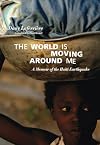
Haiti's misfortune was not what moved the world: it was the way the Haitian people stood up to misfortune. We gazed with wonder as the disaster revealed a nation whose rotten institutions prevent it from coming into its own. When those institutions disappeared from the landscape, even for a moment, we discovered a proud yet modest people through the clouds of dust.
Writer Dany Laferrière was visiting his home country when the earthquake struck on January 12, 2010. He and a friend were show more waiting for a meal at the restaurant in a Port-au-Prince hotel. Laferrière's immediate family survived the earthquake, and he was able to return to his home in Montreal a couple of days later with assistance from the Canadian embassy. He was soon back in Haiti for the funeral of an aunt who died not long after the earthquake.
This memoir isn't a fully-fleshed narrative account of the earthquake. It's a series of vignettes that often read like journal entries. Some themes emerge from the collection, including Laferrière's opinions about Haitian culture, religion, and humanitarian assistance and the aid workers who flocked to Haiti almost before the ground stopped shaking. show less
Writer Dany Laferrière was visiting his home country when the earthquake struck on January 12, 2010. He and a friend were show more waiting for a meal at the restaurant in a Port-au-Prince hotel. Laferrière's immediate family survived the earthquake, and he was able to return to his home in Montreal a couple of days later with assistance from the Canadian embassy. He was soon back in Haiti for the funeral of an aunt who died not long after the earthquake.
This memoir isn't a fully-fleshed narrative account of the earthquake. It's a series of vignettes that often read like journal entries. Some themes emerge from the collection, including Laferrière's opinions about Haitian culture, religion, and humanitarian assistance and the aid workers who flocked to Haiti almost before the ground stopped shaking. show less

This book has no plot. I knew this going in and it served me well. There can’t be a plot as time does not flow in this book in quite the normal way. The tense is constantly changing. It must have taken the author (and translator) absolutely ages to write, exerting such technical control over every sentence. I appreciated reading a book that had had such care taken over it.
But time isn’t irrelevant to the characters. History is oral and each character has a different version. The future show more is foretold in dreams. In other words the past is a rumour and a future a dream.
There’s a lot going on in this book, one of them being the coupling of disparate elements. Take chapter one, the sections The Park, Animals and The Game. First the idyll of the horses grazing, but they’re injured. Then the boys playing football beside them, but one has green flies in its eye. That coupling of an idyll and disease. Then the boy injured by the horse who eats all the leeches. That coupling of disease and humour. Finally the boys playing football until darkness falls. Darkness representing death here. These are themes and images that are returned to again many times in this, what, prose poem?
It’s also very funny. I loved the bit with the inkwells and the little blue penises. show less
But time isn’t irrelevant to the characters. History is oral and each character has a different version. The future show more is foretold in dreams. In other words the past is a rumour and a future a dream.
There’s a lot going on in this book, one of them being the coupling of disparate elements. Take chapter one, the sections The Park, Animals and The Game. First the idyll of the horses grazing, but they’re injured. Then the boys playing football beside them, but one has green flies in its eye. That coupling of an idyll and disease. Then the boy injured by the horse who eats all the leeches. That coupling of disease and humour. Finally the boys playing football until darkness falls. Darkness representing death here. These are themes and images that are returned to again many times in this, what, prose poem?
It’s also very funny. I loved the bit with the inkwells and the little blue penises. show less
Lists
Awards


You May Also Like


Associated Authors
Statistics
- Works
- 49
- Also by
- 5
- Members
- 1,359
- Popularity
- #18,912
- Rating
- 3.7
- Reviews
- 51
- ISBNs
- 191
- Languages
- 11
- Favorited
- 3
