
About the Author
Paul Ham is an Australian historian, journalist and author, He was born in Sydney, Australia in 1960. He earned his master's degree in economic history from the London School of Economics. He began working for the London Sunday Times in 1998 as their Australia correspondent. He is the author of show more Kokoda (2004), Vietnam: The Australian War (2007), Hiroshima Nagasaki (2011), Sandakan: The Untold Story of the Sandakan Death Marches (2012), 1914: The Year the World Ended (2013), and Passchendaele: Requiem for Doomed Youth (2017). He won the Queensland Literary Award for Non-Fiction in 2014 for his work, 1914: The Year the World Ended. He also received the 2018 NSW Premier's Literary Awards, Douglas Stewart Prize for Nonfiction for Passchendaele: Requiem for Doomed Youth. His other work includes 1913, The Target Committee, and Honey, We Forgot the Kids (co-authored with psychotherapist Bernie Brown). (Bowker Author Biography) show less
Image credit: Paul Ham. Photo courtesy of Mosman Library.
Works by Paul Ham
Hiroshima Nagasaki: The Real Story of the Atomic Bombings and Their Aftermath (2011) 294 copies, 9 reviews
Tagged
Common Knowledge
Members
Reviews

A superb account of the events leading up to, and the aftermath of the atomic bombing of Hiroshima and the far less successful (from a military perspective) drop on Nagasaki. Ham puts a few myths to bed - namely that the use of atomic weapons saved the lives of hundreds of thousands of American servicemen. As he points out, Truman had abandoned any plans for a ground invasion a month before the Trinity tests. And anyway the Americans could have accepted the peace proposals put forward by the show more Japanese government for unconditional surrender whilst keeping the Emperor - which in the end they did anyone. The real reason for the bombs were mainly to end the war before the Russians got there - which is the same reason the Japanese wanted to surrender to the Americans. In fact the bombs for all their hideous destruction made little difference to the end of the war; the Japanese government riven as it was by a peace faction and a war faction, couldn't grasp that these devices were any different to conventional incendiaries except in scale, given that communications were difficult and they had seen neither the destruction nor the mushroom cloud. From a military perspective the devices were useless
Ham does a great job in describing the excitement in the build up to Little Boy, the machinations at Potsdam, the intransigence of the Japanese government, trapped in in the rigidity of protocol, the hell on earth created in Hiroshima and Nagasaki and how it lingers still and of course the callousness of those who built and deployed the bombs which is hard to credit at this distance. As Ham points out, the fear came later, when the Russians exploded a device about 10 years earlier than expected.
Highly recommended show less
Ham does a great job in describing the excitement in the build up to Little Boy, the machinations at Potsdam, the intransigence of the Japanese government, trapped in in the rigidity of protocol, the hell on earth created in Hiroshima and Nagasaki and how it lingers still and of course the callousness of those who built and deployed the bombs which is hard to credit at this distance. As Ham points out, the fear came later, when the Russians exploded a device about 10 years earlier than expected.
Highly recommended show less
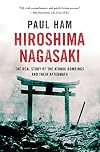
I purchased Ham’s tome because I have long held a genuine sense that I really did not have my head around the complexities of the Japanese bombing. Coming from my perspective, driven not least by exhaustive readings of the theology of Jürgen Moltmann, that the world changed dreadfully on July 16, 1945, when the obscenely named Trinity was detonated in the New Mexico desert, I realized I simply did not know enough about the circumstances and mindset that led up to its dark successors, show more Little Boy and Fat Man. Here was a chance to rectify the black hole in my knowledge pool.
What an outstanding resource Paul Ham has provided. No one-eyed the USA can do no wrong reader will agree – or probably even persevere, but to this reader it seemed that Ham skillfully negotiates pitfalls of doctrinaire anti-Americanism, blind pacifism, and plastic militarism with overwhelming skill. Few figures in the tragic narrative of preparation for, delivery of, and aftermath to Hiroshima and Nagasaki come out of the narrative unscathed, yet simultaneously few emerge as unambivalent villains. Ham has no sympathy for after the event hanky-wringers (Oppenheimer, for example) or Ramboesque opportunists (LeMay, though not responsible for nuclear warfare, Groves, who was), nor tries to exonerate the Japanese from a vile period of sub-human cruelty. Certainly, as others have noticed, Ham is of the opinion that a militaristic nose-thumbing at the emerging Soviet superpower underscores the saga and its aftermath, but he does not ultimately claim there can be nor ever could have been a naïve return of the nuclear genie to her bottle. Truman comes out of the narrative badly, but Ham’s case is well presented. If heroes emerge from the chronicle it is the survivors, those hibakusha maimed beyond belief who dared to rise from the ashes of their respective cities and live again, those who like Tagashi Nagai spent their every last ounce of life force trying to ameliorate the plight of the dying and the grieving, those who strove to build a just Japan.
Would that this volume could be on the reading list of every final year secondary school curriculum (and the reading list of every undergraduate curriculum, from physics to theology, sociology to economics). Ham’s writing is extraordinarily compulsive, and the torrid tale he tells, and the exhaustive research he utilizes to corroborate his case, ensures that no reader could digest his work while believing that a nuclear arsenal can save or redeem the world. Sadly the world that was born on the day Trinity exploded has not in any temporal sense been redeemed: referring to the Dr Strangelove figure Dr Edward Teller, Ham observes (ruefully, it seems) “posterity had judged him and the exponents of MAD [mutually assured destruction], partly correct, insofar as mankind had avoided a nuclear war through the assurance of mutual annihilation; that does not mean, of course, that it will not happen, and the dire uncertainty and immense expenditure of maintaining the balance of mutually assured death has turned the minds of enlightened leaders to the policy of nuclear disarmament.” (468). As he glances into a post Nagasaki world, a post Bay of Pigs world, a post Berlin Wall world, Ham observes that it was in the end economic, not military forces that drove the Soviet bravado to its knees and that there is no guarantee that a tin pot state (my words, not Ham’s) or rampant nationalistic or religious fundamentalist breakaway group will not detonate nuclear winter. show less
What an outstanding resource Paul Ham has provided. No one-eyed the USA can do no wrong reader will agree – or probably even persevere, but to this reader it seemed that Ham skillfully negotiates pitfalls of doctrinaire anti-Americanism, blind pacifism, and plastic militarism with overwhelming skill. Few figures in the tragic narrative of preparation for, delivery of, and aftermath to Hiroshima and Nagasaki come out of the narrative unscathed, yet simultaneously few emerge as unambivalent villains. Ham has no sympathy for after the event hanky-wringers (Oppenheimer, for example) or Ramboesque opportunists (LeMay, though not responsible for nuclear warfare, Groves, who was), nor tries to exonerate the Japanese from a vile period of sub-human cruelty. Certainly, as others have noticed, Ham is of the opinion that a militaristic nose-thumbing at the emerging Soviet superpower underscores the saga and its aftermath, but he does not ultimately claim there can be nor ever could have been a naïve return of the nuclear genie to her bottle. Truman comes out of the narrative badly, but Ham’s case is well presented. If heroes emerge from the chronicle it is the survivors, those hibakusha maimed beyond belief who dared to rise from the ashes of their respective cities and live again, those who like Tagashi Nagai spent their every last ounce of life force trying to ameliorate the plight of the dying and the grieving, those who strove to build a just Japan.
Would that this volume could be on the reading list of every final year secondary school curriculum (and the reading list of every undergraduate curriculum, from physics to theology, sociology to economics). Ham’s writing is extraordinarily compulsive, and the torrid tale he tells, and the exhaustive research he utilizes to corroborate his case, ensures that no reader could digest his work while believing that a nuclear arsenal can save or redeem the world. Sadly the world that was born on the day Trinity exploded has not in any temporal sense been redeemed: referring to the Dr Strangelove figure Dr Edward Teller, Ham observes (ruefully, it seems) “posterity had judged him and the exponents of MAD [mutually assured destruction], partly correct, insofar as mankind had avoided a nuclear war through the assurance of mutual annihilation; that does not mean, of course, that it will not happen, and the dire uncertainty and immense expenditure of maintaining the balance of mutually assured death has turned the minds of enlightened leaders to the policy of nuclear disarmament.” (468). As he glances into a post Nagasaki world, a post Bay of Pigs world, a post Berlin Wall world, Ham observes that it was in the end economic, not military forces that drove the Soviet bravado to its knees and that there is no guarantee that a tin pot state (my words, not Ham’s) or rampant nationalistic or religious fundamentalist breakaway group will not detonate nuclear winter. show less
A fascinating account of the buildup and background to the dropping of the two atomic bombs on Japan and the aftermath. A lot of research obviously went into this book, and although I have read accounts before, those were mainly to do with the horrendous experiences of the survivors. This book makes it very clear exactly what drove the handful of men who controlled the entire Japanese war machine, and their lack of concern with one exception - a man who was always overruled - for the show more ordinary people. They were just cannon fodder or expected to live off starvation rations - a lot of children died of malnutrition - while labouring to demolish buildings and create firebreaks in the cities which by then were experiencing devastating icendiary bombing raids by the US airforce. Even children as young as 12 were conscripted while the mindless propaganda continued to insist that Japan was winning the war. As long as these civilians 'died with honour', that was all that mattered to those who ruled over them.
Behind the scenes, the heads of the military were resistant to the increasing conviction of the civilian members of the government that a peace had to be brokered - but the stumbling block was the US insistence on unconditional surrender. The Emperor had to be preserved and this had not been guaranteed. The book documents the peace 'feelers' these top officials put out, through various channels, the chief one being via the ambassador to the Soviet Union who was expected to convince the Russian goverment to be the mediator of an end to the war despite the - unusual for the time - blunt and determined attempts by that ambassador to explain to his superiors that the Russians had no interest in doing that and were in fact building up to break their agreement with Japan. The strange system of government in Japan at the time - where the Emperor was literally a living god but was also rarely expected to voice his own opinion and where, if he said that Japan should surrender, it would be seen as influence from corrupt officials who would then be fair game for assassination - meant that despite crippling losses and a mounting death toll from the conventional bombing, there was no will among the military or their leaders to cease fighting.
Contrary to the impression which has been given by the US government since the end of WWII, the bombing of Hiroshima and Nagasaki are shown in the book to be of no consequence to the Japanese rulers. The chief reason for their finally agreeing to surrender was that the Soviet Union had declared war on Japan and was invading Japanese conquered territory in China. It was useful as an excuse - the Emperor for one used this in his broadcast to the general population that it was to save them from a cruel new weapon, but in his broadcast to the remnant of the Japanese fighting forces, he didn't mention it - in that, the reason given was that the Soviet Union had declared war and there was no point fighting such an overwhelmingly superior force. The author shows that the Japanese would most likely have surrendered without the dropping of atomic weapons, certainly without Nagasaki being bombed, and could have been induced to give up due to the blockade which had starved the country of all raw materials and fuel and food supplies. The decision had already been made in the US government not to invade, even before the atomic bomb had been tested, so there certainly was no saving of huge numbers of American lives as the public have always been told despite the few dissenting voices.
After the war, the US officials clamped down on news of radiation sickness and confiscated the documentation of Japanese doctors who tried to research it, as well as refusing to hand over any medical supplies to those desperately struggling medical professionals. At the same time, with inducements of food - or sweets to children - they induced Japanese who had felt the effects of the bomb or its aftermath to submit to tests, and did not provide any treatment. The whole attitude was one of extreme callousness. I had read about this before, but here it forms part of the continuous narrative of self serving and self deceiving attitudes among certain men in power in the occupation forces. Some did speak out, but reports were hushed up and so on.
In general, this is an illuminating book which raises moral questions such as how is it possible for countries which prided themselves on being Christian and democratic to inflict such horrendous suffering on a civilian population - commencing with the carpet bombing with incendiaries and high explosives and culminating in nuclear holocaust. As Ham shows, the Allies had condemned the barbaric treatment of prisoners and those conquered by Germany and Japan, and yet in effect had sunk to the same level. The only thing that holds this book back from a 5 star rating for me is that it is very focused on the US role in the Pacific and does not even acknowledge that the Royal Navy had a role in the Pacific war, which is an attitude shown in Hollywood portrayals for some years. A small acknowledgement of the British contribution in WWII would have provided a little balance. show less
Behind the scenes, the heads of the military were resistant to the increasing conviction of the civilian members of the government that a peace had to be brokered - but the stumbling block was the US insistence on unconditional surrender. The Emperor had to be preserved and this had not been guaranteed. The book documents the peace 'feelers' these top officials put out, through various channels, the chief one being via the ambassador to the Soviet Union who was expected to convince the Russian goverment to be the mediator of an end to the war despite the - unusual for the time - blunt and determined attempts by that ambassador to explain to his superiors that the Russians had no interest in doing that and were in fact building up to break their agreement with Japan. The strange system of government in Japan at the time - where the Emperor was literally a living god but was also rarely expected to voice his own opinion and where, if he said that Japan should surrender, it would be seen as influence from corrupt officials who would then be fair game for assassination - meant that despite crippling losses and a mounting death toll from the conventional bombing, there was no will among the military or their leaders to cease fighting.
Contrary to the impression which has been given by the US government since the end of WWII, the bombing of Hiroshima and Nagasaki are shown in the book to be of no consequence to the Japanese rulers. The chief reason for their finally agreeing to surrender was that the Soviet Union had declared war on Japan and was invading Japanese conquered territory in China. It was useful as an excuse - the Emperor for one used this in his broadcast to the general population that it was to save them from a cruel new weapon, but in his broadcast to the remnant of the Japanese fighting forces, he didn't mention it - in that, the reason given was that the Soviet Union had declared war and there was no point fighting such an overwhelmingly superior force. The author shows that the Japanese would most likely have surrendered without the dropping of atomic weapons, certainly without Nagasaki being bombed, and could have been induced to give up due to the blockade which had starved the country of all raw materials and fuel and food supplies. The decision had already been made in the US government not to invade, even before the atomic bomb had been tested, so there certainly was no saving of huge numbers of American lives as the public have always been told despite the few dissenting voices.
After the war, the US officials clamped down on news of radiation sickness and confiscated the documentation of Japanese doctors who tried to research it, as well as refusing to hand over any medical supplies to those desperately struggling medical professionals. At the same time, with inducements of food - or sweets to children - they induced Japanese who had felt the effects of the bomb or its aftermath to submit to tests, and did not provide any treatment. The whole attitude was one of extreme callousness. I had read about this before, but here it forms part of the continuous narrative of self serving and self deceiving attitudes among certain men in power in the occupation forces. Some did speak out, but reports were hushed up and so on.
In general, this is an illuminating book which raises moral questions such as how is it possible for countries which prided themselves on being Christian and democratic to inflict such horrendous suffering on a civilian population - commencing with the carpet bombing with incendiaries and high explosives and culminating in nuclear holocaust. As Ham shows, the Allies had condemned the barbaric treatment of prisoners and those conquered by Germany and Japan, and yet in effect had sunk to the same level. The only thing that holds this book back from a 5 star rating for me is that it is very focused on the US role in the Pacific and does not even acknowledge that the Royal Navy had a role in the Pacific war, which is an attitude shown in Hollywood portrayals for some years. A small acknowledgement of the British contribution in WWII would have provided a little balance. show less
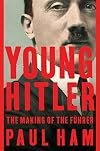
How did a young man who wanted to be an artist end up one of the most reviled, evil men of recent history? As a mother, I have often wondered what horrible mistakes his family must have made to raise a son that ordered the deaths of millions of people. It turns out the answer really isn't as simple as a bad childhood or abuse or whatever go-to reason we might ascribe to it today. Paul Ham's book on the youth and young adulthood of Adolph Hitler is well researched and points out some pivotal show more times in the creation of a monster.
The book not only includes information about Hitler's upbringing and young life, but also the history of politics and social upheaval in Germany, Austria and Europe at the time. All of those historical elements set the scene for Hitler to develop into the dictator he became. His life moving from soldier to revolutionary to political leader to dictator is fascinating and sad at the same time. I wonder what would have become of Hitler had he been accepted into art school as a young man, instead of being rejected? In the end, I guess it really doesn't matter what "might have been'' as history can't be changed. But it is thought provoking to think that one or two small changes in this man's life might have prevented the deaths of millions across Europe.
Ham obviously put much research and thought into his book. He did say that tracing facts about family lineage and youth of the Fuhrer is difficult because many of the records were destroyed by the Nazi party so they could build him up as a perfect leader. They created lies and propaganda to cover up the illegitimacy and questionable background of one of his parents and anything deemed less than stellar in his background. The author does not present Hitler in a totally negative light. He shares the good and bad that he discovered about Hitler as a young man. He was not born totally evil. He morphed into it over years. And, as we all know, absolute power corrupts absolutely.
All in all, a very interesting book and I learned a lot that I didn't know. It is a hard subject to read about as I had family members who fought in the war, and extended family in Germany who were killed. I read the book in small doses....when it got to be too much, I would take a break and come back after a rest from it. As a mother I'm glad I read this book. It shows that the sum of a man's adult decisions do not necessarily stem from his upbringing, but as a total of his life experiences, environment, outside influences and other factors. I can't imagine what it would be like to be the parent of a evil, murderous person. Hitler's mother died in 1907 way before her son killed anyone. I'm glad that she never knew what her little boy would grow up to become. And, I'm sorry that little boy ended up the way he did. Nobody is born evil. It's unfortunate that he made the life choices that he did. Not out of concern for him.....but for the millions of people that he had murdered. My family members....and the family of so many, many others. Sad.
Great book! Very well documented. The facts are presented in an interesting fashion without becoming dry, tedious or repetitive as some non-fiction books can be. I'm definitely going to read more non-fiction by this author!
**I voluntarily read an advance readers copy of this book from Pegasus Books/W.W. Norton via NetGalley. All opinions expressed are entirely my own.** show less
The book not only includes information about Hitler's upbringing and young life, but also the history of politics and social upheaval in Germany, Austria and Europe at the time. All of those historical elements set the scene for Hitler to develop into the dictator he became. His life moving from soldier to revolutionary to political leader to dictator is fascinating and sad at the same time. I wonder what would have become of Hitler had he been accepted into art school as a young man, instead of being rejected? In the end, I guess it really doesn't matter what "might have been'' as history can't be changed. But it is thought provoking to think that one or two small changes in this man's life might have prevented the deaths of millions across Europe.
Ham obviously put much research and thought into his book. He did say that tracing facts about family lineage and youth of the Fuhrer is difficult because many of the records were destroyed by the Nazi party so they could build him up as a perfect leader. They created lies and propaganda to cover up the illegitimacy and questionable background of one of his parents and anything deemed less than stellar in his background. The author does not present Hitler in a totally negative light. He shares the good and bad that he discovered about Hitler as a young man. He was not born totally evil. He morphed into it over years. And, as we all know, absolute power corrupts absolutely.
All in all, a very interesting book and I learned a lot that I didn't know. It is a hard subject to read about as I had family members who fought in the war, and extended family in Germany who were killed. I read the book in small doses....when it got to be too much, I would take a break and come back after a rest from it. As a mother I'm glad I read this book. It shows that the sum of a man's adult decisions do not necessarily stem from his upbringing, but as a total of his life experiences, environment, outside influences and other factors. I can't imagine what it would be like to be the parent of a evil, murderous person. Hitler's mother died in 1907 way before her son killed anyone. I'm glad that she never knew what her little boy would grow up to become. And, I'm sorry that little boy ended up the way he did. Nobody is born evil. It's unfortunate that he made the life choices that he did. Not out of concern for him.....but for the millions of people that he had murdered. My family members....and the family of so many, many others. Sad.
Great book! Very well documented. The facts are presented in an interesting fashion without becoming dry, tedious or repetitive as some non-fiction books can be. I'm definitely going to read more non-fiction by this author!
**I voluntarily read an advance readers copy of this book from Pegasus Books/W.W. Norton via NetGalley. All opinions expressed are entirely my own.** show less
Lists
Awards


You May Also Like


Associated Authors
Statistics
- Works
- 20
- Members
- 1,023
- Popularity
- #25,180
- Rating
- 3.9
- Reviews
- 27
- ISBNs
- 143
- Languages
- 2