
Kate Milford
Author of Greenglass House
About the Author
Kate Milford is originally from Annapolis, Maryland. She is the author of The Boneshaker, The Broken Lands, The Kairos Mechanism, Bluecrowne, and Greenglass House, which was long-listed for the National Book Award. She is also a New York Times Best Seller from 2016. (Bowker Author Biography)
Image credit: credit: ageofsteam
Series
Works by Kate Milford
Super Puzzletastic Mysteries: Short Stories for Young Sleuths from Mystery Writers of America (2020) 147 copies, 2 reviews
Greenglass House Series 5 Books Set 2 copies
Associated Works
Shadowhunters and Downworlders: A Mortal Instruments Reader (2013) — Contributor — 470 copies, 18 reviews
Tagged
Common Knowledge
- Birthdate
- 1976
- Gender
- female
- Nationality
- USA
- Birthplace
- Annapolis, Maryland, USA
- Associated Place (for map)
- Maryland, USA
Members
Reviews
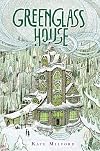
Utterly charming, with an old-fashioned vibe that gives the impression that it was the inspiration for [b:The Westing Game|884562|The Westing Game|Ellen Raskin|https://images.gr-assets.com/books/1327934000s/884562.jpg|869832] rather than the other way round. I love all the made-up books and games and words... but I'm glad to learn that [b:The Holly-Tree Inn|4906066|The Holly-Tree Inn|Charles Dickens|https://images.gr-assets.com/books/1328300304s/4906066.jpg|4971585] by [a:Charles show more Dickens|239579|Charles Dickens|https://images.gr-assets.com/authors/1387078070p2/239579.jpg] is real, and I will be reading that. The name of Milo, of course, must be from [b:The Phantom Tollbooth|378|The Phantom Tollbooth|Norton Juster|https://images.gr-assets.com/books/1438887022s/378.jpg|1782584].
I love all the individual characters. Some are more simply sketched than others, but all add value. One, for example, just shows us how to offer comfort: "He didn't ask if Milo was okay, or if he needed a tissue, or if he wanted to be left alone for a little. He just stayed there and kept Milo company." Love that the parents are very present, very loving, but that Milo still gets to have as much adventure as if he were the stereotypical MG orphan.
The plot and the setting are fantastical, but in a good way, with the dichotomy of the juicy historical fantasy contrasted with the actual setting of the 'present day', but in an inn that apparently doesn't have TV or access to a cell-phone tower... it's all rather slippery....
I bet the audio is pretty good, but I'd avoid it. You don't want to miss the little illustrations, or the ability to flip back and check on something. You also want to have a cup of hot chocolate, or at least cider, while reading this, as the winter storm, and the measures the characters take to alleviate the chill, are characters in their own right. There's also an author's note explaining the background of the story, including an explanation of Milford's pending adoption of a Chinese orphan. (I wonder if it's gone through, and business w/ that is slowing down production of the sequel.)
Normally I read only the first book of an adventure series because I don't like adventures and am just reading it for the world-building. But this is much more than an adventure, and so I'm thrilled to learn that a sequel to this is planned, and will reread this when I can get that. Also I learned that the author's other books are set in the same world and so I will investigate them.
I feel like I'm not doing the book justice, but rather than struggle to say something more, let me just highly recommend this to interested readers, with the caveat that it may not have universal appeal. show less
I love all the individual characters. Some are more simply sketched than others, but all add value. One, for example, just shows us how to offer comfort: "He didn't ask if Milo was okay, or if he needed a tissue, or if he wanted to be left alone for a little. He just stayed there and kept Milo company." Love that the parents are very present, very loving, but that Milo still gets to have as much adventure as if he were the stereotypical MG orphan.
The plot and the setting are fantastical, but in a good way, with the dichotomy of the juicy historical fantasy contrasted with the actual setting of the 'present day', but in an inn that apparently doesn't have TV or access to a cell-phone tower... it's all rather slippery....
I bet the audio is pretty good, but I'd avoid it. You don't want to miss the little illustrations, or the ability to flip back and check on something. You also want to have a cup of hot chocolate, or at least cider, while reading this, as the winter storm, and the measures the characters take to alleviate the chill, are characters in their own right. There's also an author's note explaining the background of the story, including an explanation of Milford's pending adoption of a Chinese orphan. (I wonder if it's gone through, and business w/ that is slowing down production of the sequel.)
Normally I read only the first book of an adventure series because I don't like adventures and am just reading it for the world-building. But this is much more than an adventure, and so I'm thrilled to learn that a sequel to this is planned, and will reread this when I can get that. Also I learned that the author's other books are set in the same world and so I will investigate them.
I feel like I'm not doing the book justice, but rather than struggle to say something more, let me just highly recommend this to interested readers, with the caveat that it may not have universal appeal. show less

The year is 1810, and Lucy Bluecrowne, dismayed at the prospect of being exiled from her long-time home aboard her father's ship, the Left-Handed Fate, does her best to accept these new "orders," and to reconcile herself to her new life on land. It helps that she will be living with her stepmother, Xiaoming, and her half brother Liao, and that her father has constructed the marvelous Greenglass House for her, based on all of the houses she has admired over the years, in their various ports show more of call. Lucy's feelings about these living arrangements are soon overshadowed however, as two nefarious characters - one a time-travelling villain more than willing to kill to get what he wants, the other a man with a supernatural talent for incendiary activities - target Liao. Can Lucy, always known for her cool head and strategic thinking, rescue her little brother? And what role will Xiaoming, who is not exactly what she seems, play in it all...?
Having greatly enjoyed Kate Milford's Greenglass House and Ghosts of Greenglass House, I was eager to pick up Bluecrowne, and learn bit about the family which first built this marvelous house, and the life of Nagspeake in a different time period. Unfortunately, despite my high expectations, at first I didn't particularly take to the story. Perhaps I was expecting a bit more about the house - one of my favorite "characters" in Milford's books - or perhaps I simply was missing Milo and the other beloved characters from the earlier Greenglass House books. Whatever the case may be, although I enjoyed the first half of this one, I didn't love it. Then, picking it up after a week's break, I simply raced through the second half, finding it immensely engaging. Perhaps I just wasn't in the right frame of mind, while reading the first half. Whatever the case may be, I ended up enjoying Bluecrowne immensely, even if there wasn't enough about Greenglass House itself in it, and finished it with a desire to track down the rest of the author's books. Lucy and Liao's adventures continue in The Left-Handed Fate, which will probably be the nest one I read, but other characters appear in such titles as The Boneshaker, The Broken Lands and The Kairos Mechanism. I anticipate lots of happy reading ahead, which is a lovely way to finish a book! Recommended to Milford fans, and to anyone who enjoyed the Greenglass House books. show less
Having greatly enjoyed Kate Milford's Greenglass House and Ghosts of Greenglass House, I was eager to pick up Bluecrowne, and learn bit about the family which first built this marvelous house, and the life of Nagspeake in a different time period. Unfortunately, despite my high expectations, at first I didn't particularly take to the story. Perhaps I was expecting a bit more about the house - one of my favorite "characters" in Milford's books - or perhaps I simply was missing Milo and the other beloved characters from the earlier Greenglass House books. Whatever the case may be, although I enjoyed the first half of this one, I didn't love it. Then, picking it up after a week's break, I simply raced through the second half, finding it immensely engaging. Perhaps I just wasn't in the right frame of mind, while reading the first half. Whatever the case may be, I ended up enjoying Bluecrowne immensely, even if there wasn't enough about Greenglass House itself in it, and finished it with a desire to track down the rest of the author's books. Lucy and Liao's adventures continue in The Left-Handed Fate, which will probably be the nest one I read, but other characters appear in such titles as The Boneshaker, The Broken Lands and The Kairos Mechanism. I anticipate lots of happy reading ahead, which is a lovely way to finish a book! Recommended to Milford fans, and to anyone who enjoyed the Greenglass House books. show less

Milo Pine, his family, and a number of his friends return in this marvelous follow-up to Greenglass House, one which is every bit as atmospheric, every bit as mysterious, and every bit as involving as its predecessor. It is Christimas-time again, and Milo, still smarting from some recent experiences at school with an insensitive teacher, is attempting in vain to get into the holiday spirit. Missing Meddy, who hasn't shown herself since the previous year, Milo is excited when Clem and Georgie show more return to the inn, this time on the lam from some shady confederates. Having attempted a heist involving artefacts that once belonged to Violet Cross - Nagspeake's most famous runner (i.e.: smuggler) - the girls come to Greenglass House to hide out, when things go wrong. No sooner have they arrived however, than an odd assortment of strangers once again descends upon the inn, this time in the form of the Waits - a group of Christmas carolers who preserve the ancient traditions of the season. Now the Pines once again have a packed house, and Milo must solve a number of different mysteries. Is Cantlebone - a legendary thief admired by both Georgie and Clem - also after the Violet Cross haul, and has he come to Greenglass House? Is there an agent of Gilawfer, the unscrupulous fence who is tracking Clem and Georgie, in the mix? Who is Emmett Syebuck, the overly enthusiastic art student who never seems to want to leave? Will Milo be able to answer these and other questions, and will he be able to reunite the two eponymous ghosts of Greenglass House - Meddy, and her father, Doc Holystone...?
It's quite rare that I enjoy a sequel more than the original book, but Ghosts of Greenglass House is such a delightful, charming tale, one that I found appealing on so many different levels, that I think it safe to say that it is one of those deviations from the rule. With one small exception (more on that later), I loved everything about this book, from the front cover - artwork here is provided by the talented Jaime Zollars, who also worked on the first book - to the final page. I loved the Christmas-time setting, and found Greenglass House itself just as much of a character in its own right, as in the first book. I always appreciate authors who can make you feel invested in place, who can create such an engrossing locale/environment, that you feel that the story simply wouldn't be the same, without that setting. Kate Milford certainly has done that here, and I am eager to jump into the third Greenglass House book, Bluecrowne! I also loved the Christmas doings and customs introduced by the band of Waits, all of which are based on some very ancient real-world folklore and beliefs. The figures of the sweep and the hobby horse, and the details about the latter in particular, are just fascinating. Milford captures the eldritch charm and beauty of this ghostly equine figure, both in the scene in which the Waits come to Greenglass House, and in the inset story related by Lucy, later on in the book. The role played by the hobby horse, toward the conclusion of the book, is both spine-chilling and (oddly) heartwarming. I loved the deepening sense of Nagspeake and the Skidwrack as places here, and the greater knowledge we are given of them in the story. It's clear that Nagspeake is some kind of independent political entity, located (I believe) somewhere in the Middle Atlantic region of the United States. The importance of story itself, something also touched upon in Greenglass House, is expanded upon here, and the tales told by some of the Waits, addressing the history and nature of the Liberty of Gammerbund - a semi-autonumous area within Nagspeake - were intensely involving, and absolutely amazing. I love the story within a story structure, one that is well established in world literature (everything from Chaucer's The Canterbury Tales to Rowling's Harry Potter and the Deathly Hallows), and can't wait for the publication of The Raconteur's Commonplace Book, a collection mentioned in both novels, which sets out some of the tales told in Milford's fictional world of Nagspeake. The characters all felt vibrantly alive, and I enjoyed returning to those of them who also appeared in the first book, and meeting those that were debuting here. Clem and George were more appealing than ever, as were Meddy and Milo. As for Marzana andher parents , I hope to see more of them in the future! Finally, I loved the resolution of this second mystery, precisely because I thought I saw everything coming, after the surprises at the conclusion of the first book, but was proved wrong. I felt sure I was prepared, but there were reveals that I didn't expect at all - well done, Kate Milford, in pulling that off a second time!
As should be apparent, I enjoyed Ghosts of Greenglass House immensely, and it really would have been one of my rare five-star books, were it not for a single discordant note (the aforementioned exception). Although I do appreciate the sensitive way that Milford dealt with Milo's mixed feelings about being a Chinese adoptee of a white couple, both here and in the previous book, I thought there was something of a lack of clarity, in the way she handled the issue of Milo's teacher, and how one should approach a situation in which people have competing ideas and perceptions about history and/or culture. It's clear that the teacher is a bit arrogant and "know-it-all-ish" (as Milo would put it), as he refuses to listen to Milo, when he tries to mention the partial Chinese heritage of the builders of Greenglass House. Mr. Chancelor thinks he knows the history of Nagspeake better, and Milo is so distraught about the situation that he never presents any evidence or aguments to back up his counter-claim. It's worth noting that Mr. Chancelor is insensitive and a little clueless, as evidenced by his assumption that Milo will be able to understand Chinese, just because of his ethnic identity. I liked how these issues were discussed, both between Milo and his father, and between Milo and Owen, Clem's fiancee, who is (like Milo) also a Chinese adoptee of a white couple. Where it all broke down for me was in the scene in which Milo realizes that he has hurt Marzana, with his story about Violet Cross, and his further realization that he, in his subsequent discussion with her, is inadvertently playing the role of Mr. Chancelor. I thought that this provided the perfect opportunity for him to gain a little insight into his own situation, and to grow a little in wisdom, at it concerns how we communicate with one another, and what to do when we disagree. After all, here's someone (Marzana) who is distraught at the fact that he has presented a historical narrative (a story about Violet Cross) that is (in her view) wrong. Although her hurt is apparent, and is addressed by Milo immediately (to his credit), its cause is not (at least, until much later), and she refuses to elaborate. Like Milo himself, she refuses to present an argument more extensive than "you're wrong." Rather than leading him to a moment of understanding of his own situation, a moment in which he realizes that if he wants Mr. Chancelor to acknowledge his point (about Greenglass House specifically, and about Nagspeake in general), he will have to provide something more than his feelings - he will have to make a compelling argument, and present evidence to back it up - he instead is simply horrified about the emotional aspect of it all, and his role in hurting another. Now this is a very minor scene, in an otherwise outstanding novel, but it highlights a wider social problem that has really been bothering me recently, which is this idea that emotion trumps reason, and that argument and evidence are irrelevant, in the face of that emotion. I believe that this is an immensely harmful outlook, one that is becoming increasingly dominant in our current cultural zeitgeist, and one that can lead us to very dark places. Does this one scene ruin the book? By no means, this is still a high 4.5-star title for me. Do I think it is a "mistake?" No, but I do think it reveals a philosophical difference between myself and the author, one that, given the strength of my belief on the subject, detracted from my enjoyment.
No doubt others will perceive this matter differently, and it is (as I have acknowledged) a minor scene within the story, so I would not hesitate to recommend this one to other readers who enjoyed Greenglass House. After all, the positives here far, far outweigh this one negative. Marvelously written, intricately constructed, wonderfully conceived - this is an outstanding children's novel. I hope that Milford will bring us more of Milo and all his friends, and much more from Nagspeake, the Skidwrack, and the Liberty... show less
It's quite rare that I enjoy a sequel more than the original book, but Ghosts of Greenglass House is such a delightful, charming tale, one that I found appealing on so many different levels, that I think it safe to say that it is one of those deviations from the rule. With one small exception (more on that later), I loved everything about this book, from the front cover - artwork here is provided by the talented Jaime Zollars, who also worked on the first book - to the final page. I loved the Christmas-time setting, and found Greenglass House itself just as much of a character in its own right, as in the first book. I always appreciate authors who can make you feel invested in place, who can create such an engrossing locale/environment, that you feel that the story simply wouldn't be the same, without that setting. Kate Milford certainly has done that here, and I am eager to jump into the third Greenglass House book, Bluecrowne! I also loved the Christmas doings and customs introduced by the band of Waits, all of which are based on some very ancient real-world folklore and beliefs. The figures of the sweep and the hobby horse, and the details about the latter in particular, are just fascinating. Milford captures the eldritch charm and beauty of this ghostly equine figure, both in the scene in which the Waits come to Greenglass House, and in the inset story related by Lucy, later on in the book. The role played by the hobby horse, toward the conclusion of the book, is both spine-chilling and (oddly) heartwarming. I loved the deepening sense of Nagspeake and the Skidwrack as places here, and the greater knowledge we are given of them in the story. It's clear that Nagspeake is some kind of independent political entity, located (I believe) somewhere in the Middle Atlantic region of the United States. The importance of story itself, something also touched upon in Greenglass House, is expanded upon here, and the tales told by some of the Waits, addressing the history and nature of the Liberty of Gammerbund - a semi-autonumous area within Nagspeake - were intensely involving, and absolutely amazing. I love the story within a story structure, one that is well established in world literature (everything from Chaucer's The Canterbury Tales to Rowling's Harry Potter and the Deathly Hallows), and can't wait for the publication of The Raconteur's Commonplace Book, a collection mentioned in both novels, which sets out some of the tales told in Milford's fictional world of Nagspeake. The characters all felt vibrantly alive, and I enjoyed returning to those of them who also appeared in the first book, and meeting those that were debuting here. Clem and George were more appealing than ever, as were Meddy and Milo. As for Marzana and
As should be apparent, I enjoyed Ghosts of Greenglass House immensely, and it really would have been one of my rare five-star books, were it not for a single discordant note (the aforementioned exception). Although I do appreciate the sensitive way that Milford dealt with Milo's mixed feelings about being a Chinese adoptee of a white couple, both here and in the previous book, I thought there was something of a lack of clarity, in the way she handled the issue of Milo's teacher, and how one should approach a situation in which people have competing ideas and perceptions about history and/or culture. It's clear that the teacher is a bit arrogant and "know-it-all-ish" (as Milo would put it), as he refuses to listen to Milo, when he tries to mention the partial Chinese heritage of the builders of Greenglass House. Mr. Chancelor thinks he knows the history of Nagspeake better, and Milo is so distraught about the situation that he never presents any evidence or aguments to back up his counter-claim. It's worth noting that Mr. Chancelor is insensitive and a little clueless, as evidenced by his assumption that Milo will be able to understand Chinese, just because of his ethnic identity. I liked how these issues were discussed, both between Milo and his father, and between Milo and Owen, Clem's fiancee, who is (like Milo) also a Chinese adoptee of a white couple. Where it all broke down for me was in the scene in which Milo realizes that he has hurt Marzana, with his story about Violet Cross, and his further realization that he, in his subsequent discussion with her, is inadvertently playing the role of Mr. Chancelor. I thought that this provided the perfect opportunity for him to gain a little insight into his own situation, and to grow a little in wisdom, at it concerns how we communicate with one another, and what to do when we disagree. After all, here's someone (Marzana) who is distraught at the fact that he has presented a historical narrative (a story about Violet Cross) that is (in her view) wrong. Although her hurt is apparent, and is addressed by Milo immediately (to his credit), its cause is not (at least, until much later), and she refuses to elaborate. Like Milo himself, she refuses to present an argument more extensive than "you're wrong." Rather than leading him to a moment of understanding of his own situation, a moment in which he realizes that if he wants Mr. Chancelor to acknowledge his point (about Greenglass House specifically, and about Nagspeake in general), he will have to provide something more than his feelings - he will have to make a compelling argument, and present evidence to back it up - he instead is simply horrified about the emotional aspect of it all, and his role in hurting another. Now this is a very minor scene, in an otherwise outstanding novel, but it highlights a wider social problem that has really been bothering me recently, which is this idea that emotion trumps reason, and that argument and evidence are irrelevant, in the face of that emotion. I believe that this is an immensely harmful outlook, one that is becoming increasingly dominant in our current cultural zeitgeist, and one that can lead us to very dark places. Does this one scene ruin the book? By no means, this is still a high 4.5-star title for me. Do I think it is a "mistake?" No, but I do think it reveals a philosophical difference between myself and the author, one that, given the strength of my belief on the subject, detracted from my enjoyment.
No doubt others will perceive this matter differently, and it is (as I have acknowledged) a minor scene within the story, so I would not hesitate to recommend this one to other readers who enjoyed Greenglass House. After all, the positives here far, far outweigh this one negative. Marvelously written, intricately constructed, wonderfully conceived - this is an outstanding children's novel. I hope that Milford will bring us more of Milo and all his friends, and much more from Nagspeake, the Skidwrack, and the Liberty... show less
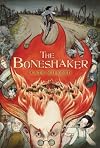
Like Bradbury’s classic Something Wicked This Way Comes, Kate Milford’s The Boneshaker is a spooky circus mystery-adventure set in a Midwestern town, and featuring young protagonists who must reckon with the insinuation of evil into their lives. Realizations about both mortality and morality loom large. The Boneshaker has more of a Western feel, though, shaded with near-apocalyptic gloom; the seductions of the circus have an even more explicitly diabolical flavor.
As protagonist, Natalie show more is an intriguing foil to the unearthly disruptions of Limberleg’s Nostrum Fair: inquisitive, skeptical, mechanically minded, a little bristly and imperious. Admirably, her inquisitiveness extends to the emotional realm, as increasingly throughout the book, she tries to get inside the heads of the people she’s known for all her life, but frequently taken for granted. From the townspeople who have encountered evil in its various forms before, including her own mother, she gleans haunting snatches of narrative that deepen the novel’s Biblical mythos and lend it an absorbing sense of grandeur and pathos.
Unfortunately, Milford’s prose, though carefully detailed, is on the flat and list-y side, even when she write scenes that should be demonically animated:
“She didn’t have to be told to run. The harlequin lunged after her. She sprinted and dodged, not caring which twists and turns she took in the maze of tents. Bells jingled overhead; the harlequin had taken to the wires again. Her feet kicked up dust and slid on old straw. The things in her arms stirred restlessly. The Amazing Quinn raced alongside and above on a wire parallel to her path.”
And so on; the rhythm and syntax remain monotonous, and the descriptive choices expected. It’s troublesome, too, that one of Natalie’s mentors seems to have been tipped out directly from the Magical Negro mold. “Nothing to do but play my guitar and dispense advice to white folks in need, doot de doo…”
What Milford does do beautifully is frame rational-minded Natalie’s collision with the realization that the world is insistently, terrifyingly irrational. Her town and the crossroads are much older and stranger than she thinks they are; many of the adults around her have known far more suffering and struggle than she could have imagined; and moreover – worst of all, even – they, too, are fallible and vulnerable. Milford has things to say, too, about the power of story and memory, and weaves in the usual YA subplot of learning to stand your ground in the face of fear and threat, but Natalie’s coming to grips with the pervasiveness of evil and mortality is by far the most affecting narrative strand.
I won’t be seeking out the sequels, but all in all, The Boneshaker was an entertaining read, both thoughtful and suspenseful, with satisfying lashings of American folklore and Christian mythology. I’d recommend it as a companion for a thunderstormy summer afternoon. show less
As protagonist, Natalie show more is an intriguing foil to the unearthly disruptions of Limberleg’s Nostrum Fair: inquisitive, skeptical, mechanically minded, a little bristly and imperious. Admirably, her inquisitiveness extends to the emotional realm, as increasingly throughout the book, she tries to get inside the heads of the people she’s known for all her life, but frequently taken for granted. From the townspeople who have encountered evil in its various forms before, including her own mother, she gleans haunting snatches of narrative that deepen the novel’s Biblical mythos and lend it an absorbing sense of grandeur and pathos.
Unfortunately, Milford’s prose, though carefully detailed, is on the flat and list-y side, even when she write scenes that should be demonically animated:
“She didn’t have to be told to run. The harlequin lunged after her. She sprinted and dodged, not caring which twists and turns she took in the maze of tents. Bells jingled overhead; the harlequin had taken to the wires again. Her feet kicked up dust and slid on old straw. The things in her arms stirred restlessly. The Amazing Quinn raced alongside and above on a wire parallel to her path.”
And so on; the rhythm and syntax remain monotonous, and the descriptive choices expected. It’s troublesome, too, that one of Natalie’s mentors seems to have been tipped out directly from the Magical Negro mold. “Nothing to do but play my guitar and dispense advice to white folks in need, doot de doo…”
What Milford does do beautifully is frame rational-minded Natalie’s collision with the realization that the world is insistently, terrifyingly irrational. Her town and the crossroads are much older and stranger than she thinks they are; many of the adults around her have known far more suffering and struggle than she could have imagined; and moreover – worst of all, even – they, too, are fallible and vulnerable. Milford has things to say, too, about the power of story and memory, and weaves in the usual YA subplot of learning to stand your ground in the face of fear and threat, but Natalie’s coming to grips with the pervasiveness of evil and mortality is by far the most affecting narrative strand.
I won’t be seeking out the sequels, but all in all, The Boneshaker was an entertaining read, both thoughtful and suspenseful, with satisfying lashings of American folklore and Christian mythology. I’d recommend it as a companion for a thunderstormy summer afternoon. show less
Lists
Awards


You May Also Like


Associated Authors
Statistics
- Works
- 14
- Also by
- 1
- Members
- 4,139
- Popularity
- #6,080
- Rating
- 3.9
- Reviews
- 153
- ISBNs
- 105
- Languages
- 4
- Favorited
- 6