

Henri Charrière (1909–1973)
Author of Papillon
About the Author
Series
Works by Henri Charrière
Papillion 28 copies
Papillon. Räddningens Öar 2 copies
Papillón 1 copy
Ο Πεταλούδας τόμος Β΄ 1 copy
Pillangó 1 copy
الفراشة 1 copy
Metulj 1 copy
Associated Works
Reader's Digest Condensed Books 1970 v04: Lone Woman / The Homecoming / Papillon / Whitewater / The Unexpected Mrs. Pollifax (1970) — Contributor — 48 copies
Readers Digest: Selezione della narrativa mondiale — Contributor — 47 copies
Papillon: A New Adventure 8 copies
Reader's Digest Auswahlbücher 70 - Unterwegs zu den Traumbergen. Papillon. Fiona. Schuhe für Adina. (1972) 3 copies
Reader's Digest Condensed Books: Fiona • Papillon • Miss One Thousand Spring Blossoms • The King's Pleasure (1970) 2 copies
De vos, de hond en... de man; Papillon; Keerpunt in een jongensleven; De spionne met het hoedje — Author — 2 copies, 1 review
Readers Digest: Den skjulte kvinde, Papillon, Den ukuelige mrs. Pollifax, Kim - en gave fra Vietnam (1971) — Author — 1 copy
Tagged
Common Knowledge
- Canonical name
- Charrière, Henri
- Other names
- Papillon
- Birthdate
- 1909-11-16
- Date of death
- 1973-07-29
- Gender
- male
- Occupations
- criminal
novelist
casino owner - Organizations
- French Navy
- Short biography
- Henri Charrière's book Papillon was published as his autobiography; but most critics now believe it is not a true account of his own life, but a mixture of events that happened to him and to many others.
- Nationality
- France
Venezuela - Birthplace
- Saint-Étienne-de-Lugdarès, Ardèche, France
- Places of residence
- Ardèche, France
Prison of St-Laurent-du-Maroni, French Guiana - Place of death
- Madrid, Spain
- Map Location
- France
Members
Reviews
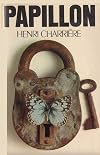
"Live, live, live. Each time I was tempted to despair, I would repeat three times: 'As long as there's life, there's hope'. "
It is 1931, and 25-year-old Henri ‘Papillon’ Charrière is convicted of murder. His sentence: life imprisonment in the infamous penal colonies of French Guiana. Papillon is innocent of the crime for which he has been condemned and he leaves France with a burning desire to escape and revenge himself upon those responsible for this miscarriage of justice.
The novel is show more semi-fictional, with even the author later admitting the autobiographical narrative to be ‘only 75% true’. The book certainly stretches the truth at times but there's also a brutal honesty about the narrative. Papillon is certainly no angel and however much he embellished the details, Charrière certainly did experience the inhuman conditions of the penal colonies and made a successful break for freedom which took some fourteen years to achieve. You have to admire his tenacity if nothing else.
"As I saw how the past faded away, growing less important in comparison with everyday life, it seemed to me that once you got to the penal settlement you must almost forget what you have been, how or why you had landed up there, and concentrate upon one thing alone – escape. I was wrong, because the most important and most engrossing thing is above all to keep yourself alive."
Unfortunately whilst the bones of an incredible story are there some wild flights of fantasy seriously undermines the readers' credulity at times. Some of the author’s purported adventures and escape attempts are likely to be based on stories Charrière heard from other prisoners, however, if the story is simply taken at face value, it's an inspirational struggle for freedom, human resilience and unlikely heroism. This is particularly true during the first half of the novel but the later chapters becomes less gripping and it begins to feel a little repetitive.
The book also contains a litany of casually racist, misogynistic and homophobic remarks which for today's readers will be difficult to overlook. Even if he was not an actual murderer, Charrière openly admits to having had sexual relations with a fifteen-year-old, a brief career as a pimp, and carried out a host of thefts, lies and acts of casual violence. Yet he clearly wants the reader to believe that he was essentially a good guy at heart, he is simply a by-product of a society that is at fault and that all criminals can turn themselves into model citizens if they are only given a chance. This is fanciful at best.
"No nation has the right to revenge itself or rush to eliminate people just because they cause society anxiety. They should be healed instead of given such inhuman punishment."
'Papillon' was a runaway success when it was published in 1969 and its easy to see why. If we are willing to but aside the fact that the book is supposedly auto-biographical and treat it as fiction it's a searing indictment of the pointless cruelty of lifelong incarceration and a rollocking boy's own adventure story. show less
It is 1931, and 25-year-old Henri ‘Papillon’ Charrière is convicted of murder. His sentence: life imprisonment in the infamous penal colonies of French Guiana. Papillon is innocent of the crime for which he has been condemned and he leaves France with a burning desire to escape and revenge himself upon those responsible for this miscarriage of justice.
The novel is show more semi-fictional, with even the author later admitting the autobiographical narrative to be ‘only 75% true’. The book certainly stretches the truth at times but there's also a brutal honesty about the narrative. Papillon is certainly no angel and however much he embellished the details, Charrière certainly did experience the inhuman conditions of the penal colonies and made a successful break for freedom which took some fourteen years to achieve. You have to admire his tenacity if nothing else.
"As I saw how the past faded away, growing less important in comparison with everyday life, it seemed to me that once you got to the penal settlement you must almost forget what you have been, how or why you had landed up there, and concentrate upon one thing alone – escape. I was wrong, because the most important and most engrossing thing is above all to keep yourself alive."
Unfortunately whilst the bones of an incredible story are there some wild flights of fantasy seriously undermines the readers' credulity at times. Some of the author’s purported adventures and escape attempts are likely to be based on stories Charrière heard from other prisoners, however, if the story is simply taken at face value, it's an inspirational struggle for freedom, human resilience and unlikely heroism. This is particularly true during the first half of the novel but the later chapters becomes less gripping and it begins to feel a little repetitive.
The book also contains a litany of casually racist, misogynistic and homophobic remarks which for today's readers will be difficult to overlook. Even if he was not an actual murderer, Charrière openly admits to having had sexual relations with a fifteen-year-old, a brief career as a pimp, and carried out a host of thefts, lies and acts of casual violence. Yet he clearly wants the reader to believe that he was essentially a good guy at heart, he is simply a by-product of a society that is at fault and that all criminals can turn themselves into model citizens if they are only given a chance. This is fanciful at best.
"No nation has the right to revenge itself or rush to eliminate people just because they cause society anxiety. They should be healed instead of given such inhuman punishment."
'Papillon' was a runaway success when it was published in 1969 and its easy to see why. If we are willing to but aside the fact that the book is supposedly auto-biographical and treat it as fiction it's a searing indictment of the pointless cruelty of lifelong incarceration and a rollocking boy's own adventure story. show less
I don't care if this book wasn't a 100% factual, honest-to-God documentary account of what actually happened to this guy - it was a magnificent adventure novel, full of blood and drama and action. From what I can tell, Charrière cobbled the narrative out of his own experiences as a prisoner in the pitiless camps of 1930s French Guyana, plus the stories of a few camp-mates, plus his own dramatic license, emerging with a masterpiece. There were many moments where the story is less than show more totally plausible (if you created a drinking game where you took a shot each time a beautiful woman befriended him out of the blue, or people started doing favors for him for no reason, or an important official preposterously took him into their trust, you would be dead drunk inside of three chapters), and yet Charrière crafted a completely absorbing tropical world of hardened criminals, miserable wretches, forbidding prisons, thrilling escapes, and all-around awesome displays of survival.
I think my favorite part, out of a lot of great parts, was Papillon's moment of agonizing choice about a third of the way in, between staying in his beautiful Venezuelan paradise with his two new-found native wives, and returning to seek "vengeance" on what he thinks is the unjust society that shipped him halfway across the world to rot in a jungle charnel house. He idiotically chooses to leave this blissful native paradise, but even when I was cursing him for being a fool I thought his reflections on the differences between the "civilized" European culture who'd condemned him and the indigenous cultures who'd adopted him were well-written and interesting in the light of the complicated relationship Western countries have had with their colonies. The French, while not exactly angels, were often more willing than their neighbors the Spanish and the British to go native and peacefully blend into the various cultures who inhabited their colonies.
While I think he overdid the Noble Savage trope a little bit, in terms of the story it makes the protagonist the perfect lone wolf badass who's as at home charming the well-to-do wives of the colonial administrators as he is getting laid with the daughters of whatever tribal chieftains he runs into. Another one of my favorite parts was his first experience in solitary at Devil's Island - I've read other books with prison scenes in them, but his description of the soul-crushing loneliness it engenders is one of the best, and was surely the prototype for countless others. And of course all his various escape attempts are amazing too, but every part of the book can't be your favorite, that's like having dessert for every meal, something only a child would do. This book hit me squarely on that kind of undiluted childish pleasure level. I wish I'd read it when I was twelve, it would have been the perfect companion to The Count of Monte Cristo and Robinson Crusoe. Now to go track down the movie! show less
I think my favorite part, out of a lot of great parts, was Papillon's moment of agonizing choice about a third of the way in, between staying in his beautiful Venezuelan paradise with his two new-found native wives, and returning to seek "vengeance" on what he thinks is the unjust society that shipped him halfway across the world to rot in a jungle charnel house. He idiotically chooses to leave this blissful native paradise, but even when I was cursing him for being a fool I thought his reflections on the differences between the "civilized" European culture who'd condemned him and the indigenous cultures who'd adopted him were well-written and interesting in the light of the complicated relationship Western countries have had with their colonies. The French, while not exactly angels, were often more willing than their neighbors the Spanish and the British to go native and peacefully blend into the various cultures who inhabited their colonies.
While I think he overdid the Noble Savage trope a little bit, in terms of the story it makes the protagonist the perfect lone wolf badass who's as at home charming the well-to-do wives of the colonial administrators as he is getting laid with the daughters of whatever tribal chieftains he runs into. Another one of my favorite parts was his first experience in solitary at Devil's Island - I've read other books with prison scenes in them, but his description of the soul-crushing loneliness it engenders is one of the best, and was surely the prototype for countless others. And of course all his various escape attempts are amazing too, but every part of the book can't be your favorite, that's like having dessert for every meal, something only a child would do. This book hit me squarely on that kind of undiluted childish pleasure level. I wish I'd read it when I was twelve, it would have been the perfect companion to The Count of Monte Cristo and Robinson Crusoe. Now to go track down the movie! show less
This is one of the handful of books that changed me inside. To read Papillon is to know what the human spirit can endure, is to find out what courage truly is. Some people say the author lied, or at least gilded his story. Maybe he did, maybe he didn't - I don't care. I only read this the once, twenty years ago, and would never do so again; I'm too jaded now, and I'd be disappointed. Some memories are best left alone. If you think you've got problems, read this book and realize you haven't.
Naysayers jumped on Henri Charriere's, aka Papillon, autobiography from the start, calling into question the truth of his harrowing tales of escapes and captures from a penal colony in French Guiana in the 1930s and 40s. The adventures detailed here may in fact not all be those of Papillon. Perhaps Charriere did synthesize the cavales of many other bagnards and claim them all as his own. But that should not really detract from the harrowing adventures contained in this book. They convey a show more truth about the brutality of the French justice system of a century ago, the capacities of man to be cruel and to suffer, but beyond everything the desire to be free, at any cost. After fourteen years Papillon did achieve that. We may never know the truth for sure. But we have one hell of an enjoyable book (and movie) to remember this remarkable (if somewhat unreliable) man by. show less
Lists
Awards


You May Also Like


Associated Authors
Statistics
- Works
- 21
- Also by
- 11
- Members
- 5,080
- Popularity
- #4,921
- Rating
- 4.0
- Reviews
- 87
- ISBNs
- 197
- Languages
- 20
- Favorited
- 2