
Timothy C. Winegard
Author of The Mosquito: A Human History of Our Deadliest Predator
About the Author
Works by Timothy C. Winegard
O Mosquito. A IncrIvel HistOria Do Maior Predador Da Humanidade (Em Portugues do Brasil) (2022) 7 copies, 1 review
Associated Works
Tagged
Common Knowledge
- Canonical name
- Winegard, Timothy C.
- Birthdate
- 1977
- Gender
- male
- Education
- Oxford Unversity (PhD history)
Royal Military College, Kingston, Ontario (MA war studies)
Nipissing University (BEd)
University of Western Ontario (BA) - Occupations
- professor
- Organizations
- Laurier Centre for Military Strategic and Disarmament Studies
Colorado Mesa University - Map Location
- Canada
Members
Reviews
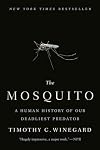
I found this book to be a revelation. Some might quibble with scientific terminology or focus on particular of history, but mosquito-borne disease has killed half of all humans in history! Did you all know this already? Why is it not at the center of school history textbooks?
Nearly every military struggle in history has had its outcome affected by mosquitos. Christianity as a religion was significantly shaped by the mosquito. The formation of the modern world, the Columbian Exchange, the show more slave trade, all these things were inexorably shaped by diseases like Malaria and Yellow Fever.
Particularly in a time -as Winegard points out- when human defenses against maladies like Malaria are significantly weaker than they have been in the past, I find this to be a vital subject and an enthralling book. show less
Nearly every military struggle in history has had its outcome affected by mosquitos. Christianity as a religion was significantly shaped by the mosquito. The formation of the modern world, the Columbian Exchange, the show more slave trade, all these things were inexorably shaped by diseases like Malaria and Yellow Fever.
Particularly in a time -as Winegard points out- when human defenses against maladies like Malaria are significantly weaker than they have been in the past, I find this to be a vital subject and an enthralling book. show less
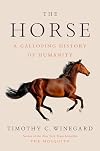
As a Certified Horse Girl and lover of footnotes, I thought this book would be a slam dunk for me. I went in with high expectations and... it was fine? It has a good number of factoids (some of which were new to me!) and a good number of historical re-frames that would probably be eye-opening to the layperson, but if you're either a horse nerd or a history nerd or both, you will find yourself scratching your head or squinting skeptically at some of the passages. This is horse-supremacy show more propaganda, which I'm normally sympathetic towards, but he is too eager to cherry pick data to prove that horses are "unique". There are also a few inaccuracies that imply he rushed some of his research to get to the part he was really interested in: military propaganda. Don't get me wrong, I understand that the study of history means the study of war, but he's too keen on it for my taste. His dismissal of donkeys and mules probably goes hand-in-hand with his constant implications that it is *only* battles and blood that move history. There are no recorded cavalry charges on donkeys, after all, so what good are they? show less

I enjoyed this more to begin with than by the time I finished. Not that I ever disliked it but I got frustrated when the promising initial chapters - a chapter each for the rise and fall of entire massive centuries-spanning empires - gave way to small fractions of USAn history. The subtitle promises "human history" but Africa is mentioned as backstory for the effect of mosquitoes on human genetics in general, and for Western slavery in particular; Asia is covered only as related to Genghis show more Khan, then World War Two and the Korean and Vietnam Wars; Australia and the Pacific Islands are namechecked somewhere I think; and the horrific genocides of the Indigenous peoples of the Americas are briefly discussed and then tossed aside so that chapter after chapter - fully two thirds of the book - can dwell on US colonial history.
This general bias made specific biased details really stand out, like page 286-7 which uncritically tells us that "Napoleon is credited with having crafted the only purposeful and successful deployment of biological warfare in the nineteenth century" just four pages after telling us of Louverture doing the same thing in Haiti (p.283) and two pages before telling us of how Bolivar "incorporated mosquito-borne disease into his strategy just as his predecessor Louverture had done. It was a proven war-winning strategy, and it worked for Bolivar as well" (p.289).
[Then too, the fact that the author is a historian and not a scientist is nowhere more clear than whenever he talks of organisms evolving defenses to each other as if evolution was a cunning strategem: granted his prose is vivid to the point of a deeply florid purple, but biologists worldwide would be wincing.]
All this said, what we do learn is fascinating and a really interesting 'new' point of view on history. The sheer numbers killed by mosquito-borne disease in peace-time and in war after war after war - with humans taking thousands of years to notice yeah, maybe don't fight wars in swamps, hey? I just... wanted the "human history" to cover a wider range of human history. Africa and Asia have plenty of it: it would have been nice to have spent at least a full chapter (ideally more!!) on each of them too. show less
This general bias made specific biased details really stand out, like page 286-7 which uncritically tells us that "Napoleon is credited with having crafted the only purposeful and successful deployment of biological warfare in the nineteenth century" just four pages after telling us of Louverture doing the same thing in Haiti (p.283) and two pages before telling us of how Bolivar "incorporated mosquito-borne disease into his strategy just as his predecessor Louverture had done. It was a proven war-winning strategy, and it worked for Bolivar as well" (p.289).
[Then too, the fact that the author is a historian and not a scientist is nowhere more clear than whenever he talks of organisms evolving defenses to each other as if evolution was a cunning strategem: granted his prose is vivid to the point of a deeply florid purple, but biologists worldwide would be wincing.]
All this said, what we do learn is fascinating and a really interesting 'new' point of view on history. The sheer numbers killed by mosquito-borne disease in peace-time and in war after war after war - with humans taking thousands of years to notice yeah, maybe don't fight wars in swamps, hey? I just... wanted the "human history" to cover a wider range of human history. Africa and Asia have plenty of it: it would have been nice to have spent at least a full chapter (ideally more!!) on each of them too. show less
In many ways this story of the interaction between mosquito borne diseases and humans is a well known and oft-told tale. But Winegarde manages to link it with just about every significant historical event. Is he right? Well, probably. But did Alexander the Great die of malaria as Winegarde suggests? I think the jury is out. And one has to be a little bit wary of the blithe way he tosses around statistics like 100,000 people died in Athens in 430 BCE ......35% of the population. Just how show more trustworthy are these figures? Admittedly, this review is only of the Blinkist version of the book and maybe the full book is more nuanced. Though I’ve found the Blinkist version to be pretty good when I’ve had the chance to compare with the original. Anyway, Wingarde tells a good story. And He seems to be generally correct in his claims. Though impossible to really say what outcomes might have resulted if the various armies were not stricken by Malaria or yellow fever. Heree are a few snippets from the book that encapsulate the story for me.
“Out of the 108 billion people who have ever lived in the past 200,000 years, an estimated 52 billion of them have died from mosquito-borne diseases.
Thriving in wet warm conditions, mosquitos are vectors for a variety of diseases, of which malaria is the deadliest...It’s only the female mosquito which bites us. A few days after biting us, she’ll lay about 200 of them on the surface of a stagnant body of water.
They prefer temperatures above 75 degrees Fahrenheit, whereas they cannot survive in temperatures below 50 or above 105.
There are at least 15 mosquito-borne diseases that affect human beings, and they derive from three types of pathogens: viruses, worms and parasites.....The heaviest hitter has been the parasite that causes malaria. There are five types of malaria that affect human beings, the deadliest of which are vivax and falciparum. Capable of causing 106-degree Fahrenheit fevers, seizures and comas that can lead to death rates of up to 50 percent..... As it gets passed back and forth between humans and mosquitos, the malaria parasite mutates multiple times during its multi-stage reproductive cycle.
The mutation (in West Africa) caused the haemoglobin in the blood to be shaped like a sickle, rather than an oval or a donut, like it normally is. The malaria parasite couldn’t attach itself to this new shape of haemoglobin. People with the sickle-cell trait developed up to 90% immunity. Unfortunately, they also developed an average lifespan of only 23 years...Fast forward to 1652 CE, when the Dutch started colonizing parts of southern Africa. With just a scattering of Khoisan groups living on the coast, the Dutch were easily able to occupy that area. But when they, and later the British, tried to expand inland, they encountered the powerful Xhosa and Zulu people–along with swarms of malarial mosquitos, which routed their soldiers.
Mosquito-borne malaria: a pivotal role in Greco-Persian and Peloponnesian Wars.
As the Persians invaded Greece and laid siege to Greek towns, they had to pass through and sometimes encamp near mosquito-filled swamps. A lethal combination of malaria and dysentery killed up to 40 percent of the Persian forces. As a result, at the climactic Battle of Plataea in 479 BCE, the Persians arrived with a very weakened army, which the Greeks were able to defeat......In 430 BCE, the Athenians were right on the verge of victory 9against the Spartans) when a terrible plague struck their city, killing up to 100,000 inhabitants–35 percent of its population. The cause? Probably either malaria or a mosquito-borne disease similar to yellow fever.
In 415 BCE, the Athenians began a two-year siege of Syracuse, which was an ally of Sparta. It too was surrounded by mosquito-filled swamps. By 413 BCE, up to 70 percent of Athens’ 40,000 soldiers were either dead or unfit for combat because of malaria.
Malaria brought down Alexander the Great.
Upon entering the wet and warm environs of the Indus River Valley, Alexander’s army met its toughest challenger yet. You guessed it–the mosquito....Alexander’s army couldn’t withstand the malaria outbreaks. [This seems ot be only half of the story, His veterans refused to keep going and push further into India.....In 323 BCE, at the age of only 32, Alexander the Great suddenly died of an illness–most likely malaria....Before he died, Alexander was contemplating an invasion of the Far East so things might have tuned out differently. [My understanding is that Alexander was actually contemplating moving into Arabia and then North Africa rather than pushing into the far east].
Malaria was an important factor in the rise and fall of the Roman Empire.
From ancient times to the mid-twentieth century, the Eternal City was surrounded by 310 square miles of marshland, known as the Pontine Marshes....Between 390 BCE and 429 CE, they helped to ward off one invader after another: the Gauls, the Carthaginians, the Visigoths, the Huns and the Vandals......Some of those invaders, like the Gauls, were able to sack Rome, but subsequently had to retreat because their forces were so depleted by malaria. Others, like the Carthaginians, never even got that far before the mosquitos beat them back.
At the beginning of the first century CE, the Roman Empire tried to expand into central and eastern Europe by invading the lands to the east of the Rhine River. There, the Roman legions were met with fierce resistance from Germanic tribes that forced the romans to encamp in the region’s marshlands where mosquito-borne malaria tore through their ranks.
Some of those same tribes would go on to contribute to the downfall of the Roman Empire a few centuries later, when groups like the Visigoths started invading in 408 CE.
Malaria contributed to the rise of Christianity and the failure of the Crusades.
Roman Empire linked much of Europe together. It did that literally, by roads, but also economically, politically and culturally, by trade and conquest. That set the stage for the widespread transmission of both diseases, and culture. [He misses the importance of shipping across the mediterranean and, in fact, Christianity spread faster to port cities than overland]. The early Christians believed they had a religious duty to tend to the sick, and they practiced what they preached by conducting healing rituals, providing nursing care and setting up hospitals. This made the religion very appealing to many Europeans during the third century CE, when the continent was wracked by malaria and other epidemics.
The Crusades may be seen as the first large-scale attempt of European powers to colonize lands outside of their continent....Time after time, the European armies were hobbled by malaria. The disease was endemic to the wet, low-lying coastal areas of the Levant.........During a two-year siege of the coastal city of Acre from 1189 to 1191, about 35 percent of the Christian soldiers died from malaria.
Prior to 1492, the Western hemisphere was home to plenty of mosquitos, but they didn't carry any diseases. When Europeans and enslaved Africans landed in the Americas, they unwittingly brought disease-ridden mosquitos with them.....Along with non-mosquito-transmitted diseases like influenza and smallpox, mosquito-borne diseases soon spread to the indigenous people of the hemisphere.....As early as the 1520’s malaria, smallpox and other diseases may have reached as far north as the Great Lakes and as far south as Cape Horn......In both the southeast and the southwest of what is now the United States, entire indigenous communities had been destroyed or decimated by malaria long before Europeans even stepped foot on their territories. [The same thing happened in Australia].....A combination of malaria and smallpox also devastated the mighty Aztec and Incan civilizations in the 1520s and '30s.
From 1492 to 1700, the overall indigenous population of the Western hemisphere plummeted an estimated 95 percent, from 100 million to 5 million. Most of the deaths were due to illness, rather than military conquest.
During European colonization of the Americas, the mosquito played a role in establishing both slavery and revolution.
Enslaved Africans became seen as a much more dependable and valuable source of labour because they were much more likely to survive the mosquito's deadly bite. Thus, the mosquito played a major role in the emergence and proliferation of Africans as slave labour during the European colonization of the Americas....With a combination of malaria, yellow fever and dengue, the mosquito killed or incapacitated large percentages of the armies of the European empires during the revolutionary wars that swept the Americas. In the Thirteen Colonies, those diseases rendered 40 percent of the main contingent of British soldiers unfit for service at one point in 1780......And during the Haitian Revolution of 1791 to 1804, 55,000 out of 65,000 French soldiers sent to the island died from mosquito-borne diseases.
By prolonging the Civil War, mosquitos helped to bring an end to American slavery.
In March, 1862, an army of 120,000 Union soldiers began to march toward the Confederate capital of Richmond, Virginia. Along the way, they got bogged down in a landscape full of creeks and swamps......By June, 1862, 40 percent of the Union soldiers were incapacitated by illness. An objective was to seize the Confederate fortress city of Vicksburg, Mississippi. By the end of that failed campaign in July of 1862, an astonishing 75% of the Union soldiers had either been killed or incapacitated by mosquito-borne illnesses.
Many of the enslaved people had lost that immunity due to genetic mixing because for generations, slave owners had been raping them....Ultimately, 40,000 African American soldiers died fighting for their freedom in the Union army-and 75 percent of them perished from illness.
During Spanish-American War, mosquitos helped the US in rise to global dominance.
In April, 1898, the US declared war on Spain in the hope of ending the Cuban conflict and protecting its corporations' investments on the island. By that point, 75 percent of the 200,000 Spanish soldiers had either been killed or incapacitated-the majority of them by mosquito-borne diseases. Which allowed the US to easily defeat the Spanish with only 23,000 troops.....In addition to partially gaining Cuba and fully obtaining Puerto Rico, the US also acquired the Pacific islands of Guam and the Philippines from the Spanish. At the same time, it annexed Hawaii, cementing its status as a burgeoning Pacific power.
in June, 1900, the US government established the US Army Yellow Fever Commission, which was headed by Dr. Walter Reed. Under his leadership, a team of scientists began to conduct research on the hypothesis that the disease was spread by mosquitos.....Now, by 1897, a number of different European scientists working in various European colonies in Africa and Asia had already discovered that the mosquito and its parasites were the culprits behind malaria, so the miasma theory was on the way out. In October, 1900, Dr. Reed and his team helped to slam the door shut on it, when they announced they'd discovered definitive proof that mosquitos also caused yellow fever. A team of "sanitation squads" launched a full-out war against the mosquito in Cuba. They deployed a number of tactics: draining swamps, limiting stagnant water on the streets, setting up mosquito nets and employing a range of chemical agents, including sulfur, chrysanthemum-pyrethrum powder and pyrethrum-laced kerosene....By 1902, yellow fever had vanished from Havana, and by 1908, the entire island of Cuba was free from its clutches.
When the Panama canal was finished in 1914, the significance of the achievement wasn't a matter of engineering alone; it also represented a historic victory against humankind's worst enemy, the mosquito. ....Thanks to Dr. Gorgas's mosquito-fighting measures, the US was now able to eliminate yellow fever entirely and reduce malarial infections of the canal's workers by 90 percent.
With a mixture of governmental and charitable funding....... research led to the development of synthetic antimalarial drugs, such as chloroquine and atabrine, which replaced quinine which was naturally derived from cinchona bark
It also led to the re-discovery of an insecticide that seemed like a miracle solution to the problem of mosquitos. It was called dichlorodiphenyltrichloroethane. Thankfully, that chemical has a much shorter abbreviation, which you're probably familiar with: DDT.
Between 1939 and 1955, DDT's use became increasingly widespread. US soldiers sprayed it all over the Pacific and Italian battlefronts of World War Two....The results were astounding. In the developing world, cases of malaria dropped at rates from 35 to 90 percent,
In Europe, malaria was totally wiped out by 1975.....And globally, from 1930 to 1970, the total cases of mosquito-borne diseases plunged by an incredible 90%. However, during the 1960s, more and more populations of the insect began to develop resistance to DDT across the world....The combination of DDT's loss of effectiveness and the cessation of its use led to an international resurgence of mosquito-borne diseases.....By the mid-1980s, chloroquine had become ineffective across the world, and mefloquine was following in its wake.
The history of the mosquito’s impact on humanity is still being written.
In the twenty-first century, non-profit organizations such as the Gates Foundation have stepped in to fund antimalarial research, but an effective cure has yet to be found.....The malaria parasite mutates so quickly that it's very difficult to suppress it for long....Since the turn of the twenty-first century, an average of two million African people per year have died from malaria.
But now, there's a new prospect on the horizon: the genetic-engineering technology known as CRISPR. With this technology, scientists could tinker with the DNA of male mosquitos in a lab and then release a batch of them into the wild to mate and spread their human-altered genes.....A mosquito-free world might sound like a dream come true, but we don't know what the consequences of it would be on the Earth's ecosystems and the natural balances that sustain them.
Summary: Thriving in wet, warm conditions and transmitting a variety of deadly diseases, such as yellow fever and malaria, the mosquito has been impacting the human species for thousands of years. By killing and incapacitating large percentages of the soldiers who filled the ranks of numerous invading armies, it has swayed the fortunes of many wars, empires and military campaigns. The mosquito has also contributed to a wide range of historical developments, including the rise of European colonization in the Western hemisphere, the devastation of indigenous populations in the Americas, the entrenchment of enslaved African labour and the ascent of the United States as a world power. Great advancements were made in combating the mosquito and its diseases during the early and mid-twentieth century, but since then, they've been on the resurgence. The future of humankind's relationship to the mosquito remains to be written-possibly through genetic engineering of the insect's DNA.”
So, what’s my overall take on the book. Overall, I liked it. Maybe a bit over-hyped and over-claiming but I’m not sure with mosquitos. Generally humans have erred in underestimating the impact of mosquitos. He covers a lot of ground. And one thing really impressed me and that was the decline in the native populations in the Americas from around 100 million to just 5 million in the space of 200 years (From 1500-1700). Happy to give it five stars. show less
“Out of the 108 billion people who have ever lived in the past 200,000 years, an estimated 52 billion of them have died from mosquito-borne diseases.
Thriving in wet warm conditions, mosquitos are vectors for a variety of diseases, of which malaria is the deadliest...It’s only the female mosquito which bites us. A few days after biting us, she’ll lay about 200 of them on the surface of a stagnant body of water.
They prefer temperatures above 75 degrees Fahrenheit, whereas they cannot survive in temperatures below 50 or above 105.
There are at least 15 mosquito-borne diseases that affect human beings, and they derive from three types of pathogens: viruses, worms and parasites.....The heaviest hitter has been the parasite that causes malaria. There are five types of malaria that affect human beings, the deadliest of which are vivax and falciparum. Capable of causing 106-degree Fahrenheit fevers, seizures and comas that can lead to death rates of up to 50 percent..... As it gets passed back and forth between humans and mosquitos, the malaria parasite mutates multiple times during its multi-stage reproductive cycle.
The mutation (in West Africa) caused the haemoglobin in the blood to be shaped like a sickle, rather than an oval or a donut, like it normally is. The malaria parasite couldn’t attach itself to this new shape of haemoglobin. People with the sickle-cell trait developed up to 90% immunity. Unfortunately, they also developed an average lifespan of only 23 years...Fast forward to 1652 CE, when the Dutch started colonizing parts of southern Africa. With just a scattering of Khoisan groups living on the coast, the Dutch were easily able to occupy that area. But when they, and later the British, tried to expand inland, they encountered the powerful Xhosa and Zulu people–along with swarms of malarial mosquitos, which routed their soldiers.
Mosquito-borne malaria: a pivotal role in Greco-Persian and Peloponnesian Wars.
As the Persians invaded Greece and laid siege to Greek towns, they had to pass through and sometimes encamp near mosquito-filled swamps. A lethal combination of malaria and dysentery killed up to 40 percent of the Persian forces. As a result, at the climactic Battle of Plataea in 479 BCE, the Persians arrived with a very weakened army, which the Greeks were able to defeat......In 430 BCE, the Athenians were right on the verge of victory 9against the Spartans) when a terrible plague struck their city, killing up to 100,000 inhabitants–35 percent of its population. The cause? Probably either malaria or a mosquito-borne disease similar to yellow fever.
In 415 BCE, the Athenians began a two-year siege of Syracuse, which was an ally of Sparta. It too was surrounded by mosquito-filled swamps. By 413 BCE, up to 70 percent of Athens’ 40,000 soldiers were either dead or unfit for combat because of malaria.
Malaria brought down Alexander the Great.
Upon entering the wet and warm environs of the Indus River Valley, Alexander’s army met its toughest challenger yet. You guessed it–the mosquito....Alexander’s army couldn’t withstand the malaria outbreaks. [This seems ot be only half of the story, His veterans refused to keep going and push further into India.....In 323 BCE, at the age of only 32, Alexander the Great suddenly died of an illness–most likely malaria....Before he died, Alexander was contemplating an invasion of the Far East so things might have tuned out differently. [My understanding is that Alexander was actually contemplating moving into Arabia and then North Africa rather than pushing into the far east].
Malaria was an important factor in the rise and fall of the Roman Empire.
From ancient times to the mid-twentieth century, the Eternal City was surrounded by 310 square miles of marshland, known as the Pontine Marshes....Between 390 BCE and 429 CE, they helped to ward off one invader after another: the Gauls, the Carthaginians, the Visigoths, the Huns and the Vandals......Some of those invaders, like the Gauls, were able to sack Rome, but subsequently had to retreat because their forces were so depleted by malaria. Others, like the Carthaginians, never even got that far before the mosquitos beat them back.
At the beginning of the first century CE, the Roman Empire tried to expand into central and eastern Europe by invading the lands to the east of the Rhine River. There, the Roman legions were met with fierce resistance from Germanic tribes that forced the romans to encamp in the region’s marshlands where mosquito-borne malaria tore through their ranks.
Some of those same tribes would go on to contribute to the downfall of the Roman Empire a few centuries later, when groups like the Visigoths started invading in 408 CE.
Malaria contributed to the rise of Christianity and the failure of the Crusades.
Roman Empire linked much of Europe together. It did that literally, by roads, but also economically, politically and culturally, by trade and conquest. That set the stage for the widespread transmission of both diseases, and culture. [He misses the importance of shipping across the mediterranean and, in fact, Christianity spread faster to port cities than overland]. The early Christians believed they had a religious duty to tend to the sick, and they practiced what they preached by conducting healing rituals, providing nursing care and setting up hospitals. This made the religion very appealing to many Europeans during the third century CE, when the continent was wracked by malaria and other epidemics.
The Crusades may be seen as the first large-scale attempt of European powers to colonize lands outside of their continent....Time after time, the European armies were hobbled by malaria. The disease was endemic to the wet, low-lying coastal areas of the Levant.........During a two-year siege of the coastal city of Acre from 1189 to 1191, about 35 percent of the Christian soldiers died from malaria.
Prior to 1492, the Western hemisphere was home to plenty of mosquitos, but they didn't carry any diseases. When Europeans and enslaved Africans landed in the Americas, they unwittingly brought disease-ridden mosquitos with them.....Along with non-mosquito-transmitted diseases like influenza and smallpox, mosquito-borne diseases soon spread to the indigenous people of the hemisphere.....As early as the 1520’s malaria, smallpox and other diseases may have reached as far north as the Great Lakes and as far south as Cape Horn......In both the southeast and the southwest of what is now the United States, entire indigenous communities had been destroyed or decimated by malaria long before Europeans even stepped foot on their territories. [The same thing happened in Australia].....A combination of malaria and smallpox also devastated the mighty Aztec and Incan civilizations in the 1520s and '30s.
From 1492 to 1700, the overall indigenous population of the Western hemisphere plummeted an estimated 95 percent, from 100 million to 5 million. Most of the deaths were due to illness, rather than military conquest.
During European colonization of the Americas, the mosquito played a role in establishing both slavery and revolution.
Enslaved Africans became seen as a much more dependable and valuable source of labour because they were much more likely to survive the mosquito's deadly bite. Thus, the mosquito played a major role in the emergence and proliferation of Africans as slave labour during the European colonization of the Americas....With a combination of malaria, yellow fever and dengue, the mosquito killed or incapacitated large percentages of the armies of the European empires during the revolutionary wars that swept the Americas. In the Thirteen Colonies, those diseases rendered 40 percent of the main contingent of British soldiers unfit for service at one point in 1780......And during the Haitian Revolution of 1791 to 1804, 55,000 out of 65,000 French soldiers sent to the island died from mosquito-borne diseases.
By prolonging the Civil War, mosquitos helped to bring an end to American slavery.
In March, 1862, an army of 120,000 Union soldiers began to march toward the Confederate capital of Richmond, Virginia. Along the way, they got bogged down in a landscape full of creeks and swamps......By June, 1862, 40 percent of the Union soldiers were incapacitated by illness. An objective was to seize the Confederate fortress city of Vicksburg, Mississippi. By the end of that failed campaign in July of 1862, an astonishing 75% of the Union soldiers had either been killed or incapacitated by mosquito-borne illnesses.
Many of the enslaved people had lost that immunity due to genetic mixing because for generations, slave owners had been raping them....Ultimately, 40,000 African American soldiers died fighting for their freedom in the Union army-and 75 percent of them perished from illness.
During Spanish-American War, mosquitos helped the US in rise to global dominance.
In April, 1898, the US declared war on Spain in the hope of ending the Cuban conflict and protecting its corporations' investments on the island. By that point, 75 percent of the 200,000 Spanish soldiers had either been killed or incapacitated-the majority of them by mosquito-borne diseases. Which allowed the US to easily defeat the Spanish with only 23,000 troops.....In addition to partially gaining Cuba and fully obtaining Puerto Rico, the US also acquired the Pacific islands of Guam and the Philippines from the Spanish. At the same time, it annexed Hawaii, cementing its status as a burgeoning Pacific power.
in June, 1900, the US government established the US Army Yellow Fever Commission, which was headed by Dr. Walter Reed. Under his leadership, a team of scientists began to conduct research on the hypothesis that the disease was spread by mosquitos.....Now, by 1897, a number of different European scientists working in various European colonies in Africa and Asia had already discovered that the mosquito and its parasites were the culprits behind malaria, so the miasma theory was on the way out. In October, 1900, Dr. Reed and his team helped to slam the door shut on it, when they announced they'd discovered definitive proof that mosquitos also caused yellow fever. A team of "sanitation squads" launched a full-out war against the mosquito in Cuba. They deployed a number of tactics: draining swamps, limiting stagnant water on the streets, setting up mosquito nets and employing a range of chemical agents, including sulfur, chrysanthemum-pyrethrum powder and pyrethrum-laced kerosene....By 1902, yellow fever had vanished from Havana, and by 1908, the entire island of Cuba was free from its clutches.
When the Panama canal was finished in 1914, the significance of the achievement wasn't a matter of engineering alone; it also represented a historic victory against humankind's worst enemy, the mosquito. ....Thanks to Dr. Gorgas's mosquito-fighting measures, the US was now able to eliminate yellow fever entirely and reduce malarial infections of the canal's workers by 90 percent.
With a mixture of governmental and charitable funding....... research led to the development of synthetic antimalarial drugs, such as chloroquine and atabrine, which replaced quinine which was naturally derived from cinchona bark
It also led to the re-discovery of an insecticide that seemed like a miracle solution to the problem of mosquitos. It was called dichlorodiphenyltrichloroethane. Thankfully, that chemical has a much shorter abbreviation, which you're probably familiar with: DDT.
Between 1939 and 1955, DDT's use became increasingly widespread. US soldiers sprayed it all over the Pacific and Italian battlefronts of World War Two....The results were astounding. In the developing world, cases of malaria dropped at rates from 35 to 90 percent,
In Europe, malaria was totally wiped out by 1975.....And globally, from 1930 to 1970, the total cases of mosquito-borne diseases plunged by an incredible 90%. However, during the 1960s, more and more populations of the insect began to develop resistance to DDT across the world....The combination of DDT's loss of effectiveness and the cessation of its use led to an international resurgence of mosquito-borne diseases.....By the mid-1980s, chloroquine had become ineffective across the world, and mefloquine was following in its wake.
The history of the mosquito’s impact on humanity is still being written.
In the twenty-first century, non-profit organizations such as the Gates Foundation have stepped in to fund antimalarial research, but an effective cure has yet to be found.....The malaria parasite mutates so quickly that it's very difficult to suppress it for long....Since the turn of the twenty-first century, an average of two million African people per year have died from malaria.
But now, there's a new prospect on the horizon: the genetic-engineering technology known as CRISPR. With this technology, scientists could tinker with the DNA of male mosquitos in a lab and then release a batch of them into the wild to mate and spread their human-altered genes.....A mosquito-free world might sound like a dream come true, but we don't know what the consequences of it would be on the Earth's ecosystems and the natural balances that sustain them.
Summary: Thriving in wet, warm conditions and transmitting a variety of deadly diseases, such as yellow fever and malaria, the mosquito has been impacting the human species for thousands of years. By killing and incapacitating large percentages of the soldiers who filled the ranks of numerous invading armies, it has swayed the fortunes of many wars, empires and military campaigns. The mosquito has also contributed to a wide range of historical developments, including the rise of European colonization in the Western hemisphere, the devastation of indigenous populations in the Americas, the entrenchment of enslaved African labour and the ascent of the United States as a world power. Great advancements were made in combating the mosquito and its diseases during the early and mid-twentieth century, but since then, they've been on the resurgence. The future of humankind's relationship to the mosquito remains to be written-possibly through genetic engineering of the insect's DNA.”
So, what’s my overall take on the book. Overall, I liked it. Maybe a bit over-hyped and over-claiming but I’m not sure with mosquitos. Generally humans have erred in underestimating the impact of mosquitos. He covers a lot of ground. And one thing really impressed me and that was the decline in the native populations in the Americas from around 100 million to just 5 million in the space of 200 years (From 1500-1700). Happy to give it five stars. show less
Lists
Awards


You May Also Like


Associated Authors
Statistics
- Works
- 8
- Also by
- 1
- Members
- 756
- Popularity
- #33,638
- Rating
- 3.6
- Reviews
- 26
- ISBNs
- 44
- Languages
- 4