
Michael Freedland (1934–2018)
Author of Jolson
About the Author
Works by Michael Freedland
Dino the Dean Martin story 4 copies
Tagged
Common Knowledge
- Birthdate
- 1934-12-18
- Date of death
- 2018-10-01
- Gender
- male
- Occupations
- biographer
journalist
broadcaster - Organizations
- Luton News
Daily Sketch
Sunday Telegraph
Spectator
Guardian
Observer (show all 8)
Economist
BBC Radio - Relationships
- Freedland, Jonathan (son)
- Cause of death
- heart attack
- Nationality
- UK
- Birthplace
- London, Middlesex, England, UK
- Places of residence
- Luton, Bedfordshire, England, UK
- Place of death
- Aberdeen, South Dakota, USA
- Associated Place (for map)
- England, UK
Members
Reviews
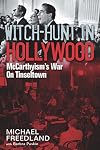
There are probably more pivotal moments in American history out there, there are probably times when people lived in greater fear for their lives and livelihood, there may be times when pure evil became more manifest and infected the thoughts and dreams of the American public more fully, but the activities of the House Un-American Activities Committee rates a seat right there at the pinnacle. The term McCarthyism can still make a cold chill run up the spine of those who understand the wrong show more that was being committed in the name of "saving" America and ensuring we were all "free". And it is probably as close to a Fascist state as we have ever come. (Although we have toyed with getting there a few times recently.)
What I know about this period in American history has come piecemeal. I have learned about it from discussions others have had, from occasional references in articles, and the odd documentary. In other words, I know what it was about and why it was something to be feared, but I really don't know the details. I don't have the knowledge to accurately engage in any kind of informed debated about the actions that were taken.
It is a lack I have been meaning to fill for some time and, when I stumbled across this book, I felt it was as good a time as any to get started.
Unfortunately, I still need to fill that void by finding a good book on the subject because what I found here, instead, was a book full of anecdotes and stories that were poorly tied together. And what I found here was a very one-sided approach to the telling of the story. Now, I am not looking for a book that provides apologies for the actions that were taken. However, I am looking for a book that takes an unprejudiced view of the proceedings. I am one who sides with those who say this was a black mark in our times. And yet, I kept reading statements so purple with prose, so jaded in their perceptions, so damned one-sided, that it put in doubt the author's objectivity. It reached the point where that I had to question the veracity of anything that was written.
So there is that to contend with as you read this book. But perhaps the bigger problem (as I've already mentioned) is that the narrative of this book did a poor job of laying out exactly what was happening and how the pieces came together. The book is extensively researched (that is, there are a great number of interviews used to back up the stories that are told), but this research is not used to tell the story. Rather, it is used to tell stories. (Those are, indeed, two different things.) And there is even some question about how those interviews are used. I lost count of the number of times I read something to the effect that a statement made by an interviewee was just a belief they had about a situation. In other words, innuendo and hearsay were reported as hard evidence.
HUAC and McCarthyism represent significant times in American history; it is a period every person should understand. It is only by understanding what occurred that we can hope to keep from repeating those mistakes again. However, no good is done by a book that fails as basic journalism in the pursuit of flashy stories and potential truths.
If you have read other books on McCarthyism, then this might be a good book to fill in some of the missing information. But do not – I repeat do no – make this the first step in your research. show less
What I know about this period in American history has come piecemeal. I have learned about it from discussions others have had, from occasional references in articles, and the odd documentary. In other words, I know what it was about and why it was something to be feared, but I really don't know the details. I don't have the knowledge to accurately engage in any kind of informed debated about the actions that were taken.
It is a lack I have been meaning to fill for some time and, when I stumbled across this book, I felt it was as good a time as any to get started.
Unfortunately, I still need to fill that void by finding a good book on the subject because what I found here, instead, was a book full of anecdotes and stories that were poorly tied together. And what I found here was a very one-sided approach to the telling of the story. Now, I am not looking for a book that provides apologies for the actions that were taken. However, I am looking for a book that takes an unprejudiced view of the proceedings. I am one who sides with those who say this was a black mark in our times. And yet, I kept reading statements so purple with prose, so jaded in their perceptions, so damned one-sided, that it put in doubt the author's objectivity. It reached the point where that I had to question the veracity of anything that was written.
So there is that to contend with as you read this book. But perhaps the bigger problem (as I've already mentioned) is that the narrative of this book did a poor job of laying out exactly what was happening and how the pieces came together. The book is extensively researched (that is, there are a great number of interviews used to back up the stories that are told), but this research is not used to tell the story. Rather, it is used to tell stories. (Those are, indeed, two different things.) And there is even some question about how those interviews are used. I lost count of the number of times I read something to the effect that a statement made by an interviewee was just a belief they had about a situation. In other words, innuendo and hearsay were reported as hard evidence.
HUAC and McCarthyism represent significant times in American history; it is a period every person should understand. It is only by understanding what occurred that we can hope to keep from repeating those mistakes again. However, no good is done by a book that fails as basic journalism in the pursuit of flashy stories and potential truths.
If you have read other books on McCarthyism, then this might be a good book to fill in some of the missing information. But do not – I repeat do no – make this the first step in your research. show less
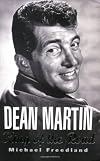
Dean Martin's coolness has created a bunch of books about him. Alas, this is not one of the good ones. There are proofreading errors (really, I don't think anyone proofed this before it went to print), the page numbers are smooshed together so that eights look like sixes, and timeframes seem to jump through black holes.
For example, the author places Gary Cooper in the 1970s (even though he died in 1961) and quotes from previous decades end up in other decades. Very bizarre. Maybe I should show more have read this after several margaritas.
Book Season = Summer (Dino deserves better) show less
For example, the author places Gary Cooper in the 1970s (even though he died in 1961) and quotes from previous decades end up in other decades. Very bizarre. Maybe I should show more have read this after several margaritas.
Book Season = Summer (Dino deserves better) show less
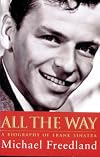
I don't know that much about Sinatra, but this struck me as a fair presentation of a complex man. As Pete Hamill writes in an excellent (and much more insightful book) book, Sinatra Counts. This book isn'tterribly gossipy, or scandalous, but is comprehensive and covers his full life. Be forewarned, it was written by a English author and not edited for American readers, which may bother some readers.
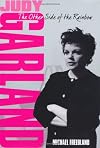
Michael Freedland presents a new biography of Judy Garland based upon interviews he conducted with people who knew her. It's not meant to be a complete story, and leaves out many details. It's nice to hear from people who knew Judy, but you have to remember that they are sharing their impressions of her, not necessarily facts. And Freedland writes like the reporter he is. I wish he could have told a better story.
You May Also Like


Statistics
- Works
- 51
- Members
- 459
- Popularity
- #53,509
- Rating
- 3.3
- Reviews
- 5
- ISBNs
- 123
- Languages
- 6


