
Daniel Loxton
Author of Abominable Science!: Origins of the Yeti, Nessie, and Other Famous Cryptids
Series
Works by Daniel Loxton
Abominable Science!: Origins of the Yeti, Nessie, and Other Famous Cryptids (2013) — Cover artist, some editions — 140 copies, 5 reviews
Associated Works
Tagged
Common Knowledge
Members
Reviews

A skeptical look at famous cryptids - Bigfoot, the Yeti, Nessie, the Great Sea Serpent, and Mokele Mbembe (the alleged modern dinosaur from the Congo) - rounded off with a look at cryptozoology and monster belief as a sociological phenomenon.
Believers in the aforementioned critters will likely dismiss this as yet another reductive debunking by narrow-minded exponents of the mainstream (ignoring Loxton having started out as a youthful monster enthusiast and insisting that only increasing show more knowledge, not any antipathy towards cryptozoology or cryptozoologists, have turned him into a skeptic). For the rest of us, however, it's a delightful look at well-known zoological myths, their cultural history, and the subculture of cryptozoology enthusiasts. There can be no scientific study of the Loch Ness monster, but there can and should be one of how and why people believe in Nessie. show less
Believers in the aforementioned critters will likely dismiss this as yet another reductive debunking by narrow-minded exponents of the mainstream (ignoring Loxton having started out as a youthful monster enthusiast and insisting that only increasing show more knowledge, not any antipathy towards cryptozoology or cryptozoologists, have turned him into a skeptic). For the rest of us, however, it's a delightful look at well-known zoological myths, their cultural history, and the subculture of cryptozoology enthusiasts. There can be no scientific study of the Loch Ness monster, but there can and should be one of how and why people believe in Nessie. show less
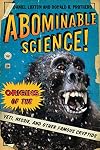
[b: Abominable Science!|12930972|Abominable Science! Origins of the Yeti, Nessie, and Other Famous Cryptids|Daniel Loxton|https://images.gr-assets.com/books/1328013950s/12930972.jpg|18086760] is one of two books that my library has classified under the cryptozoology header. Books for adults, I mean. Apparently there's a fairly vast number of children and YA books dealing with the subjects, the bulk of them fiction. Looking for some more in depth writings on the topic was what lead me to this show more book, and man, it was a delight to read. This book is divided up into a number of sections, each focusing upon a single cryptid. All the big ones are represented: Bigfoot, Yeti, Sea Serpents, the Loch Ness Monster, Mokele Mbembe - and it is all wrapped up in a final section that details why people believe in these creatures. The final section, to me, was actually the most interesting - just about everything in it was unexpected.
The bulk of the book is fairly kind to cryptozoologists. While the authors both take severe issue with the lack of scientific rigor in the field, it's evident that for the most part they want things so wondrous and strange to exist. The problem isn't necessarily with cryptozoology on the whole, just with the hoaxers and the people's lack of desire to be forthcoming about how much of accepted data was likely manufactured by hoaxers. Cryptozoology needs a wake up call, and it needs more people to be more critical of certain aspects of what has been seen, documented, believed.
All in all, this is a pretty great book that does good service to folklorists and the public at large. The final section, however, is the most important... Why cryptozoology is a good thing, why it is a bad thing, and what it means for the public that it endures as it does. In summation? It's fine to believe in the esoteric and the strange, just so long as you don't let your mind be so open that your brains end up falling out. Scientific rigor matters, and scientific literacy matters even more. Don't let your belief (or desire to believe, Mulder) in the strange erode either too much. show less
The bulk of the book is fairly kind to cryptozoologists. While the authors both take severe issue with the lack of scientific rigor in the field, it's evident that for the most part they want things so wondrous and strange to exist. The problem isn't necessarily with cryptozoology on the whole, just with the hoaxers and the people's lack of desire to be forthcoming about how much of accepted data was likely manufactured by hoaxers. Cryptozoology needs a wake up call, and it needs more people to be more critical of certain aspects of what has been seen, documented, believed.
All in all, this is a pretty great book that does good service to folklorists and the public at large. The final section, however, is the most important... Why cryptozoology is a good thing, why it is a bad thing, and what it means for the public that it endures as it does. In summation? It's fine to believe in the esoteric and the strange, just so long as you don't let your mind be so open that your brains end up falling out. Scientific rigor matters, and scientific literacy matters even more. Don't let your belief (or desire to believe, Mulder) in the strange erode either too much. show less
Not gonna lie, I *definitely* had a paranormal/cryptid phase as a tweenager (likely fueled by Disney Channel's "So Weird" show), and I do own Loren Coleman and Patrick Huyghe's [b:The Field Guide to Lake Monsters, Sea Serpents, and Other Mystery Denizens of the Deep|98779|The Field Guide to Lake Monsters, Sea Serpents, and Other Mystery Denizens of the Deep|Loren Coleman|https://d202m5krfqbpi5.cloudfront.net/books/1347743356s/98779.jpg|95224].
That being said, I'm aware that most places that show more supposedly house a number of plesiosaurs or hominids either a) don't actually have the resources to support a huge population and b) have never ever had tangible carcasses recovered. Still, I love the idea of cryptids being out there though I now take it with a heavy dose of skepticsm.
Loxton and Prothero take a skeptical look at the cultural origins of several popular cryptids (Bigfoot, the Yeti, Nessie, sea serpents in general, and Mokele-Mbeme [the Congo dinosaur]) and why they persist in our imaginations. I found it curious that most Mokele-Mbeme supporters today are actually creationists attempting to undermine evolutionary teaching by proving that nonavian dinosaurs still exist- something that never occurred to me (though little or no scientific training would explain why such explorers think a sauropod could hibernate in tiny holes on river banks).
The book itself is excellent, printed in full color with illustrations and end notes color coded to the chapter. A solid read for anyone who still wonders what mysteries could be lurking in nearby bodies of water (though let's be real: it's probably full of marine viruses). show less
That being said, I'm aware that most places that show more supposedly house a number of plesiosaurs or hominids either a) don't actually have the resources to support a huge population and b) have never ever had tangible carcasses recovered. Still, I love the idea of cryptids being out there though I now take it with a heavy dose of skepticsm.
Loxton and Prothero take a skeptical look at the cultural origins of several popular cryptids (Bigfoot, the Yeti, Nessie, sea serpents in general, and Mokele-Mbeme [the Congo dinosaur]) and why they persist in our imaginations. I found it curious that most Mokele-Mbeme supporters today are actually creationists attempting to undermine evolutionary teaching by proving that nonavian dinosaurs still exist- something that never occurred to me (though little or no scientific training would explain why such explorers think a sauropod could hibernate in tiny holes on river banks).
The book itself is excellent, printed in full color with illustrations and end notes color coded to the chapter. A solid read for anyone who still wonders what mysteries could be lurking in nearby bodies of water (though let's be real: it's probably full of marine viruses). show less
Abominable Science! is a series of essays written in turn by Daniel Loxton, editor of Junior Skeptic Magazine and Donald Prothero a professor of Geology and Geobiology. In turn they examine various "cryptids" explain why the so-called proof of their existence is bogus and finish with an essay on why we want to believe and what we need to do in order to actual be credible "monster-hunters". It was fascinating to hear the history of these various animals, who knew that Nessie is probably the show more dinosaur from King Kong? Although Loxton and Prothero masterfully shred the assertions of cryptozoologists, they never judge or sneer at those who do spend their lives looking for Bigfoot and friends. They support the desire to find the impossible, they just want us to do it in a scientifically responsible manner. An excellent book for skeptics and science geeks of any age. I would strongly recommend for Middle grades and up. show less
Awards


You May Also Like


Associated Authors
Statistics
- Works
- 6
- Also by
- 1
- Members
- 310
- Popularity
- #76,068
- Rating
- 4.1
- Reviews
- 13
- ISBNs
- 24
- Languages
- 1