
Janice N. Harrington
Author of The Chicken-Chasing Queen of Lamar County
About the Author
Image credit: Photo by Rachel Eliza Griffiths, found at author's website
Works by Janice N. Harrington
Associated Works
Tagged
Common Knowledge
Members
Reviews
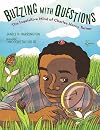
One of the reasons I often dislike picture book biographies, is that their art, while sometimes beautiful, is not particularly eye-catching or likely to inspire a kid to take the book off the shelf. This cover grabbed me right away and drew me into the interesting story. Harrington's past as a librarian and author of excellent read-alouds makes the text accessible, even though it's lengthy.
This is the story of Charles Henry Turner, the biologist you've never heard of. Born in Ohio to a show more janitor and practical nurse, he struggled against prejudice and poverty but eventually became a teacher and then earned a master's degree and PhD. He taught in many different venues and became an honored researcher and colleague, known for his intelligence and indefatigable work and curiosity as well as his scholarship.
Colorful, bold art shows Turner with the insects that inspired him, never losing focus as he taught and worked throughout his too-short life. Taylor's art follows Harrington's story, always centered on Turner's scientific curiosity and strength of character, but drawing in various world events and not shying away from the prejudice and struggles he faced.
Verdict: While this is lengthy for a read-aloud, it would work well in an elementary classroom or for a strong reader to tackle on their own. Pair it with books about bugs to foster curiosity and exploration of the natural world in children, as well as encourage them to exhibit perseverance and focus.
ISBN: 9781629795584; Published 2019 by Calkins Creek; Purchased for the library show less
This is the story of Charles Henry Turner, the biologist you've never heard of. Born in Ohio to a show more janitor and practical nurse, he struggled against prejudice and poverty but eventually became a teacher and then earned a master's degree and PhD. He taught in many different venues and became an honored researcher and colleague, known for his intelligence and indefatigable work and curiosity as well as his scholarship.
Colorful, bold art shows Turner with the insects that inspired him, never losing focus as he taught and worked throughout his too-short life. Taylor's art follows Harrington's story, always centered on Turner's scientific curiosity and strength of character, but drawing in various world events and not shying away from the prejudice and struggles he faced.
Verdict: While this is lengthy for a read-aloud, it would work well in an elementary classroom or for a strong reader to tackle on their own. Pair it with books about bugs to foster curiosity and exploration of the natural world in children, as well as encourage them to exhibit perseverance and focus.
ISBN: 9781629795584; Published 2019 by Calkins Creek; Purchased for the library show less
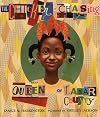
The self-proclaimed Chicken Chasing Queen of Lamar County can’t help herself: she has to chase the chickens, no matter what Big Mama says. Every morning it’s the same routine: wake, wash, eat, tell stories, and when Big Mama’s not looking…chase chickens! The Chasing Queen won’t be satisfied until she can get her hands on her favorite chicken of all, Miss Hen. After many failed attempts to catch that “plump as a Sunday purse” chicken, the Queen decides to stop chasing and start show more thinking. Using Big Mama’s words of wisdom, “you catch more flies with honey than with vinegar,” she devises a plan. The Queen leaves a trail of sweet cornbread crumbs around the yard to lure in Miss Hen. She crouches down and waits patiently for Miss Hen behind the wheelbarrow. After a short time, Miss Hen arrives. This is the Queen’s chance. She waits, she watches, she thinks, she JUMPS after Miss Hen! “SQWALK!” In a flash of feathers, Miss Hen is gone. The Queen couldn’t find her anywhere. She searches all over the farm, and then she spots her. Miss Hen is resting on a nest of brown eggs and protecting three baby chicks. Miss Hen looks steadily at the Queen, she’s so close, and this is her chance. But compassion takes over and instead of finally catching her favorite chicken; she sits and admires Miss Hen and her babies. That was the end of the Chicken Chasing Queen. Now, after waking, washing, eating and telling stories, when Big Mama is looking, the Queen feeds Miss Hen and her babies, making sure they are safe from any chicken chasers. show less
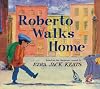
Honestly, I think it would have worked better as an original. I think it's wonderful that Harrington, who is OwnVoices African-American, pays homage to Keats, a white man who did his best to portray kids who weren't Dick and Jane.
But this doesn't read like a Keats book to me. Or maybe I haven't read the right Keats' books. But one thing Harrington does is make it plain how gritty and unsavory the neighborhood is... Keats left that to show in the pictures without telling.
On the third hand, show more Harrington may have made a good choice. Apparently some readers are still overlooking the setting, especially the one who criticizes 'the parents' who let the boys play ball at night. Um, first of all, it's clear that the boys live with their abuelo, and probably only with him. He surely can't helicopter parent them. And even if he could, would it serve them well to grow up pampered and restricted from a healthy activity like playing basketball together? I think not.
In any case, I do like the book very much, and will continue to read more by Harrington (as well as more by Keats) whenever I can find them.
I will not, however, look for more by the illustrator. show less
But this doesn't read like a Keats book to me. Or maybe I haven't read the right Keats' books. But one thing Harrington does is make it plain how gritty and unsavory the neighborhood is... Keats left that to show in the pictures without telling.
On the third hand, show more Harrington may have made a good choice. Apparently some readers are still overlooking the setting, especially the one who criticizes 'the parents' who let the boys play ball at night. Um, first of all, it's clear that the boys live with their abuelo, and probably only with him. He surely can't helicopter parent them. And even if he could, would it serve them well to grow up pampered and restricted from a healthy activity like playing basketball together? I think not.
In any case, I do like the book very much, and will continue to read more by Harrington (as well as more by Keats) whenever I can find them.
I will not, however, look for more by the illustrator. show less
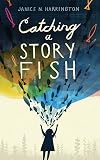
More joyful than not, given the challenges Keet faces. #OwnVoices. Not a novel-in-verse, but a bunch of actual poems that work together as puzzle pieces to tell the story of the family adapting to their first two months in their new home. A *fun* story... with lots of literary value.
I have decided that I am a *big* fan of Harrington and her works are pretty much auto-reads. And I will reread this.
One of my favorite poems is 'Math Class' because Keet's experience is actually universal. I show more loved math but I still know exactly what is going on her head as she struggles with one learning challenge while also carrying on in the rest of her classes and in life. "...I have numbers tangled in my braid9s, numbers caught between my t2eeth, 4,5,6, and 7 stuck to my tongue, and 177 tickling my nose...."
I also liked when Keet challenges her clever friend to spell preposterous. Friend says "You're using your Alabama voice to make it harder." Keet says "Yup." show less
I have decided that I am a *big* fan of Harrington and her works are pretty much auto-reads. And I will reread this.
One of my favorite poems is 'Math Class' because Keet's experience is actually universal. I show more loved math but I still know exactly what is going on her head as she struggles with one learning challenge while also carrying on in the rest of her classes and in life. "...I have numbers tangled in my braid9s, numbers caught between my t2eeth, 4,5,6, and 7 stuck to my tongue, and 177 tickling my nose...."
I also liked when Keet challenges her clever friend to spell preposterous. Friend says "You're using your Alabama voice to make it harder." Keet says "Yup." show less
Lists
Awards


You May Also Like


Associated Authors
Statistics
- Works
- 12
- Also by
- 4
- Members
- 977
- Popularity
- #26,369
- Rating
- 4.1
- Reviews
- 55
- ISBNs
- 43
- Languages
- 1