

Nigel Pennick
Author of A History of Pagan Europe
About the Author
Nigel Pennick is an authority on ancient belief systems, traditions, runes, and geomancy and has traveled and lectured extensively in Europe and the United States. He is the author and illustrator of more than 50 books, including The Pagan Book of Days. The founder of the Institute of Geomantic show more Research and the Library of the European Tradition, he lives near Cambridge, England. show less
Works by Nigel Pennick
The Pagan Book of Days: A Guide to the Festivals, Traditions, and Sacred Days of the Year (1992) 541 copies, 7 reviews
The Sacred World of the Celts: An Illustrated Guide to Celtic Spirituality and Mythology (1997) 184 copies, 2 reviews
The Celtic Saints: An Illustrated and Authoritative Guide to These Extraordinary Men and Women (1997) 83 copies, 1 review
Witchcraft and Secret Societies of Rural England: The Magic of Toadmen, Plough Witches, Mummers, and Bonesmen (2019) 46 copies, 2 reviews
Elemental Magic: Traditional Practices for Working with the Energies of the Natural World (2020) 21 copies, 2 reviews
The Ancestral Power of Amulets, Talismans, and Mascots: Folk Magic in Witchcraft and Religion (2021) 18 copies
Crossing the Borderlines: Guising, Masking, and Ritual Animal Disguises in the Europian Tradition (1998) 12 copies
The Oracle of Geomancy: The Divinatory Arts of Raml, Geomantia, Sikidy , and I Ching (1995) 12 copies
Creating Places of Power: Geomancy, Builders' Rites, and Electional Astrology in the Hermetic Tradition (2022) 5 copies
The Power Within-The Way of the Warrior and the Martial Arts in the European Tradition (2002) 3 copies, 1 review
Tunnels Under London 3 copies
The Ideal Tower 2 copies
Linee Magiche 1 copy
Ancient hill figures of England (Occasional paper - Institute of Geomantic Research ; no. 2) (1975) 1 copy
The Geomancy of Cambridge 1 copy
Associated Works
Meyn Mamvro: Ancient Stones and Sacred Sites of West Penwith - No 8, Spring 1989 — Contributor — 1 copy
Tagged
Common Knowledge
Members
Reviews
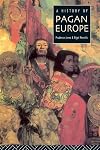
I LOVE this book. It functions as a 400 page knockout punch to the concept that folk religion is dead in Europe by going section by section through the pagan practices and their lasing impact on the entire continent. Other reviews say this book is too obviously pagan; they are correct. It is probably very obnoxious if you are not pagan. That's blindingly undeniable.

Lost Lands and Sunken Cities takes a look at all the places in Britain that have supposedly disappeared beneath the waves, including Lyonesse, which possibly never existed, to Dunwich, which certainly did, and lots of places in between.
Pennick also covers Atlantis and the deluge myth and makes me want to head off to the UK's North Sea to coach to watch more villages fall victim to erosion and crash into the sea, to become future myth.
Pennick also covers Atlantis and the deluge myth and makes me want to head off to the UK's North Sea to coach to watch more villages fall victim to erosion and crash into the sea, to become future myth.
The Sacred World of the Celts: An Illustrated Guide to Celtic Spirituality and Mythology by Nigel Pennick
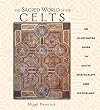
It is a good introduction to things Celtic: where the Celts originated, what different gods and goddesses they worshipped depending on the region, where place names derived from their deities, and the incorporation between Celtic spirituality with the Celtic Christian church. And the photos in this book are extraordinary! Many of them I have never seen before, such as medieval tapestries depicting British Celtic royalty or horse bronzes from different Western European countries. Those alone show more are worth the printing of this book.
However, this book suffers from a lack of scholarship and reference material. There is no bibliography, certainly no footnotes, and no reference to any prior publications. Granted, it is an introduction to the subject matter, but it would stand up much better if it had at least a source of references for further study or source material. show less
However, this book suffers from a lack of scholarship and reference material. There is no bibliography, certainly no footnotes, and no reference to any prior publications. Granted, it is an introduction to the subject matter, but it would stand up much better if it had at least a source of references for further study or source material. show less
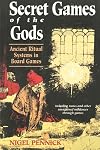
The title promises more than this book delivers. The first half is a catalogue of divinatory methods that slowly wends it way toward the subject of board games. Once we get there, however, the focus becomes descriptions of the boards, pieces, and gameplay. Mystic and magical references are scant and conjectural. This edition also suffers from poor editing, with dropped letters within words and even repeated clauses, often several to a page. The strangest lacuna, however, is in its discussion show more of chess variants. Chaturanga is mentioned in several places, yet the Rosicrucian Chess, the variant developed by the Hermetic Order of the Golden Dawn for divinatory purposes, is completely absent. show less
You May Also Like


Associated Authors
Statistics
- Works
- 84
- Also by
- 2
- Members
- 3,422
- Popularity
- #7,439
- Rating
- 3.5
- Reviews
- 36
- ISBNs
- 163
- Languages
- 8
- Favorited
- 2
