
Kelly O’Connor McNees
Author of The Lost Summer of Louisa May Alcott
About the Author
Works by Kelly O’Connor McNees
Undiscovered Country: A Novel Inspired by the Lives of Eleanor Roosevelt and Lorena Hickok (2018) 49 copies, 2 reviews
Associated Works
Tagged
Common Knowledge
- Canonical name
- McNees, Kelly O’Connor
- Birthdate
- 19??
- Gender
- female
- Occupations
- editorial assistant
English teacher - Nationality
- USA
- Birthplace
- Michigan, USA
- Places of residence
- Michigan, USA
New York, USA
Rhode Island, USA
Ontario, Canada
Chicago, Illinois, USA - Associated Place (for map)
- USA
Members
Reviews
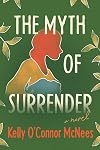
Chicago, 1960. Doreen, eighteen, slips out of the house one night and goes to the movies in what her mother would call the wrong part of town. There, she meets what Mother would call the wrong sort of young man, a Black college-bound student; eventually, Doreen sleeps with him. The first time, he uses a condom, but not subsequently.
Meanwhile, Margie, sixteen, works part-time at a jewelry store, and one day, her boss inveigles her to a basement. She has no idea what he’s after, or even how show more intercourse works, but she does know she doesn’t want it, only she’s not strong enough to repel him.
After these two young women discover they’re pregnant, they cross paths at a maternity home run by the Catholic Church. There, in return for agreeing to give up their children for adoption, they’ll receive free room and board, medical care, and absolute discretion.
The prospect of returning to their previous lives as though the shame and burden never happened relieves Doreen and Margie, at least at first. However, if they decide, after all, to keep their children, they’ll have to repay the money spent on their care. As with the other young women there, neither Margie nor Doreen could afford that.
Moreover, the nun running the home, Sister Simon, tells them the same message every day, seemingly intended to make sure nobody becomes attached to her newborn. Each girl there is morally depraved, Sister Simon says, unfit to mother that child conceived in sin, whereas the prospective adoptive parents deserve their good fortune and will raise the child better than the sinful girl ever could. Young, frightened, without family support, and impressionable, the expecting young mothers tell themselves all this must be true, and they wouldn’t have things any other way.
Margie and Doreen strike up an unlikely friendship, the younger girl a goody-goody afraid of her own shadow, the elder having practiced a different sort of life. But we’re not talking about doormats here. McNees has several twists in store, all credible, which kick the narrative into higher gear. For the two protagonists, their stay at the maternity home shows them, in ways they can’t ignore, how powerless they are. (A telling example is the “expert” medical care they receive, from a sadistic brute of a doctor who begrudges them every second of his time and who leaves no doubt of his contempt for them.) How Doreen and Margie handle their powerlessness enlarges the narrative beyond a poignant moral tale into a struggle for freedom.
Also trailing them into their futures are the secrets both guard with their lives, including, but not limited to, the identity of their babies’ fathers — and recall that Doreen’s lover is Black, therefore unacceptable to her family. But the greatest lie that Sister Simon tells them concerns the children they’re supposed to forget and whom they’re forbidden by law to trace. The assurance that accompanies such falsehoods doesn’t go entirely unquestioned, however. One young woman actually dares ask, “How would you know?” a rare instance of backtalk, for which she’s immediately punished.
Consequently, from a shameful problem as old as our alleged civilization, The Myth of Surrender spins a potent story that grabs you from several directions. Heightening the effect, McNees shows her terrific eye for mother-daughter relationships and family life in general. If either young woman ever thought passing through the maternity home would spell the end of their problems, they are sorely mistaken.
I do think Sister Simon makes an over-the-top villain, just as Sister Joan, another nun, plays good cop to the other’s bad one. I’d have liked a subtler, more artful approach there. I also think McNees could have omitted the brief sections titled “We” between those chapters narrated by her protagonists. They’re essays, and though I have no quarrel with what’s in them, they’re not part of the story, which speaks loudly enough.
But these are quibbles. The Myth of Surrender is a terrific novel, based on an astounding fact the author cites in an afterword: between 1945 and 1973, the year of Roe v. Wade, 1.5 million pregnant girls and women gave up their children for adoption at maternity homes run by various charities. This may be an old story, but McNees’s interpretation of it is as timely as ever. show less
Meanwhile, Margie, sixteen, works part-time at a jewelry store, and one day, her boss inveigles her to a basement. She has no idea what he’s after, or even how show more intercourse works, but she does know she doesn’t want it, only she’s not strong enough to repel him.
After these two young women discover they’re pregnant, they cross paths at a maternity home run by the Catholic Church. There, in return for agreeing to give up their children for adoption, they’ll receive free room and board, medical care, and absolute discretion.
The prospect of returning to their previous lives as though the shame and burden never happened relieves Doreen and Margie, at least at first. However, if they decide, after all, to keep their children, they’ll have to repay the money spent on their care. As with the other young women there, neither Margie nor Doreen could afford that.
Moreover, the nun running the home, Sister Simon, tells them the same message every day, seemingly intended to make sure nobody becomes attached to her newborn. Each girl there is morally depraved, Sister Simon says, unfit to mother that child conceived in sin, whereas the prospective adoptive parents deserve their good fortune and will raise the child better than the sinful girl ever could. Young, frightened, without family support, and impressionable, the expecting young mothers tell themselves all this must be true, and they wouldn’t have things any other way.
Margie and Doreen strike up an unlikely friendship, the younger girl a goody-goody afraid of her own shadow, the elder having practiced a different sort of life. But we’re not talking about doormats here. McNees has several twists in store, all credible, which kick the narrative into higher gear. For the two protagonists, their stay at the maternity home shows them, in ways they can’t ignore, how powerless they are. (A telling example is the “expert” medical care they receive, from a sadistic brute of a doctor who begrudges them every second of his time and who leaves no doubt of his contempt for them.) How Doreen and Margie handle their powerlessness enlarges the narrative beyond a poignant moral tale into a struggle for freedom.
Also trailing them into their futures are the secrets both guard with their lives, including, but not limited to, the identity of their babies’ fathers — and recall that Doreen’s lover is Black, therefore unacceptable to her family. But the greatest lie that Sister Simon tells them concerns the children they’re supposed to forget and whom they’re forbidden by law to trace. The assurance that accompanies such falsehoods doesn’t go entirely unquestioned, however. One young woman actually dares ask, “How would you know?” a rare instance of backtalk, for which she’s immediately punished.
Consequently, from a shameful problem as old as our alleged civilization, The Myth of Surrender spins a potent story that grabs you from several directions. Heightening the effect, McNees shows her terrific eye for mother-daughter relationships and family life in general. If either young woman ever thought passing through the maternity home would spell the end of their problems, they are sorely mistaken.
I do think Sister Simon makes an over-the-top villain, just as Sister Joan, another nun, plays good cop to the other’s bad one. I’d have liked a subtler, more artful approach there. I also think McNees could have omitted the brief sections titled “We” between those chapters narrated by her protagonists. They’re essays, and though I have no quarrel with what’s in them, they’re not part of the story, which speaks loudly enough.
But these are quibbles. The Myth of Surrender is a terrific novel, based on an astounding fact the author cites in an afterword: between 1945 and 1973, the year of Roe v. Wade, 1.5 million pregnant girls and women gave up their children for adoption at maternity homes run by various charities. This may be an old story, but McNees’s interpretation of it is as timely as ever. show less
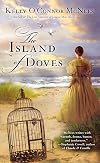
This is an inspiring story about the rebirth of two damaged women that begins in 1835.
Susannah Fraser, 23, is a woman living in wealthy circumstances in Buffalo, New York with a cruel husband who beats her. After the fingers in her hand are broken, a nun in the area, Sister Mary Genevieve, offers to help her escape. The sister knows of a refuge on Mackinac Island in the Michigan Territory, and arranges for Susannah to sneak out and be transported there.
Once in Mackinac, Susannah, going by show more the pseudonym “Miss Dove,” is taken in by the widowed Magdelaine Fonteneau, 46, who runs a successful business and lives alone in a large house with her son, Jean-Henri, and Esmee, her talented and resourceful housekeeper.
Adjustment is difficult for Susannah. She loves it on the island, but she has never experienced making her own decisions or taking her own life in her hands: first she was a daughter, directed by her father, and then she was a wife, with a husband who controlled each minute of her day. Independence is terrifying for her.
Magdelaine has her own demons to overcome; she lost most of her family, and steadfastly refuses to get close to anyone again, even her own son. The two women unexpectedly find they have much in common, but each must be willing to let go of her defenses to be become truly free.
Discussion: The author based her story on two historical figures. One was Magdelaine LaFramboise, who, like the fictional Magdelaine, took over her husband’s fur-trading business after his death and became very successful. The second was Benjamin Rathbun who was a notorious and corrupt builder in Buffalo in the same time period.
It is especially interesting to read about what life for the real Magdelaine may have been like from the author’s reconstruction of her circumstances.
Evaluation: The plot elements are fairly predictable and the characters sometimes a bit too caricatured or given to clichéd dialogue, but that doesn’t detract from the basic charm of this warm-hearted story. show less
Susannah Fraser, 23, is a woman living in wealthy circumstances in Buffalo, New York with a cruel husband who beats her. After the fingers in her hand are broken, a nun in the area, Sister Mary Genevieve, offers to help her escape. The sister knows of a refuge on Mackinac Island in the Michigan Territory, and arranges for Susannah to sneak out and be transported there.
Once in Mackinac, Susannah, going by show more the pseudonym “Miss Dove,” is taken in by the widowed Magdelaine Fonteneau, 46, who runs a successful business and lives alone in a large house with her son, Jean-Henri, and Esmee, her talented and resourceful housekeeper.
Adjustment is difficult for Susannah. She loves it on the island, but she has never experienced making her own decisions or taking her own life in her hands: first she was a daughter, directed by her father, and then she was a wife, with a husband who controlled each minute of her day. Independence is terrifying for her.
Magdelaine has her own demons to overcome; she lost most of her family, and steadfastly refuses to get close to anyone again, even her own son. The two women unexpectedly find they have much in common, but each must be willing to let go of her defenses to be become truly free.
Discussion: The author based her story on two historical figures. One was Magdelaine LaFramboise, who, like the fictional Magdelaine, took over her husband’s fur-trading business after his death and became very successful. The second was Benjamin Rathbun who was a notorious and corrupt builder in Buffalo in the same time period.
It is especially interesting to read about what life for the real Magdelaine may have been like from the author’s reconstruction of her circumstances.
Evaluation: The plot elements are fairly predictable and the characters sometimes a bit too caricatured or given to clichéd dialogue, but that doesn’t detract from the basic charm of this warm-hearted story. show less
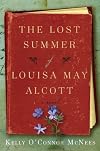
Little Women remains one of my favorite childhood novels. It is one of the first "big" books I remember reading as a little girl, and like millions of girls before and since, I fell in love with Meg, Jo, Beth, and Amy. Because I much prefer to read fiction rather than research authors, I only know the basic premise of Louisa Alcott's life, but I requested this advanced reading copy because of my affection for Little Women. When I started noticing positive buzz from my fellow bloggers, I show more opened to the first page with low expectations in an effort to avoid disappointment. Happily, not only were my expectations met, they were completely exceeded by this engaging, enticing book that successfully blurs fact and fiction.
The writing is absolutely phenomenal. Ms. McNees brought Louisa and her family to life, creating a crystal-clear picture of life in New England in the 1850s. Meg, Jo, Beth, and Amy literally come to life as Louisa's real-life sisters, and the reader comes to complete understanding of what sacrifices were made by the Alcott family in order to allow Bronson to live according to his transcendental philosophy.
Interwoven throughout the action is an undercurrent of tragedy. Are choices ever easy? Should they be? Of particular importance is the idea of women's reliance on men and the consequences of that reliance. Exemplified by the Alcott's perpetual suffering and destitution because of Bronson's ideals and Joseph's choice between happiness and duty in the form of the care of his sister, women had few choices for happiness and security. In fact, Louisa's struggle highlights the unfair choices offered to women either through convention or society.
Given those societal norms, Louisa's story and ultimate success are all the more remarkable. Rather than pigeonhole her into a marriage and allow her to wither away as a housewife, both her parents supported her reading and writing. They encouraged her to make her own way in society, and, if Ms. McNees' research is correct, gave her the push out the door she needed to step out on her own - all at a time when women just did not live by themselves and write for a living. Given what other women faced at a similar time period, this truly is an amazing show of support, and readers everywhere are the better for it.
For those of us who grew up relating to Jo, you will absolutely relate to and love Louisa. Just like Jo, she prefers to read versus doing anything else, especially housework. She has a deep-seeded need to be alone every so often. Like Jo, she has a tendency to over-dramatics and depression plus issues with her temper. Her opinions of marriage and motherhood are extremely modern, and as she discovers throughout the novel, unique when compared to her contemporaries and fellow sisters. Readers can definitely see glimpses of Jo in Louisa, even as Louisa takes on a life of her own.
I cannot do justice to this book. It truly is amazing in its depth and detail. More importantly, Ms. McNees provides plenty of food for thought on women's plight and station in life, especially as we compare our lives and choices today with those in the 1800s. I highly recommend The Lost Summer of Louisa May Alcott to historical fiction lovers or to anyone who fell in love with the March sisters. show less
The writing is absolutely phenomenal. Ms. McNees brought Louisa and her family to life, creating a crystal-clear picture of life in New England in the 1850s. Meg, Jo, Beth, and Amy literally come to life as Louisa's real-life sisters, and the reader comes to complete understanding of what sacrifices were made by the Alcott family in order to allow Bronson to live according to his transcendental philosophy.
Interwoven throughout the action is an undercurrent of tragedy. Are choices ever easy? Should they be? Of particular importance is the idea of women's reliance on men and the consequences of that reliance. Exemplified by the Alcott's perpetual suffering and destitution because of Bronson's ideals and Joseph's choice between happiness and duty in the form of the care of his sister, women had few choices for happiness and security. In fact, Louisa's struggle highlights the unfair choices offered to women either through convention or society.
Given those societal norms, Louisa's story and ultimate success are all the more remarkable. Rather than pigeonhole her into a marriage and allow her to wither away as a housewife, both her parents supported her reading and writing. They encouraged her to make her own way in society, and, if Ms. McNees' research is correct, gave her the push out the door she needed to step out on her own - all at a time when women just did not live by themselves and write for a living. Given what other women faced at a similar time period, this truly is an amazing show of support, and readers everywhere are the better for it.
For those of us who grew up relating to Jo, you will absolutely relate to and love Louisa. Just like Jo, she prefers to read versus doing anything else, especially housework. She has a deep-seeded need to be alone every so often. Like Jo, she has a tendency to over-dramatics and depression plus issues with her temper. Her opinions of marriage and motherhood are extremely modern, and as she discovers throughout the novel, unique when compared to her contemporaries and fellow sisters. Readers can definitely see glimpses of Jo in Louisa, even as Louisa takes on a life of her own.
I cannot do justice to this book. It truly is amazing in its depth and detail. More importantly, Ms. McNees provides plenty of food for thought on women's plight and station in life, especially as we compare our lives and choices today with those in the 1800s. I highly recommend The Lost Summer of Louisa May Alcott to historical fiction lovers or to anyone who fell in love with the March sisters. show less
Normally, I hate the books that attempt to cram fiction into the lives of my favorite authors. I also hate the insulting implication that literary geniuses like Jane Austen and Louisa May Alcott must have had love affairs in order to write brilliantly about relationships between people -- as if these authors do not have enough skill, imagination, and observational power to write such stories on their own.
So, I was a bit nervous when I sat down to read Kelly O'Connor McNees' The Lost Summer show more of Louisa May Alcott. And I continued to be a little bit on edge as I read the first half -- as the author settled in to Louisa's mode of writing, as the circumstances of the novel unfolded through fade-in images that were half-familiar, as the persons with whom I had been acquainted through non-fiction became characters.
In the end, however, after all that nervousness, and after a considerable period of "getting used to" the novel, I was pleasantly surprised by this book. McNees is incredibly respectful -- instead of twisting the facts as others have done, she has done her research and found an empty space in Alcott's life, one just the right size for a romance. The love interest she created for Alcott is not too much like Laurie (of 'Little Women' fame) to be cloying, but has echoes of the character enough to allow us to see McNees' inspiration. The light hand and gentle tone of the writing echo -- again, respectfully -- Alcott's own, particularly in 'Little Women'. It did take some getting used to, this approximation of another author's voice, but as I read I realized that it was necessary.
Is this a great and lasting piece of literary genius? Probably not. But it is a sweet and tactful offering, from one Alcott fan to the others of us who have not been so bold as to take up the pen in imitation of our hero. Overall, well worth the read. show less
So, I was a bit nervous when I sat down to read Kelly O'Connor McNees' The Lost Summer show more of Louisa May Alcott. And I continued to be a little bit on edge as I read the first half -- as the author settled in to Louisa's mode of writing, as the circumstances of the novel unfolded through fade-in images that were half-familiar, as the persons with whom I had been acquainted through non-fiction became characters.
In the end, however, after all that nervousness, and after a considerable period of "getting used to" the novel, I was pleasantly surprised by this book. McNees is incredibly respectful -- instead of twisting the facts as others have done, she has done her research and found an empty space in Alcott's life, one just the right size for a romance. The love interest she created for Alcott is not too much like Laurie (of 'Little Women' fame) to be cloying, but has echoes of the character enough to allow us to see McNees' inspiration. The light hand and gentle tone of the writing echo -- again, respectfully -- Alcott's own, particularly in 'Little Women'. It did take some getting used to, this approximation of another author's voice, but as I read I realized that it was necessary.
Is this a great and lasting piece of literary genius? Probably not. But it is a sweet and tactful offering, from one Alcott fan to the others of us who have not been so bold as to take up the pen in imitation of our hero. Overall, well worth the read. show less
Lists
Awards


You May Also Like


Associated Authors
Statistics
- Works
- 6
- Also by
- 1
- Members
- 850
- Popularity
- #30,104
- Rating
- 3.7
- Reviews
- 79
- ISBNs
- 25

