
David Stahler Jr.
Author of Truesight
About the Author
Series
Works by David Stahler Jr.
Associated Works
Tagged
Common Knowledge
- Gender
- male
Members
Reviews
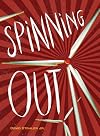
Reviewed from a Librarything Early Reviewer copy
There are some books that surprise you. You pick them up with low expectations, thinking that this is not the kind of book for you and opening it with a sense of duty. Oh, fine. I really should review this. It was sent to me for free after all. That sort of thing.
But then you read a few pages and although the story has no werewolves, vampires or any supernatural creatures, no murders or corporate secrets being traded to the highest bidder, the show more book has your full attention.
This was the case with Stahler's Spinning Out, a simple tale of two high school buddies in their senior year of high school. Frenchie and Stewart are the clowns of the school, though they both do well academically, they are the non-joiners, the outcasts. But when Stewart gets it into his quirky head that they should try out for the school musical, Man of La Mancha, the fit hits the shan as they say. Stewart gets the role of Don Quixote and Frenchy gets the role of Sancho Panza, a fitting metaphor for their friendship and personality.
Frenchy (so named because of his French-Canadian background and the fact that he is husky and hirsute- a stereotype I take issue with Mr. Stahler) thinks Stewart is joking, that it is a big lark. But it is soon clear that playing Don Quixote means way more to Stewart than Frenchy could have guessed. Stewart begins to wear his costume all the time, and is rarely out of character. When Frenchy hears Stewart battling the voices in his head, he realises that there is something very wrong with his friend and he doesn't know what to do. Unfortunately, this is just the horrifying scenario he has just lived through with his father. An ex-soldier fresh from Iraq, he suffered from post-traumatic stress syndrome and committed suicide, leaving Frenchy and his mother to wonder how they could have stopped him. frenchy is haunted by the "if I had just..." syndrome familiar to the surviving family members.
At first glance, this is a story with a predictable plotline. Disinterested, troubled kid comes of age by taking a chance and finding out he is not such a loser as he supposes. But Stahler has made it so much richer. He deftly weaves themes of mental illness, suicide and depression through out the book without ever getting maudlin.
I think I actually heard the creaking of my heart as it cracked just a little for Stewart and Frenchy.
I suprised the hell out of myself by not being able to put this book down. The characters are rich and nuanced. The plot swift and suspenseful. There are several scenes centered around battling windmills. What's not to like?
I would recommend this to...I don't know who I would recommend this to. It would be a good one for teen boys who don't like to read maybe. But alas, I don't know many of those. I would also recommend this to teen girls who like coming of age stories- fans of Nick Hornby maybe, or Gordon Korman... Hell, I would recommend this to anyone who likes Don Quixote, or even just a good story. show less
There are some books that surprise you. You pick them up with low expectations, thinking that this is not the kind of book for you and opening it with a sense of duty. Oh, fine. I really should review this. It was sent to me for free after all. That sort of thing.
But then you read a few pages and although the story has no werewolves, vampires or any supernatural creatures, no murders or corporate secrets being traded to the highest bidder, the show more book has your full attention.
This was the case with Stahler's Spinning Out, a simple tale of two high school buddies in their senior year of high school. Frenchie and Stewart are the clowns of the school, though they both do well academically, they are the non-joiners, the outcasts. But when Stewart gets it into his quirky head that they should try out for the school musical, Man of La Mancha, the fit hits the shan as they say. Stewart gets the role of Don Quixote and Frenchy gets the role of Sancho Panza, a fitting metaphor for their friendship and personality.
Frenchy (so named because of his French-Canadian background and the fact that he is husky and hirsute- a stereotype I take issue with Mr. Stahler) thinks Stewart is joking, that it is a big lark. But it is soon clear that playing Don Quixote means way more to Stewart than Frenchy could have guessed. Stewart begins to wear his costume all the time, and is rarely out of character. When Frenchy hears Stewart battling the voices in his head, he realises that there is something very wrong with his friend and he doesn't know what to do. Unfortunately, this is just the horrifying scenario he has just lived through with his father. An ex-soldier fresh from Iraq, he suffered from post-traumatic stress syndrome and committed suicide, leaving Frenchy and his mother to wonder how they could have stopped him. frenchy is haunted by the "if I had just..." syndrome familiar to the surviving family members.
At first glance, this is a story with a predictable plotline. Disinterested, troubled kid comes of age by taking a chance and finding out he is not such a loser as he supposes. But Stahler has made it so much richer. He deftly weaves themes of mental illness, suicide and depression through out the book without ever getting maudlin.
I think I actually heard the creaking of my heart as it cracked just a little for Stewart and Frenchy.
I suprised the hell out of myself by not being able to put this book down. The characters are rich and nuanced. The plot swift and suspenseful. There are several scenes centered around battling windmills. What's not to like?
I would recommend this to...I don't know who I would recommend this to. It would be a good one for teen boys who don't like to read maybe. But alas, I don't know many of those. I would also recommend this to teen girls who like coming of age stories- fans of Nick Hornby maybe, or Gordon Korman... Hell, I would recommend this to anyone who likes Don Quixote, or even just a good story. show less
 This review was written for LibraryThing Early Reviewers.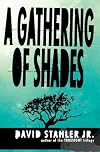
“Sixteen year old Aidan’s grandmother has a secret recipe. She feeds ghosts.”
This opening line in the flyleaf description of A Gathering of Shades is what made me take the book home. An old lady who feeds ghosts. What a powerfully creepy image. And I must say that I wasn’t disappointed. This story is one of the better books for teens I’ve read in a long time. Evocative, eerie, and heartbreaking…all at once.
Aidan’s grandmother does indeed feed ghosts, but he doesn’t find out show more until a few days after he and his mother arrive back at the family homestead in The Kingdom, an area in upper Vermont. After Aidan’s father is killed in a car accident, his mother decides to pull up stakes from the suburbs of Boston and head back home to heal. Aidan, having only visited The Kingdom as a child and having listened to his father talk about how much he hated it when he was growing up, is less than thrilled about the move. He’s uncomfortable around his odd grandmother, but is curious enough about her lengthy after-dinner walks that he follows her one night and discovers her secret. She’s been feeding the ghosts of The Kingdom for years, helping them pass the time until they’re ready to move on. She’s surprised that Aidan can see the ghosts, but seems pleased to have flesh-and-blood company among the ectoplasm, until she figures out that Aidan joins her every evening only because he’s hopeful his father’s ghost will put in an appearance. Aidan spends the better part of the summer chasing his father’s ghost until he finally manages to say goodbye.
There are plenty of messages here, but none are pushed to the point of being annoying. The futility of chasing ghosts, the difficulty of moving on and letting go after a tragedy, the reliving the memories of the dead time and again…all are addressed with lovely, gentle writing. Reading this story is a little like floating down a stream tucked in an inner tube. Give it a try… show less
This opening line in the flyleaf description of A Gathering of Shades is what made me take the book home. An old lady who feeds ghosts. What a powerfully creepy image. And I must say that I wasn’t disappointed. This story is one of the better books for teens I’ve read in a long time. Evocative, eerie, and heartbreaking…all at once.
Aidan’s grandmother does indeed feed ghosts, but he doesn’t find out show more until a few days after he and his mother arrive back at the family homestead in The Kingdom, an area in upper Vermont. After Aidan’s father is killed in a car accident, his mother decides to pull up stakes from the suburbs of Boston and head back home to heal. Aidan, having only visited The Kingdom as a child and having listened to his father talk about how much he hated it when he was growing up, is less than thrilled about the move. He’s uncomfortable around his odd grandmother, but is curious enough about her lengthy after-dinner walks that he follows her one night and discovers her secret. She’s been feeding the ghosts of The Kingdom for years, helping them pass the time until they’re ready to move on. She’s surprised that Aidan can see the ghosts, but seems pleased to have flesh-and-blood company among the ectoplasm, until she figures out that Aidan joins her every evening only because he’s hopeful his father’s ghost will put in an appearance. Aidan spends the better part of the summer chasing his father’s ghost until he finally manages to say goodbye.
There are plenty of messages here, but none are pushed to the point of being annoying. The futility of chasing ghosts, the difficulty of moving on and letting go after a tragedy, the reliving the memories of the dead time and again…all are addressed with lovely, gentle writing. Reading this story is a little like floating down a stream tucked in an inner tube. Give it a try… show less
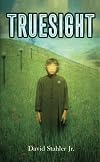
A colony planet where everyone is blind due to medical procedure, genetic whatever manipulation. The society is cultish. This is about a kid growing up in that community who rather suddenly gains the ability to see. He angsts about this and eventually it gets him into trouble.It's an interesting book and an okay read. It suffers a little for being part of a trilogy.One quibble I had with it is that once genetic modification became really popular and people were making super-awesome, designer show more kids, the supposedly _first_ group with a 'disability' who wanted to make kids that way were a blind couple? I just don't see that happening. I think the Deaf would be the first ones to take that route. They have a shared language which defines much more of a culture and community.The largest problem though is that somewhere around the middle, and definitely toward the end, I saw blindness and seeing as a big old metaphor. This kid can now see, so he starts to 'see' the corruption and lies and the not-so-pretty aspects of his community. Which you can take as a larger view that he becomes a teenager on his way to being an adult. And I just wonder, did he really need to be able to literally see to realize all these things?So the book and the idea started out cool, but then, to me, got undermined by the end of the book. show less
To echo another reviewer, I too was surprised by the book's incredibly serious subject matter. From the promotional material, I expected the novel to be a comedic look at the inner-workings and backstage drama of a high school musical. While the novel definitely had its funny moments, Stahler's novel is ultimately a very serious and moving portrait of a young man's struggles with mental illness.
Honestly, I did not expect to like the novel. The story is inextricably interwoven with that of show more Cervantes's Don Quixote and I usually find these types of texts incredibly dry. It's almost as if they're trying too hard to stake out their claim as "serious" pieces of literature. Happily, Stahler's novel proved to be the complete opposite of my expectations. Perhaps he has his job as a high school teacher to thank for this, but I think Stahler has a true gift for writing "real" characters. The narrative voice of the novel's protagonist, Frenchy, was particularly phenomenal. Yes, as one reviewer mentioned there is a lot of cursing and discussion of drug use, but it fit in the context of the character and was far from gratuitous.
Aside from great characters, Stahler also weaves an intricate plot that had me hooked from the first page. I was worried that I wouldn't really understand the novel, never having read Don Quixote, but I was completely invested in the characters and their incredibly important story. I will happily recommend this novel to friends and students alike! show less
Honestly, I did not expect to like the novel. The story is inextricably interwoven with that of show more Cervantes's Don Quixote and I usually find these types of texts incredibly dry. It's almost as if they're trying too hard to stake out their claim as "serious" pieces of literature. Happily, Stahler's novel proved to be the complete opposite of my expectations. Perhaps he has his job as a high school teacher to thank for this, but I think Stahler has a true gift for writing "real" characters. The narrative voice of the novel's protagonist, Frenchy, was particularly phenomenal. Yes, as one reviewer mentioned there is a lot of cursing and discussion of drug use, but it fit in the context of the character and was far from gratuitous.
Aside from great characters, Stahler also weaves an intricate plot that had me hooked from the first page. I was worried that I wouldn't really understand the novel, never having read Don Quixote, but I was completely invested in the characters and their incredibly important story. I will happily recommend this novel to friends and students alike! show less
This review was written for LibraryThing Early Reviewers.Lists
Awards


You May Also Like


Associated Authors
Statistics
- Works
- 8
- Also by
- 1
- Members
- 688
- Popularity
- #36,763
- Rating
- 3.7
- Reviews
- 35
- ISBNs
- 27
- Languages
- 1
