
Alex Kotlowitz
Author of There Are No Children Here: The Story of Two Boys Growing Up in the Other America
About the Author
Image credit: Photo by Lilithcat, taken at Printers Row Book Fair, 7 June 2008
Works by Alex Kotlowitz
There Are No Children Here: The Story of Two Boys Growing Up in the Other America (1991) 1,620 copies, 20 reviews
The Other Side of the River: A Story of Two Towns, a Death, and America's Dilemma (1998) 417 copies, 8 reviews
anything 1 copy
Associated Works
Race, Class, and Gender in the United States: An Integrated Study (1992) — Contributor, some editions — 562 copies
High Rise Stories: Voices from Chicago Public Housing (Voice of Witness) (2013) — Foreword — 82 copies, 1 review
Tagged
Common Knowledge
- Canonical name
- Kotlowitz, Alex
- Legal name
- Kotlowtiz, Alex
- Birthdate
- 1955
- Gender
- male
- Education
- Wesleyan University
- Occupations
- journalist
- Organizations
- The Wall Street Journal
- Awards and honors
- George Foster Peabody Award
Robert F. Kennedy Journalism Award
George Polk Award
John LaFarge Memorial Award for Interracial Justice - Nationality
- USA
- Places of residence
- New York, New York, USA
Chicago, Illinois, USA - Associated Place (for map)
- USA
Members
Reviews

This excellent work of journalism weaves the stories of more than a dozen perpetrators and victims of violent crime, and their families and communities, into Chicago’s summer of 2013. It does so via Kotlowitz’s close-in reporting that at times is nearly oral history and, for me, is evocative of Studs Terkel. It’s compulsively readable and also unbearably tragic. In several cases, I was so moved that I Googled combinations of names and keywords to find updates.
At its least, the book has show more further informed my reactions to each day’s reports of violence. At its most, it inspires activism.
(Review based on an advance reading copy provided by the publisher.) show less
At its least, the book has show more further informed my reactions to each day’s reports of violence. At its most, it inspires activism.
(Review based on an advance reading copy provided by the publisher.) show less
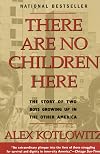
Kotlowitz's account of two young boys growing up in the projects of Chicago is exhaustively researched, and his writing is both thoughtful and thought-provoking. The book is informative without being preachy and challenged many of my assumptions about government, birth control, criminal justice and gangs in the United States.
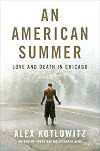
One summer in Chicago, tracking the effects of violence both random and targeted on its victims—who include lots of people who weren’t physically injured but suffer from what they saw and felt every day. A lot of the violence is not police-related, and all of it is terrible, but the most outrageous parts involved the police because the state is supposed to protect citizens from violence, not inflict it. One man was shot for running from the cops; they framed him with a gun that was show more inoperable and still had a full complement of bullets, and the cops received commendations even as the city settled a lawsuit with the victim’s family. It’s not, Kotlowitz says, that people hate snitches as such, but providing evidence can be personally dangerous and isn’t all that likely to help (maybe 10% of shooters are arrested, and less than half of murders are solved—and the city considers cases solved when they’re convinced who did it, regardless of whether there’s an arrest), so many people don’t take the risk and many also take retribution into their own hands. show less
Well, what do you want to hear first? How well crafted this book is as word craft, or how perfectly this captures big city life for American-Americans while painting a vivid picture of a constant, relentless life of poverty in a country of immense wealth? This was not my first experience in reading this author's work. I was very impressed with the earlier work, There Are No Children Here. This book actually takes off from a direct connection to people portrayed in that much earlier work. show more I've been very fortunate lately to read books by superb non-fiction journalists, Rachel Louise Snyder and Isabelle Wilkerson, both of whom proved able to seemingly embed themselves into the lives and minds of those upon whom they were reporting to spectacular insights. This author, who did this with great skill in his earlier work, has somehow marinated his skills even more and deserves to be elevated to my own personal pantheon of great journalists. In essence, this book takes a single summer a few years back in Chicago and takes the reader deep into the violence of a major U.S. city notorious for its death count. Anyone who has studied the data knows that Chicago is not the worst offender in this area. (The one that is rarely even gets mentioned in the news.) Nevertheless, any city connected to someone the current U.S. president takes great joy in degrading in public is bound to get undue bad press. On the other hand, what is bad is bad. We're only talking a matter of degree. The author takes the reader deep into the jungle of this perpetual life of community violence in a series of interviews. Especially, early on, the author shifts the narrative approach to each setting he enters, giving the book a sense of a short story collection. In fact, one particular chapter is so masterfully presented and so emotionally wrought, I was taken back to the reaction I had to "Going to Meet the Man", James Baldwin's extraordinary story. One can read this or not. Personally, I don't think any one should make judgment on what is happening in Chicago without reading this book first. On the other hand, those who so publicly make negative judgments from big white houses in Washington, DC, do not read books. So there is that. show less
Lists
Awards


You May Also Like


Associated Authors
Statistics
- Works
- 6
- Also by
- 6
- Members
- 2,508
- Popularity
- #10,237
- Rating
- 4.1
- Reviews
- 39
- ISBNs
- 47
- Languages
- 2
- Favorited
- 3