
Jean-David Morvan
Author of Wake: Fire and Ash
About the Author
Image credit: bedetheque.com
Series
Works by Jean-David Morvan
Omaha Beach on D-Day: June 6, 1944 with One of the World's Iconic Photographers (2014) 53 copies, 2 reviews
Las aventuras de Spirou y Fantasio: París bajo el Sena; El hombre que no quería morir; En Tokio (1900) 5 copies
Senda 1- Fogo e Cinzas 4 copies
Estela 14. Liquidación total (Pandora 127) (CÓMIC EUROPEO) (Spanish Edition) (2013) 2 copies, 1 review
Taras Buljba - svezak 1 1 copy
Clones en série Vol. 3 1 copy
Pozoga 1 copy
Friends of Spirou 1 copy
Warschau 1 copy
O.K. Corral 1 copy
Ludwig XIV.: (Graphic Novel) (Historische Persönlichkeiten (Graphic Novels) 8) (German Edition) 1 copy
Brazda - Potpuna likvidacija 1 copy
De Chasch 1 copy
Brazda - ljudska priroda 1 copy
Sillage 1 copy
De Wankh 1 copy
Brazda 1 copy
Chine : Peuples et lumières 1 copy
Senda, 05. Jvsv 1 copy
Senda, 02. Colecção Privada 1 copy
Penthouse #6 1 copy
Penthouse Comics #5 1 copy
Penthouse Comics #4 1 copy
Penthouse Comics #2 1 copy
Penthouse Comics #1 1 copy
Penthouse Comics #3 1 copy
Nas Origens do Z 1 copy
Les amis de Spirou 1 copy
Associated Works
Tagged
Common Knowledge
- Legal name
- Morvan, Jean-David
- Other names
- Morvan, J. D.
JDMorvan - Birthdate
- 1969-11-28
- Gender
- male
- Education
- Institut Saint-Luc, Brussels, Belgium
- Occupations
- comic book writer
- Nationality
- France
- Birthplace
- Reims, France
- Places of residence
- Reims, France
- Map Location
- France
- Associated Place (for map)
- Reims, France
Members
Reviews
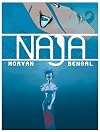
TW: Self-harm, child abuse
This story wanted to be full of twists and turns, but none of them were hitting. Instead, it’s just a disorganized, confusing mess.
First, the artwork is lovely, colorful, and stylized though some shots of Naja feel gratuitous. I loved seeing the color palette change with each new location.
Does Naja hate every country? I was put off by the narrator. I understand this was to show how detached Naja is from the world, but she just sounded like a butthole to me. The show more false equivalence with Haiti overthrowing slavery was not it. At all.
Anyway, the story is definitely older. A character is referred to as a “faggot.” It’s twisted as well. Naja’s father beat her repeatedly when she was younger entirely out of love from his perspective, as he knows how desperately she desires to feel pain.
The ending is too outlandish and disgusting. Were y’all trying to be edgy? Najais the LI's mom and half-sister. And they were in instalove for the first half of the book. Why do y’all put this incestuous junk in here?
Ultimately, this story wasn’t for me. show less
This story wanted to be full of twists and turns, but none of them were hitting. Instead, it’s just a disorganized, confusing mess.
First, the artwork is lovely, colorful, and stylized though some shots of Naja feel gratuitous. I loved seeing the color palette change with each new location.
Does Naja hate every country? I was put off by the narrator. I understand this was to show how detached Naja is from the world, but she just sounded like a butthole to me. The show more false equivalence with Haiti overthrowing slavery was not it. At all.
Anyway, the story is definitely older. A character is referred to as a “faggot.” It’s twisted as well. Naja’s father beat her repeatedly when she was younger
The ending is too outlandish and disgusting. Were y’all trying to be edgy?
Ultimately, this story wasn’t for me. show less
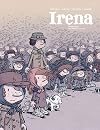
A book we need now more than ever.
(Full disclosure: I received a free e-ARC for review through Edelweiss. Trigger warning for anti-Semitic violence.)
Irena Sendlerowa (maiden name Krzyżanowska) was born on February 10, 1910 in Warsaw, Poland. Shew grew up in nearby Otwock, which was home to a large Jewish community. Her father Stanisław was a physician who treated everyone, regardless of their ethnicity or ability to pay. He contracted typhus in the line of duty, and died when Irena was show more just seven. Despite being raised by a single mother, Irena attended college, studying law and literature at the University of Warsaw. She was a socialist who was outspoken in support of her Jewish classmates. Identified as a leftist, she was denied employment in the Warsaw school system.
Instead, Irena was working for the Social Welfare Department when Germany invaded Poland. Here she was uniquely positioned to provide help to Poland's most marginalized citizens. Irena's department was allowed access to the Warsaw Ghetto, ostensibly to conduct sanitary inspections and help prevent the outbreak and spread of epidemics. Here she leveraged her position to make life a little more bearable for the ghetto's 4,000 Jewish residents, by smuggling in food, clothing, and medicine - with the help of a large and ever-expanding group of family, friends, and colleagues, of course.
Irena also began smuggling out people, including dozens of children and babies, which she placed in a network of foster homes, orphanages, and religious sanctuaries. She diligently recorded the given name, fake name, and new address of each child, so that they could be reunited with their families after the war was over. In order to avoid incriminating herself in the event of a search - and making it easier for the Gestapo to find the missing children - Irena placed the names in jars, which she buried. Sadly, while her records survived the war, most of their would-be recipients did not. A majority of the children Irena and her network rescued - up to 2,500, by some estimates - were orphaned.
Perhaps the most astonishing part of Irena's story is that she was captured, interrogated, and sentenced to death in 1943. Despite repeated torture, she did not name her co-conspirators or the people they rescued. She escaped when the Żegota, a Polish resistance organization with which she'd been working, bribed a German guard. Instead of giving up or fleeing the country, Irena resumed her subversive activities, albeit under an assumed name and new occupation: Klara Dąbrowska, nurse. Irena died of natural causes in 2008; she was 98 years old.
Irena, Book One: Wartime Ghetto covers the events through Irena's capture by and escape from the Gestapo. To describe it as "powerful" is a gross understatement. It's a force, though not quite like Irena. I imagine very few things could come that close. (Later in life, Irena rarely gave interviews, and vehemently insisted that she hated the word "hero" and did not consider herself one. If she wasn't, then they simply don't exist.)
While rooted firmly in fact, the narrative does contain some fictional and downright fantastical elements. For example, Morvan identifies the murder of a young boy by a sadistic SS officer as the impetus for Irena's human smuggling; yet Wiki says that she began her operations when some friends were trapped on the Jewish side of the wall.
Still, some of the more surreal embellishments, like the ghosts (of Nethanial and the other murdered Jews, as well as Irena's father, always guiding her towards what's right) and Nethanial's loyal and prescient dog, are inspired and will bring you to tears.
Irena's Children just moved higher on my TBR list; and, imho, a desire to learn more is usually a pretty good indicator of a comic book or tv show's success.
The artwork has a Dickensian quality to it. It wasn't my favorite at first, but it grew on me. It suits the mood and content of the story perfectly.
http://www.easyvegan.info/img/irena-book-one-02-515w.jpg
As I write this review, supporters of Drumpf's border policy - which includes ramped up ICE raids across the country this weekend - are splitting hairs over terminology, questioning whether the "dog pounds" along the border qualify as "concentration camps." I am reminded of that older woman who showed up to a rally for women's rights bearing a sign that proclaims "I can't believe I still have to protest this fucking shit." I wonder what Irena would do if she lived in Texas or New York or Minnesota in June of 2019.
http://www.easyvegan.info/2019/08/09/irena-book-one-by-jean-david-morvan/ show less
(Full disclosure: I received a free e-ARC for review through Edelweiss. Trigger warning for anti-Semitic violence.)
Irena Sendlerowa (maiden name Krzyżanowska) was born on February 10, 1910 in Warsaw, Poland. Shew grew up in nearby Otwock, which was home to a large Jewish community. Her father Stanisław was a physician who treated everyone, regardless of their ethnicity or ability to pay. He contracted typhus in the line of duty, and died when Irena was show more just seven. Despite being raised by a single mother, Irena attended college, studying law and literature at the University of Warsaw. She was a socialist who was outspoken in support of her Jewish classmates. Identified as a leftist, she was denied employment in the Warsaw school system.
Instead, Irena was working for the Social Welfare Department when Germany invaded Poland. Here she was uniquely positioned to provide help to Poland's most marginalized citizens. Irena's department was allowed access to the Warsaw Ghetto, ostensibly to conduct sanitary inspections and help prevent the outbreak and spread of epidemics. Here she leveraged her position to make life a little more bearable for the ghetto's 4,000 Jewish residents, by smuggling in food, clothing, and medicine - with the help of a large and ever-expanding group of family, friends, and colleagues, of course.
Irena also began smuggling out people, including dozens of children and babies, which she placed in a network of foster homes, orphanages, and religious sanctuaries. She diligently recorded the given name, fake name, and new address of each child, so that they could be reunited with their families after the war was over. In order to avoid incriminating herself in the event of a search - and making it easier for the Gestapo to find the missing children - Irena placed the names in jars, which she buried. Sadly, while her records survived the war, most of their would-be recipients did not. A majority of the children Irena and her network rescued - up to 2,500, by some estimates - were orphaned.
Perhaps the most astonishing part of Irena's story is that she was captured, interrogated, and sentenced to death in 1943. Despite repeated torture, she did not name her co-conspirators or the people they rescued. She escaped when the Żegota, a Polish resistance organization with which she'd been working, bribed a German guard. Instead of giving up or fleeing the country, Irena resumed her subversive activities, albeit under an assumed name and new occupation: Klara Dąbrowska, nurse. Irena died of natural causes in 2008; she was 98 years old.
Irena, Book One: Wartime Ghetto covers the events through Irena's capture by and escape from the Gestapo. To describe it as "powerful" is a gross understatement. It's a force, though not quite like Irena. I imagine very few things could come that close. (Later in life, Irena rarely gave interviews, and vehemently insisted that she hated the word "hero" and did not consider herself one. If she wasn't, then they simply don't exist.)
While rooted firmly in fact, the narrative does contain some fictional and downright fantastical elements. For example, Morvan identifies the murder of a young boy by a sadistic SS officer as the impetus for Irena's human smuggling; yet Wiki says that she began her operations when some friends were trapped on the Jewish side of the wall.
Still, some of the more surreal embellishments, like the ghosts (of Nethanial and the other murdered Jews, as well as Irena's father, always guiding her towards what's right) and Nethanial's loyal and prescient dog, are inspired and will bring you to tears.
Irena's Children just moved higher on my TBR list; and, imho, a desire to learn more is usually a pretty good indicator of a comic book or tv show's success.
The artwork has a Dickensian quality to it. It wasn't my favorite at first, but it grew on me. It suits the mood and content of the story perfectly.
http://www.easyvegan.info/img/irena-book-one-02-515w.jpg
As I write this review, supporters of Drumpf's border policy - which includes ramped up ICE raids across the country this weekend - are splitting hairs over terminology, questioning whether the "dog pounds" along the border qualify as "concentration camps." I am reminded of that older woman who showed up to a rally for women's rights bearing a sign that proclaims "I can't believe I still have to protest this fucking shit." I wonder what Irena would do if she lived in Texas or New York or Minnesota in June of 2019.
http://www.easyvegan.info/2019/08/09/irena-book-one-by-jean-david-morvan/ show less
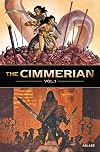
Well this was unexpected and accidental find. Based on Conan stories that are now in public domain and unable to use the name of our hero in the title of volumes these are more ... unrestricted comic adaptations of Conan stories.
And I have to say I like it. These are stories in which Conan is shown as what he truly is - force of nature, force of life that aims to live to the fullest no matter the consequences. In first story we witness Conan joining the forces with Belit. As story progresses show more and as Belit loses her life we see Conan, dark and vengeful waiting on the murderer of his beloved to exact his revenge.
Second story is one I did not come across before - again, we witness Conan as he sells his martial skills to the greatest bidder and ends up in the mysterious city with no windows, city so large that entire civilization is living within its walls that never saw the sun of the outside world.
Conan is not part of the civilized world, as a matter of fact he is disgusted with civilization. He is powerful man that hates tricksters of any kind and trusts only in himself and power of his body and mind, and people who prove to be worthy of his trust that he might call friends. He is not above brigandry and outright murder, he chases women in a manner that would make him unpopular today but in all of this he is honest. He does not represent himself to be something he is not and while he might be considered epitome of might-makes-right he has a code of honor and tries to get into conflict only with people who truly deserve to meet the edge of his sword.
Art in these two stories is different but rather good. Art style is very European but it works.
As cover blurb states this version of Conan's stories is uncensored one so there is gore and sex, in a manner that reminds me of Metal Hurlant in a good way (which closes the circle because all of the techno-barbarian stories from Metal Hurlant were definitely inspired by Conan's adventures).
So overall this is very different adaptation from Marvel one. Maybe closes thing to this way of storytelling are DarkHorse adaptations, that I truly enjoyed. I am not fan of making everything dark and deadly realistic but for Conan, deadly swordsman and one-man army, approach taken by Ablaze truly works.
Highly recommended to fans of Conan and more dark fantasy approach to his adventures. show less
And I have to say I like it. These are stories in which Conan is shown as what he truly is - force of nature, force of life that aims to live to the fullest no matter the consequences. In first story we witness Conan joining the forces with Belit. As story progresses show more and as Belit loses her life we see Conan, dark and vengeful waiting on the murderer of his beloved to exact his revenge.
Second story is one I did not come across before - again, we witness Conan as he sells his martial skills to the greatest bidder and ends up in the mysterious city with no windows, city so large that entire civilization is living within its walls that never saw the sun of the outside world.
Conan is not part of the civilized world, as a matter of fact he is disgusted with civilization. He is powerful man that hates tricksters of any kind and trusts only in himself and power of his body and mind, and people who prove to be worthy of his trust that he might call friends. He is not above brigandry and outright murder, he chases women in a manner that would make him unpopular today but in all of this he is honest. He does not represent himself to be something he is not and while he might be considered epitome of might-makes-right he has a code of honor and tries to get into conflict only with people who truly deserve to meet the edge of his sword.
Art in these two stories is different but rather good. Art style is very European but it works.
As cover blurb states this version of Conan's stories is uncensored one so there is gore and sex, in a manner that reminds me of Metal Hurlant in a good way (which closes the circle because all of the techno-barbarian stories from Metal Hurlant were definitely inspired by Conan's adventures).
So overall this is very different adaptation from Marvel one. Maybe closes thing to this way of storytelling are DarkHorse adaptations, that I truly enjoyed. I am not fan of making everything dark and deadly realistic but for Conan, deadly swordsman and one-man army, approach taken by Ablaze truly works.
Highly recommended to fans of Conan and more dark fantasy approach to his adventures. show less
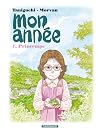
"What you have to understand is that trisomy is not a disease, but a state. Make an effort to understand the difference between these two terms."
It is technically a good book. The illustrations are wonderful; simple but also detailed. The author managed to give a slice-of-life glimpse into Capucine's life, without it just being about her disability.
She's not very good in school, but very observant of the world. I love her ability to see people's emotions behind their "mask". Like, she can show more always tell whenever someone's sad, even though they're pretending everything's fine on the outside.
I love the drawings from her perspective especially too! Gives a better image of what she sees.
I'm not very familiar with trisomies, so I can't tell how accurate that was, but still makes for a sweet story. Actually, I do have a very distant cousin with down syndrome, but unfortunately haven't seen the family for a decade... I wonder how they are. Gotta ask my mother.
It's a bit disappointing that Capucine doesn't have the outer characteristics of trisomy 21. Sure, better for her, but there are already barely any books with down syndrome rep (as far as I know), so... I looked it up, and it says that under 2% of people with trisomy 21 can have it without the physical characteristics, which usually is called mosaic down syndrome. The author however didn't use that term, making me wonder whether he did proper research or didn't want her to look like that?
And it's very old-fashioned. Not sure in which year exactly it plays, but the characters give 60s vibes. For example, the parents were upset over Capucine using knife and fork with the different hand (hinting that she may be left-handed). They keep telling her or mentioning it in front of her that she's "retarded". I'm aware that people still use this term nowadays, but...
This is a short story series that spans over all seasons. This one, spring, ended quite abruptly, which definitely makes me want to continue, simply to see what will happen.
Overall I'm not that eager though, cause the Dad's been a nuisance, pouring all his pessimism onto the reader.
At least Capucine's chapters are colorful and warm, and the mom also tries her best, but you can see she needs some rest. The grandparents seem lovely so far.
I'm just hoping for the best for her.
That one scene made me sad though:
"I won't be able to draw you anymore. Everyone will think that I'm making progress. I don't like it. But I'll never forget you, you know?"
Not me getting flashbacks from Inside Out's "bing-bong goodbye scene"… Let a kid draw their imaginary friend in peace, please.
-25.07.24 show less
Awards


You May Also Like


Associated Authors
Statistics
- Works
- 308
- Also by
- 1
- Members
- 3,627
- Popularity
- #6,980
- Rating
- 3.5
- Reviews
- 71
- ISBNs
- 525
- Languages
- 16
- Favorited
- 1