
Liane Merciel
Author of Dragon Age: Last Flight
About the Author
Disambiguation Notice:
Liane Merciel is a pen name.
Image credit: Liane Merciel
Series
Works by Liane Merciel
Associated Works
Tagged
Common Knowledge
- Gender
- female
- Education
- Yale University
College of William & Mary (Law School) - Occupations
- state prosecutor
attorney - Nationality
- USA
- Places of residence
- Alaska, USA
Germany
South Korea
Philadelphia, Pennsylvania, USA - Disambiguation notice
- Liane Merciel is a pen name.
- Associated Place (for map)
- USA
Members
Reviews
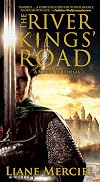
This is exactly the kind of fantasy I love: a potentially epic setting but with "low fantasy" focus on the actual people within it. Peasants have the chance to determine fate for a change. Like Saladin Ahmed, I also want "fewer kings and starship captains, more coach drivers and space waitresses" in my spec fic.
Beyond class diversity, the spec fic genre also needs progress in racial diversity. It's something I try to do in my own writing and also something I consciously keep an eye out for show more in my reading. I was pleasantly surprised to discover the paladin in The River Kings' Road, Sir Kelland, is from the African-analogue of this fictional universe. Although an orphan raised by Sun Knights, he connects with his heritage by braiding his hair in the fashion of its warriors, and the common folk view his dark skin as a manifestation of the Sun Goddess' favor, making him the "Burnt Knight." He's also the subject of a wants-to-be-but-bound-to-celibacy romantic subplot with his assistant, a woman warrior, and I was happy to see that these two will have a bigger part in the sequel.
I hasten to add that the story itself is less of an essay on class and racial diversity than the paragraphs I've written here--I was just impressed at how, while not groundbreaking, this story is able to quietly model that sort of diversity with a cast of well-rounded characters, albeit in a fairly standard fantasy setting.
Although there are some unique and flavorful additions--the sadomasochistic Thorn witches (and that's sadomasochism in the not fun, safe, sane, and consensual manner), Sir Kelland and his background, and even the River Kings' gleaming Road itself--ultimately the setting is a medieval world, complete with analogues to the Vikings. One nice thing is that it's a medieval world written by an author who clearly did historical research: there's a throwaway line about a family losing its milk cow when their house is burned down, because during winter they keep the livestock indoors with them. Again, there's these down-to-earth details of daily lives and what it's like to be an average person in this world. I hasten to add that these are throwaway lines; the main plot isn't bogged down by trivia.
Which isn't exactly to say doesn't get bogged down.
The plot starts with a bang--technically, with fire and Bloodmist, which is exactly what it sounds like--and the story moves forward steadily, without any wasted scenes. Yet, in the middle particularly, there are a lot of flashbacks to provide background information that rarely rises above standard fantasy fare. Wars, evil wizards, hard-bitten mercenaries, strange curses, and those Viking analogues I mention call the undead they fight Skraelings, which is an actual Viking term (meaning "wretch," and applied by them to Native Americans. Specifically the Native Americans who drove them out of Newfoundland. I highly doubt Merciel intends anything racially loaded by the term; that's just interesting trivia I want to bog my review down with).
In contrast to my parenthetical comment above, the characters' flashbacks are generally germane, and frequently help to develop the backstory and personality of individuals. Sometimes I wonder whether the background information could be more gracefully presented, but on the whole it is a fast-paced story as the worldbuilding gets fleshed out. All the same, aspects of the world still feel a bit thrown together--the Thorn Witches, despite some genuinely creepy body modifications, are in many ways a generic evil sorcerers empire to the east with exotic naming conventions, while the Western European main setting has a mixture of names that feel English and French--which makes parts of it feel more constructed than inhabited. Ang'arta especially--I do not know how that country works, and it does not feel like a real place. To be fair, none of the characters have actually been there yet, mostly because in true evil empire fashion it's a place few people go to and survive.
Even if the evil empire which never appears onscreen could be better realized (and when you put it like that, it's obvious), the villainous characters themselves are as well-rounded as the good guys. There does seem to be more character development on their part, with redemptive arcs or at least tragic ones. In fact, I wound up feeling more sympathy for the most decent of the villains than the most antiheroic of the heroes--and I think that's a feature, not a bug. There are enough genuinely kind people for me to care about and root for, like the peasant mother Odosse and Sir Kelland, who are respectively trying to survive and keep two babes in arms alive while fleeing a Thorn Witch through border territory that might at any moment erupt into war, and launching an investigation into a massacre that might wind up triggering said war. Unlike the typical epic fantasy where we're supposed to be cheered at the prospect of a nice war to get the heart pounding and the lungs inflated, here war is shown as terrible as it generally is when you're, say, one of the people who might drop dead when the Bloodmist is unleashed.
Of a fairly large cast, one of the least interesting characters happens to be the one we start off with--Brys Tarnell, the brilliantly green-eyed swordsman featured on the cover, and pretty much a standard antihero. I actually expected more character development from him than I got. He's a perfectly well-rounded standard antihero, with the street smarts to get Odosse and two babies across enemy territory and the occasional sarcastic barb, but he hasn't hit the full swing of his redemptive arc yet (some might find this refreshing). Odosse, though, is instantly sympathetic without being nothing but a victim, despite being a peasant, a young unmarried mother, and unattractive in more than the "Hollywood Homely" sense. She has to make her own choices in this novel, some of them surprising.
The Thorn Witch and her magic, which relies largely on mutilation, is genuinely terrifying, and while I wish we learned more about her motives, it looks like those will come up in the sequel. All of the backstory dropping and the slow character arcs appear to be in preparation for a much larger story arc--and this book is clearly the first in the series, with much tantalizingly unresolved at the end. I've already ordered the next, Heaven's Needle.
This review is cross-posted from Story Addict. show less
Beyond class diversity, the spec fic genre also needs progress in racial diversity. It's something I try to do in my own writing and also something I consciously keep an eye out for show more in my reading. I was pleasantly surprised to discover the paladin in The River Kings' Road, Sir Kelland, is from the African-analogue of this fictional universe. Although an orphan raised by Sun Knights, he connects with his heritage by braiding his hair in the fashion of its warriors, and the common folk view his dark skin as a manifestation of the Sun Goddess' favor, making him the "Burnt Knight." He's also the subject of a wants-to-be-but-bound-to-celibacy romantic subplot with his assistant, a woman warrior, and I was happy to see that these two will have a bigger part in the sequel.
I hasten to add that the story itself is less of an essay on class and racial diversity than the paragraphs I've written here--I was just impressed at how, while not groundbreaking, this story is able to quietly model that sort of diversity with a cast of well-rounded characters, albeit in a fairly standard fantasy setting.
Although there are some unique and flavorful additions--the sadomasochistic Thorn witches (and that's sadomasochism in the not fun, safe, sane, and consensual manner), Sir Kelland and his background, and even the River Kings' gleaming Road itself--ultimately the setting is a medieval world, complete with analogues to the Vikings. One nice thing is that it's a medieval world written by an author who clearly did historical research: there's a throwaway line about a family losing its milk cow when their house is burned down, because during winter they keep the livestock indoors with them. Again, there's these down-to-earth details of daily lives and what it's like to be an average person in this world. I hasten to add that these are throwaway lines; the main plot isn't bogged down by trivia.
Which isn't exactly to say doesn't get bogged down.
The plot starts with a bang--technically, with fire and Bloodmist, which is exactly what it sounds like--and the story moves forward steadily, without any wasted scenes. Yet, in the middle particularly, there are a lot of flashbacks to provide background information that rarely rises above standard fantasy fare. Wars, evil wizards, hard-bitten mercenaries, strange curses, and those Viking analogues I mention call the undead they fight Skraelings, which is an actual Viking term (meaning "wretch," and applied by them to Native Americans. Specifically the Native Americans who drove them out of Newfoundland. I highly doubt Merciel intends anything racially loaded by the term; that's just interesting trivia I want to bog my review down with).
In contrast to my parenthetical comment above, the characters' flashbacks are generally germane, and frequently help to develop the backstory and personality of individuals. Sometimes I wonder whether the background information could be more gracefully presented, but on the whole it is a fast-paced story as the worldbuilding gets fleshed out. All the same, aspects of the world still feel a bit thrown together--the Thorn Witches, despite some genuinely creepy body modifications, are in many ways a generic evil sorcerers empire to the east with exotic naming conventions, while the Western European main setting has a mixture of names that feel English and French--which makes parts of it feel more constructed than inhabited. Ang'arta especially--I do not know how that country works, and it does not feel like a real place. To be fair, none of the characters have actually been there yet, mostly because in true evil empire fashion it's a place few people go to and survive.
Even if the evil empire which never appears onscreen could be better realized (and when you put it like that, it's obvious), the villainous characters themselves are as well-rounded as the good guys. There does seem to be more character development on their part, with redemptive arcs or at least tragic ones. In fact, I wound up feeling more sympathy for the most decent of the villains than the most antiheroic of the heroes--and I think that's a feature, not a bug. There are enough genuinely kind people for me to care about and root for, like the peasant mother Odosse and Sir Kelland, who are respectively trying to survive and keep two babes in arms alive while fleeing a Thorn Witch through border territory that might at any moment erupt into war, and launching an investigation into a massacre that might wind up triggering said war. Unlike the typical epic fantasy where we're supposed to be cheered at the prospect of a nice war to get the heart pounding and the lungs inflated, here war is shown as terrible as it generally is when you're, say, one of the people who might drop dead when the Bloodmist is unleashed.
Of a fairly large cast, one of the least interesting characters happens to be the one we start off with--Brys Tarnell, the brilliantly green-eyed swordsman featured on the cover, and pretty much a standard antihero. I actually expected more character development from him than I got. He's a perfectly well-rounded standard antihero, with the street smarts to get Odosse and two babies across enemy territory and the occasional sarcastic barb, but he hasn't hit the full swing of his redemptive arc yet (some might find this refreshing). Odosse, though, is instantly sympathetic without being nothing but a victim, despite being a peasant, a young unmarried mother, and unattractive in more than the "Hollywood Homely" sense. She has to make her own choices in this novel, some of them surprising.
The Thorn Witch and her magic, which relies largely on mutilation, is genuinely terrifying, and while I wish we learned more about her motives, it looks like those will come up in the sequel. All of the backstory dropping and the slow character arcs appear to be in preparation for a much larger story arc--and this book is clearly the first in the series, with much tantalizingly unresolved at the end. I've already ordered the next, Heaven's Needle.
This review is cross-posted from Story Addict. show less

Summary: Tensions between the neighboring kingdoms of Oakharn and Langmyr have been high for as long as anyone can remember. After a terrible attack on a Langmyr village, in which an Oakharne prince was visiting, the only survivors are Brys Tarnell, a mercenary man-at-arms, and the infant son of the prince. The attack was committed using bloodmagic, the specialty of the Ang'artan Maimed Witches, a group of terrifyingly dangerous sorcerers. Brys plans to take the baby to Oakharn, and he soon show more encounters a homely young woman with a son of her own to help him care for the infant, but the witch does not like leaving a job unfinished. Meanwhile, the perpetrators of the attack are being hunted by the religious knight Kellan, who may be the only man alive who has a chance of killing of killing the evil sorceress.
Review: This book has a lot going for it - a compelling story, some interesting bits of worldbuilding, and an effectively terrifying bad guy - but it faltered by trying to do too much, too fast. By epic fantasy standards, it's not a particularly long book, and its 400-odd pages are split amongst four storylines and five points of view. Multiple POV characters is something that can be used to move a story along (see: George R. R. Martin's A Song of Ice and Fire series), but in the case of The River Kings' Road, Merciel hasn't yet obtained nearly that level of mastery. Instead, too long is spent on each segment, leaving a hundred pages between successive installments from each character, and effectively keeping me from being too involved in any one story, or from ever becoming particularly attached to any one character.
Merciel also doesn't quite have the grip on her worldbuilding that I would have liked. The raw materials are there, for sure, but there's so much going on in her story that all of the details of the worldbuilding don't always get worked into an organic whole. As a result, there are a number of elements (including the road of the title; a relic of an ancient civilization) that seem to be there only because they sounded good. Perhaps these elements will get picked up and explained in the sequel which the ending is so obviously setting up.
Overall, this was an enjoyable read; Merciel's prose is smooth and her story has a lot of potential to become very interesting. I just think this book was overambitious - too many characters, worldbuilding too complex, etc. - for what it was able to achieve. I'll be reading the sequel, in hopes that as Merciel matures as an author that she manages to take the reins on this sprawling story. 3.5 out of 5 stars.
Recommendation: I enjoy epic fantasy, and am always interested to see a fresh take on it, particularly if it's not a pigboy parable, and particularly if it's written by a woman. The River Kings' Road is not the most astounding debut I've ever come across, but it definitely shows promise, and is therefore probably worth checking out for other fans of epic fantasy. show less
Review: This book has a lot going for it - a compelling story, some interesting bits of worldbuilding, and an effectively terrifying bad guy - but it faltered by trying to do too much, too fast. By epic fantasy standards, it's not a particularly long book, and its 400-odd pages are split amongst four storylines and five points of view. Multiple POV characters is something that can be used to move a story along (see: George R. R. Martin's A Song of Ice and Fire series), but in the case of The River Kings' Road, Merciel hasn't yet obtained nearly that level of mastery. Instead, too long is spent on each segment, leaving a hundred pages between successive installments from each character, and effectively keeping me from being too involved in any one story, or from ever becoming particularly attached to any one character.
Merciel also doesn't quite have the grip on her worldbuilding that I would have liked. The raw materials are there, for sure, but there's so much going on in her story that all of the details of the worldbuilding don't always get worked into an organic whole. As a result, there are a number of elements (including the road of the title; a relic of an ancient civilization) that seem to be there only because they sounded good. Perhaps these elements will get picked up and explained in the sequel which the ending is so obviously setting up.
Overall, this was an enjoyable read; Merciel's prose is smooth and her story has a lot of potential to become very interesting. I just think this book was overambitious - too many characters, worldbuilding too complex, etc. - for what it was able to achieve. I'll be reading the sequel, in hopes that as Merciel matures as an author that she manages to take the reins on this sprawling story. 3.5 out of 5 stars.
Recommendation: I enjoy epic fantasy, and am always interested to see a fresh take on it, particularly if it's not a pigboy parable, and particularly if it's written by a woman. The River Kings' Road is not the most astounding debut I've ever come across, but it definitely shows promise, and is therefore probably worth checking out for other fans of epic fantasy. show less
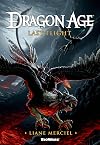
There were a lot of questionable decisions and lore bits in this novel, but I still found it the most personable among all of the DA ones I've read so far. It did a fantastic job at describing the horror of the Blight in a way that the games only managed to touch, it brought to life a lot of locations we've only heard about, and it had a refreshing, tragic heroine who made me shed a few tears. Overall, I'd say it's the only one I've actually enjoyed *reading* vs just getting through the show more others in order to learn more about the backstory. show less

Summary: The ruined castle of Duradh Mal lurks in the hills above the town of Carden Vale. Ever since its destruction, the fortress has been a place of fear and menace, gripped as it is in the throes of the Mad God's power, but now something dark has been loosed, and Maol's influence has begun to spread from Duradh Mal into the surrounding mountains. The high priest of the goddess Celestia was unaware of how bad things were when he sends two young Illuminers to minister to the people of show more Carden Vale, guarded only by a exiled woman warrior from the northern tribes. Also headed to Carden Vale are Kelland, the Sun Knight; Bitharn, his lifelong friend and partner; and Malentir, a Thorn of the Spider of Ang'arta, a cult dedicated to the goddess of pain. They are unlikely - and uneasy - allies, but they will need all of their separate powers if they are to have any hope of escaping from Duradh Mal with their minds and bodies intact against the taint of the Mad God.
Review: Heaven's Needle improves on the first book in the series, The River Kings' Road, in a number of ways. Its focus is tighter, giving Merciel more room to develop her characters and their stories, instead of the sprawling surplus of POV characters that overwhelmed the first book. She also does a better job of spinning her worldbuilding and history into a convincing and complete backdrop for the action of the story. Even her prose, which I already thought was smooth in The River Kings' Road, has matured even further.
However, while I can objectively recognize that Heaven's Needle is better-written and better-plotted than The River Kings' Road, I liked it less. The tone of the book veered away from the high fantasy of the first book and straight into heavy horror - gory torture-based horror, to be specific. It's a dark, dark book - not just emotionally dark, but physically, painfully dark - and a lot of parts are exceptionally disturbing. It's not a style that I go for (at all), and by the midway point, it had gotten to be too much for me; I had to steel myself to push through some of the more gruesome bits. So, while Merciel's definitely gaining skill as an author, this book was just not for me. 2.5 out of 5 stars.
Recommendation: Although this is technically the second book in the series, there's very little plot overlap with The River Kings' Road, and only Bitharn and Kelland appear in both, so it could easily be read independently. It'd probably be best for established horror fans, though; I normally don't mind dark fantasy, but I found this book to be too disturbingly gory. show less
Review: Heaven's Needle improves on the first book in the series, The River Kings' Road, in a number of ways. Its focus is tighter, giving Merciel more room to develop her characters and their stories, instead of the sprawling surplus of POV characters that overwhelmed the first book. She also does a better job of spinning her worldbuilding and history into a convincing and complete backdrop for the action of the story. Even her prose, which I already thought was smooth in The River Kings' Road, has matured even further.
However, while I can objectively recognize that Heaven's Needle is better-written and better-plotted than The River Kings' Road, I liked it less. The tone of the book veered away from the high fantasy of the first book and straight into heavy horror - gory torture-based horror, to be specific. It's a dark, dark book - not just emotionally dark, but physically, painfully dark - and a lot of parts are exceptionally disturbing. It's not a style that I go for (at all), and by the midway point, it had gotten to be too much for me; I had to steel myself to push through some of the more gruesome bits. So, while Merciel's definitely gaining skill as an author, this book was just not for me. 2.5 out of 5 stars.
Recommendation: Although this is technically the second book in the series, there's very little plot overlap with The River Kings' Road, and only Bitharn and Kelland appear in both, so it could easily be read independently. It'd probably be best for established horror fans, though; I normally don't mind dark fantasy, but I found this book to be too disturbingly gory. show less
You May Also Like


Associated Authors
Statistics
- Works
- 16
- Also by
- 5
- Members
- 668
- Popularity
- #37,770
- Rating
- 3.7
- Reviews
- 25
- ISBNs
- 45
- Languages
- 1