
Jacqueline Yallop
Author of Obedience
Works by Jacqueline Yallop
Tagged
Common Knowledge
- Birthdate
- 1969
- Gender
- female
- Education
- University of Sheffield
University of Oxford (Lincoln College) - Nationality
- UK
- Birthplace
- Reading, Berkshire, England, UK
- Associated Place (for map)
- England, UK
Members
Reviews
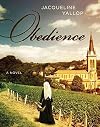
Obedience by Jacqueline Yallop is really a tale of two stories – one is historical fiction, allowing the reader insight into occupied France during World War II, and the other is contemporary fiction, showcasing the end of an era. Throughout both stories flows Sister Bernard’s history, past and present combining to highlight the lasting impact one moment’s poor decision had on the rest of her life. While Sister Bernard is forced to confront her guilt, the unfolding of her story show more highlights the true victims and guilty party of those past deeds. A difficult book to describe, Obedience is a compelling read for its brutally honest depiction of convent life, the pressure to conform, and the steps people are willing to take to survive when the world is torn upside-down.
The words “poor decision” when describing Sister Bernard’s life-changing moment is something of a misnomer. Her need to find love overrides every instinct her upbringing and religious life has instilled in her. Indeed, this is the true tragedy, as this need induces her to act before thinking and to take chances when to be caught means almost certain death. What is worse is the fact that her sheltered existence within the convent fails to prepare her for the true circumstances behind the presence of the German soldiers and the cruelty of mankind. Sister Bernard is simply a nun in the wrong place at the wrong time, and her overwhelming need to belong to someone places her in some truly unfortunate, horrific experiences.
Obedience itself is rather jagged in its storytelling. The sections jump from one era to the next with little to no warning or explanation of the current time frame of the story in a given section. The reader is forced to determine whether it is past or present based on certain clues. This does become easier towards the end, when the two scenes are more familiar to the reader, but can be confusing in the beginning of the novel. Similarly, Obedience is one of those novels that does not willingly share its secrets and truths. Rather, the entire story is hazy, almost impressionistic, providing no clear picture of motive, personalities, physical descriptions, or anything else which would add clarity to the truth. Instead, the reader is forced to interpret the hidden secrets, much like someone interprets a painting, based on the sweeping strokes of Ms. Yallop’s pen.
While difficult to describe, Obedience is one novel that sneaks under a reader’s skin. Languid in its storytelling, the story unfolds slowly and yet surprisingly forcefully, compelling the reader to feel the full weight of Sister Bernard’s emotional turmoil. It is a novel that leaves the reader grasping under the weight of the full knowledge of lost opportunities and lost truths.
Acknowledgements: Thank you to NetGalley and to Elaine Broeder from Penguin Group for my e-galley! show less
The words “poor decision” when describing Sister Bernard’s life-changing moment is something of a misnomer. Her need to find love overrides every instinct her upbringing and religious life has instilled in her. Indeed, this is the true tragedy, as this need induces her to act before thinking and to take chances when to be caught means almost certain death. What is worse is the fact that her sheltered existence within the convent fails to prepare her for the true circumstances behind the presence of the German soldiers and the cruelty of mankind. Sister Bernard is simply a nun in the wrong place at the wrong time, and her overwhelming need to belong to someone places her in some truly unfortunate, horrific experiences.
Obedience itself is rather jagged in its storytelling. The sections jump from one era to the next with little to no warning or explanation of the current time frame of the story in a given section. The reader is forced to determine whether it is past or present based on certain clues. This does become easier towards the end, when the two scenes are more familiar to the reader, but can be confusing in the beginning of the novel. Similarly, Obedience is one of those novels that does not willingly share its secrets and truths. Rather, the entire story is hazy, almost impressionistic, providing no clear picture of motive, personalities, physical descriptions, or anything else which would add clarity to the truth. Instead, the reader is forced to interpret the hidden secrets, much like someone interprets a painting, based on the sweeping strokes of Ms. Yallop’s pen.
While difficult to describe, Obedience is one novel that sneaks under a reader’s skin. Languid in its storytelling, the story unfolds slowly and yet surprisingly forcefully, compelling the reader to feel the full weight of Sister Bernard’s emotional turmoil. It is a novel that leaves the reader grasping under the weight of the full knowledge of lost opportunities and lost truths.
Acknowledgements: Thank you to NetGalley and to Elaine Broeder from Penguin Group for my e-galley! show less
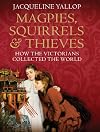
Review of Magpies, Squirrels and Thieves – how the Victorians collected their world.
By Jacqueline Yallop ( Atlantic Books, 2001)
If you are a museum enthusiast who thrills to the quiet pleasure of stepping into a London museum- the British Museum, the Victoria and Albert or the John Soane Museum or the Natural History Museum, this book is for you. If you are a collector this book is a salutary read. Who were the people behind the creation of these great institutions? Who assembled the show more treasures we see today? What is the purpose of a museum? What were the issues of the day? This book introduces you to that cultural and social history in a readable form that belies its erudition and academic research..
The world of collecting and the making of 19th century museums is presented through the experiences and lives of five relatively unknown English collectors of the era. Beyond these key collectors was a network of friends, dealers, curators and other experts who figure in the narrative. The anchors - four men and one woman, became obsessed by their collecting interests and led lives that seemed to revolve around acquisition and ownership of the ultimate treasure. A passion to find objects of rare beauty and a sense of adventure led these collectors , if not to travel the world, to reach into Europe, North Africa and China in search of treasures . It was both more physically difficult and intellectually challenging than today but the rewards were substantial. These pioneering enthusiasts shifted from amateur to profession in their approach as they became more knowledgeable. The acquisition of expertise and gathering a specialist collection was an enduring creative effort.
Yallop stresses that each collector was typical of many of that era in wanting their collections to pass in tact into museums through their generosity, philanthropy, donations, scholarship and sometimes sales. Assembling and bequeathing a collection to one of the great British museums established in the 19th century was seen as one route to immortality . Having your name attached to a collection in a museum theoretically commanded respect and preservation from future generations.
This book gives an insight into why individuals collect and scour diverse sources in far flung travels to assemble a coherent collections. The stories of these five individuals illuminate disparate personalities but they are all cut from the same mould in their obsessive drive to garner, gather and be magpies and squirrels. All found that deep specialist knowledge and a focus on specific areas of the arts gave they the collecting edge. It was a highly competitive world, where collector rubbed shoulders with dealers auctioneers, craftsmen and traders ; sometimes collectors because dealers . There examples cited of roguery, theft , fraud and dissimulation . Conflicts of interest as collector merged with curator who often became a dealer are touched on in the context of class consciousness and social attitudes. It is unfortunate to bring the term “thievery” into the title as none of the five were thieves, although a passion for collecting could turn the collector into gullible dupes of thieves or fraudsters on occasion.
John Charles Robinson was an artist, who from his Paris base collected as a young man, the spoils of war and revolution in France. He started collecting for himself on a shoestring and scavenged and bargained wherever he went in search of Limoges enamels, antique silks, carpets, paintings bronzes, Renaissance Italian masterpieces. He moved from Nottingham to Hanley and then to London to Marlborough House becoming a curator. In London he conflicted with the great museum creator Henry Cole as the two men had very different ideas about the purpose of a museum and hence collecting, while the new South Kensington Museum ( today’s Victoria and Albert) took shape. Educational aims and design reform ( Cole’s view) clashed with collecting the rarest and best for a discerning sometimes elite audience (Robinson’s milieu). Robinson’s story highlights the dangers of a conflict of interest when a museum curator purchases objects both for his own collection and for his museum. Robinson having been fired by Cole from the South Kensington Museum, became a successful and well established dealer who later reestablished himself as a consultant, purchaser for and lender to the museum. His collection did not survive him. His career moves from private connoisseur to professional curator, to successful dealer and finally to benefactor and consultant highlight the changing tastes , conflicts and compromises of the Victorian era.
Charlotte Schreiber was a connoisseur and collector of English porcelain and with her second husband, Charles , used her wealth inherited from her first husband ( a Welsh industrialist and iron manufacturer, John Guest of Dowlais) to scour Europe and even North Africa in search of treasures. Over the years she built up a formidable knowledge base and used her scholarship to fill her red travelling bag with rare and unusual items of china, fans, playing cards. She was a highly educated and determined independent minded woman and unusual for her class and era in breaking the rules about remarriage, travel and striking a bargain in a man’s world. She too clashed with other collectors such as Joseph Duveen; Charlotte started as an amateur but became a professional mixing on equal terms with the male museum establishment of London. Over a thirteen year period she and her husband, made 23 foreign trips through Europe. I had encountered Schreiber previously as her journal was published in 1911 and are themselves an interesting read.
Joseph Mayer was a man who collected for love . An 1840 portrait painted by William Daniels places the sitter, Mayer at the centre of his growing but eclectic collection. Mayer was a successful Liverpool silversmith and business man whose mania for collecting took over his life. He was an enthusiastic amateur antiquarian who keenly used a network of friends and associates to gather ancient relics and archaeological finds. It was Mayer who purchased the important but neglected Fausset archaeological collection (assembled through searching Anglo- Saxon barrows – 630 graves had been excavated yielding a vast number of grave goods in the 1760s ) and promoted the publication of serious studies. Mayer bought the complete existing collections of earlier collectors; sometimes his deals came unstuck. He funded his collecting from his jewellery business and he was not a man of unlimited wealth. Luck, curiosity, the eye for an opportunity , recognizing the potential and assiduous searching for those “ once in a lifetime moment” led to many such treasure finds. He is described as a man of exceptional shrewdness and guile . Mayer conceived of the idea of creating an Egyptian museum in Liverpool. Sometimes collecting in remote and not so distant lands – Egypt and Abyssinia , led to the collectors, treasure hunter cum archaeologist becoming looters of the cultural treasures of other societies. The controversy over the Elgin marbles is still alive today. Mayer was the father and effective founder of what became the fine Liverpool Museum. There is though a poignant sadness in the subsequent fortunes and fate of Meyer’s collections.
Murray Marks was a friend of Rossetti, who connected interior design, dealing and collecting adeptly and successfully, enabling artists of the pre- Raphaelite brotherhood fill their homes with appropriate and desirable objects. Marks was the son of an antiques dealer, so was born into the trade but himself revolutionized the display and marketing of the arts. He was a discerning importer of European art objects – furniture, china, curiosities, but his particular specialty was blue-white ceramics from China and Japan.. His magnificent showroom on Oxford Street was designed by the architect, Richard Norman Shaw and it was Whistler who designed his business card. His expertise extended to carvings, armour, leather, tapestry, furniture, bronzes, enamels and ceramics .
Stephen Bushell was a young London doctor who in 1868 set sail for China to serve the foreign community in its Peking compound. Bushell soon became enraptured with all things Chinese and began to collect in the wider old city’s markets. He applied his mind to acquiring a deep knowledge of Chinese history, language, culture and art.. Bushell established contact with the South Kensington Museum and began to collect with the museum in mind. He was given a purchasing allowance and collected widely over jewellery, jade, ceramics, bronze mirrors rooted in growing scholarship and careful note taking. He scrutinized, observed and asked probing questions. His approach was significant because the objects he collected and sent to London became a window through which Chinese culture could be grasped and understood. He changed attitudes.. In time his knowledge and life’s work was encapsulated in the magisterial pioneering two volume work “Chinese art.” Bushell too became a dealer but simply to finance further collecting.
Through the history of these specific collectors, Yallop introduces the reader to the world of the museums, the professional curators , the collector, the dealer
and trends in 19th century collecting. Sometimes fraud and sharp practice were perpetrated on the collectors; rising prices and growing competitiveness went hand in glove with a more professional knowledge base.
If you wish to collect in a systematic and organized manner you needed to be wealthy, leisured, educated, determined and fearless . The hunt of the chase is a much fun as later gloating over acquisitions. The collectors selected by Jacqueline Yallop were very different in personality character and objective and collecting areas but together their stories gives us a fascinating prism through wish to view how collections were formed and in turn how the great museums of London and Liverpool were created and grew through benefactions, discerning purchase and bequests. The book is a serious and effective study, well researched social history . It is well written, offers an easy read, is supported by detailed research . In summary, it is about the relationship between museums and collecting. Without the passionate collectors who were the magpies and squirrels the museums we enjoy today would not exist. Any weaknesses? This work is anchored in English social history and has very little to say about the formation great European and American museums and collections . The shift in economic power and wealth to the new world gave the American collector the edge from the late 19th century as we know from the operations of the Duveen family. A representative American collector would have broadened the interest. K A M. show less
By Jacqueline Yallop ( Atlantic Books, 2001)
If you are a museum enthusiast who thrills to the quiet pleasure of stepping into a London museum- the British Museum, the Victoria and Albert or the John Soane Museum or the Natural History Museum, this book is for you. If you are a collector this book is a salutary read. Who were the people behind the creation of these great institutions? Who assembled the show more treasures we see today? What is the purpose of a museum? What were the issues of the day? This book introduces you to that cultural and social history in a readable form that belies its erudition and academic research..
The world of collecting and the making of 19th century museums is presented through the experiences and lives of five relatively unknown English collectors of the era. Beyond these key collectors was a network of friends, dealers, curators and other experts who figure in the narrative. The anchors - four men and one woman, became obsessed by their collecting interests and led lives that seemed to revolve around acquisition and ownership of the ultimate treasure. A passion to find objects of rare beauty and a sense of adventure led these collectors , if not to travel the world, to reach into Europe, North Africa and China in search of treasures . It was both more physically difficult and intellectually challenging than today but the rewards were substantial. These pioneering enthusiasts shifted from amateur to profession in their approach as they became more knowledgeable. The acquisition of expertise and gathering a specialist collection was an enduring creative effort.
Yallop stresses that each collector was typical of many of that era in wanting their collections to pass in tact into museums through their generosity, philanthropy, donations, scholarship and sometimes sales. Assembling and bequeathing a collection to one of the great British museums established in the 19th century was seen as one route to immortality . Having your name attached to a collection in a museum theoretically commanded respect and preservation from future generations.
This book gives an insight into why individuals collect and scour diverse sources in far flung travels to assemble a coherent collections. The stories of these five individuals illuminate disparate personalities but they are all cut from the same mould in their obsessive drive to garner, gather and be magpies and squirrels. All found that deep specialist knowledge and a focus on specific areas of the arts gave they the collecting edge. It was a highly competitive world, where collector rubbed shoulders with dealers auctioneers, craftsmen and traders ; sometimes collectors because dealers . There examples cited of roguery, theft , fraud and dissimulation . Conflicts of interest as collector merged with curator who often became a dealer are touched on in the context of class consciousness and social attitudes. It is unfortunate to bring the term “thievery” into the title as none of the five were thieves, although a passion for collecting could turn the collector into gullible dupes of thieves or fraudsters on occasion.
John Charles Robinson was an artist, who from his Paris base collected as a young man, the spoils of war and revolution in France. He started collecting for himself on a shoestring and scavenged and bargained wherever he went in search of Limoges enamels, antique silks, carpets, paintings bronzes, Renaissance Italian masterpieces. He moved from Nottingham to Hanley and then to London to Marlborough House becoming a curator. In London he conflicted with the great museum creator Henry Cole as the two men had very different ideas about the purpose of a museum and hence collecting, while the new South Kensington Museum ( today’s Victoria and Albert) took shape. Educational aims and design reform ( Cole’s view) clashed with collecting the rarest and best for a discerning sometimes elite audience (Robinson’s milieu). Robinson’s story highlights the dangers of a conflict of interest when a museum curator purchases objects both for his own collection and for his museum. Robinson having been fired by Cole from the South Kensington Museum, became a successful and well established dealer who later reestablished himself as a consultant, purchaser for and lender to the museum. His collection did not survive him. His career moves from private connoisseur to professional curator, to successful dealer and finally to benefactor and consultant highlight the changing tastes , conflicts and compromises of the Victorian era.
Charlotte Schreiber was a connoisseur and collector of English porcelain and with her second husband, Charles , used her wealth inherited from her first husband ( a Welsh industrialist and iron manufacturer, John Guest of Dowlais) to scour Europe and even North Africa in search of treasures. Over the years she built up a formidable knowledge base and used her scholarship to fill her red travelling bag with rare and unusual items of china, fans, playing cards. She was a highly educated and determined independent minded woman and unusual for her class and era in breaking the rules about remarriage, travel and striking a bargain in a man’s world. She too clashed with other collectors such as Joseph Duveen; Charlotte started as an amateur but became a professional mixing on equal terms with the male museum establishment of London. Over a thirteen year period she and her husband, made 23 foreign trips through Europe. I had encountered Schreiber previously as her journal was published in 1911 and are themselves an interesting read.
Joseph Mayer was a man who collected for love . An 1840 portrait painted by William Daniels places the sitter, Mayer at the centre of his growing but eclectic collection. Mayer was a successful Liverpool silversmith and business man whose mania for collecting took over his life. He was an enthusiastic amateur antiquarian who keenly used a network of friends and associates to gather ancient relics and archaeological finds. It was Mayer who purchased the important but neglected Fausset archaeological collection (assembled through searching Anglo- Saxon barrows – 630 graves had been excavated yielding a vast number of grave goods in the 1760s ) and promoted the publication of serious studies. Mayer bought the complete existing collections of earlier collectors; sometimes his deals came unstuck. He funded his collecting from his jewellery business and he was not a man of unlimited wealth. Luck, curiosity, the eye for an opportunity , recognizing the potential and assiduous searching for those “ once in a lifetime moment” led to many such treasure finds. He is described as a man of exceptional shrewdness and guile . Mayer conceived of the idea of creating an Egyptian museum in Liverpool. Sometimes collecting in remote and not so distant lands – Egypt and Abyssinia , led to the collectors, treasure hunter cum archaeologist becoming looters of the cultural treasures of other societies. The controversy over the Elgin marbles is still alive today. Mayer was the father and effective founder of what became the fine Liverpool Museum. There is though a poignant sadness in the subsequent fortunes and fate of Meyer’s collections.
Murray Marks was a friend of Rossetti, who connected interior design, dealing and collecting adeptly and successfully, enabling artists of the pre- Raphaelite brotherhood fill their homes with appropriate and desirable objects. Marks was the son of an antiques dealer, so was born into the trade but himself revolutionized the display and marketing of the arts. He was a discerning importer of European art objects – furniture, china, curiosities, but his particular specialty was blue-white ceramics from China and Japan.. His magnificent showroom on Oxford Street was designed by the architect, Richard Norman Shaw and it was Whistler who designed his business card. His expertise extended to carvings, armour, leather, tapestry, furniture, bronzes, enamels and ceramics .
Stephen Bushell was a young London doctor who in 1868 set sail for China to serve the foreign community in its Peking compound. Bushell soon became enraptured with all things Chinese and began to collect in the wider old city’s markets. He applied his mind to acquiring a deep knowledge of Chinese history, language, culture and art.. Bushell established contact with the South Kensington Museum and began to collect with the museum in mind. He was given a purchasing allowance and collected widely over jewellery, jade, ceramics, bronze mirrors rooted in growing scholarship and careful note taking. He scrutinized, observed and asked probing questions. His approach was significant because the objects he collected and sent to London became a window through which Chinese culture could be grasped and understood. He changed attitudes.. In time his knowledge and life’s work was encapsulated in the magisterial pioneering two volume work “Chinese art.” Bushell too became a dealer but simply to finance further collecting.
Through the history of these specific collectors, Yallop introduces the reader to the world of the museums, the professional curators , the collector, the dealer
and trends in 19th century collecting. Sometimes fraud and sharp practice were perpetrated on the collectors; rising prices and growing competitiveness went hand in glove with a more professional knowledge base.
If you wish to collect in a systematic and organized manner you needed to be wealthy, leisured, educated, determined and fearless . The hunt of the chase is a much fun as later gloating over acquisitions. The collectors selected by Jacqueline Yallop were very different in personality character and objective and collecting areas but together their stories gives us a fascinating prism through wish to view how collections were formed and in turn how the great museums of London and Liverpool were created and grew through benefactions, discerning purchase and bequests. The book is a serious and effective study, well researched social history . It is well written, offers an easy read, is supported by detailed research . In summary, it is about the relationship between museums and collecting. Without the passionate collectors who were the magpies and squirrels the museums we enjoy today would not exist. Any weaknesses? This work is anchored in English social history and has very little to say about the formation great European and American museums and collections . The shift in economic power and wealth to the new world gave the American collector the edge from the late 19th century as we know from the operations of the Duveen family. A representative American collector would have broadened the interest. K A M. show less
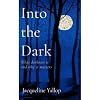
A fascinating exploration and history of the dark. Is it a presence or an absence? What has been believed across time. How it has in Western cultures at least been demonised, is the dark side, the bad etc. How, in most peoples lives at some time it has been or remains something to fear.
It is also a look at dementia, the darkness her father is subject too, and how darkness unsettles him in his dementia.
Surprised that she didn't include an exploration of the countries who have longer periods show more of darkness or light, Iceland for example. Nor the aspect of darkness that most people do enjoy, eyes open with head under the covers. In the dark, and safe. show less
It is also a look at dementia, the darkness her father is subject too, and how darkness unsettles him in his dementia.
Surprised that she didn't include an exploration of the countries who have longer periods show more of darkness or light, Iceland for example. Nor the aspect of darkness that most people do enjoy, eyes open with head under the covers. In the dark, and safe. show less
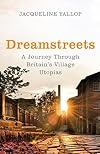
When I think of model villages I think of those miniaturised places that children love so much as they peer in through the tiny windows and look at the treasures within. But the title of model villages was given to those places that were built in the eighteenth and nineteenth centuries by philanthropists and employers for families working in factories and mines. These places are scattered across the country and are as well-known as Port Sunlight, Saltaire and Bournville.
Part historical show more examination and part travelogue, Yallop provides a scholarly overview of each of these villages and the effect that they had on the social scene of the day, coupled with a personal view of how they sit in the modern landscape now. She considers the effect that the Arts and Crafts movement had on the worker’s cottages, the rising concerns that the great and the good had about poverty and the political system that gave birth to these communities.
It is an interesting book, these places have become embedded in our cultural landscape. The original factories and industries that these places supported are long gone now but some are as popular to live in today as they were when built. Yallop brings her expertise and personal experience to the book; she worked giving guided tours at a village in the high fells, and it shows as it is eloquent and well researched. What doesn’t work for me though is it that the books feels disjointed. A chapter starts at a particular village, then wanders off to other places before going back to visit to the original village. It feels a bit disjointed and loses some of the fluidity that could have made it so much better. I did like the travel parts of her book though; her visits to the villages are richly descriptive and full of warmth. show less
Part historical show more examination and part travelogue, Yallop provides a scholarly overview of each of these villages and the effect that they had on the social scene of the day, coupled with a personal view of how they sit in the modern landscape now. She considers the effect that the Arts and Crafts movement had on the worker’s cottages, the rising concerns that the great and the good had about poverty and the political system that gave birth to these communities.
It is an interesting book, these places have become embedded in our cultural landscape. The original factories and industries that these places supported are long gone now but some are as popular to live in today as they were when built. Yallop brings her expertise and personal experience to the book; she worked giving guided tours at a village in the high fells, and it shows as it is eloquent and well researched. What doesn’t work for me though is it that the books feels disjointed. A chapter starts at a particular village, then wanders off to other places before going back to visit to the original village. It feels a bit disjointed and loses some of the fluidity that could have made it so much better. I did like the travel parts of her book though; her visits to the villages are richly descriptive and full of warmth. show less
Lists
Mooie titels (1)
Awards

You May Also Like


Statistics
- Works
- 8
- Members
- 200
- Popularity
- #110,007
- Rating
- 3.5
- Reviews
- 14
- ISBNs
- 42
- Languages
- 1