

Phillip Rock (1927–2004)
Author of The Passing Bells
About the Author
Series
Works by Phillip Rock
NA RODA DO TEMPO 2 copies
Opera and Song 1 copy
Un marino singular 1 copy
Quando os Sinos se Calam 1 copy
A GUN-FIGHT 1 copy
Associated Works
Reader's Digest Condensed Books 1979 v05: Hungry as the Sea / The Tightrope Walker / The Passing Bells / Flesh and Spirit (1979) — Author — 19 copies
Reader's-Digest-Auswahlbücher 1980: Rache per Computer / Sturmwind der Zeit / Die Dachse von Summercombe / Nacht über dem Tal (1980) 5 copies
Reader's Digest Condensed Books: Sunflower • The Passing Bells • The Education of Little Tree • The Mountain Farm (1979) 5 copies
Tagged
Common Knowledge
- Birthdate
- 1927-07-30
- Date of death
- 2004-04-03
- Gender
- male
- Nationality
- USA
- Birthplace
- Hollywood, California, USA
- Place of death
- Los Angeles, California, USA
- Map Location
- USA
Members
Reviews
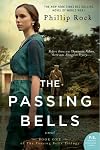
In the summer of 1914, the aristocratic Grevilles of Abingdon Pryory are relatively carefree, except for the usual problems of their class: son and heir Charles is in love with an unsuitable woman, daughter Alexandra is about to begin her first London Season, and brash American cousin Martin Rilke is visiting from Chicago. So when a duke in faraway Austria is assassinated by a Serbian revolutionary, neither the Grevilles nor their friends believe that the event will have any effect on them. show more Yet as the conflict escalates into a full-scale war, the Grevilles' lives are changed forever as Charles joins the army and Alexandra volunteers as a nurse. This novel follows several characters, from Lord Greville down to housemaid Ivy Thaxton, as they experience the shock and horror of World War I.
"Downton Abbey" fan that I am, I couldn't resist this historical novel about WWI. I was very impressed by the way historical information was embedded into the narrative; while there are a few infodumps, they're largely unobtrusive. For example, the American Martin Rilke is a newspaper man trying to do a story about the war, but his fellow journalists have to explain the background of the European conflict to him. I also liked that the book follows a variety of characters with different perspectives on the war. The young people are enthusiastic and overflowing with patriotism at first, but most of them are quickly disillusioned. Senior military officers berate the stupidity that lost so many lives needlessly at the Somme. The women experience the pain of losing their loved ones, but they also find new and useful work that gives their lives a new direction. All that said, I never became fully gripped by the story; because the novel is so focused on the war, it somewhat neglects character development and relationships. Overall, this is a solid historical fiction novel, and I'd recommend it to fans of the period, but I didn't love it. show less
"Downton Abbey" fan that I am, I couldn't resist this historical novel about WWI. I was very impressed by the way historical information was embedded into the narrative; while there are a few infodumps, they're largely unobtrusive. For example, the American Martin Rilke is a newspaper man trying to do a story about the war, but his fellow journalists have to explain the background of the European conflict to him. I also liked that the book follows a variety of characters with different perspectives on the war. The young people are enthusiastic and overflowing with patriotism at first, but most of them are quickly disillusioned. Senior military officers berate the stupidity that lost so many lives needlessly at the Somme. The women experience the pain of losing their loved ones, but they also find new and useful work that gives their lives a new direction. All that said, I never became fully gripped by the story; because the novel is so focused on the war, it somewhat neglects character development and relationships. Overall, this is a solid historical fiction novel, and I'd recommend it to fans of the period, but I didn't love it. show less
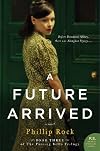
I am seriously not ready for this trilogy to end. I actually feel melancholy, reluctant to start another book for fear of losing the 'taste' of the novel. (For recaps, see my reviews of the first novel, The Passing Bells, and the second novel, Circles of Time.)
The novel opens similarly to the first book, The Passing Bells, with Lord Stanmore getting dressed for the day, and my heart lifted -- until the scene changed to sadness with the death of a tertiary character. With that mood show more established, Rock's final novel is a bounce between familiarity, bittersweet loss, and heady hope.
Seven years have passed between the end of the second novel and the start of this one. Those who wanted more time with the 'original' cast might feel some loss at the shifting direction -- I will admit I initially was disappointed -- but the twining connection between the 'new' cast and the other characters, as well as Rock's wonderful writing, sucked me in and I no longer mourned the shifting focus.
This book has the largest scope -- ten years -- from 1930 through 1940 and in that sense, I think it felt a bit rushed. Rock covered six years in The Passing Bells but conveyed, I thought, the unending grind of trench warfare rather well without losing the reader. I felt the two years covered in the second book was too little -- even though the page length was the same as the first novel! (What can I say, I just want more!) Still, this isn't an unsatisfying story: threads are tied up, characters come to some concluding arc (whether I like it or not!), and the Grevilles and their beloved Abington Pryory continue to live on, changed.
Our intrepid American reporter Martin is still the moral 'voice' of the novel; his interest in European politics and experience as a war reporter allow him to be a bit of an oracle or Greek chorus here, hinting at what we know will come. Fenton Wood-Lacey, still in the military, returns to the same battlefields where he fought during World War I, again fighting Germany. His daughters are now vibrant and passionate young women, hungry for their own victories, infatuated with soldiers the way the characters from the first novel were. Lord and Lady Stanmore, the Greville patriarchs, clinging to the past as much as they grab for the future, keep their beloved Abingdon Pryory as their seat. Rock doesn't forget the working class either: the brother of one of the Greville house maids becomes a main character, eager to change his fortunes the way he saw his sister change hers.
As with his previous novels, Rock articulates so well the societal shifts in behavior, attitudes, and mores -- and the ways parts of society haven't changed. There's a seen where a character decides to marry a divorcee, and Lady Standmore has to have a frank conversation with the woman about how, pre-war, this marriage would have never happened and how, even now, some society will never accept her. It is in this world that the children bristle -- having grown up in a post-war era of parties, blatant sexuality, explosive politics, economic boom -- and just as they hurtle into adulthood, war approaches. The bookending of these two conflicts is wonderful/upsetting/moving/cinematic/exciting/so ridiculously sad, and I love/hate Rock for doing so.
The ending was lovely, a note of hope, but I still got teary just remembering all the losses and changes that the characters experienced. (I'm getting a tiny bit teary right now!) This trilogy definitely makes my top ten for this year -- these books were everything I love about reading -- and I feel the absence of my favorite characters now that I'm done. I anticipate a reread of these books -- they're that kind of read -- and I hope this trilogy enters into the canon of 'classic' historical fiction. show less
The novel opens similarly to the first book, The Passing Bells, with Lord Stanmore getting dressed for the day, and my heart lifted -- until the scene changed to sadness with the death of a tertiary character. With that mood show more established, Rock's final novel is a bounce between familiarity, bittersweet loss, and heady hope.
Seven years have passed between the end of the second novel and the start of this one. Those who wanted more time with the 'original' cast might feel some loss at the shifting direction -- I will admit I initially was disappointed -- but the twining connection between the 'new' cast and the other characters, as well as Rock's wonderful writing, sucked me in and I no longer mourned the shifting focus.
This book has the largest scope -- ten years -- from 1930 through 1940 and in that sense, I think it felt a bit rushed. Rock covered six years in The Passing Bells but conveyed, I thought, the unending grind of trench warfare rather well without losing the reader. I felt the two years covered in the second book was too little -- even though the page length was the same as the first novel! (What can I say, I just want more!) Still, this isn't an unsatisfying story: threads are tied up, characters come to some concluding arc (whether I like it or not!), and the Grevilles and their beloved Abington Pryory continue to live on, changed.
Our intrepid American reporter Martin is still the moral 'voice' of the novel; his interest in European politics and experience as a war reporter allow him to be a bit of an oracle or Greek chorus here, hinting at what we know will come. Fenton Wood-Lacey, still in the military, returns to the same battlefields where he fought during World War I, again fighting Germany. His daughters are now vibrant and passionate young women, hungry for their own victories, infatuated with soldiers the way the characters from the first novel were. Lord and Lady Stanmore, the Greville patriarchs, clinging to the past as much as they grab for the future, keep their beloved Abingdon Pryory as their seat. Rock doesn't forget the working class either: the brother of one of the Greville house maids becomes a main character, eager to change his fortunes the way he saw his sister change hers.
As with his previous novels, Rock articulates so well the societal shifts in behavior, attitudes, and mores -- and the ways parts of society haven't changed. There's a seen where a character decides to marry a divorcee, and Lady Standmore has to have a frank conversation with the woman about how, pre-war, this marriage would have never happened and how, even now, some society will never accept her. It is in this world that the children bristle -- having grown up in a post-war era of parties, blatant sexuality, explosive politics, economic boom -- and just as they hurtle into adulthood, war approaches. The bookending of these two conflicts is wonderful/upsetting/moving/cinematic/exciting/so ridiculously sad, and I love/hate Rock for doing so.
The ending was lovely, a note of hope, but I still got teary just remembering all the losses and changes that the characters experienced. (I'm getting a tiny bit teary right now!) This trilogy definitely makes my top ten for this year -- these books were everything I love about reading -- and I feel the absence of my favorite characters now that I'm done. I anticipate a reread of these books -- they're that kind of read -- and I hope this trilogy enters into the canon of 'classic' historical fiction. show less
Given the Downton Abbey craze, I was apprehensive about this trilogy: was it any good or just a marketing ploy to cash in while DA is hot?
Thankfully, happily, awesomely, this book is good. Great. Another meaty hist fic that satisfies. This review, however, is probably going to be a hot mess, because how do I describe what is contained in these 500+ pages without just squeeing stupidly? Here goes:
The novel follows a few families and tangential individuals from 1914 through 1920, and at first, show more the enormous cast was be a bit overwhelming. There are the rich, titled, old money families, the wealthy trade families who are trying to gain their own social standing, the working class, the serving class, and everything in between.
As a result, this book is massive, in size, cast, and scope. Still, I loved every frickin' page. It's the kind of epic book I love to snuggle up with and devour over a weekend, and devour I did -- I was sneaking reads as often as I can. (I recommend not putting this down for any length of time -- given the size of the cast, it could be very easy to forget who is who.)
Opening at the beautiful, bucolic country estate of Abingdon Pryory, the reader basks in the refined dramas of the titled rich -- marriages, love affairs, training house hold staff -- before widening to incorporate a wider lens. As the residents of Abingdon Pryory move to London for the season, we meet the educated tradesmen, American relatives, reporters, and politicians. Then war strikes and everything changes.
Rock's writing style reminded me of the 'classic' historical fiction I love. There's a little romance -- some vague intimations of sex among the younger set -- and a leeetle bit of philosophic ruminations on war and violence. As this was originally written in the late 1970s, Rock has some distance from the era to insert a little sharp and wry commentary and observation. Early on, for example, one of his characters muses about the inequality of marrying American heiress made rich from trade while an Englishwoman with a successful merchant father is completely out of the picture. It's a darkly funny moment and this novel is punctuated with that -- the hypocrisy and beauty of the pre-World War I era.
Rock's characters do change and shift and I liked them, all of them. Some are selfish, some are jerks, some are badly behaved -- but I found all of them to be real and settled in their 'place' -- even as their place shifted as time went on. (Rock conveys that shift so very well -- when one of the titled rich girls seeks out her former maid, now a nurse, their interaction is painful and striking.)
If you like family sagas, this is your book -- while I normally bristle now at sequels, I am bouncing with excitement for the second book. I don't want to leave these people yet. show less
Thankfully, happily, awesomely, this book is good. Great. Another meaty hist fic that satisfies. This review, however, is probably going to be a hot mess, because how do I describe what is contained in these 500+ pages without just squeeing stupidly? Here goes:
The novel follows a few families and tangential individuals from 1914 through 1920, and at first, show more the enormous cast was be a bit overwhelming. There are the rich, titled, old money families, the wealthy trade families who are trying to gain their own social standing, the working class, the serving class, and everything in between.
As a result, this book is massive, in size, cast, and scope. Still, I loved every frickin' page. It's the kind of epic book I love to snuggle up with and devour over a weekend, and devour I did -- I was sneaking reads as often as I can. (I recommend not putting this down for any length of time -- given the size of the cast, it could be very easy to forget who is who.)
Opening at the beautiful, bucolic country estate of Abingdon Pryory, the reader basks in the refined dramas of the titled rich -- marriages, love affairs, training house hold staff -- before widening to incorporate a wider lens. As the residents of Abingdon Pryory move to London for the season, we meet the educated tradesmen, American relatives, reporters, and politicians. Then war strikes and everything changes.
Rock's writing style reminded me of the 'classic' historical fiction I love. There's a little romance -- some vague intimations of sex among the younger set -- and a leeetle bit of philosophic ruminations on war and violence. As this was originally written in the late 1970s, Rock has some distance from the era to insert a little sharp and wry commentary and observation. Early on, for example, one of his characters muses about the inequality of marrying American heiress made rich from trade while an Englishwoman with a successful merchant father is completely out of the picture. It's a darkly funny moment and this novel is punctuated with that -- the hypocrisy and beauty of the pre-World War I era.
Rock's characters do change and shift and I liked them, all of them. Some are selfish, some are jerks, some are badly behaved -- but I found all of them to be real and settled in their 'place' -- even as their place shifted as time went on. (Rock conveys that shift so very well -- when one of the titled rich girls seeks out her former maid, now a nurse, their interaction is painful and striking.)
If you like family sagas, this is your book -- while I normally bristle now at sequels, I am bouncing with excitement for the second book. I don't want to leave these people yet. show less
4.5 Stars
The first novel in Phillip Rock's Greville Family Saga, The Passing Bells, is a magnificent work of historical fiction that successfully captures the atmosphere and spirit of the age in which it is set. The novel opens in England in the summer of 1914, and even though Europe is poised on the brink of war, life continues on as usual at Abingdon Pryory, the stately home of the Earl of Stanmore and his family. After the War's outbreak, the general consensus is that Britain and her show more allies will enjoy a quick victory. Countless young men, including Charles Greville, heir to the Earldom of Stanmore, enthusiastically heed the call to arms and are dispatched to fight for King and country. Despite initial optimism, a conclusion to hostilities remains elusive and the spirit with which the participants began the war soon dissipates as the realities of the conflict set in. Back in England, the War brings an end to the nobility's golden age and ushers in a period of immense social change.
With well-developed characters, engaging story lines and a remarkable sense of time and place, The Passing Bells is a novel not to be missed. The early part of the book, which focuses primarily on the lives and loves of the Greville's and those closest to them prior to the outset of the War, provides an intimate look at the privileged lives of Britain's noble class. While the first part of the novel is entertaining, the greatest strength of this book rests with how well Rock has captured the War and the struggles of those who fought in it. Whether detailing character experiences in the trenches of the Somme, on a ship off the coast of Gallipoli, at a Casualty Clearing Station close to the Front, or in hospital recovering from wounds, Rock successfully conveys the horrors of WWI. For this reason it is not difficult to understand why the War had such a devastating and lasting effect on those who lived through it.
The Greville Family Saga continues in Circles of Time and A Future Arrived.
Recommended to all readers of historical fiction, especially those interested in novels set during the Edwardian era and WWI. show less
The first novel in Phillip Rock's Greville Family Saga, The Passing Bells, is a magnificent work of historical fiction that successfully captures the atmosphere and spirit of the age in which it is set. The novel opens in England in the summer of 1914, and even though Europe is poised on the brink of war, life continues on as usual at Abingdon Pryory, the stately home of the Earl of Stanmore and his family. After the War's outbreak, the general consensus is that Britain and her show more allies will enjoy a quick victory. Countless young men, including Charles Greville, heir to the Earldom of Stanmore, enthusiastically heed the call to arms and are dispatched to fight for King and country. Despite initial optimism, a conclusion to hostilities remains elusive and the spirit with which the participants began the war soon dissipates as the realities of the conflict set in. Back in England, the War brings an end to the nobility's golden age and ushers in a period of immense social change.
With well-developed characters, engaging story lines and a remarkable sense of time and place, The Passing Bells is a novel not to be missed. The early part of the book, which focuses primarily on the lives and loves of the Greville's and those closest to them prior to the outset of the War, provides an intimate look at the privileged lives of Britain's noble class. While the first part of the novel is entertaining, the greatest strength of this book rests with how well Rock has captured the War and the struggles of those who fought in it. Whether detailing character experiences in the trenches of the Somme, on a ship off the coast of Gallipoli, at a Casualty Clearing Station close to the Front, or in hospital recovering from wounds, Rock successfully conveys the horrors of WWI. For this reason it is not difficult to understand why the War had such a devastating and lasting effect on those who lived through it.
The Greville Family Saga continues in Circles of Time and A Future Arrived.
Recommended to all readers of historical fiction, especially those interested in novels set during the Edwardian era and WWI. show less
You May Also Like


Associated Authors
Statistics
- Works
- 22
- Also by
- 6
- Members
- 599
- Popularity
- #41,951
- Rating
- 3.8
- Reviews
- 26
- ISBNs
- 46
- Languages
- 4