
Elizabeth Cooke (5) (1953–)
Author of Rutherford Park
For other authors named Elizabeth Cooke, see the disambiguation page.
Series
Works by Elizabeth Cooke
Tagged
Common Knowledge
- Birthdate
- 1953
- Gender
- female
- Short biography
- Elizabeth Cooke lives in Dorset in southern England and is the author of fourteen novels, many of which she wrote under the pseudonym Elizabeth McGregor, as well as a work of nonfiction, The Damnation of John Donellan: A Mysterious Case of Death and Scandal in Georgian England. Acclaimed for her vivid, emotionally powerful storytelling and rigorous historical accuracy, Cooke has developed an international reputation. She is best known for her novels Rutherford Park and The Ice Child. Her work has been translated into numerous languages.
Members
Reviews
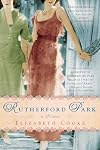
Rutherford Park is the palatial home of Lord William and Lady Octavia Cavendish. Nestled in the Yorkshire countryside, the peaceful-appearing estate is an island unto itself, but the secrets that run deep among the Cavendish family and their staff and the coming of war threaten to fracture the idyllic, if suddenly fragile, life the aristocratic family has come to know. As World War I looms on the horizon William struggles to maintain his family and their refuge at Rutherford Park even as his show more nearest and dearest seem to be moving beyond his grasp.
In Rutherford Park, Cooke allows us to sneak a peek beneath the proper and orderly surface of the Cavendish family and their estate. William takes comfort in order and propriety, but his wife Octavia chafes at the bonds of what is considered appropriate behavior for the lady of the house. She longs to show her love effusively, to walk barefoot in the grass, to cuddle her children instead of resigning them to the staff to raise, but William despite being well-meaning is embarrassed by her improper behavior. The couple's children, Harry, who wants nothing more than to fly away from an indiscretion that ended in tragedy; naïve Louisa, who is about to make her debut in society, and Charlotte, the youngest daughter who might just be a budding activist for change are each slipping away from William and Octavia in their own ways. As William rushes to gather his family back to himself and to the safety of Rutherford Park in the days before the war, past indiscretions and current scandals threaten to undo the life he and Octavia have built together.
In such a book as Rutherford Park, it might be tempting for the author to focus solely on the Cavendish family. Their feelings and foibles certainly could a whole book make. However, Cooke makes the wise decision to take on the estate as a whole exploring the lives of the many servants who keep the wealthy Cavendish household up and running. From the housemaids, Mary and Emily who made their escape from the dangers of mill work only to come face to face with other heartbreaks, to the footman, Nash, who delights in the occasional book of poetry pilfered from William's library, to the farrier, Jack Armitage, who shared an unexpected and perplexing moment with one of the Cavendish daughters, Cooke breathes life into the whole breadth of characters that make Rutherford Park tick. The result is a book that quietly explores the beginning of the end of a way of life through the co-mingled lives of a family whose wealthy way of life is becoming unsuitable and unsustainable and the people whose existence as mere servants is slowly drawing to a close.
Rutherford Park is an unexpectedly deep and wide portrait of not just a family but an entire estate's worth of people. Rather than focus on drama and scandal, Cooke makes the excellent decision to zero in on her characters' inner lives. As a result, characters both major and minor leap off the page, and much to Cooke's credit she manages to make very nearly all of her cast sympathetic to readers who might not agree with their actions but who might well commiserate with their feelings and motivations. If you are a lover of historical fiction or can appreciate a few great character studies, you'll find much to enjoy in Rutherford Park. Recommended! show less
In Rutherford Park, Cooke allows us to sneak a peek beneath the proper and orderly surface of the Cavendish family and their estate. William takes comfort in order and propriety, but his wife Octavia chafes at the bonds of what is considered appropriate behavior for the lady of the house. She longs to show her love effusively, to walk barefoot in the grass, to cuddle her children instead of resigning them to the staff to raise, but William despite being well-meaning is embarrassed by her improper behavior. The couple's children, Harry, who wants nothing more than to fly away from an indiscretion that ended in tragedy; naïve Louisa, who is about to make her debut in society, and Charlotte, the youngest daughter who might just be a budding activist for change are each slipping away from William and Octavia in their own ways. As William rushes to gather his family back to himself and to the safety of Rutherford Park in the days before the war, past indiscretions and current scandals threaten to undo the life he and Octavia have built together.
In such a book as Rutherford Park, it might be tempting for the author to focus solely on the Cavendish family. Their feelings and foibles certainly could a whole book make. However, Cooke makes the wise decision to take on the estate as a whole exploring the lives of the many servants who keep the wealthy Cavendish household up and running. From the housemaids, Mary and Emily who made their escape from the dangers of mill work only to come face to face with other heartbreaks, to the footman, Nash, who delights in the occasional book of poetry pilfered from William's library, to the farrier, Jack Armitage, who shared an unexpected and perplexing moment with one of the Cavendish daughters, Cooke breathes life into the whole breadth of characters that make Rutherford Park tick. The result is a book that quietly explores the beginning of the end of a way of life through the co-mingled lives of a family whose wealthy way of life is becoming unsuitable and unsustainable and the people whose existence as mere servants is slowly drawing to a close.
Rutherford Park is an unexpectedly deep and wide portrait of not just a family but an entire estate's worth of people. Rather than focus on drama and scandal, Cooke makes the excellent decision to zero in on her characters' inner lives. As a result, characters both major and minor leap off the page, and much to Cooke's credit she manages to make very nearly all of her cast sympathetic to readers who might not agree with their actions but who might well commiserate with their feelings and motivations. If you are a lover of historical fiction or can appreciate a few great character studies, you'll find much to enjoy in Rutherford Park. Recommended! show less
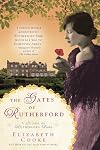
This is the first book and first introduction I have had to the Cavendish family. Yet, this did not deter me from having a pleasant time reading this book. While I did find the family to be a bit dysfunctional I still felt their strong sense of family bond and pride.
Although I was going along just fine reading this book from start to finish, I felt that the first half was alright but the second half of the story was the better half and when the story picked up and moved along faster and show more smoother. I tended to gravitate towards Charlotte and her free spirit. I was so glad when she broke free and branched out on her own. The ending of this story was a good one and it left a smile on my face.
Discussion Questions:
Why do you think Octavia advocates for "sensible marriages" for her daughters when it's not what she wants for herself?
I think that the reason that Octavia advocated for her daughters to have sensible marriages is because of her sense of duty and pride. Even though Octavia was separated from her husband, she still played the role in a way of committed wife.
Do you think Louisa and Charlotte would have had the courage to be with the ones they truly love if Octavia had not set the example?
To be honest, I am not sure if either woman would have really had the courage to venture out too much to find true love if they had not seen their mother find love and not be afraid to go after what she wants. show less
Although I was going along just fine reading this book from start to finish, I felt that the first half was alright but the second half of the story was the better half and when the story picked up and moved along faster and show more smoother. I tended to gravitate towards Charlotte and her free spirit. I was so glad when she broke free and branched out on her own. The ending of this story was a good one and it left a smile on my face.
Discussion Questions:
Why do you think Octavia advocates for "sensible marriages" for her daughters when it's not what she wants for herself?
I think that the reason that Octavia advocated for her daughters to have sensible marriages is because of her sense of duty and pride. Even though Octavia was separated from her husband, she still played the role in a way of committed wife.
Do you think Louisa and Charlotte would have had the courage to be with the ones they truly love if Octavia had not set the example?
To be honest, I am not sure if either woman would have really had the courage to venture out too much to find true love if they had not seen their mother find love and not be afraid to go after what she wants. show less
Set in a Yorkshire Estate just prior to the outbreak of World War I.
It started out quite promising with a few interesting storylines involving the Cavendish family and their servants. I was predisposed to like this book since I’m a fan of Downton Abbey and Upstairs Downstairs. Sadly, this did not live up to my expectations. Lots of intrigue and secrets, but too many characters and changes in points of view that the story got muddled for me and I couldn’t connect with most of the characters.
It started out quite promising with a few interesting storylines involving the Cavendish family and their servants. I was predisposed to like this book since I’m a fan of Downton Abbey and Upstairs Downstairs. Sadly, this did not live up to my expectations. Lots of intrigue and secrets, but too many characters and changes in points of view that the story got muddled for me and I couldn’t connect with most of the characters.
This is your typical historical fiction novel about family drama caused by secrets. I happen to like books like this so naturally I liked this. It wasn’t the best one I ever read, but it was still good and entertaining for the most part. It took a while for the story to actually get going. What I really liked was how it took place just before World War I broke out. It captured a really interesting time in England and France.
You May Also Like


Statistics
- Works
- 4
- Members
- 206
- Popularity
- #107,331
- Rating
- 3.7
- Reviews
- 8
- ISBNs
- 85
- Languages
- 2